
 AI Tools Review Editorial Team
Today, OpenAI introduced the Codex app for macOS, a powerful new interface designed to effortlessly manage multiple agents at once, run work in parallel, and collaborate over long-running tasks.
The Codex app changes how software gets built and who can build it: from pairing with a single coding agent on targeted edits to supervising coordinated teams of agents across the full lifecycle of designing, building, shipping, and maintaining software.
The Codex App: A Command Center for Agents
Since the launch of Codex in April 2025, the way developers work with agents has fundamentally changed. Models are now capable of handling complex, long-running tasks end to end and developers are now orchestrating multiple agents across projects: delegating work, running tasks in parallel, and trusting agents to take on substantial projects that can span hours, days, or weeks.
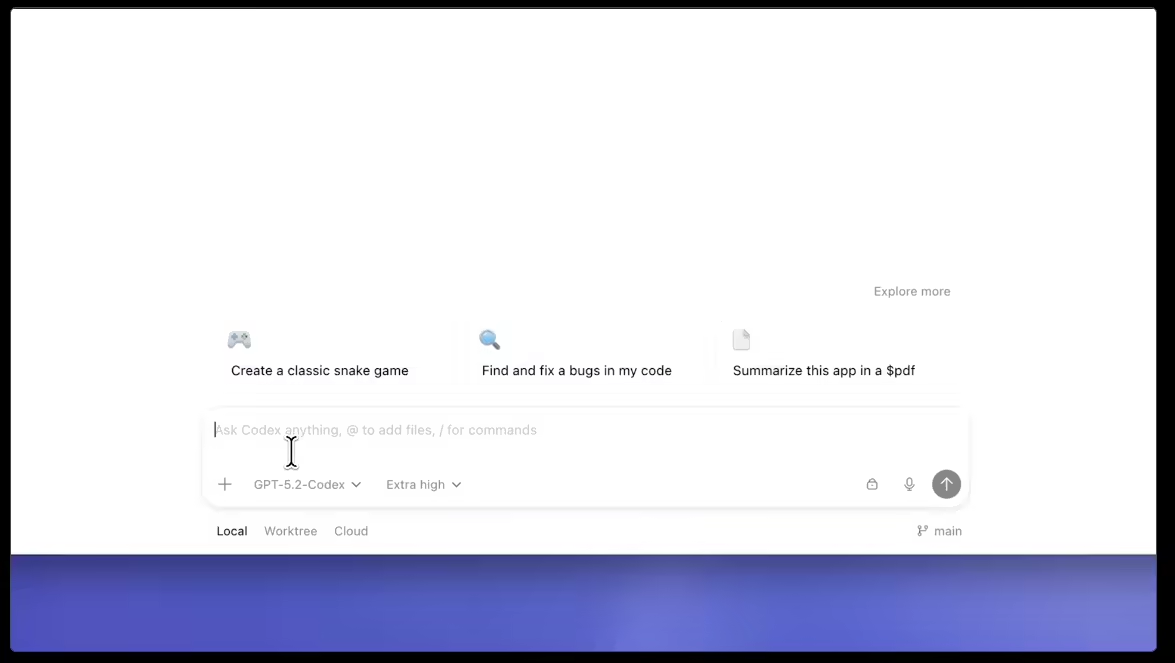
The new multi-agent sidebar allows for seamless context switching between different project threads.
The core challenge has shifted from what agents can do to how people can direct, supervise, and collaborate with them at scale. Existing IDEs and terminal-based tools are not built to support this way of working. This new way of building coupled with new model capabilities demands a different kind of tool, which is why we are introducing the Codex desktop app, a command center for agents.
Native macOS Experience
- Persistent Dashboard: A dedicated space for all your active and background agents.
- Rich Diff Reviews: Review agent changes with syntax highlighting and interactive commenting.
- System-Level Access: Deep integration with macOS sandboxing for secure file system and network operations.
Work with Multiple Agents in Parallel
The Codex app provides a focused space for multi-tasking with agents. Agents run in separate threads organized by projects, so you can seamlessly switch between tasks without losing context. The app lets you review the agent’s changes in the thread, comment on the diff, and even open it in your editor to make manual changes.
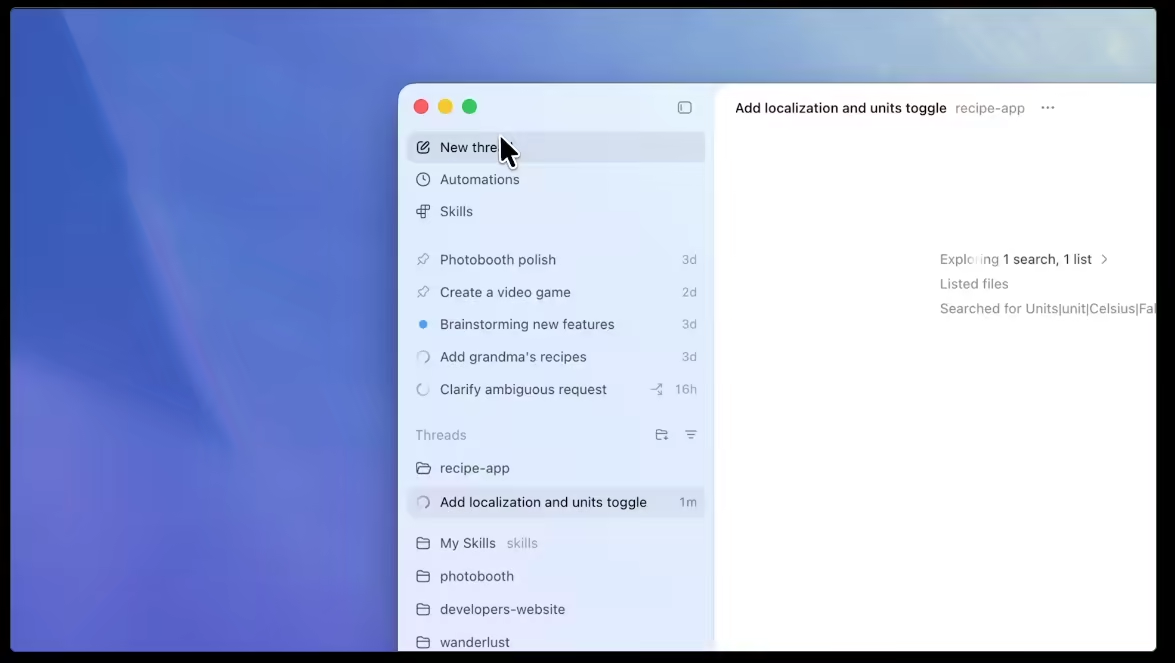
Individual threads allow you to supervise specific tasks while other agents work in the background.
This parallel approach means you no longer have to wait for a single agent to finish a large refactor before starting work on a new feature. You can have one agent triaging bugs in your stable branch while another explores a new architectural pattern in a feature branch. The interface handles the heavy lifting of context management, ensuring that each interaction is tailored to the specific agent's current task and environment.
Agent Specialization
Assign different personas or toolsets to specific agents within the same project for specialized work.
Workflow Orchestration
Move fluidly between the app, CLI, and IDE extension as your projects require different levels of supervision.
Isolated Progress: Built-in Support for Worktrees
One of the most powerful features of the Codex app is its built-in support for worktrees. This allows multiple agents to work on the same repository without conflicts. Each agent works on an isolated copy of your code, allowing you to explore different paths without needing to track how they impact your local codebase.
As an agent works, you can check out changes locally or let it continue making progress without touching your local git state. This solved a major pain point for developers: the fear of an agent "corrupting" the current working directory while a manual task was in progress. With worktrees, the agent's environment is truly separate yet perfectly synchronized with the repository's history.
Git Strategy
"The app automatically handles the creation and cleanup of temporary worktrees, so you can treat agents like ephemeral branches that only merge when you are ready."
Go Beyond Code Generation with Skills
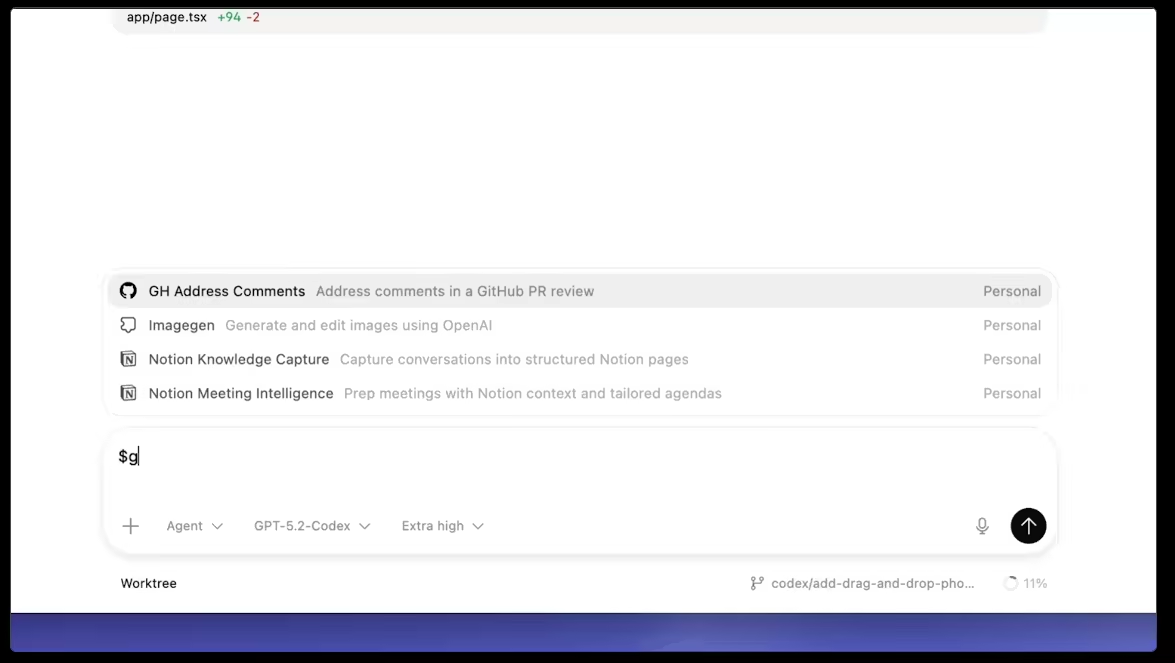
Codex is evolving from an agent that writes code into one that uses code to get work done on your computer. With skills, you can easily extend Codex beyond code generation to tasks that require gathering and synthesizing information, problem-solving, writing, and more.
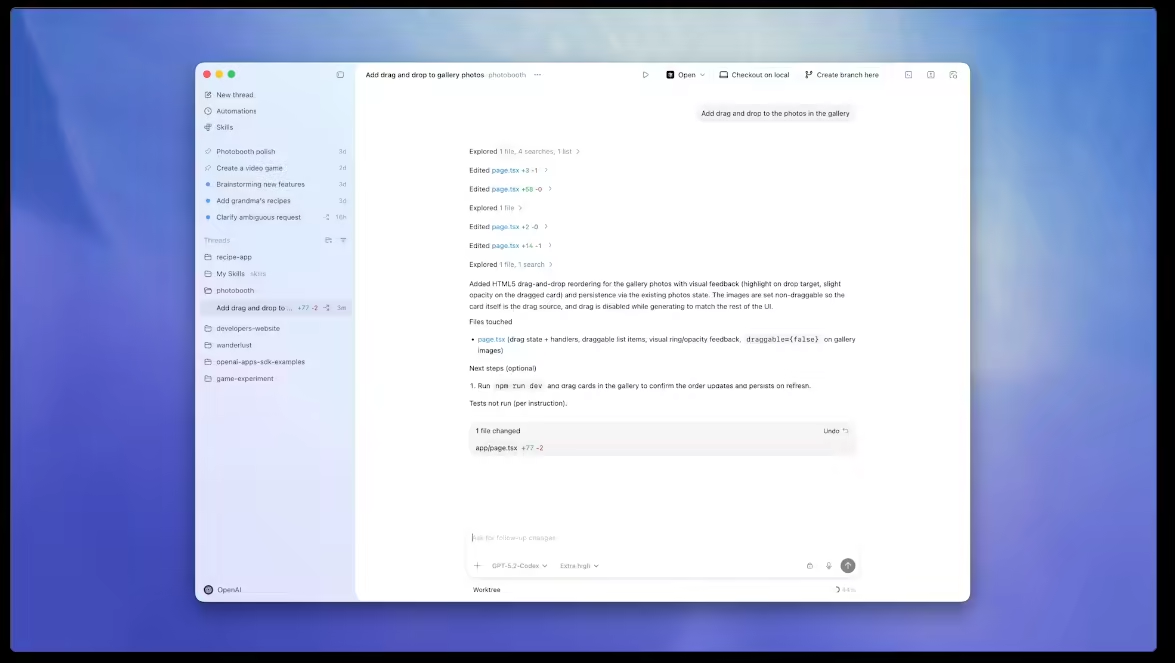
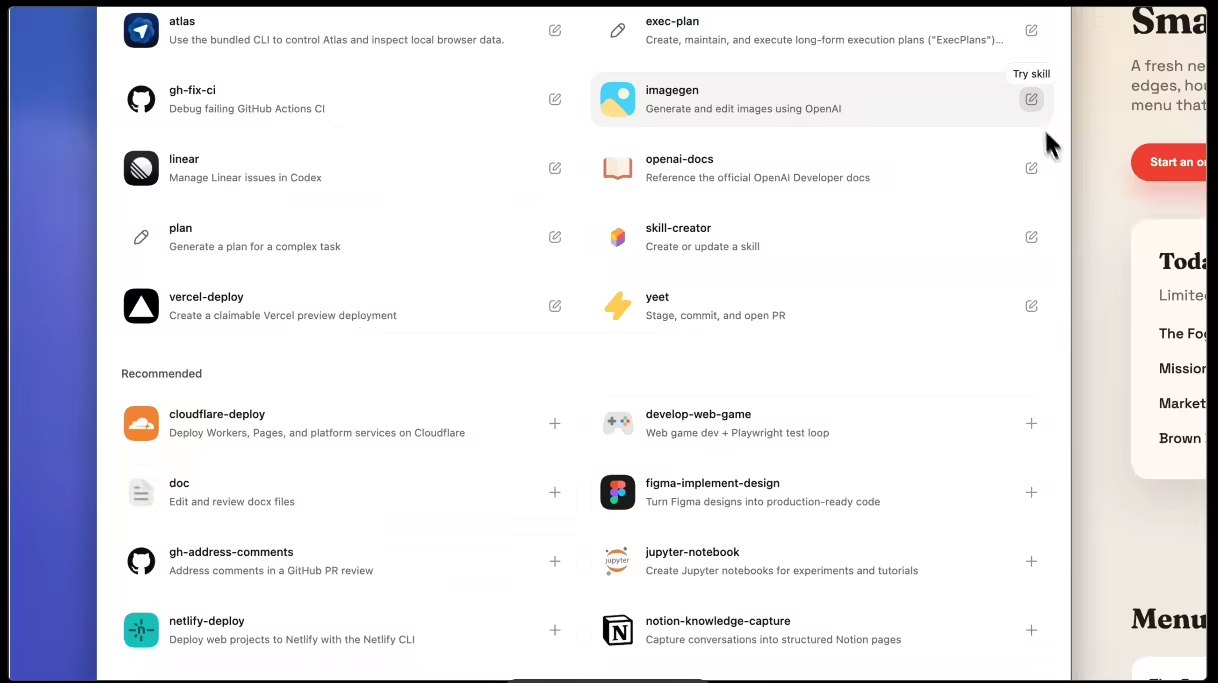
The Skill Library centralizes reusable agentic capabilities across your entire team.
Skills bundle instructions, resources, and scripts so Codex can reliably connect to tools, run workflows, and complete tasks according to your team’s preferences. The Codex app includes a dedicated interface to create and manage skills. You can explicitly ask Codex to use specific skills, or let it automatically use them based on the task at hand.
Case Study: Voxel Velocity
To demonstrate the power of skills, we asked Codex to make a racing game, complete with different racers, eight maps, and even items players could use with the space bar. Using an image generation skill and a web game development skill, Codex built Voxel Velocity by working independently using more than 7 million tokens with just one initial user prompt.
It took on the roles of designer, game developer, and QA tester to validate its work by actually playing the game. This level of autonomy is only possible because the agent had access to high-level skills that abstracted away the boilerplate of game engine setup and asset pipeline management.
Core Skills Included at Launch:
Figma-to-Code
Translate high-fidelity designs into production-ready UI components with 1:1 parity.
Linear Management
Triage bugs, update task status, and manage releases directly from the agent thread.
OpenAI API Reference
Access live, up-to-date documentation for all OpenAI models and endpoints.
Delegate Repetitive Work with Automations
With the Codex app, you can also set up Automations that let Codex work in the background on an automatic schedule. Automations combine instructions with optional skills, running on a schedule you define. When an Automation finishes, the results land in a review queue so you can jump back in and continue working if needed.
Schedule recurring tasks like issue triage, release summaries, and test runs.
At OpenAI, we have been using Automations to handle repetitive but important tasks: like daily issue triage, finding and summarizing CI failures, generating daily release briefs, checking for bugs, and more. This shifts the developer's role from executing these tasks to reviewing the synthesized output, significantly increasing team velocity.
A Personality That Fits How You Work
Developers have different preferences in how they work with an agent. Some want a blunt, execution-focused partner; others prefer more communicative, engaging interactions. Codex now lets developers choose between two personalities, a terse, pragmatic style and a more conversational, empathetic one, without any change in capabilities, to fit the approach you like the most.
Choose between Terse and Conversational styles to match your preferred workflow.
Secure by Default, Configurable by Design
We are integrating security by design across the entire Codex agent stack. The Codex app uses native, open-source and configurable system-level sandboxing just like in the Codex CLI. By default, Codex agents are limited to editing files in the folder or branch where they are working and using cached web search, then asking for permission to run commands that require elevated permissions like network access.
Availability and Pricing
The Codex app is available starting today on macOS. Anyone with a ChatGPT Plus, Pro, Business, Enterprise or Edu subscription can use Codex across the CLI, web, IDE-extension and app with their ChatGPT login.
| Plan | Codex Access | Rate Limits |
|---|---|---|
| Free / Go | Limited Time Only | Standard |
| Plus / Pro | Full Access | Double (2x) |
| Enterprise / Edu | Full Access | Double (2x) + Priority |
We are also excited to show more people what is now possible with Codex. For a limited time we are including Codex with ChatGPT Free and Go, and we are doubling the rate limits on Plus, Pro, Business, Enterprise, and Edu plans. Those higher limits apply everywhere you use Codex: in the app, from the CLI, in your IDE, and in the cloud.
The Future of Software is Agentic
Download the Codex app for macOS today and experience the command center for the next generation of software engineering.