OpenClaw (formerly ClawdBot): The Open Source AI Agent Revolution
What is OpenClaw?
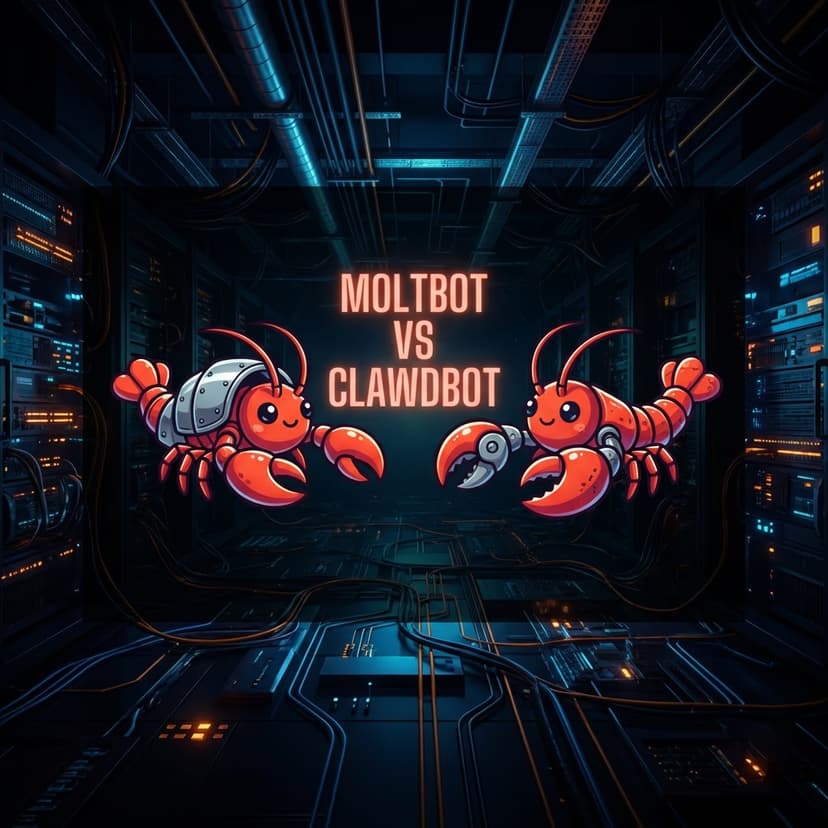
The AI agent revolution is here, but does it belong to Big Tech or to you? OpenClaw (formerly ClawdBot, and briefly Moltbot) is betting on the latter. It's an open-source, self-hosted AI personal assistant that breaks the limits of traditional chat applications.
Imagine having a digital employee that lives on your server, remembers every conversation, and actively helps you manage your life—without sending your data to a black box. The slogan says it all: "Your assistant. Your machine. Your rules."
Technical Architecture: Local-First by Design
OpenClaw is designed as a decentralized, local-first platform. Unlike cloud services where your data lives on someone else's servers, OpenClaw runs entirely on hardware you control—whether that's a Mac mini in your closet, a Raspberry Pi on your desk, a VPS, or a homelab server.
Built with a TypeScript CLI for message routing and supporting Docker-based installations, OpenClaw acts as an orchestration layer for AI agents. It's model-agnostic, meaning you can connect it to:
- Cloud Models: Anthropic's Claude, OpenAI's ChatGPT
- Local Models: Ollama (for completely offline operation)
Persistent memory is stored in JSONL and Markdown files, allowing OpenClaw to retain context, preferences, and conversation history across sessions—something ephemeral chat apps can't do.
Proactive Automation & Multi-Channel Inbox
Most AI assistants are reactive—they wait for you to ask a question. OpenClaw is proactive.
It integrates with a multi-channel inbox, connecting to popular messaging platforms like WhatsApp, Telegram, Discord, Slack, Microsoft Teams, Signal, iMessage, and Google Chat. You don't open an app to use it; you just text it like a coworker.
OpenClaw can execute a wide range of actions autonomously:
- Running shell commands and scripts
- Browsing the web (using semantic snapshots of accessibility trees instead of inefficient screenshots)
- Controlling smart home devices
- Managing emails and calendars
- Checking RSS feeds and monitoring server health
It's extensible through custom "skills"—Python or TypeScript scripts that you write to teach it new capabilities.
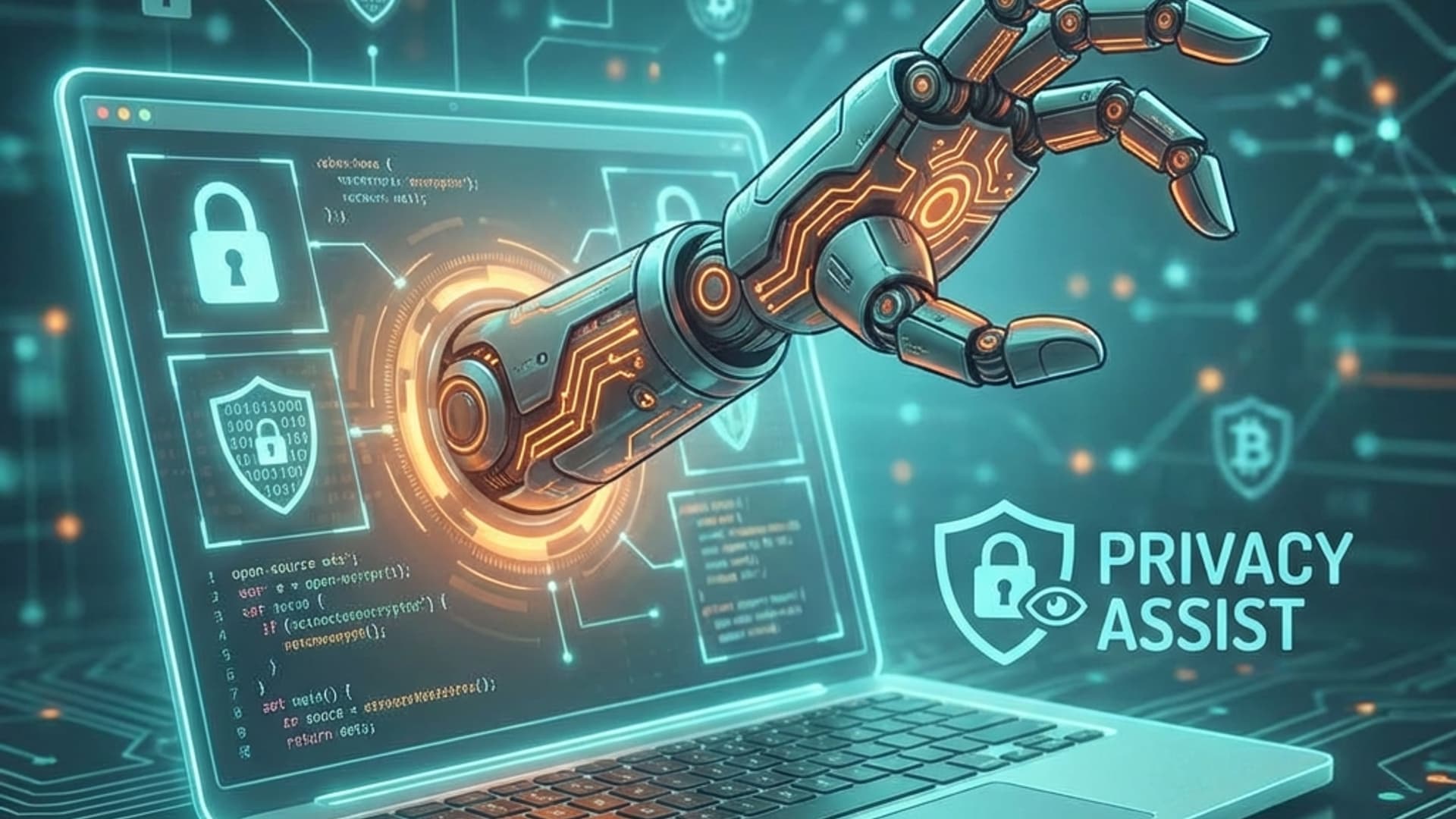
Privacy-First Architecture
Because it's self-hosted, your data stays with you. You maintain full control over your data, API keys, and logs. Information remains on your device unless you explicitly choose to connect to cloud LLM providers.
You choose which LLM it connects to—be it a local Llama model for maximum privacy or Anthropic's API for maximum intelligence. This architecture avoids vendor lock-in. If one model provider changes their terms or goes down, you just swap the backend. Your memory and workflows remain intact.
Security Considerations & Attack Surface
OpenClaw's power comes with responsibility. Its ability to run shell commands and execute scripts locally can pose significant risks if misconfigured or if malicious "skills" are introduced.
Common security concerns include:
- Plaintext API Keys: Early versions had instances of credentials being leaked
- Prompt Injection: An industry-wide challenge where malicious inputs trick the AI into executing unintended commands
- Expanded Attack Surface: Integration with multiple messaging platforms increases potential entry points
To mitigate these risks, OpenClaw incorporates consent prompts for sensitive operations (like terminal access) and requires "pairing" by default to prevent unknown contacts from interacting with the bot. Recent development efforts have prioritized security, with numerous security-related commits and machine-verifiable security models being released.
Verdict
OpenClaw is for the power user who wants control. It requires setup—it's not a one-click install like ChatGPT—but the payoff is a personalized, private, and powerful agent that works for you, not for an ad network.
The rebranding from ClawdBot → Moltbot → OpenClaw signals a maturity that the open-source community is ready to embrace. As Big Tech locks down their walled gardens, OpenClaw represents the counter-movement: digital autonomy through self-hosting.
If you're comfortable with Docker and excited about the idea of owning your AI assistant the same way you own your files, OpenClaw is the most compelling option on the market.
Related Articles