
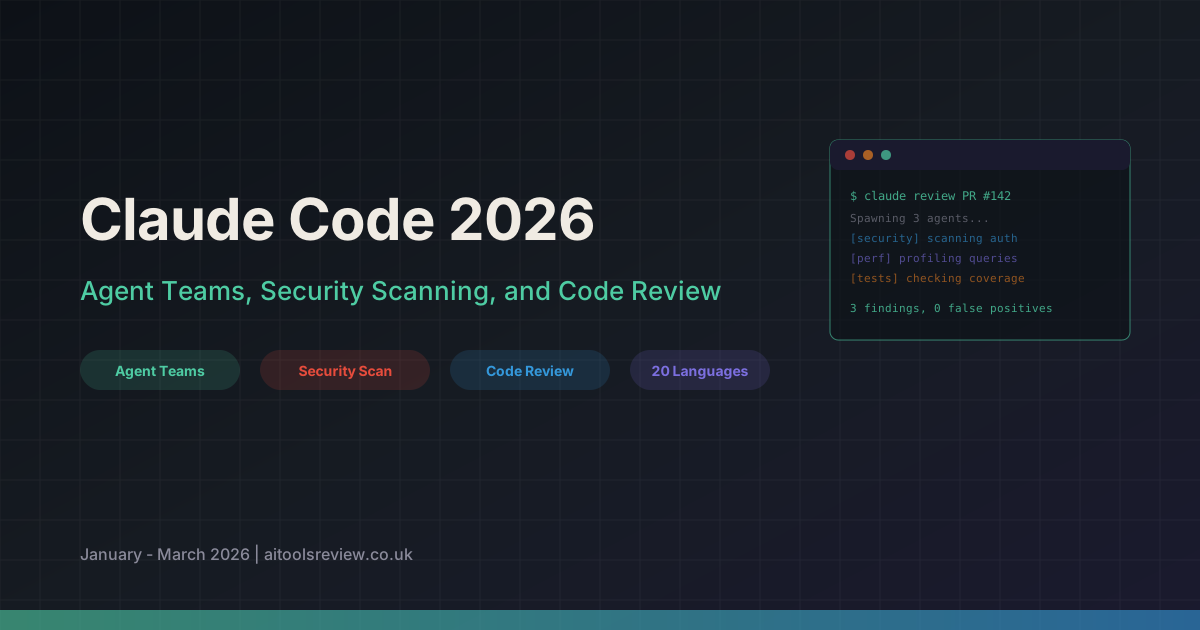
Claude Code 2026: Features, Benchmarks, Pricing and How to Use
Claude Code started 2025 as an agentic coding tool that lived in your terminal. By January 2026, it was widely considered the best AI coding assistant available, with run-rate revenue surpassing $2.5 billion (£2 billion). It had gone viral over the winter holidays as non-programmers discovered "vibe coding" and developers realised they could delegate entire projects rather than just asking for help with individual functions.
Then 2026 arrived and Anthropic kept shipping. Agent teams, automated security scanning, multi-agent code review, voice input in 20 languages, and dozens of quality-of-life improvements. Here is everything that has landed since January.
Claude Code 2026: Major Feature Timeline
| Date | Feature | Availability |
|---|---|---|
| 5 February | Agent Teams | Experimental (all plans) |
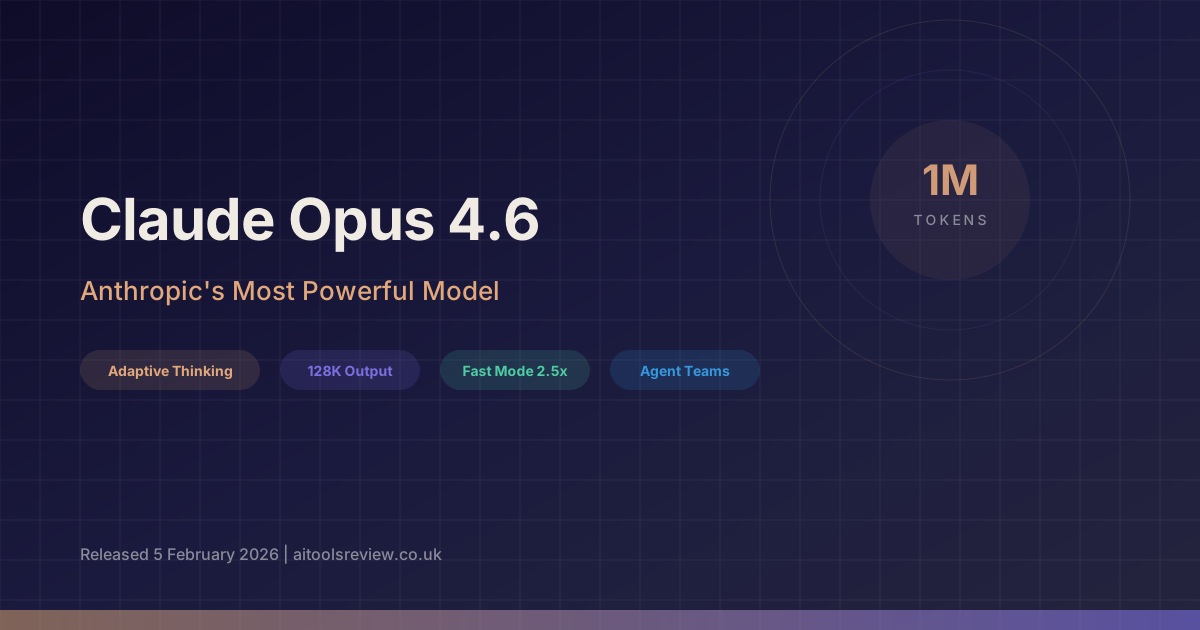
| 5 February | Opus 4.6 support + 1M context | All plans |
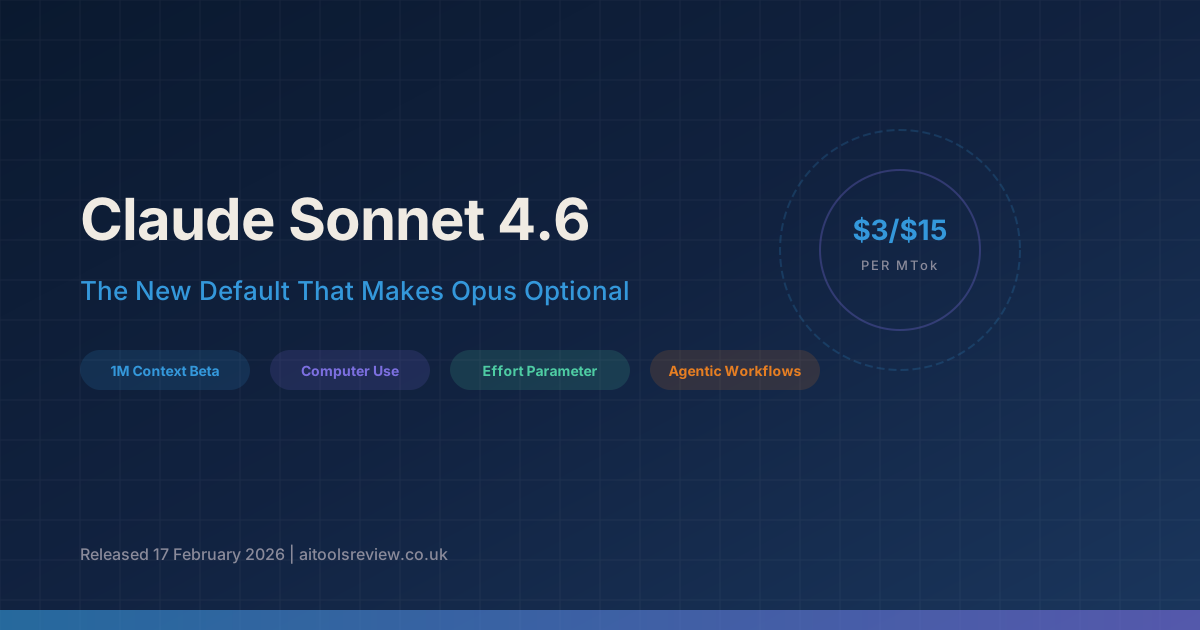
| 17 February | Sonnet 4.6 support | All plans |
| 20 February | Automated preview, review, merge on desktop | All plans |
| 21 February | Claude Code Security | Team + Enterprise (research preview) |
| 28 February | /simplify, /batch, HTTP hooks | All plans |
| 3 March | Skill-creator improvements | All plans |
| 9 March | Code Review (multi-agent PR review) | Team + Enterprise (research preview) |
Agent Teams: Multiple Claude Instances Working Together
Agent teams shipped alongside Opus 4.6 on 5 February and represent a fundamental shift in how Claude Code works. Instead of a single AI session handling tasks sequentially, you can now spin up multiple Claude instances that work together in parallel, each with its own context window and focus area.
One session acts as the team lead, coordinating work, assigning tasks, and synthesising results. Teammates work independently and, critically, can communicate directly with each other. This is the key difference from subagents, which have been available for a while. Subagents run within a single session and can only report back to the main agent.
Agent Teams vs Subagents
| Feature | Agent Teams | Subagents |
|---|---|---|
| Context | Separate context window per agent | Shared single session |
| Communication | Direct inter-agent messaging | Report to main agent only |
| User interaction | Direct access to any teammate | Through main session only |
Claude Code Security: AI-Powered Vulnerability Scanning
Claude Code Security launched on 21 February 2026 as a limited research preview. It scans codebases for security vulnerabilities and suggests targeted software patches for human review.
Multi-Stage Verification
Every finding goes through a multi-stage verification process before it reaches an analyst. Claude re-examines each result, attempting to prove or disprove its own findings and filter out false positives.
The capability is backed by real results. Using Claude Opus 4.6, Anthropic's team found over 500 vulnerabilities in production open-source codebases, including 14 high-severity bugs in Firefox.
Code Review: Multi-Agent PR Reviews
Code Review launched on 9 March 2026 as a research preview for Team and Enterprise customers. It is a multi-agent code review system that dispatches teams of AI agents to examine every pull request for bugs.
Dynamic Scaling
The system scales dynamically with the complexity of the change. Large or intricate pull requests receive more agents and deeper analysis.
Enterprise Pricing
Anthropic estimates each review costs $15-$25 (£12-£20) on average. A premium price for enterprise reliability.
Frequently Asked Questions

AI Tools Review Editorial Team Expert Verified
Our editorial team consists of veteran AI researchers, software engineers, and industry analysts. We spend hundreds of hours benchmarking frontier models natively to provide you with objective, actionable intelligence on agentic AI capabilities and cybersecurity landscapes.