 AI Tools Review Editorial Team
Quick answer:
Enterprise AI deals keep stalling because buyers and sellers argue about per-seat versus per-token pricing, which settles what gets billed but not whether the AI produces value. Nate B Jones argues (video and newsletter, 25 October 2026) that intelligence is a new economic input and that returns start after the purchase. Public pricing research agrees on the mechanics: per-seat pricing is simple but erodes margin, per-token is transparent but hard to budget, outcome pricing aligns cost with value but is hard to attribute, and hybrids are common.
Ask any procurement team what is slowing their AI rollout and you will hear about the contract: do we pay per seat, per token, per task or per result? Nate B Jones's latest video argues those are the wrong questions. They decide how an invoice is calculated. They do not decide whether the AI is worth buying.
This article sets out his argument as far as it is publicly available, and then tests it against independent pricing research from Zuora and Bessemer Venture Partners. One caveat up front: the full written briefing is behind a paywall, so we have worked from the video, its description and the free preview. Where we go beyond that, we say so and cite our sources.
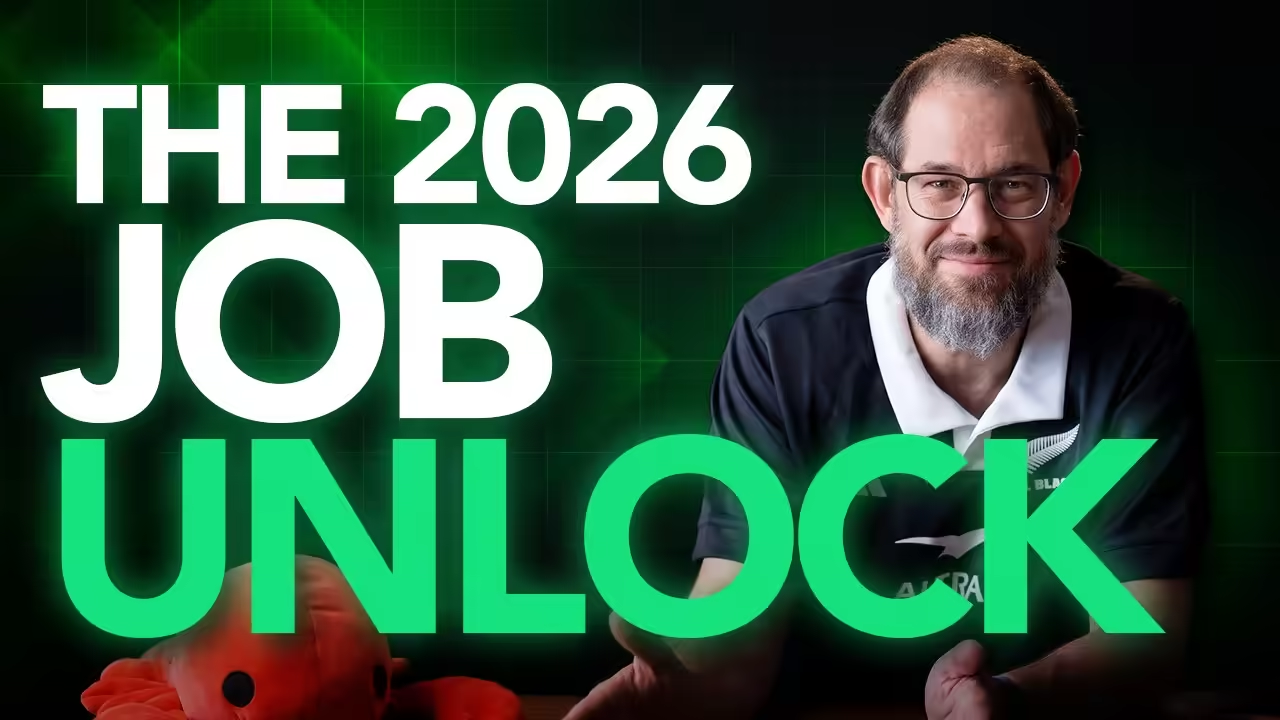
Nate B Jones on why seat-or-token pricing questions miss where enterprise AI returns actually come from.
Executive Summary
The core claim in the video is simple. Enterprise AI deals keep stalling on SaaS-style questions such as per seat or per token, and those questions miss the point, because AI is not a software licence to be negotiated down but a new economic input whose value depends on whether a company knows where to put it.
According to the video description, the argument has four threads: why seat and token pricing leave the hard part with the buyer; how forward-deployed engineers and deeper partnerships fill the know-how gap; where outcome pricing works and where complex work makes it harder; and what it means for individuals who are becoming managers of intelligence. The newsletter preview adds a framing line: ten hours saved by AI do not become ten useful hours on their own.
- Seat and token pricing settle what is billed. They do not settle who does the work or who owns the upside.
- The price arrives before the value, so a cheap deal can hide a poor return and an expensive one can hide a great one.
- A company-wide subscription buys access, not the knowledge of which customer problem to solve or how to connect the systems.
- Someone has to supply that missing work: the buyer, the vendor, or a partner.
Independent research supports the premise that pricing models are moving. Bessemer Venture Partners reports that AI companies see 50 to 60 per cent gross margins against 80 to 90 per cent for traditional SaaS, because compute and inference cost real money on every use. That cost structure is exactly why vendors keep experimenting with usage and outcome pricing. For the model prices themselves, see our AI API pricing comparison.
Why SaaS Pricing Logic Breaks for AI
Traditional SaaS pricing worked because the marginal cost of one more user was close to zero. A vendor could sell a seat for a fixed monthly fee, and whether the customer logged in once or a hundred times made little difference to the vendor's costs. Margins of 80 to 90 per cent, as Bessemer notes, were the norm.
AI breaks that assumption in two ways. First, every query consumes compute. Zuora's guide to AI pricing models notes that a single complex query can use 50 to 100 times the tokens of a simple one, so two seats with identical fees can have wildly different costs. Second, the value is not in the software itself but in the work it does, and that work varies by user and by task.
Zuora cites a Wall Street Journal report from October 2023 that GitHub Copilot averaged a loss of $20 per user per month against a $10 seat price, with heavy users consuming inference compute worth two to three times the seat fee. That is an older figure and the economics of coding assistants have changed since, but it illustrates why vendors have been wary of unlimited per-seat plans. Treat it as a historical example, not a current cost figure.
This is the backdrop to Jones's argument. If the vendor's costs vary with usage, the vendor wants to price on usage. If the buyer's value varies with how well the AI is deployed, the buyer wants to pay for results. Per-seat pricing is a compromise that satisfies neither once usage grows.
The Pricing Models, Compared
Zuora's guide lists six models. We have summarised them with the examples it gives.
| Model | What you pay for | Main advantage | Main drawback | Example (per source) |
|---|---|---|---|---|
| Per seat | A fixed fee per named user | Simple to budget and procure | Vendor margin shrinks as usage grows | GitHub Copilot |
| Per token | Model input and output volume | Price tracks cost; transparent for engineers | Hard for non-technical buyers to forecast | OpenAI, Anthropic and Google API rates |
| Per activity | A discrete action such as a call or workflow run | Countable and understandable | Defining an activity at renewal | Salesforce Agentforce at $2 per conversation (launch price) |
| Per output | A generated artefact such as a report or image | Clear when the artefact is the product | Weak when output is one step in a workflow | Adobe Firefly, EvenUp demand letters |
| Per outcome | A defined business result | Bill maps to value received | Attribution is hard; vendor carries cost risk | Intercom Fin, Zendesk autonomous resolutions |
| Hybrid | Subscription plus usage or outcome component | Balances predictability and margin | Complexity; unpredictable bills | Microsoft Security Copilot, prepaid credits |
Two further data points from Bessemer's February 2026 playbook help. Intercom's Fin charges $0.99 per AI resolution, and Bessemer suggests a platform fee of roughly twice the calculated delivery cost plus outcome credits, giving an illustrative example of a $12,000 annual platform fee that includes 100 resolutions, with further resolutions at $5,000 per 100 tickets. Those are one firm's suggestions, not market standards.
The central message of the Bessemer piece is that AI will monetise outcomes, just as SaaS monetised access. That lines up with Jones's argument, but note that the two are not identical: Bessemer is advising vendors on how to charge, while Jones is advising buyers on how to read what they are being charged.
Separating What You Are Buying
The newsletter outline describes a first step for buyers: separate what gets billed, who does the work and who owns the upside. This is the most practical idea in the briefing, and it is worth unpacking, because the three questions can have three different answers.
What gets billed
This is the meter: seats, tokens, tasks or outcomes. It determines how your bill scales. Seat pricing scales with headcount, token pricing with usage and outcome pricing with results. Choose the meter that matches how you expect value to scale.
Who does the work
A model subscription gives you a capability. It does not tell you which customer problem to attack, how to connect your systems or how to make the result good enough for customers to adopt. The video calls this the know-how gap. In practice, someone has to integrate, evaluate and maintain the system. If it is your own team, that is a cost the invoice never shows.
This is where forward-deployed engineers come in. As described in the video description, vendors that embed engineers inside a customer to build the system are selling work, not only access. That can close the gap quickly, but it also changes the commercial relationship: you are buying a service with software inside it.
Who owns the upside
If a vendor's engineers help you build a new revenue line using their models, who benefits? The newsletter outline poses this as a question to settle before a supplier receives equity or a revenue share, and suggests valuing what your own company contributes. We cannot report the detailed answer because it sits behind the paywall, but the question itself is sound: any deal that shares upside should be priced against what each side actually contributes.
Where Outcome Pricing Works, and Where It Struggles
Outcome pricing is the model that most appeals to buyers: you pay only when the AI delivers. Intercom's per-resolution Fin pricing, Zendesk's autonomous resolution pricing and Bessemer's examples of EvenUp, Pepper Content and Resolve AI all fit the pattern.
Bessemer includes a case study that illustrates the appeal. Leena AI began with consumption pricing, but customers became wary of using the product because every use added to the bill. After moving to outcome-based pricing, it gained clearer return on investment and accelerated revenue. This is a vendor-reported example, so weigh it accordingly, but it captures a real dynamic: usage pricing can discourage adoption, which is the opposite of what both sides want.
The weaknesses are equally real. Zuora lists attribution and the highest margin exposure as the main drawbacks, and notes that it is unclear what counts as achieved when a person intervened. Complex work makes this worse. A resolved support ticket is a clean unit. A redesigned supply chain or a new product line is not, and the more value depends on judgement and context, the harder it is to write a contract that defines the outcome.
- Works best: repeatable, countable outcomes such as resolved tickets, qualified leads or processed cases.
- Struggles: long-horizon, ambiguous work where results depend on many parties.
- Watch for: definitions of success that the vendor controls, and floors or minimums that turn outcome pricing back into a subscription.
Reading the Return Before the Invoice Misleads You
The newsletter outline includes a section titled around reading the return before the invoice misleads you. The logic follows from everything above: the price appears first, the value appears later, and the two are only loosely linked.
A low per-seat price can disguise a negligible return if nobody changes how work is done. A high price can hide a transformative return if the AI is pointed at the right problem. Jones's line that ten hours saved do not become ten useful hours on their own makes the point crisply: time saved is not the same as value created unless the freed time is redirected to something that matters.
Bessemer makes a related observation from the vendor side. Copilots that advise without closing the loop tend to have what it calls soft return on investment, which weakens willingness to pay, while agentic products that complete work have clearer, harder return. That is a useful test for buyers: can you point to a specific piece of work the AI completes, and measure it?
Practical measures for a finance team include: tracking completed work items rather than hours saved; separating pilot results from production results, since Bessemer notes the 2026 renewal cycle is when 2025 pilots convert to contracts that must reflect demonstrated value; and distinguishing the value your company creates from the value the vendor keeps.
Becoming a Manager of Intelligence
The final theme in the video is personal. Jones frames employees as becoming managers of intelligence before anyone gives them a management title. The person who supplies the missing judgement, deciding which problem to attack and how to check the result, can end up responsible for work far beyond what they could execute alone.
The newsletter outline describes this as becoming the allocator of intelligence: directing AI toward problems the company has deferred and making that judgement visible. We cannot report the detail, but the underlying idea matches what we see in agent products. Our coverage of the agentic future of work and recent agent launches such as Cohere North 2 and the OpenAI Agents API shows the same shift: the scarce skill is no longer typing a prompt but deciding what to delegate and how to verify it.
For individuals, the practical implication is to build a record. Document which tasks you delegated to AI, what the results were and what they were worth. That is the evidence you will need when your company asks which AI investments paid off.
Hybrid Pricing and the Margin Problem
Most real enterprise contracts end up as hybrids, and it is worth understanding why. Bessemer describes a hybrid, a base subscription plus usage or outcome tiers, as an effective middle ground, offering predictability for the buyer and upside for the seller. Zuora lists Microsoft Security Copilot, with provisioned units plus overage, and the prepaid credit schemes used by Adobe Firefly and Genesys as examples.
The margin problem explains the shape of these deals. If AI vendors earn 50 to 60 per cent gross margins where SaaS earned 80 to 90, as Bessemer reports, they cannot afford to give unlimited use for a flat fee to every customer. A base fee covers the fixed cost of serving the account, while the variable part covers the compute that heavy users burn. Bessemer's suggested formula of a platform fee at about twice the calculated delivery cost, plus outcome credits, is one way to write that down.
For buyers, the risk is complexity creep. Zuora warns that multiple meters can produce a bill nobody can predict. A contract with seats, token overage, credits and outcome fees is hard to forecast and harder to audit. Ask for a worked example of a typical month, a heavy month and a bad month, and ask the vendor to show the invoice that would result in each case.
There is also a negotiating asymmetry. Vendors know their own cost curves and you do not. The best protection is a cap, a price-protection clause for model changes and the right to move between meters at renewal if your usage pattern changes.
What This Means for Different Buyers
The right answer depends on who you are. A small team using AI for drafting and research is probably best served by seats or a simple subscription, because the administrative cost of anything more elaborate outweighs the benefit. The question to ask is whether the plan's allowances fit your usage, and what happens when you hit them.
A mid-sized company building its first customer-facing AI feature faces the know-how gap Jones describes most acutely. It has real data and real customers but few people who have shipped an AI system. Here a deeper partnership, whether through forward-deployed engineers or a specialist agency, can be worth paying for, provided the scope, the ownership of what is built and the exit terms are clear.
A large enterprise has leverage and complexity in equal measure. It can negotiate volume pricing and caps, but it also has many teams buying AI separately, which makes it hard to see total spend. Centralising visibility, even before centralising purchasing, is often the first win. The 2026 renewal cycle that Bessemer describes, when 2025 pilots convert to contracts, is the moment to ask what each pilot actually delivered.
Whatever your size, the conversation should start with the work to be done and the value expected, then move to the meter. Starting with the meter, as many procurement processes do, is the pattern Jones is warning against.
A Buyer's Checklist for AI Contracts
Pulling the research together, here is a checklist you can take into a negotiation. It is our synthesis, not Jones's list, and it draws on the sources cited above.
- Name the meter: what exactly is counted, and can the vendor change the definition at renewal?
- Model your usage: estimate low, expected and high usage, remembering that complex queries can use 50 to 100 times the tokens of simple ones.
- Ask who does the integration work, and what it costs on top of the licence.
- Define the outcome in writing if you accept outcome pricing, including what happens when a human intervenes.
- Check for minimum commitments that convert variable pricing into a fixed fee.
- Agree on how you will measure value before you sign, not after.
- Settle ownership of anything built with the vendor's help, including data, prompts and workflows.
- Plan for price changes: model prices and vendor packaging have been moving quickly.
For the underlying model costs that feed vendor pricing, our Claude API pricing guide and AI API pricing comparison are kept up to date. For market structure, see Stripe's OpenRouter acquisition, which shows how payment infrastructure is moving into AI billing.
Limitations and Caveats
This article has real limits. The full briefing is paywalled, so we have not seen Jones's worked examples, figures or detailed recommendations, and we have not tried to reconstruct them. The video itself is the primary source for his argument, and we relied on its description.
The independent sources are vendor and investor material. Zuora sells billing software and Bessemer invests in AI companies, so both have an interest in pricing complexity and in outcome pricing. The statistics they cite are indicative rather than audited, and some, such as the GitHub Copilot loss, date from 2023. The Intercom, EvenUp and Leena AI examples are reported by those sources and we have not verified them independently.
Finally, pricing moves quickly. Check current vendor price pages before making decisions.
The Bottom Line
Jones's argument is that enterprise AI pricing debates miss the point because the real question is value, not the meter. The public evidence supports the framing even if it does not prove every claim: AI costs vary with usage, vendors are experimenting with outcome and hybrid models, and buyers who treat AI as a subscription to be negotiated down risk paying for access without capturing returns.
The practical advice is to separate what you are billed for, who does the work and who owns the upside; to measure completed work instead of hours saved; and to treat the contract as the start of the return, not the end of the negotiation. We will update this piece as more of the briefing and independent pricing data becomes available.
Last updated: 26 October 2026. Sources: Nate B Jones's video and the free preview of his newsletter briefing (25 October 2026), Zuora's guide to AI pricing models, and Bessemer Venture Partners' AI pricing and monetisation playbook (10 February 2026). The full briefing is paywalled and was not reviewed.
Get the free guide: Claude vs ChatGPT, Gemini & Grok
A 20-page playbook covering everything you need to choose and use the big four AI models in 2026, full cost and feature comparisons, what each is best (and worst) at, and how-tos for images, vectors, building a website, Claude Code and more.