 AI Tools Review Editorial Team
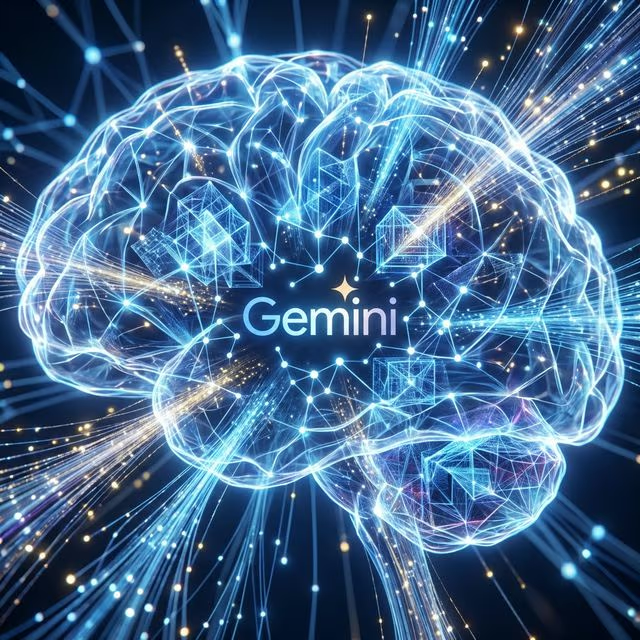
Google has fundamentally shifted the AI landscape with the release of Gemini 3.1 Pro. While previous iterations established Google as a multimodal leader, 3.1 Pro is a surgical strike at the heart of the reasoning market, moving beyond simple chat to power autonomous engineering via the Antigravity IDE.
Expert Consensus:
Gemini 3.1 Pro isn't just a model update; it's a platform shift. Its native integration with Antigravity pairs reasoning that genuinely rivals Claude Opus 4.6 and GPT-5.3 with an agent harness that verifies its own work in a real browser — and, for individual developers, costs nothing to try.
WorldofAI covers Gemini 3.1 Pro in this video.
The Reasoning Breakthrough: Native Antigravity Integration
Gemini 3.1 Pro was released in preview on 19/02/2026 across consumer, developer and enterprise channels simultaneously. Google has not published a detailed architecture paper for the model, so anyone telling you precisely how it works internally is guessing. What Google has published is the surface that developers actually touch: the model exposes three explicit thinking levels — low, medium and high — so you can dial reasoning depth against latency and cost rather than accepting a single fixed behaviour.
The clearest evidence of a genuine reasoning gain is ARC-AGI-2, a benchmark built specifically to resist memorisation by presenting logic patterns the model cannot have seen. Gemini 3.1 Pro scores a verified 77.1%, more than double Gemini 3 Pro's 31.1%. Benchmarks that double in a single point release are rare enough to be worth pausing on, and ARC-AGI-2 is the one benchmark in the suite least susceptible to contamination.
This is most evident when used through Antigravity, Google's agent-first development platform. In that environment Gemini doesn't just suggest code; it plans multi-step work, executes it, and verifies its own output — including by driving a browser to click through the flow it has just built.
Antigravity IDE: The New Gold Standard for AI Development
For years, developers have used AI as a "sidekick." With Gemini 3.1 Pro and Antigravity, the AI is now a collaborator in the truest sense. Antigravity leverages 3.1 Pro's one-million-token context window to ingest entire repositories and documentation sets, providing genuinely context-aware development rather than file-at-a-time autocomplete.
Key Antigravity Features Powered by Gemini 3.1 Pro:
- Agent Manager: A command centre for running several local agents at once, organising conversations into projects and operating across multiple workspaces, rather than babysitting one chat thread.
- Browser in the loop: Agents can spin up a Chromium instance, navigate to your local development server, click through user flows and capture screenshots as evidence that the feature actually works. This is the single biggest practical difference from a conventional AI editor: the agent produces proof, not just a diff.
- Three surfaces, one platform: Antigravity ships as a full agentic IDE, a terminal-first CLI for autonomous coding and background subagents, and a Python SDK for prototyping custom agents.
- Multi-model, not Gemini-only: Antigravity's agent models include Gemini 3.1 Pro alongside the Flash tiers, Anthropic's Claude Sonnet and Opus 4.6, and the open-weight gpt-oss-120b. Google is competing on the harness as much as on the model.
Antigravity left public preview and reached general availability on 10/09/2026. The individual plan remains free, with basic weekly rate limits on the agent models, unlimited tab completions and unlimited command requests. Higher quotas ride on the Google AI subscription tiers rather than a separate IDE licence. If you have read our coverage of Gemini 3.1 Pro inside Antigravity, this is the model that pairing was built around.
Benchmark Analysis: Math, Logic, and Coding Performance
Google reported that Gemini 3.1 Pro leads on 13 of the 16 benchmarks it published at launch, with results stated as of February 2026. The figures below are Google's own published numbers for Gemini 3.1 Pro Thinking at high effort. As always, treat any vendor's self-reported suite as a directional signal rather than an independent audit.
| Benchmark | What it measures | Gemini 3.1 Pro |
|---|---|---|
| ARC-AGI-2 | Novel abstract logic patterns | 77.1% |
| GPQA Diamond | Graduate-level science questions | 94.3% |
| SWE-bench Verified | Resolving real GitHub issues autonomously | 80.6% |
| SWE-bench Pro (public) | Harder, longer-horizon engineering tasks | 54.2% |
| Terminal-Bench 2.0 | Command-line agent competence | 68.5% |
| LiveCodeBench Pro | Competitive programming (Elo) | 2,887 |
| Humanity's Last Exam | Expert-level breadth, no tools | 44.4% |
| Humanity's Last Exam | With search and code execution | 51.4% |
| MMMU Pro | Multimodal reasoning across disciplines | 80.5% |
| SciCode | Scientific code generation | 59% |
Two things stand out. The first is the 26-point drop between SWE-bench Verified (80.6%) and SWE-bench Pro (54.2%). Verified issues are self-contained and well specified; Pro tasks are longer and messier. That gap is the honest measure of how far autonomous engineering still has to go, and it is a far more useful planning number than the headline.
The second is Humanity's Last Exam, where tool access lifts the score from 44.4% to 51.4%. A seven-point gain from search and code execution tells you that a meaningful share of the remaining errors are retrieval and calculation failures rather than reasoning failures — which is precisely why agentic harnesses have become the battleground rather than raw model quality.
Agentic and Tool-Use Benchmarks
The agentic suite is where Gemini 3.1 Pro makes its strongest case, and it is the set of numbers most relevant to anyone actually deploying the model rather than reading about it.
- τ²-bench Telecom — 99.3%. Effectively saturated. Multi-step customer workflows in a well-specified domain are, for practical purposes, a solved problem.
- τ²-bench Retail — 90.8%. Still excellent, and worth comparing against the 69.2% the best model of late 2024 managed on the equivalent retail task.
- BrowseComp — 85.9%. Autonomous web research across many pages, the capability underpinning deep-research features.
- MCP Atlas — 69.2%. Tool orchestration over Model Context Protocol servers. The gap between this and the τ² scores is instructive: calling well-documented tools inside a tight domain is far easier than composing arbitrary ones.
- APEX-Agents — 33.5%. The most sobering figure in the set, and a reminder that long-horizon, open-ended agent work remains genuinely hard.
- MRCR v2 at 128k — 84.9%. Long-context retrieval. Useful ballast against the marketing claim that a million-token window means a million usable tokens.
Technical Specifications and Architecture
Google has not disclosed parameter counts, training compute or architectural detail for Gemini 3.1 Pro, and we are not going to invent any. What is documented is the usable envelope, and for most teams that is the part that determines whether the model fits.
Context Window
1,000,000 Tokens
Roughly 1,500 pages of standard text in a single prompt. Note this is one million, not the two million occasionally reported — that figure belongs to earlier Gemini Pro generations.
Maximum Output
64,000 Tokens
Ample for long documents or large multi-file code changes in a single response.
Input Modalities
Text, Image, Audio, Video
Output is text only. Multimodal understanding is native rather than bolted on via a separate vision encoder pipeline.
Thinking Levels
Low / Medium / High
Reasoning depth is a request parameter, so you can tune quality against cost and latency per route rather than globally.
Independent measurement from Artificial Analysis puts throughput at around 115 output tokens per second, which is fast for a reasoning model. The trade-off shows up at the other end: time to first token measures roughly 23 seconds, at the higher end even among reasoning models. If you are building anything conversational, budget for that pause or drop to a lower thinking level.
Pricing and How to Get Access
API pricing is tiered by prompt length. For prompts up to 200,000 tokens, Gemini 3.1 Pro costs roughly £1.50 ($2.00) per million input tokens and £9.00 ($12.00) per million output tokens. Above 200,000 tokens the rate rises to about £3.00 ($4.00) input and £13.50 ($18.00) output per million. Context caching can cut costs by up to 75% for workloads that repeatedly send the same large prefix, which matters enormously if you are pushing whole repositories through the long-context tier.
That 200,000-token boundary is worth designing around. A retrieval pipeline that trims context to stay under it halves your input cost and roughly a third of your output cost, which on high-volume traffic dwarfs most other optimisations.
On the access side, developers and enterprises reach the model through the Gemini API via AI Studio, Antigravity, Vertex AI, Gemini Enterprise, the Gemini CLI and Android Studio. Consumers get it in the Gemini app, with higher limits for Google AI Pro and Ultra subscribers, and in NotebookLM exclusively for Pro and Ultra users. For a broader view of how the subscription tiers compare against rivals, see our guide to Claude pricing.
Deep Google Workspace & Cloud Integration
The true strength of Gemini 3.1 Pro for enterprise is its integration. It doesn't just live in a sidebar; it is the infrastructure. Through Vertex AI and Gemini Enterprise, the model sits behind the same identity, audit and data-residency controls an organisation already applies to the rest of its Google Cloud estate, which in practice removes most of the procurement friction that slows frontier-model adoption elsewhere.
The distribution advantage is the part rivals cannot easily replicate. A model that appears simultaneously in AI Studio, Vertex AI, Android Studio, the Gemini CLI, NotebookLM, Antigravity and the consumer Gemini app reaches an enormous installed base on day one without anyone having to adopt a new tool. For an organisation already standardised on Google Workspace, "which frontier model should we use" is frequently answered by whichever one is already inside the documents.
Limitations and Honest Caveats
Three caveats are worth stating plainly before anyone commits a roadmap to this model.
It is still a preview. Google shipped 3.1 Pro in preview, and its own model listings already flag a successor as coming soon. Preview models can change behaviour, pricing and availability with limited notice, so pin your evaluations and re-run them rather than assuming today's numbers hold.
The benchmarks are vendor-reported. Every figure in the tables above comes from Google's own published results. Independent evaluation tells a slightly more tempered story: Artificial Analysis places the model above average on its Intelligence Index whilst describing it as "somewhat expensive when comparing to other models of similar price". Both things can be true.
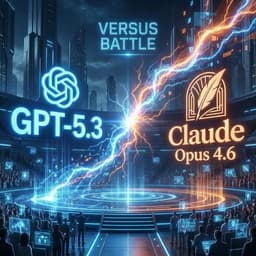
The lead is narrow and contested. On the numbers available, Gemini 3.1 Pro's clearest advantage over Claude Opus 4.6 is ARC-AGI-2, at 77.1% against 68.8%. On SWE-bench Verified the two are effectively tied, with Opus 4.6 marginally ahead at 80.8% against 80.6% — a difference well inside the noise of any single evaluation run. On Terminal-Bench 2.0, GPT-5.3-Codex leads comfortably at 77.3% against 68.5%. Anyone claiming a decisive winner in this generation is selling something. Our GPT-5.3 versus Claude Opus 4.6 comparison covers the other side of that triangle in detail.
Verdict: Who Should Switch
Gemini 3.1 Pro is the right default if you are already inside Google Cloud or Workspace, if your workload involves genuinely long documents or video, or if you want an agentic development platform that verifies its own work in a real browser without paying for a separate IDE licence. The ARC-AGI-2 result and the near-saturated τ²-bench scores are real, and the free Antigravity tier makes evaluating it close to costless.
It is the wrong default if latency matters more than depth — 23 seconds to first token is a long time to stare at a spinner — or if your workload is dominated by terminal-native agent work, where GPT-5.3-Codex currently holds a clear lead. And if your existing stack is built on Claude, the SWE-bench gap is not large enough on its own to justify a migration.
The more durable observation is that the meaningful competition has moved. The gaps between frontier models on any single benchmark are now smaller than the gaps between the harnesses wrapped around them. Antigravity, not Gemini 3.1 Pro, is the more interesting half of this release.
Benchmark figures are Google's published results for Gemini 3.1 Pro Thinking (High) as of February 2026. Independent performance and pricing measurements are from Artificial Analysis. Performance may vary by implementation, thinking level and harness.