 AI Tools Review Editorial Team
Quick Answer:
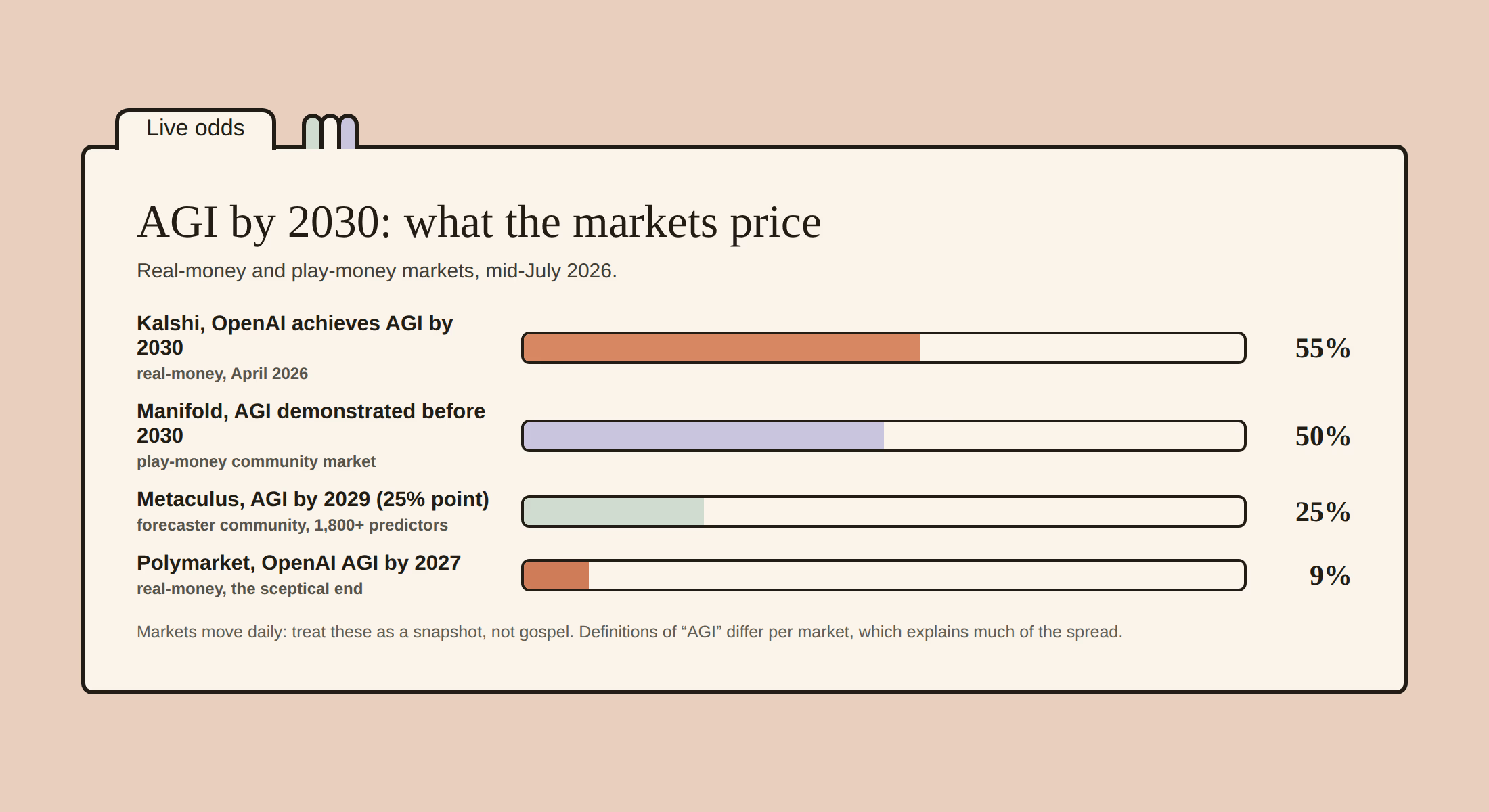
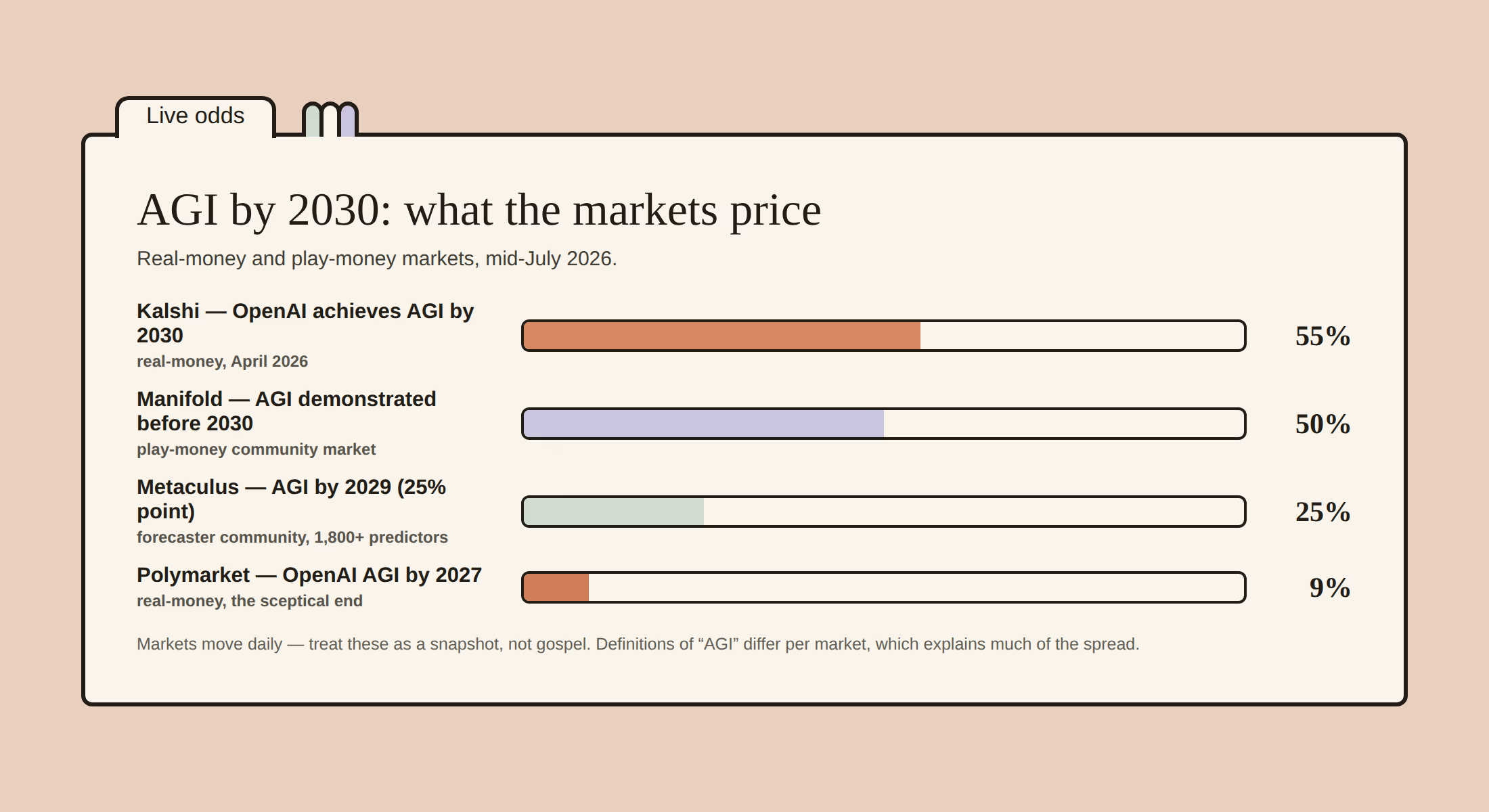
As of mid-July 2026, the Metaculus community median for the first general AI system is January 2033, with a 25% probability by 2029. The prediction markets price “AGI by 2030” at roughly 55% (Kalshi, OpenAI-specific) and 50% (Manifold), while Polymarket gives just ~9% for OpenAI AGI by 2027. Aggregating everything, the combined forecast centres on ~2031, with an 80% confidence interval of 2027–2044. Lab leaders are earlier (Amodei: 2027 plausible; Hassabis: ~50% by 2030). The spread is mostly a definitions problem, and none of it delays the job-market effects, which are already underway.
“When will we get AGI?” has quietly become the most-forecast question on the internet: tracked by thousands of forecasters on Metaculus, priced with real money on Kalshi and Polymarket, and revised downward, year after year, by the people building the systems.
This page keeps the numbers in one place: what each platform actually says, why they disagree, and what the odds mean for decisions you have to make now.
The Numbers Right Now
Five numbers define the mid-2026 AGI forecast landscape. The Metaculus community median for the first general AI system (devised, tested and publicly announced) stands at January 2033, from a question pool of more than 1,800 forecasters with a strong calibration record on near-term events. The same community puts 25% probability on AGI by 2029, and its separate “weakly general AI” question (a cognitive-only benchmark basket, no robotics required) carries a far earlier median of June 2028.
The real-money markets bracket those figures from both sides. Kalshi prices OpenAI achieving AGI by 2030 at roughly 55%, a number that has risen sharply through 2026, while Polymarket remains the sceptic, giving OpenAI about 9% for 2027. Manifold's community market on AGI being publicly demonstrated before 2030 trades near 50%. And stitching platforms and expert surveys together, the aggregate forecast as of 14 July 2026 lands on ~2031, with an 80% confidence interval of 2027–2044. Every claim in this article should be read against that interval: the centre has moved close; the uncertainty has not gone away.
AGI by 2030: The Market Odds
The question most people actually search for, what's the probability of AGI by 2030?, has no single answer, but it has a defensible range: roughly 40–55% on the markets that resolve near that date. Kalshi's regulated, real-money market on OpenAI achieving AGI by 2030 sits at ~55% as of April 2026; Manifold's play-money community market on a public AGI demonstration before 2030 trades around 50%; and Metaculus's distribution implies meaningfully less than half its probability mass lands before the decade closes, with the median seven years out at January 2033.
Two readings of that spread are both worth holding. The bullish one: a coin-flip on AGI within four years is an extraordinary place for sober money to be, five years ago the equivalent markets would have priced single digits. The bearish one: money remains notably more cautious than rhetoric. Polymarket's 9% on OpenAI-AGI-by-2027 is the market's answer to the most aggressive lab timelines, and it amounts to a polite “probably not”. Prediction markets have been wrong before, but their calibration record on technology questions is better than that of either enthusiasts or sceptics, which is precisely why we track them rather than headlines.
How the Timelines Collapsed
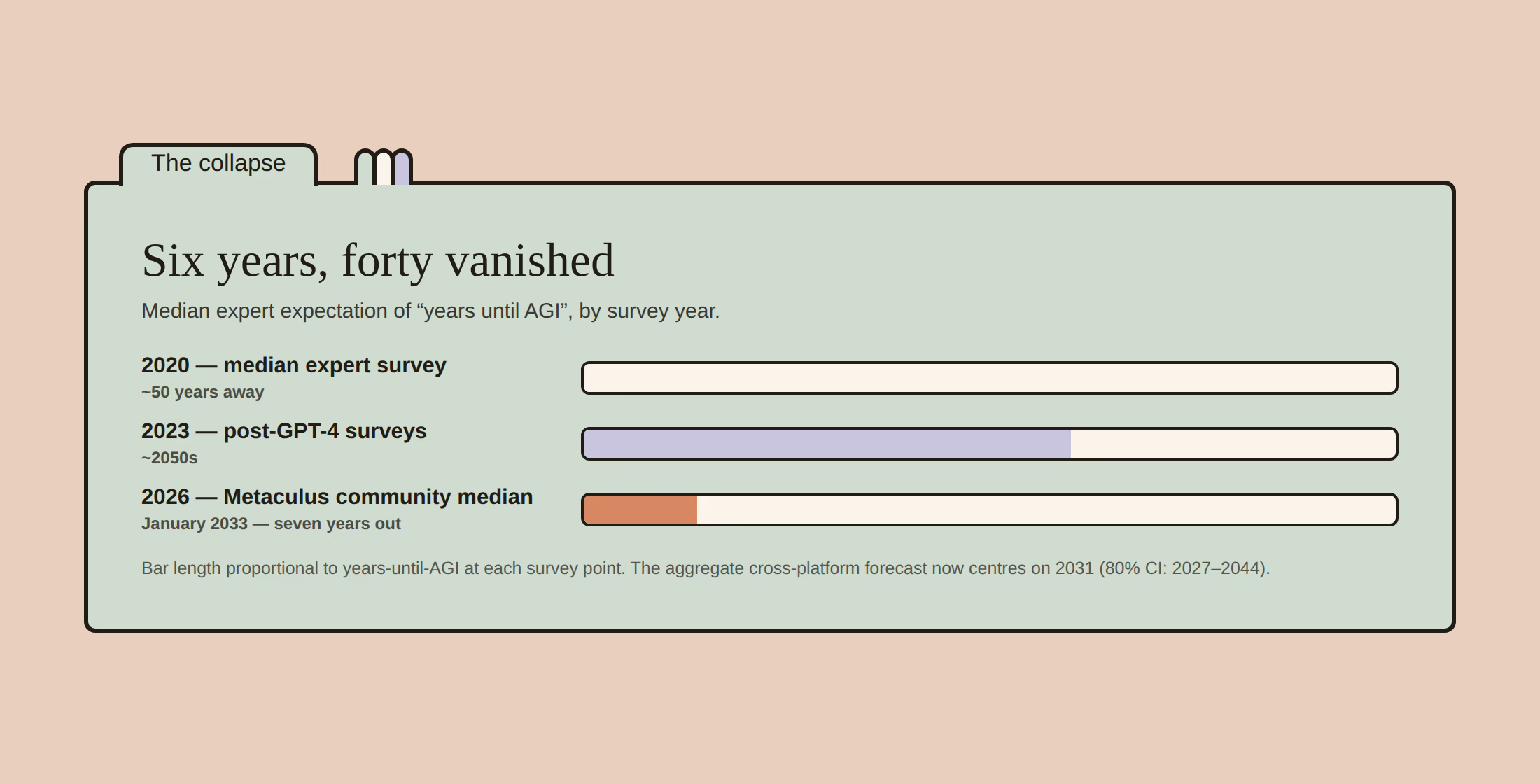
The most important fact about AGI timelines is not any single date: it is the direction and speed of revision. In 2020, the median expert survey placed AGI roughly fifty years away. Post-GPT-4 surveys in 2023 pulled that into the 2050s. By early 2026, the Metaculus median stood at January 2033, seven years out, and the aggregate cross-platform forecast centres on 2031. Three cycles of frontier-model releases each deleted a decade or more from the consensus.
Forecast revisions of that size and consistency are themselves evidence. When every new data point moves estimates in the same direction, the rational response is to expect further moves the same way, a pattern forecasters call “predictable updating”, and one reason serious aggregators now weight recent revisions heavily. The counterweight is equally real: collapsing timelines partly track hype cycles, the definitions being forecast have quietly loosened, and the 80% interval still stretches to 2044. The honest summary is that the centre of gravity has moved from “our grandchildren's problem” to “this decade, maybe”, and stopped short of certainty by a wide margin.
Labs vs Forecasters vs Markets
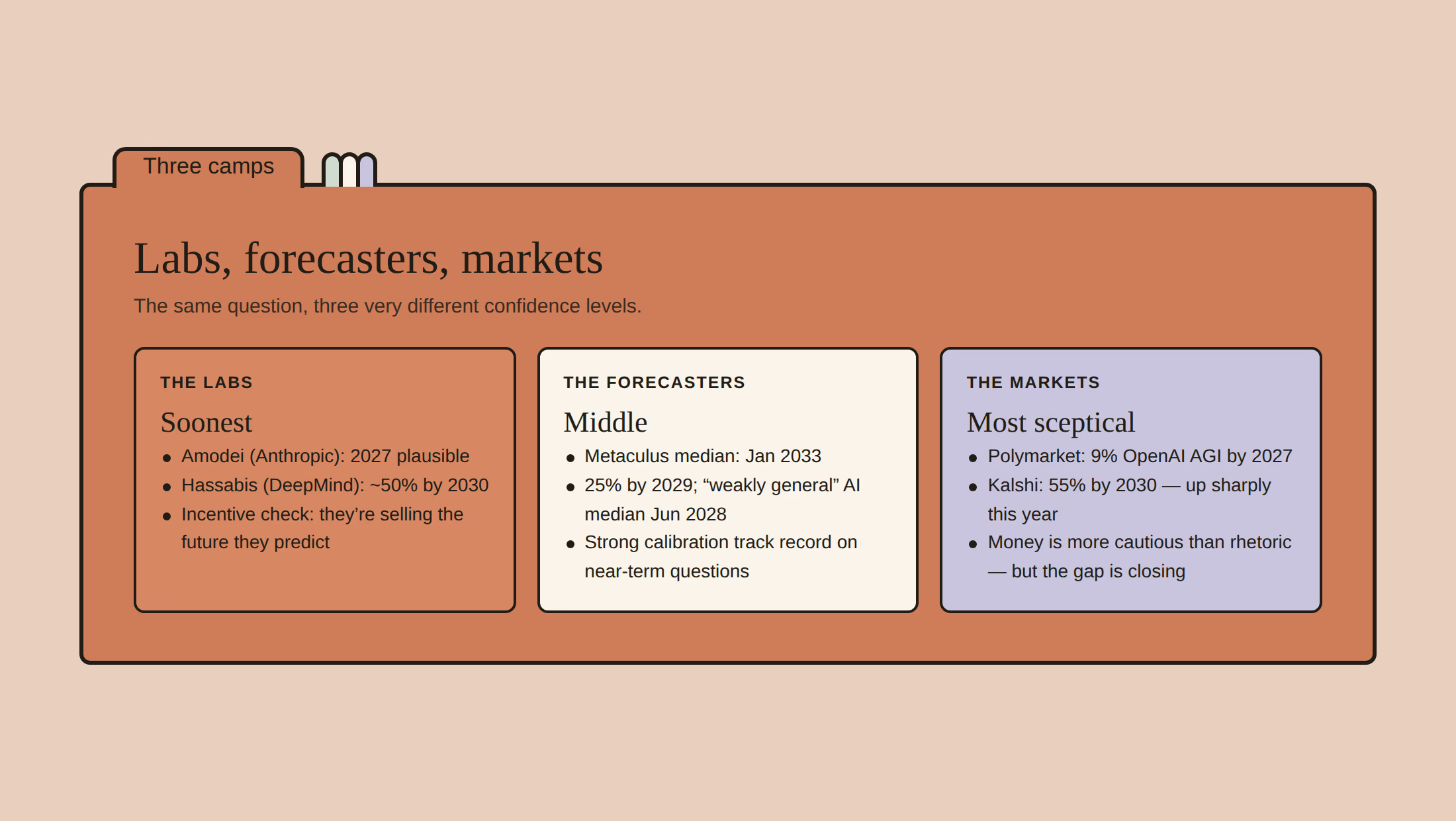
The forecast landscape sorts into three camps with reliably different answers. The labs are earliest: Anthropic's Dario Amodei has repeatedly pointed to 2027 as plausible for systems exceeding human capability in most domains, DeepMind's Demis Hassabis holds to roughly a 50% chance by the end of the decade, and OpenAI's Sam Altman is the most aggressive of all, telling TIME he expects internal AGI by the end of 2026. At the most extreme end sits Ilya Sutskever's Safe Superintelligence Inc., a lab built explicitly around reaching superintelligence safely rather than shipping incremental consumer products along the way. The incentive caveat writes itself, they are describing a future they are also selling, but it cuts both ways: they also see the unreleased systems.
The forecasters sit in the middle. Metaculus's 2033 median comes from a community whose calibration on near-term AI questions has been repeatedly audited, and whose full-AGI definition is deliberately strict. The markets are the most sceptical, Polymarket's 9% on 2027 especially, but the gap is closing from both ends: Kalshi's AGI-by-2030 price has climbed through 2026 while the most aggressive lab rhetoric has cooled slightly. When three methodologically independent camps converge toward the same five-year window, the convergence itself is the story. For how the underlying capabilities are actually tracking, our live model benchmarks are the ground truth this debate runs on.
Why Every Platform Disagrees
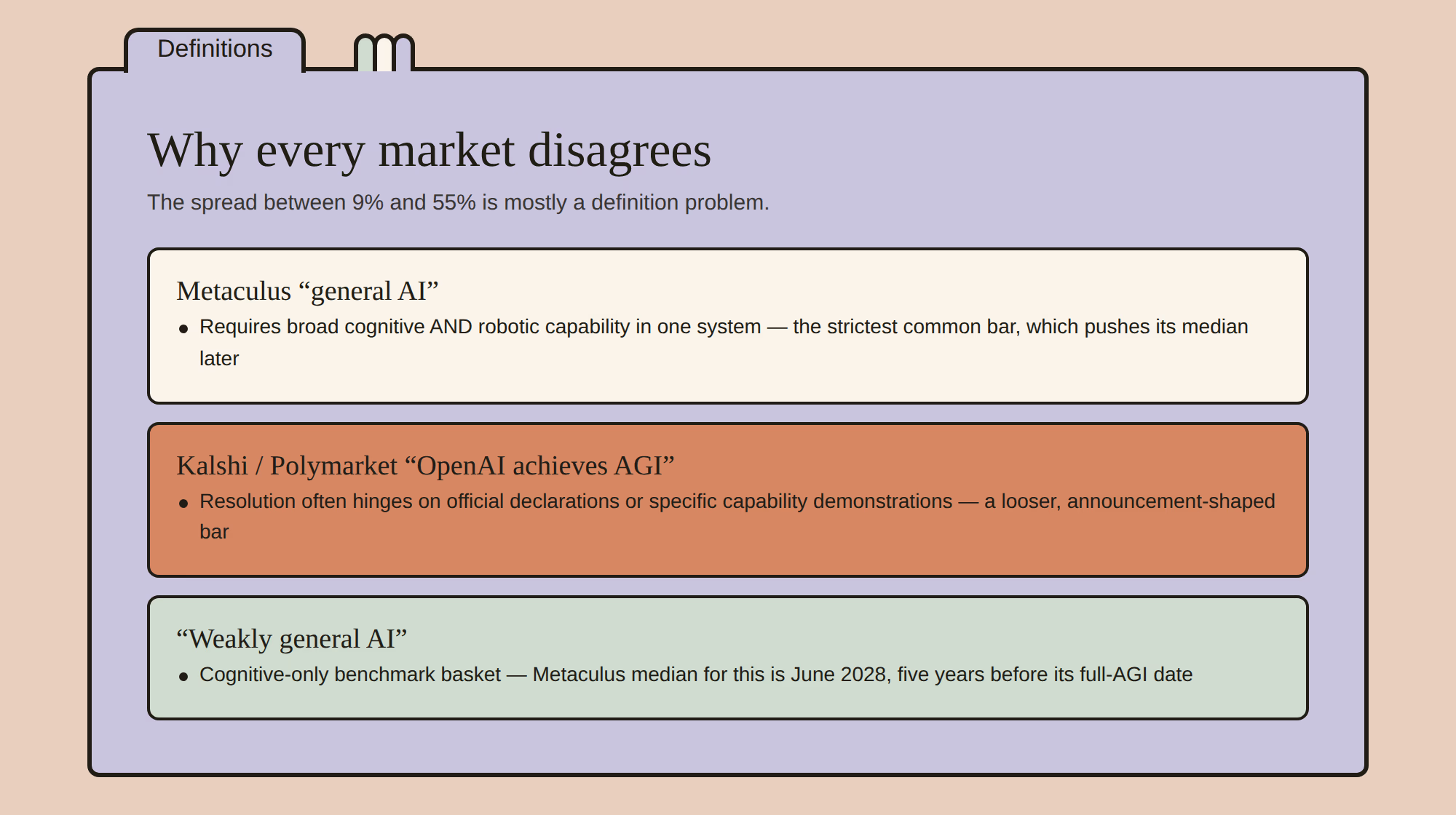
Before treating the spread between platforms as disagreement about reality, check the fine print: most of it is disagreement about wording. Metaculus's flagship question requires a single system with broad cognitive and robotic capability, the strictest common bar, which mechanically pushes its median later. The Kalshi and Polymarket OpenAI markets resolve on declarations and specific demonstrations, an announcement-shaped bar that could trigger years before a Metaculus-grade system exists. And “weakly general AI”, the cognitive-only basket, is already forecast for June 2028, five years before its full-AGI sibling.
This is why the most useful habit when reading any AGI probability is to ask which AGI? A 55% chance of an OpenAI declaration by 2030 and a 2033 median for a robotics-inclusive general system are not contradictory positions: they may well be the same worldview expressed against different rulers. It is also why we quote the aggregate (~2031, 80% CI 2027–2044) rather than any single market: the ensemble washes out definition quirks that no individual number escapes.
What the Odds Mean in Practice
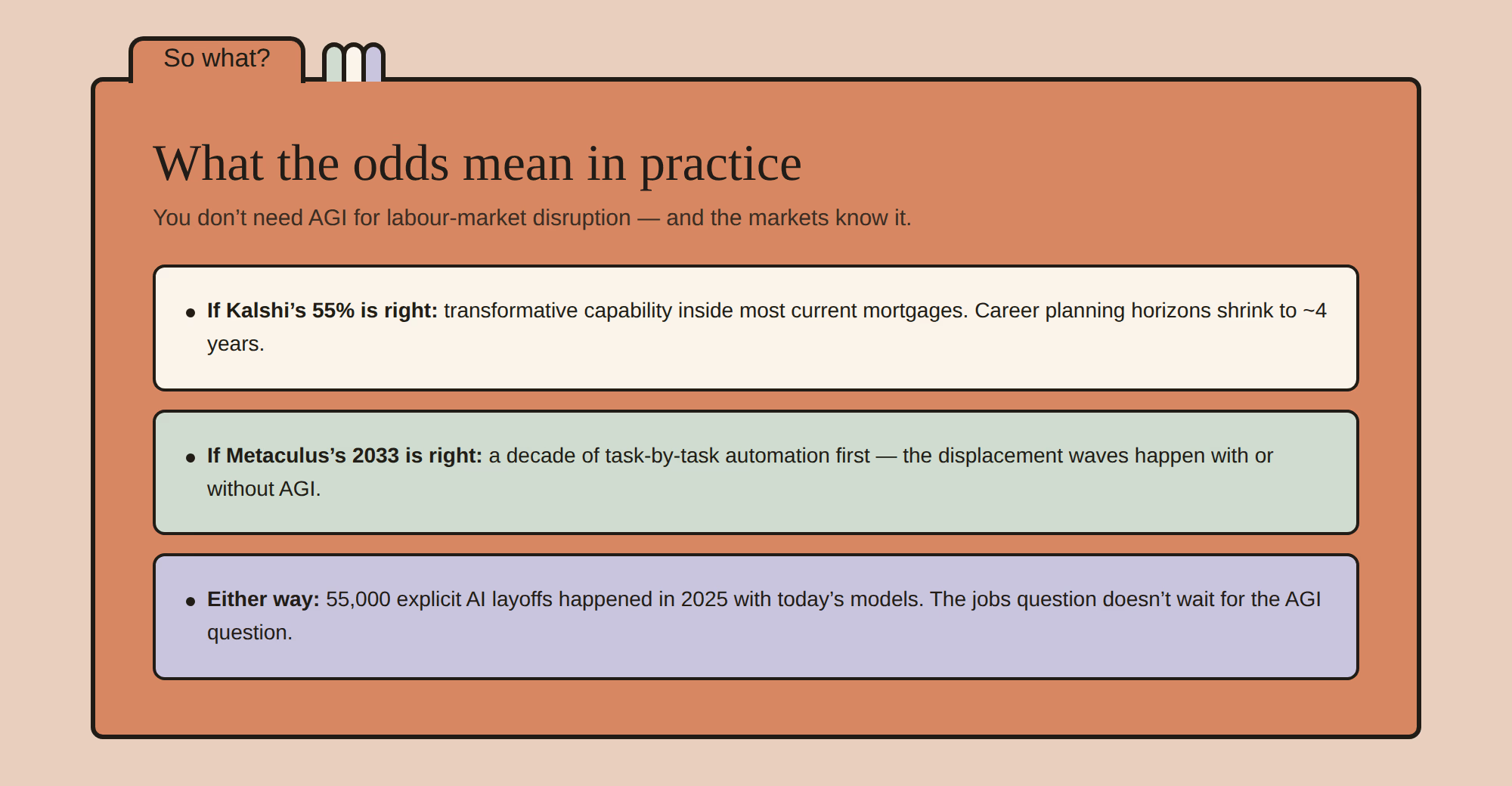
For most readers the practical question behind the search is not really “when AGI?”: it is “how long do my plans have?” The odds above give a usable answer. If Kalshi's 55% is roughly right, transformative capability arrives inside the span of most current mortgages, and career or business plans premised on today's task mix should be stress-tested on a ~4-year horizon. If Metaculus's stricter 2033 is right, there is a decade of task-by-task automation first, which is not a reprieve so much as a different shape of the same pressure.
The crucial point is that the labour-market consequences do not wait for the AGI threshold. 55,000 US job cuts were explicitly attributed to AI in 2025, with today's models, and the World Economic Forum expects 92 million roles displaced globally by 2030 against 170 million created, whether or not any market resolves YES. The displacement runs on task automation, not on definitions. Our companion deep dive on which jobs AI will replace by 2030 maps that side of the question (the waves, the safe lanes and the personal playbook) against the same forecast base used here.
The Bottom Line
The state of AGI forecasting in mid-2026, in one paragraph: the Metaculus community median is January 2033; real-money markets put AGI-by-2030 at roughly a coin flip (Kalshi 55%, Manifold 50%) while pricing the most aggressive 2027 scenarios at under 10%; lab leaders continue to say sooner; and the aggregate forecast centres on 2031 with an 80% interval of 2027–2044. The centre has moved a full generation closer in six years. The error bars have not.
We will keep this page updated as the medians move, they will, and track the capability ground truth on the benchmarks page. Treat every number here as a snapshot, every definition as load-bearing, and every confident single-date prediction, in either direction, as a sales pitch.
Last updated: 15 July 2026. Sources: Metaculus (general AI and weakly-general AI questions), Kalshi, Polymarket and Manifold markets, the Good Heart Labs AGI-timelines aggregate dashboard, and the 80,000 Hours review of expert forecasts. Figures are snapshots of moving markets: check the platforms for live prices.
Get the free guide: Claude vs ChatGPT, Gemini & Grok
A 20-page playbook covering everything you need to choose and use the big four AI models in 2026, full cost and feature comparisons, what each is best (and worst) at, and how-tos for images, vectors, building a website, Claude Code and more.