 AI Tools Review Editorial Team
Quick answer:
ChatGPT Ads launched in the UK on 11 August 2026. They may appear below answers for logged-in adults using the Free and Go tiers. OpenAI says Plus, Pro and business plans remain ad-free, ads do not influence answers, and advertisers cannot read conversations. Matching can still use the current conversation and, when personalisation is enabled, selected signals from a user's wider ChatGPT activity. UK advertisers can now use Ads Manager Beta, with CPC and CPM buying, but independent UK performance data is not yet available.
Advertising has moved from a proposed ChatGPT business model to a live UK product. The important questions are no longer whether ads are coming, but who sees them, what information is used to select them and whether the separation between commercial messages and AI answers holds up in practice.
This review uses OpenAI's 11 August launch update and current Ads Manager documentation. It separates confirmed product behaviour from claims that still need independent evidence.
Summary
- UK launch: OpenAI confirmed ChatGPT Ads launched in the United Kingdom on 11 August 2026.
- Eligible users: logged-in adults on Free and Go may see ads. Plus, Pro, Business, Enterprise and Education plans remain ad-free.
- Placement: ads sit below responses, with an advertiser name, favicon, headline, description, image and landing page.
- Matching: OpenAI uses the current conversation, the ad and its landing page. Wider ChatGPT signals may be used when ad personalisation is enabled.
- Advertiser access: the UK is listed as available in Ads Manager Beta.
- Buying model: advertisers can bid on a CPC or CPM basis through a relevance-weighted, second-price auction.
- Evidence gap: OpenAI reports encouraging early results, but has not published UK-specific trust, dismissal, click or conversion data.
What launched in the UK
OpenAI began testing ads in the United States on 9 February 2026, expanded to Canada, Australia and New Zealand, then confirmed a second international wave on 11 August 2026. The United Kingdom launched alongside Mexico, Brazil, Japan and South Korea. OpenAI's separate Ads Manager availability page also lists the UK as available, so this is both a consumer rollout and an advertiser-market opening.
OpenAI still describes the product as a test or beta. That matters because formats, controls, eligibility and auction dynamics may change. The launch confirms availability, not a mature market with stable pricing or audited performance benchmarks.
Who sees ads
OpenAI says ads are limited to logged-in adults on the Free and Go tiers. Plus, Pro, Business, Enterprise and Education plans do not show ads. Accounts that OpenAI identifies as belonging to people under 18, using account information and age prediction where available, are excluded.
Free users can also opt out of ads in exchange for fewer daily free messages, according to OpenAI. That is a real choice, but it is not cost-free: the trade is attention for usage allowance. Paid subscriptions remain the straightforward ad-free route.
Where ads appear
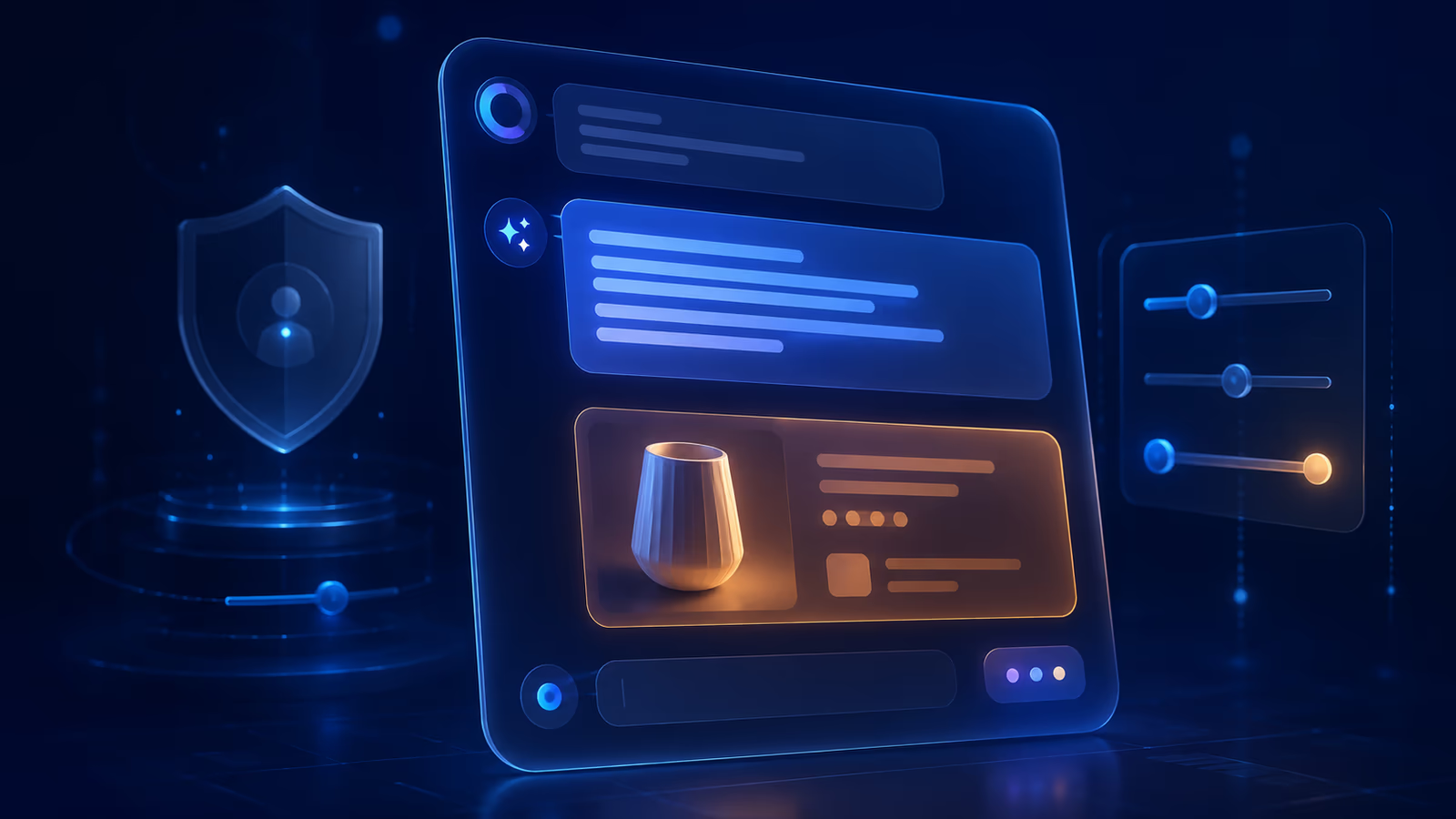
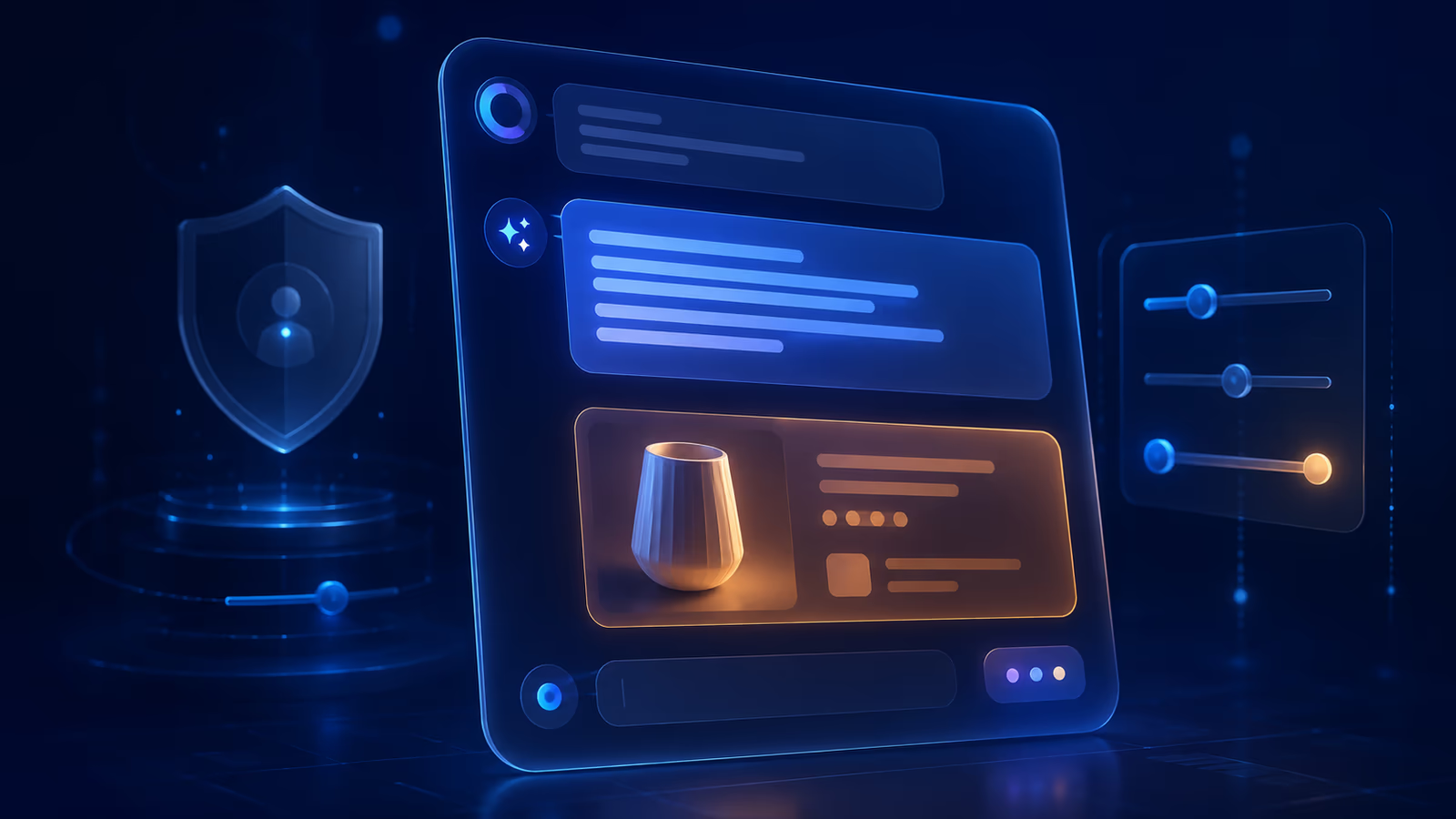
Ads appear below a ChatGPT response. OpenAI's current format includes the advertiser name, favicon, headline, description, image and landing page. The company says each unit is clearly labelled as sponsored and kept visually separate from the answer.
This separation is the product's most important trust promise. A search advert is obviously adjacent to ranked links. In a conversation, the answer can feel more personal and authoritative, so even a separate card may benefit from the credibility of the response above it. Clear labelling helps, but the practical test is whether users consistently understand where the answer ends and the advert begins.
Targeting and privacy
OpenAI says advertisers cannot access chats, chat history, memories or personal details. They receive aggregate campaign information such as impressions, clicks, spend and conversions. That limits what an individual advertiser sees, but it does not mean conversation context is absent from ad selection.
The matching system considers the intent and context of the current conversation, the advertiser's landing page, ad title and copy, plus advertiser-supplied context hints. When ad personalisation is enabled, OpenAI says selected signals from a user's broader ChatGPT experience may also be considered.
The distinction is important: advertisers do not read the conversation, while OpenAI's own ad system processes contextual signals to choose an advert. Users who prefer a narrower data footprint should review ad personalisation settings rather than relying only on the statement that conversations are private from advertisers.
OpenAI says ads are not eligible near sensitive or regulated topics such as health, mental health and politics. The policy is sensible, although the effectiveness of automated topic classification and edge-case handling has not yet been independently measured for the UK rollout.
Controls for users
Users can dismiss ads, give feedback, inspect why an ad appeared, delete ad data and manage ad personalisation. These controls are more meaningful than a generic privacy statement because they let people change the experience after seeing a mismatched or unwanted advert.
The remaining usability question is discoverability. Controls only work well if they are easy to find and their consequences are explained plainly. That is one area worth watching as the UK beta expands beyond early users.
What advertisers can buy
OpenAI Ads Manager Beta supports Reach campaigns, bought on a cost-per-thousand-impressions basis, and Clicks campaigns, bought on a cost-per-click basis. Advertisers set a maximum CPM or CPC bid at ad-group level. OpenAI recommends starting CPC campaigns with a maximum bid of $3 to $5 per click, but this is platform guidance in US dollars, not a guaranteed UK clearing price.
Eligible adverts enter a relevance-weighted, second-price auction. Context hints can describe useful conversations, topics or keywords, but OpenAI says they are not exact-match keywords and do not guarantee delivery. Reporting currently includes impressions, clicks, spend, click-through rate, average CPC, average CPM and conversions.
For marketers, the attraction is obvious: users often reveal more intent in a conversation than in a short search query. The risk is equally clear. Richer context can improve relevance, but it raises the standard for privacy explanations, sensitive-topic exclusions and misleading-ad enforcement.
What is still unclear
- No UK performance benchmark: OpenAI has not published UK-specific CPC, CPM, CTR, conversion or dismissal rates.
- No independent trust study: OpenAI says early trust metrics were unaffected, but the methodology and full results are not public.
- Beta economics: recommended bids and auction competitiveness may change as more UK advertisers join.
- Context safeguards: the sensitive-topic exclusions are stated policy, not evidence that every difficult conversation will be classified correctly.
- Answer independence: OpenAI says advertising does not influence answers, but no external audit has yet tested that promise at UK scale.
Balanced verdict
The UK launch is significant because it turns conversational advertising into a live mainstream product. OpenAI has made sensible initial choices: ads are below answers, paid and business tiers stay ad-free, under-18 accounts and sensitive topics are excluded, and advertisers do not receive conversation histories.
The harder questions begin after launch. Relevance depends on analysing conversational intent, and the perceived authority of ChatGPT may make adjacent advertising unusually persuasive. The product should therefore be judged on visible labelling, user control, scam prevention and independently measurable separation between commercial incentives and answer quality.
For UK users, the practical advice is simple: check ad personalisation settings, use the explanation control when an advert feels surprising, and remember that a relevant sponsored card is still an advert. For marketers, treat the current platform as a beta channel and test incrementally until UK-specific performance and policy enforcement become clearer.
Get the free guide: Claude vs ChatGPT, Gemini & Grok
A 20-page playbook covering everything you need to choose and use the big four AI models in 2026, full cost and feature comparisons, what each is best (and worst) at, and how-tos for images, vectors, building a website, Claude Code and more.
Last updated: 12 August 2026. Sources: OpenAI's UK launch update, Ads in ChatGPT: The Basics, Ads Manager availability and OpenAI Ads Manager.