 AI Tools Review Editorial Team
Quick Verdict:
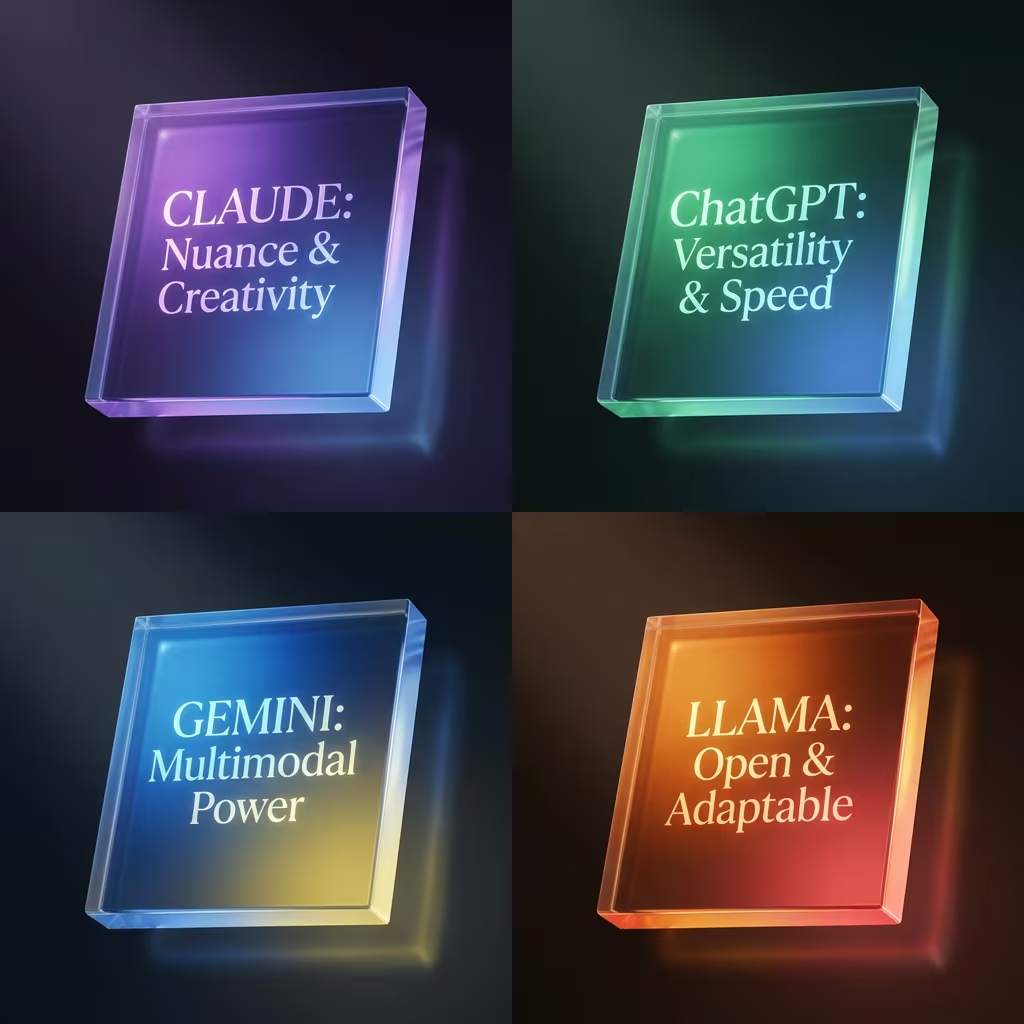
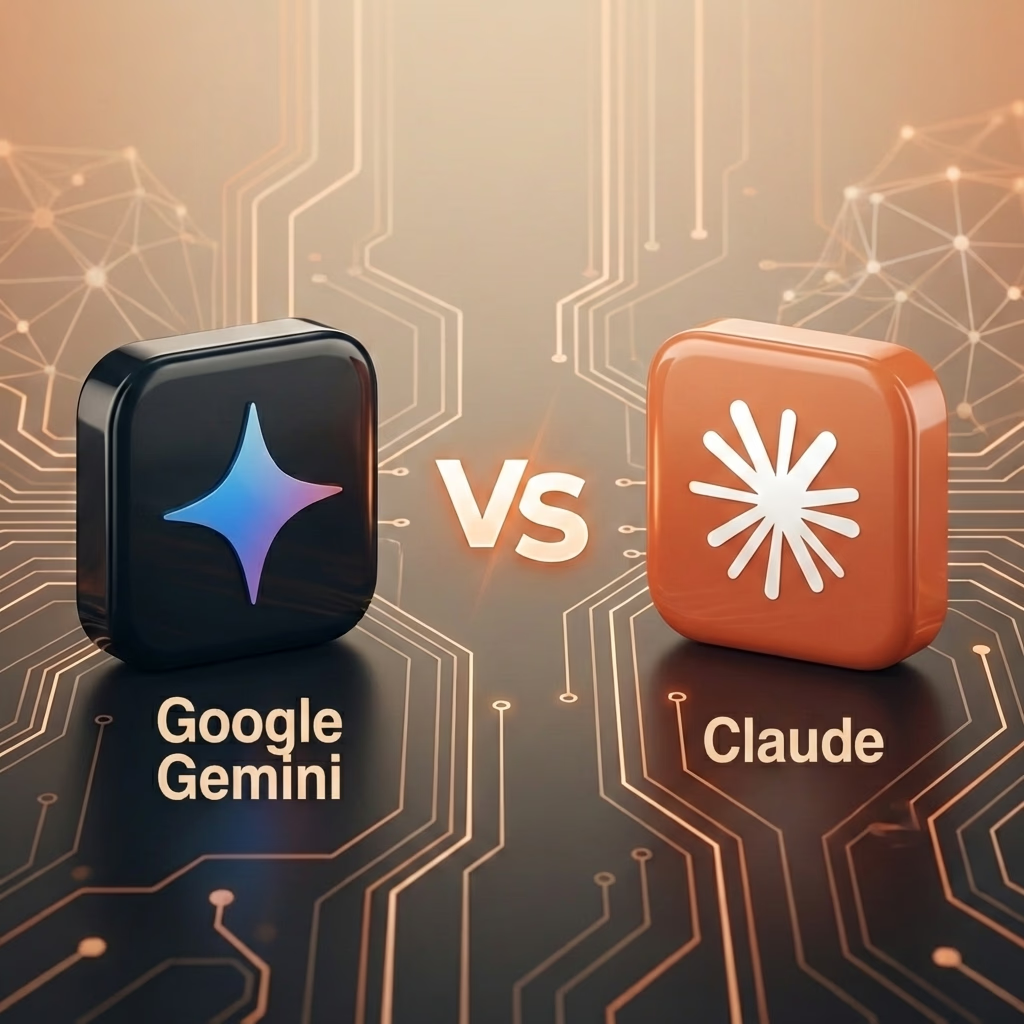
Claude Opus 4.6 & Sonnet 4.6 remain the top choice for complex reasoning, autonomous agentic web workflows, and "human-like" writing. Google Gemini 3.1 Pro wins on ecosystem integration via Google Conductor, multimodal understanding (zero-shot video analysis), and massive context windows. Choose Claude for building and agent swarms; choose Gemini for enterprise integration and analyzing limitless context.
Quick Comparison: The 2026 Landscape
As 2026 unfolds, the AI landscape has codified into distinct paradigms. While OpenAI continues its push into consumer hardware with the rumored "Dime" earbuds, Google and Anthropic have carved out specific niches that appeal to power users, developers, and enterprise architects.
The choice isn't just about "which model is smarter", it's about where that intelligence lives, how it integrates into your operating system, and whether you prefer an autonomous "digital colleague" or a hyper-capable data layer.
Coding Capabilities: Precision vs. Scale
For software engineers, the battle has shifted from simple autocomplete to autonomous, multi-agent code orchestration. Claude has long held the crown for "vibes", writing code that feels idiomatic and human-written. Gemini, however, has approached the problem with sheer scale and deep IDE integration via Antigravity.
Claude Opus & Sonnet 4.6: The Architects
Claude Opus 4.6 and its faster sibling, Sonnet 4.6, continue to be the gold standard for reasoning about code structure. Anthropic's new implementation of "Adaptive Thinking" allows these models to plan complex refactors before writing a single line of code.
- One-Shot Accuracy: Claude tends to get the syntax and logic right on the first try significantly more often, particularly in strictly typed languages like Rust and TypeScript.
- Instruction Adherence: When you give a laundry list of constraints (e.g. "use Tailwind, no external deps, accessible, strictly follow the Next.js 16 app router specifications"), Claude follows them rigidly.
- Claude Code & Agent Teams: The 2026 update to Claude Code introduced parallel agent teams, allowing Claude to assign refactoring tasks to sub-agents, vastly reducing turnaround time on large pull requests.
Gemini 3.1 Pro: The Data Hoarder
Gemini's superpower is its massive multi-million token Context Window. This fundamentally changes how you code. Instead of pasting snippets, you dump the entire repo documentation, three library references, and thousands of internal slack messages into the prompt.
- Whole-Repository Awareness: Gemini can spot deeply nested dependencies and side effects across microservices that Claude might miss if the precise files aren't explicitly provided.
- Google Antigravity Integration: Gemini 3.1 Pro serves as the backbone for Google Antigravity, where it utilizes specialized "Skills" (pre-packaged code intelligence) to instantly understand custom enterprise frameworks.
- Multimodal Debugging: You can literally feed Gemini a 45-minute screen recording of a bug reproducing, and it will perfectly correlate the visual error with the exact line of code causing it.
Reasoning & Logic
"Reasoning" is a nebulous term, but in practice, it means: how well does the AI handle ambiguity and novel problem-solving?
Claude is cautious, methodical, and deeply analytical. When you ask a vague question, Claude Opus 4.6 will often ask for clarification or explicitly outline its assumptions before proceeding. This "epistemic humility" makes it significantly safer for enterprise tasks and complex mathematical problem-solving where hallucination is an existential risk. In blind writing and reasoning tests, Sonnet 4.6 consistently sweeps the board.
Gemini is confident, expansive, and incredibly fast. It excels at creative brainstorming and connecting disparate dots. Its integration with Google Search (Grounding) and the new Bayesian real-time evolution framework means its logic is often backed by the most up-to-the-millisecond data available, whereas Claude works primarily from its highly curated training data and context window.
Ecosystem Integration & Autonomous Agents
This is where the sharpest dividing line exists between Anthropic and Google in 2026. The platform you choose dictates the nature of how the AI interacts with your computer.
Google Ecosystem: The OS Layer
Gemini aims to be the invisible data layer operating natively within your systems.
- Google Conductor: Turns Chrome into an execution environment for AI agents.
- Google Stitch: Can design, code, and document complete UIs directly from text prompts into working components.
- Deep, native integration with Workspace (Drive, Docs, Sheets).
- Antigravity IDE integration for enterprise dev teams.
Anthropic Ecosystem: The Digital Colleague
Claude is a distinct, autonomous entity that uses your computer just like you do.
- Claude Cowork: Anthropic's flagship desktop agent that autonomously manages local files and executes multi-step workflows.
- Computer Use Protocol: Claude visually reads the screen and clicks UI elements to operate any software.
- Artifacts UI: Live, real-time preview of code outputs and data visualizations.
Pricing, Value & Features
The economics of frontier models have stabilized entirely around the $20/month mark for consumers, but enterprise and API pricing reveals distinct strategies. Here is the 2026 pricing and feature comparison:
| Feature / Metric | Google Gemini 3.1 Pro / Advanced | Claude Opus 4.6 / Pro |
|---|---|---|
| Consumer Monthly Cost | $19.99/mo (includes Google One) | $20/mo |
| Context Window | 2+ Million Tokens | 1 Million Tokens |
| Primary UI / Paradigm | Google Conductor (Chrome integration) | Claude Cowork (Desktop autonomy) |
| Live Data Grounding | Yes, native Google Search & Workspace | Limited via specific plugin integrations |
| Multimodal Strengths | Unrivaled multi-hour video and audio processing | Unrivaled document parsing and structured text extraction |
Conclusion: Which one should you build with?
Choose Claude Pro if: You are a developer, writer, analyst, or content architect who spends 80% of their time creating. The quality of output, the brilliant Artifacts UI, and the incredible reasoning capabilities of Opus 4.6 are simply superior for deep, focused work. If you want an agent that feels like a brilliant junior colleague who occasionally takes over your mouse to get something done, Claude is the answer.
Choose Gemini Advanced if: You live in the Google ecosystem and require massive context. The sheer value of dropping a dozen PDFs, a codebase, and five hour-long meeting recordings into a single prompt, and having Gemini synthesize it perfectly, is a productivity multiplier that no other AI can currently match safely.
The 2026 Summary: Use Claude for Creation, execution, and extreme precision. Use Gemini for Knowledge Management, video analysis, and ecosystem scale.
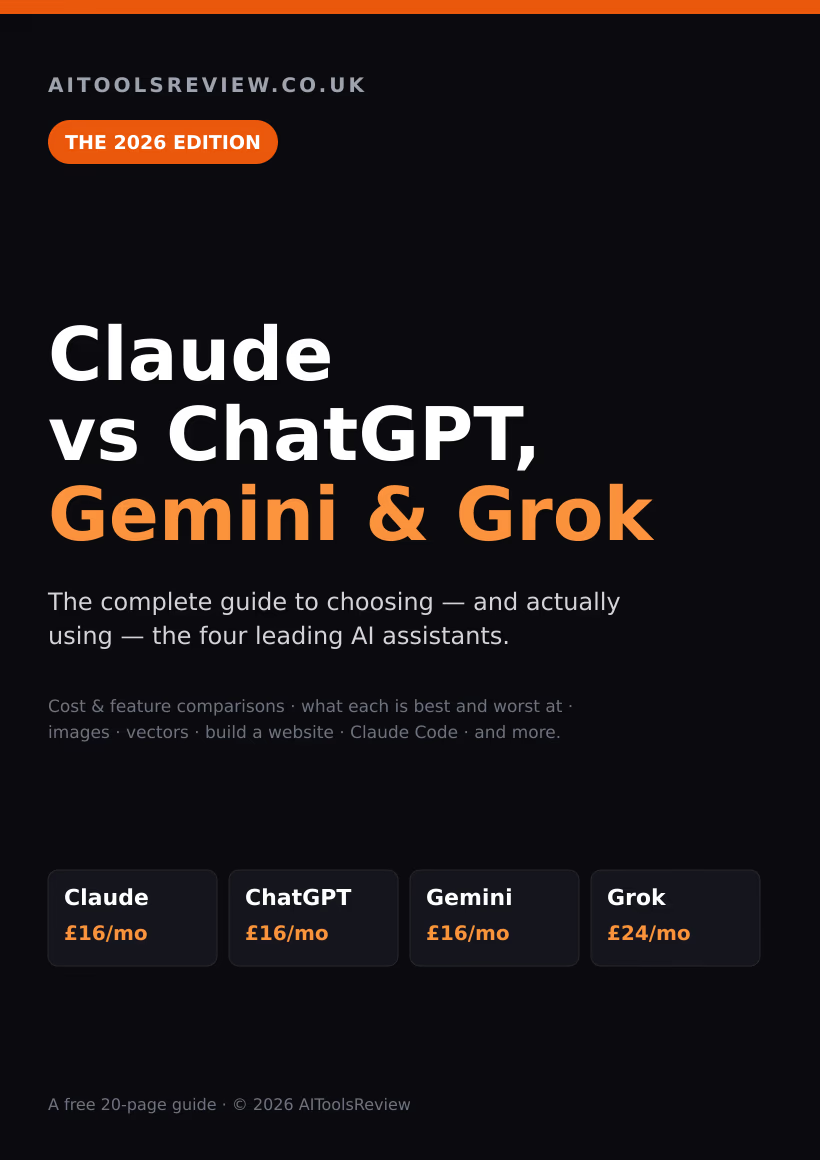
Get the free guide: Claude vs ChatGPT, Gemini & Grok
A 20-page playbook covering everything you need to choose and use the big four AI models in 2026, full cost and feature comparisons, what each is best (and worst) at, and how-tos for images, vectors, building a website, Claude Code and more.