 AI Tools Review Editorial Team
Quick answer
GPT-Live is OpenAI's new full-duplex voice architecture. It can listen and speak at the same time, so the conversation no longer depends on a separate model guessing when the user has finished a turn. A dedicated media path keeps audio flowing while harder reasoning and tool calls run asynchronously. The architecture already supports ChatGPT Voice experiences, but OpenAI describes the GPT-Live API as upcoming and has not published API pricing or a release date.
Most voice assistants still behave like walkie-talkies. One side speaks, a detector decides the turn is over, and only then can the system begin its response. OpenAI's GPT-Live replaces that sequence with a continuous audio loop.
OpenAI published the architecture on 3 August 2026. The important news is not simply that the voice sounds more natural. It is that speaking, listening, reasoning and using tools no longer have to wait in the same queue. That separation is what makes interruption, back-channel responses and longer agent tasks possible without an awkward silence in the conversation.
What GPT-Live changes
Earlier cascaded voice systems processed speech-to-text, language reasoning and text-to-speech in series. Direct speech-to-speech models removed some of that delay, but they still relied on a turn detector. If it fired too early, the assistant interrupted the user. If it waited too long, the exchange felt sluggish.
GPT-Live removes that detector from the audio path. OpenAI calls the model full-duplex because incoming and outgoing audio can be processed at the same time. The voice model controls the conversational rhythm rather than waiting for another component to declare each turn complete.
| Voice architecture | How interaction is organised | Main trade-off |
|---|---|---|
| Cascaded | Speech-to-text, LLM and text-to-speech run in sequence | Extra latency and lost vocal cues |
| Turn-based speech-to-speech | One speech model, but a separate detector ends each turn | Interruptions or noticeable pauses |
| GPT-Live | Audio streams continuously while deeper work runs separately | More stateful infrastructure and coordination |
How the architecture works
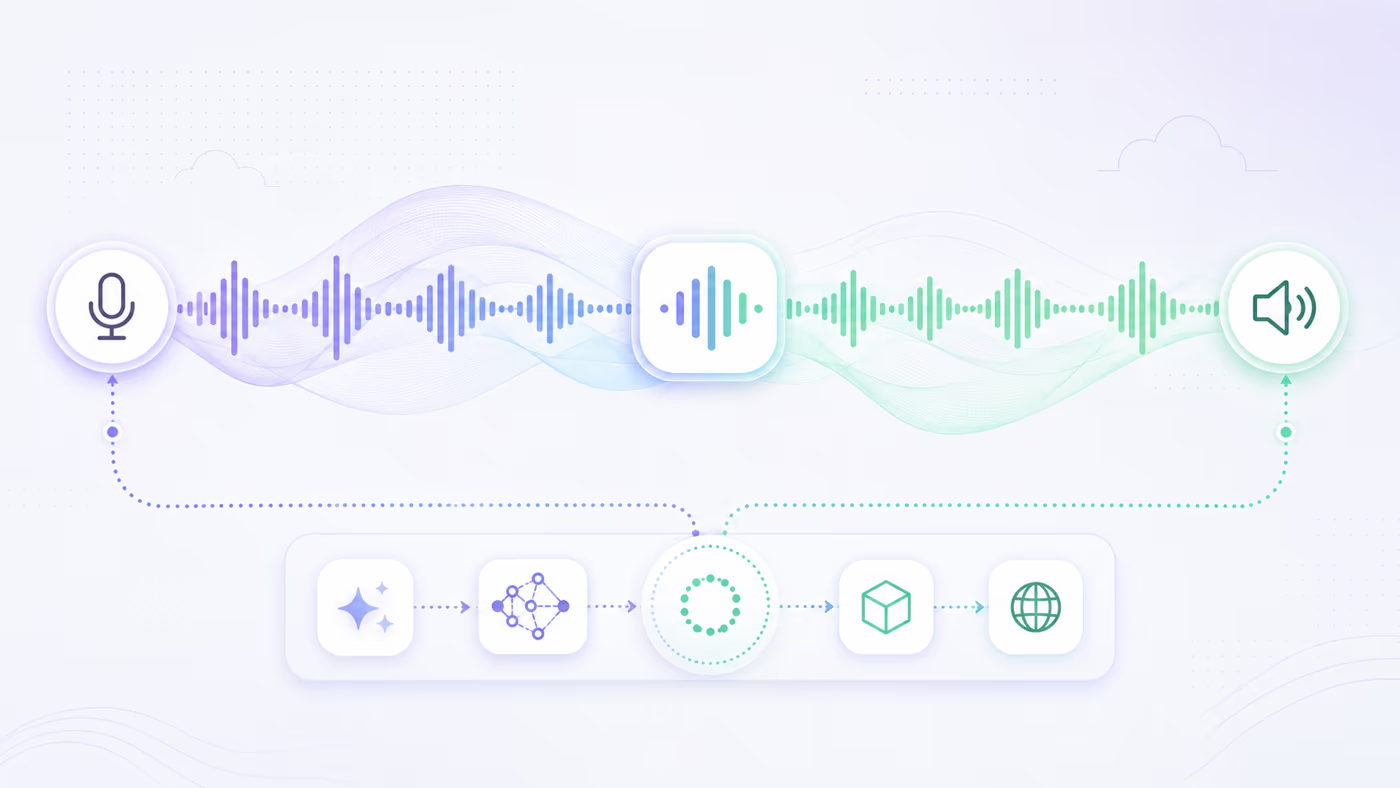
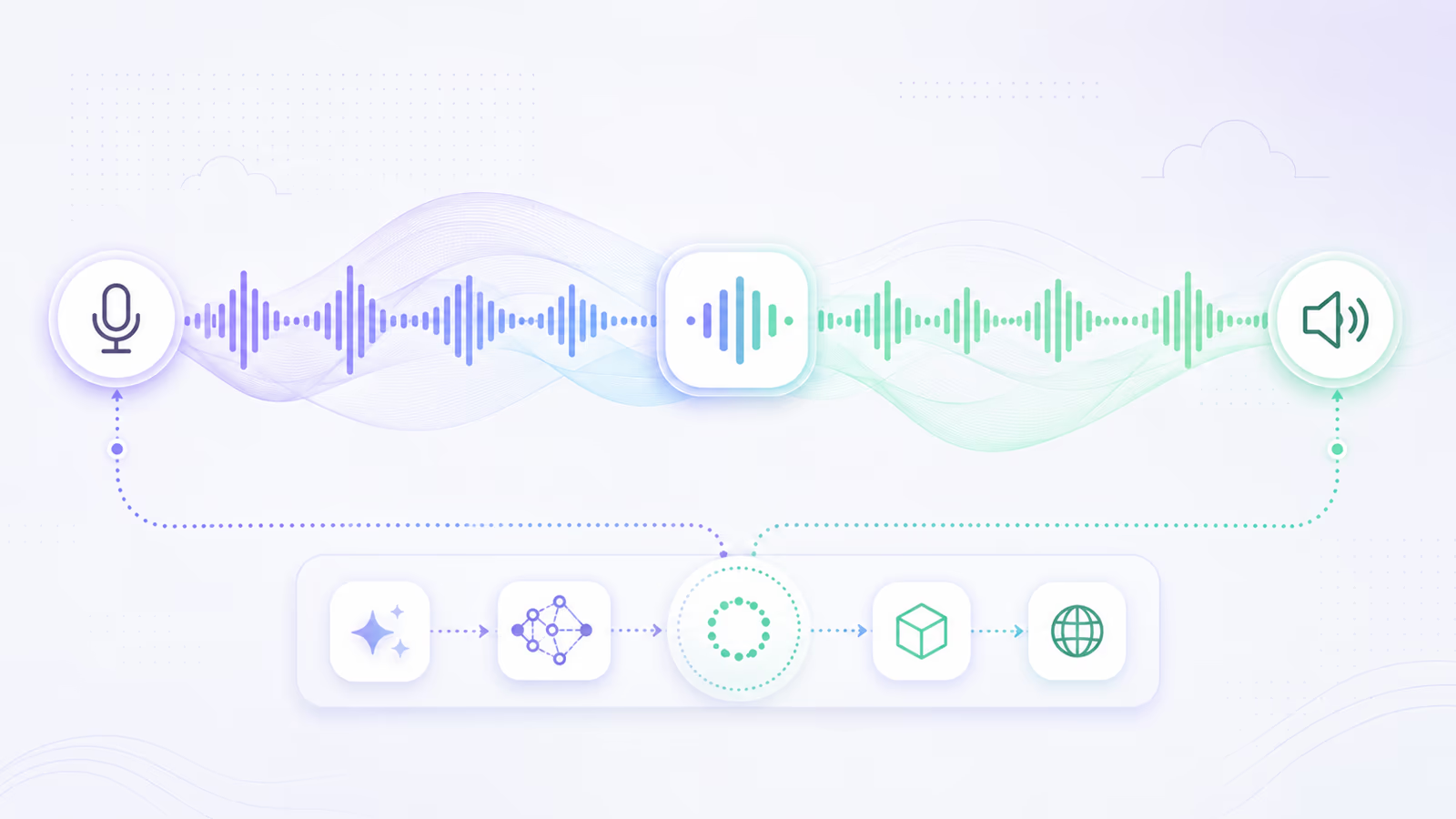
The system separates work that must happen in real time from work that can tolerate variable delay. Audio travels on a dedicated fast path between the client and the voice model. Application logic, model delegation and tool calls sit behind an asynchronous remote procedure call boundary.
That boundary matters. A slow web search or business system can delay its own result, but it should not stop the assistant from listening, acknowledging the user or maintaining the conversational flow. Applications can also change tools and policies without rebuilding the media layer responsible for responsiveness.
How delegation avoids blocking the conversation
GPT-Live is designed to handle quick conversational responses itself. When a request needs deeper reasoning or a tool, it can delegate the work to a frontier model on a separate path. OpenAI's example uses GPT-5.5 for background search and reasoning while GPT-Live continues the spoken exchange.
OpenAI reduces the delay by preparing the delegated session when the voice conversation begins. The frontier model receives the initial context before it is needed, so a later request does not start from a cold prompt. The continuous transcript is also converted into discrete messages for systems that still expect conventional turns.
This is best understood as an orchestration design, not one giant model doing everything. The voice model, delegated model, tools and application server each have different jobs. That distinction is important when assessing privacy, reliability or cost because the published article does not provide one universal behaviour for every future implementation.
How OpenAI reduces latency
OpenAI says GPT-Live uses stateful inference, dynamic context management and a dedicated WebRTC media path. WebRTC is built for low-latency audio and can absorb packet loss, clock drift and connection changes. It can subtly stretch late audio to prevent a gap, then speed playback briefly to catch up.
The company also changed how sessions start. Instead of waiting for a conventional request-response setup, the system establishes the media and delegated inference state early. OpenAI says the goal is sub-second responsiveness, but it does not publish a single measured latency figure that readers should expect across every device, network or workload.
What is available now
OpenAI says the architecture already powers a growing set of ChatGPT Voice capabilities, including computer control and agent coordination in the ChatGPT desktop app. It also says GPT-Live will underpin an upcoming API.
The wording is precise: upcoming is not generally available. The 3 August article does not provide an API launch date, model identifier, price, rate limits or regional availability. Developers looking for something deployable today should use OpenAI's currently documented realtime products and wait for a separate GPT-Live API announcement before planning a migration.
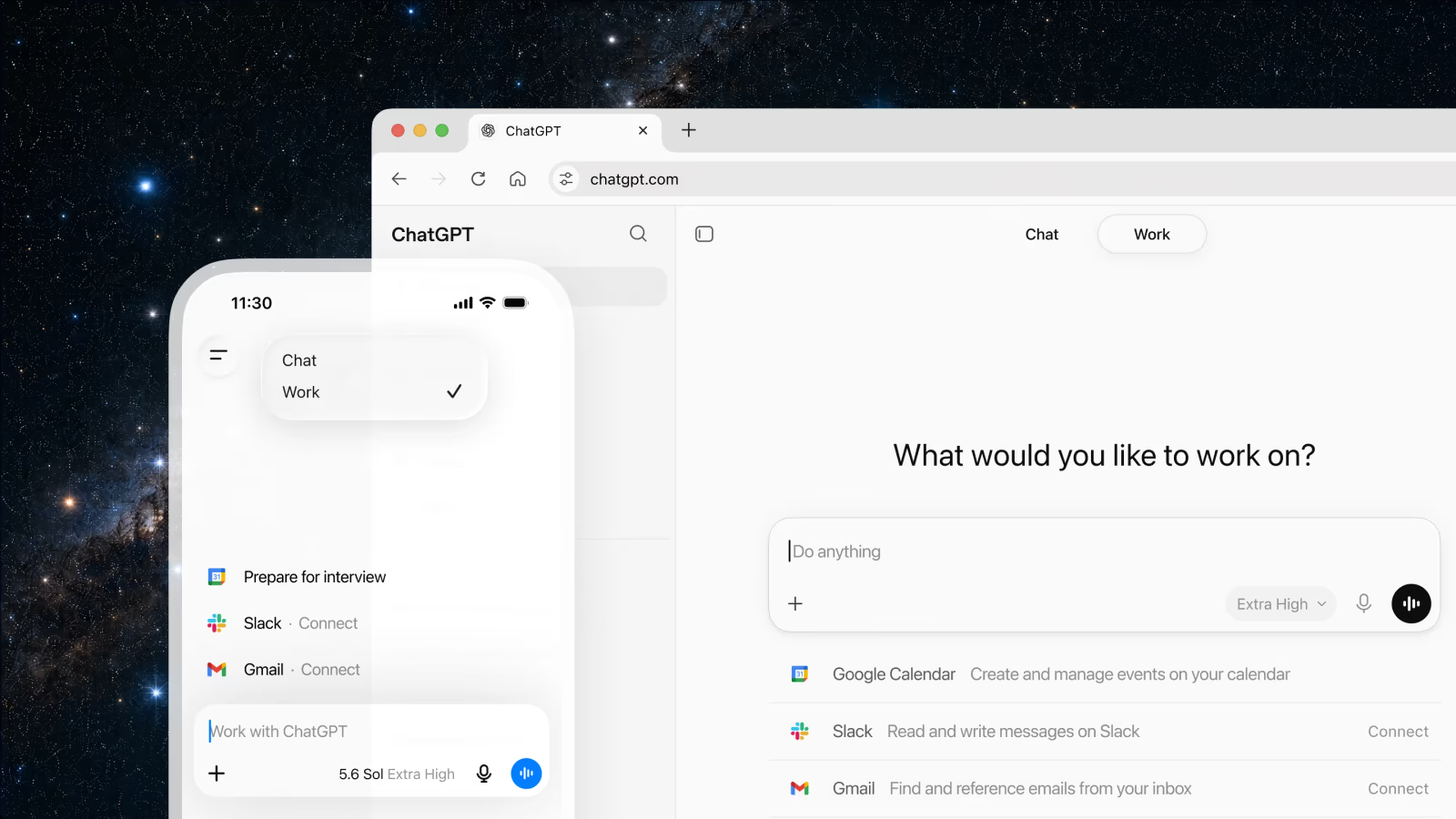
The desktop reference also connects GPT-Live to OpenAI's broader move from chat towards coordinated work. Our ChatGPT Work guide covers that agentic workspace separately.
What OpenAI has not disclosed
The article is an engineering account, not a model card or product launch document. It explains the architecture well but leaves several practical questions unanswered.
- No public GPT-Live API release date or pricing.
- No independent latency comparison against competing voice systems.
- No model card, benchmark suite or detailed safety evaluation for GPT-Live itself.
- No fixed promise that GPT-5.5 will be the delegated model in every product or API configuration.
- No universal data-retention statement beyond the production-testing approach described in the article.
OpenAI says it tested GPT-Live through a gradually expanded shadow deployment. A read-only version processed a share of real ChatGPT Voice sessions in parallel while the existing system continued serving users. That is useful evidence about rollout discipline, but it is still OpenAI's own account and not an independent audit.
Why it matters
Voice becomes more useful when it can remain present while other systems work. A user can clarify a request, interrupt an incorrect assumption or ask what is happening while a tool is still running. That is a better fit for agentic software than a silent assistant that disappears between commands.
The same architecture also raises the bar for developers. A continuous, stateful session needs reliable media transport, careful context management, clear tool permissions and a way to recover when delegated work fails. The conversational surface may feel simpler, but the system behind it is more distributed.
Bottom line
GPT-Live is a meaningful architectural change because it separates talking from deeper thinking. Continuous full-duplex audio handles the human rhythm of conversation, while asynchronous models and tools handle slower work without blocking it.
For users, that should mean fewer awkward pauses and better interruption handling. For developers, the most important detail is still pending: OpenAI has announced the architecture and an upcoming API, but not the API's release date, price or production contract.
Primary source: OpenAI's 3 August 2026 GPT-Live engineering article.