
 AI Tools Review Editorial Team
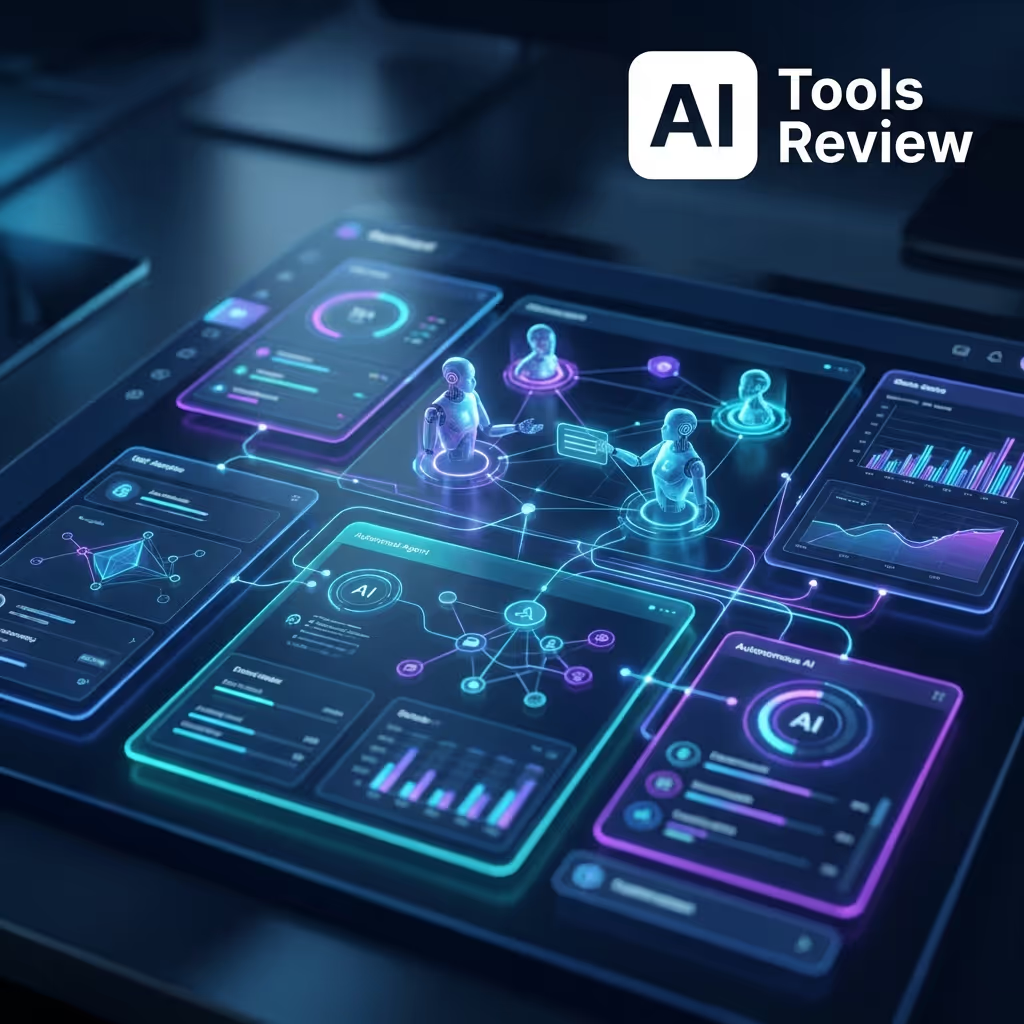
The year 2026 marks a paradigm shift in artificial intelligence. We are no longer just talking to LLMs; we are deploying them. Agentic AI – systems designed to reason, plan, and execute multi-step workflows autonomously – has fundamentally altered the technological landscape.
Quick Answer:
Agentic AI refers to AI models capable of autonomous reasoning and action. In early 2026, models like Claude Opus 4.6 have made multi-agent collaboration feasible for enterprise tasks ranging from complex coding to automated logistics.
From Chat to Action
For years, the generative AI boom was defined by the chat interface. Users would prompt an AI, receive a response, and guide it through iterative feedback. However, the bottleneck remained human oversight for every discrete step. Agentic AI breaks this cycle by introducing autonomous planning. These models can understand a high-level goal, break it down into actionable sub-tasks, use tools (like web browsers, IDEs, and APIs), and course-correct when they encounter errors.
The Impact of Claude Opus 4.6
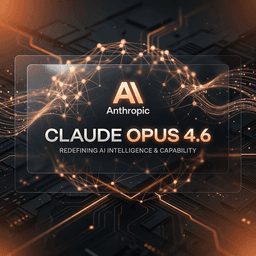
A primary driver of this shift has been the release of Anthropic's Claude Opus 4.6. With its native support for "adaptive thinking levels" and a 1 million token context window, Opus 4.6 doesn't just process information; it manages it over long horizons.
| Agentic Feature | Benefit |
|---|---|
| Self-Correction | Allows agents to recover from API failures or logical dead-ends without human prompts. |
| Multi-Agent Swarms | Enables specialized AI roles (e.g., Maker, Reviewer, Tester) to collaborate on a single project. |
Industry Adoption rates in 2026
We are seeing unprecedented adoption rates in sectors like manufacturing and financial services. Instead of static dashboards, modern supply chain managers are interacting with AI agents that proactively reroute shipments based on real-time weather and geopolitical data. In software engineering, tools utilizing agentic architectures are autonomously fixing bugs, writing tests, and even deploying minor feature updates.
The Adoption Numbers: Hype vs Production
The headline forecasts are striking. Gartner predicts that 40% of enterprise applications will feature task-specific AI agents by the end of 2026, up from less than 5% in 2025. On the surface, that suggests agents are about to become as ubiquitous as search boxes. The reality on the ground is more nuanced.
According to the 2026 Gartner CIO and Technology Executive Survey, only 17% of organisations have actually deployed AI agents to date, although more than 60% expect to do so within the next two years. The gap between claimed adoption and production reality is the defining tension of the year: many organisations say they have "adopted" agents when what they really have is a pilot running in a sandbox.
| Gartner Forecast | Figure |
|---|---|
| Enterprise apps with task-specific agents by end of 2026 | 40% (up from under 5% in 2025) |
| Organisations that have deployed agents (2026 CIO survey) | 17%, with over 60% expecting to within two years |
| Agentic AI projects predicted to be cancelled by end of 2027 | Over 40% |
| Best-case share of enterprise application software revenue by 2035 | Around 30%, surpassing $450 billion (approx £360 billion) |
Agent Teams: Multi-Agent Goes Mainstream
If a single agent was the story of 2025, the coordinated team of agents is the story of 2026. Anthropic's release of Claude Opus 4.6 on 5 February 2026 included Agent Teams in Claude Code as a research preview: developers can spin up multiple agents that work in parallel on the same project and coordinate autonomously, splitting roles such as implementation, review and testing between them. We cover the orchestration patterns behind this in our guide to agent swarms.
Two other Opus 4.6 details matter for agentic workloads. First, adaptive thinking now comes with developer-facing effort controls, so the model decides when deeper reasoning is worth the latency, and builders can tune that trade-off between intelligence, speed and cost. Second, it is Anthropic's first Opus-class model with a 1 million token context window, although premium pricing applies to prompts beyond 200k tokens, at $10 per million input tokens and $37.50 per million output tokens (approx £8 and £30). Long-horizon memory is precisely what separates an agent that manages a week-long project from a chatbot with a good short-term memory.
Why Agentic Projects Fail
The sobering counterweight to all this momentum is Gartner's prediction that over 40% of agentic AI projects will be cancelled by the end of 2027, citing escalating costs, unclear business value and inadequate risk controls. Most current deployments remain narrowly scoped, concentrated in software engineering, customer support and operations, and fully autonomous agents are still not ready for the majority of enterprise use cases.
The pattern behind the failures is consistent. Teams bolt an agent onto a process that was never mapped properly in the first place, discover that token costs scale with every retry loop, and then find they have no way to evaluate whether the agent's output is actually correct. The organisations succeeding in 2026 tend to do the opposite: they start with one narrow, measurable workflow, keep a human approval gate on any action with real-world consequences, and treat evaluation infrastructure as a first-class investment rather than an afterthought.
The Outlook for Late 2026
The direction of travel for the second half of the year seems clear. Agent-to-agent coordination is moving from research preview to production feature, and the competitive frontier is shifting from raw model intelligence to orchestration: memory management, tool reliability and graceful failure recovery. The economics are shifting too, as efficiency-focused architectures push down the per-task cost that currently makes large agent fleets impractical. For a longer view of where this leads the workplace, see our essay on the agentic future of work.
The honest summary of mid-2026: the technology has outrun the operating model. The models can plan, act and self-correct. Most organisations cannot yet specify, supervise or evaluate that work. Closing that gap, not the next benchmark score, is what will decide which enterprises actually bank the productivity gains.
Last updated: 15 July 2026. Adoption figures sourced from Gartner press releases (June and August 2025) and the 2026 Gartner CIO and Technology Executive Survey; Claude Opus 4.6 details from Anthropic's release announcement and InfoQ's coverage.