 AI Tools Review Editorial Team
Quick Answer:
SecondBrain Note is GenSpark's first hardware product: a 2.95mm-thin, 26g AI voice recorder that clips to a phone via MagSafe or lives in a card holder, capturing up to 35 hours of audio on a charge into 64GB of onboard storage. It exists to feed GenSpark's cloud-based SecondBrain memory layer - the recordings, once synced, get transcribed, summarised and turned into follow-up actions by a "Super Agent" that also pulls in your email, calendar and CRM data. It launched at $179 and competes directly with the established Plaud Note in the same card-format category.
GenSpark built its name as a software company - an AI workspace and agent platform. SecondBrain Note is its first step into physical hardware, and the pitch is unusually direct for a category that has mostly been sold on vibes: a recorder thin enough to disappear into a card holder, married to an AI system that is supposed to do something useful with everything it hears.
Here is what the device actually does, how it plugs into GenSpark's software, and how it holds up against the AI recorder that got there first.
Matt Wolfe's first look at the SecondBrain Note and what a credit-card-thin AI recorder changes about capturing meetings.
Summary
SecondBrain Note is a narrow, well-executed bet: make the capture device as unobtrusive as possible - thinner than a phone case, light enough to forget you are wearing it, quiet enough that a privacy light is the only tell - and put the intelligence in the cloud layer it feeds. The device itself is not trying to be clever; it is trying to be invisible.
The interesting part is what it plugs into. Where a standalone recorder like Plaud Note lives largely as its own app, SecondBrain Note is explicitly a feeder for GenSpark's broader agent platform - recordings become part of the same memory layer as your email, calendar and CRM data, retrievable and actionable by GenSpark's "Super Agent" alongside everything else it already knows about your work.
- Best for: people already using GenSpark's AI Workspace who want meetings and calls folded into the same searchable memory as their other work data.
- Headline numbers: 2.95mm thin, 26g, 35-hour battery, 64GB storage (~7,000 hours of audio), $179 launch price.
- Defining trait: designed to be carried, not worn - it lives in a wallet or on the back of a phone rather than around your neck.
- Main caveat: the useful part of the product - transcription, summaries, the Super Agent - is cloud-dependent, not on-device.
Design and Hardware Specs
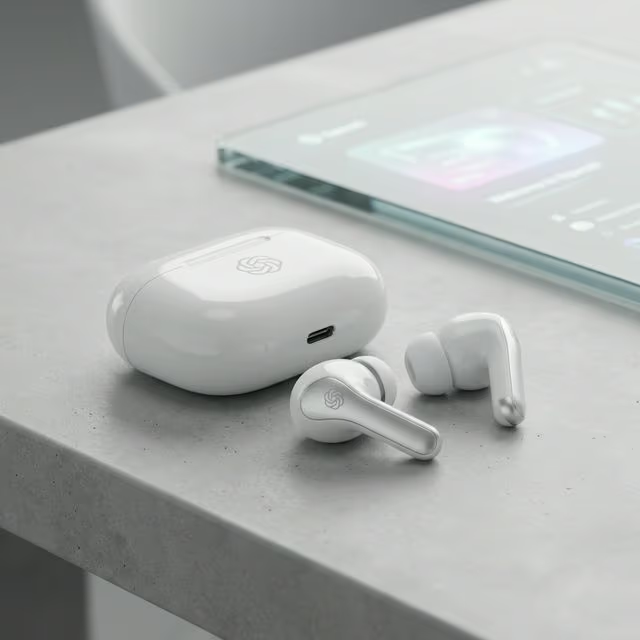
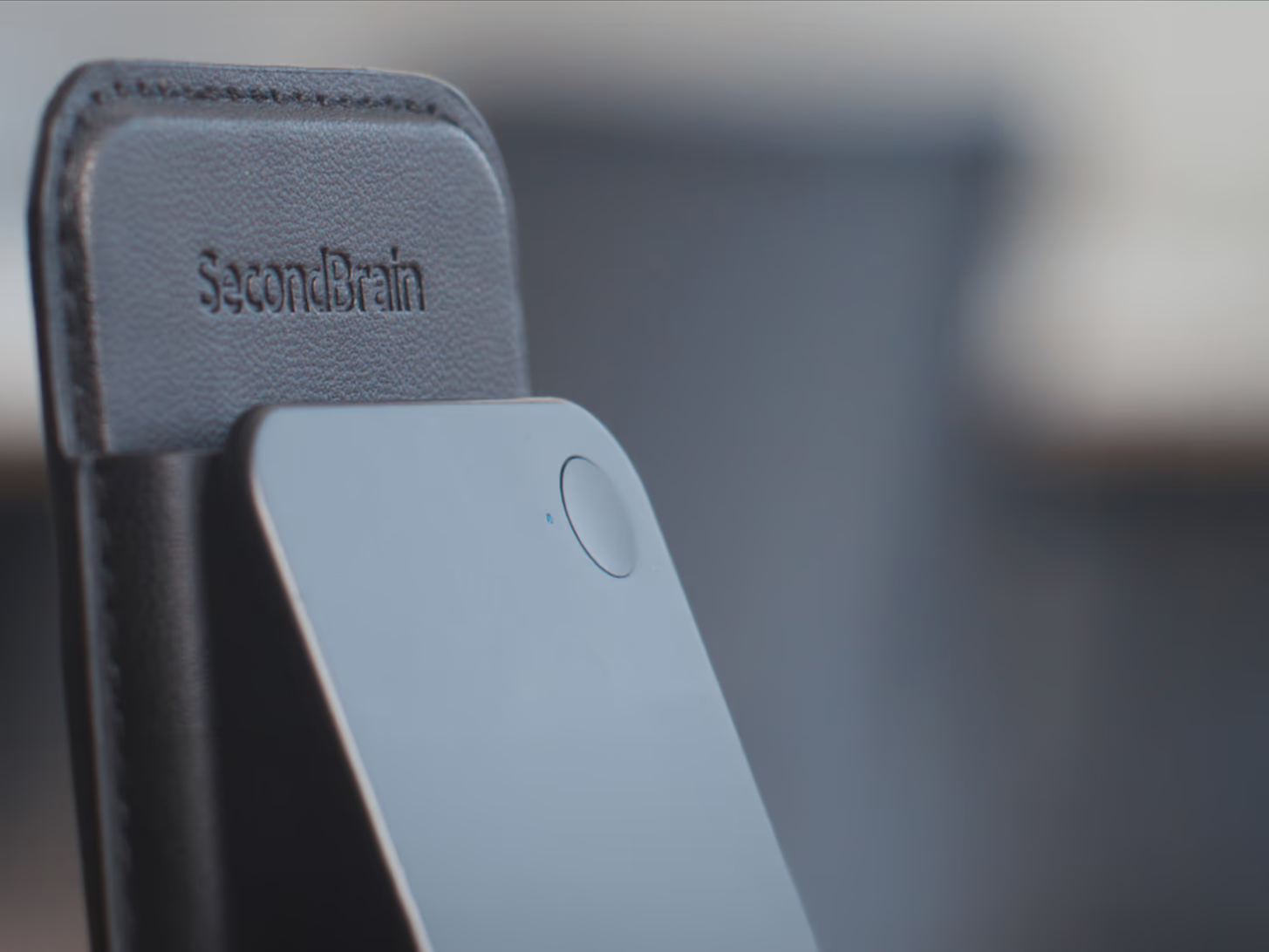
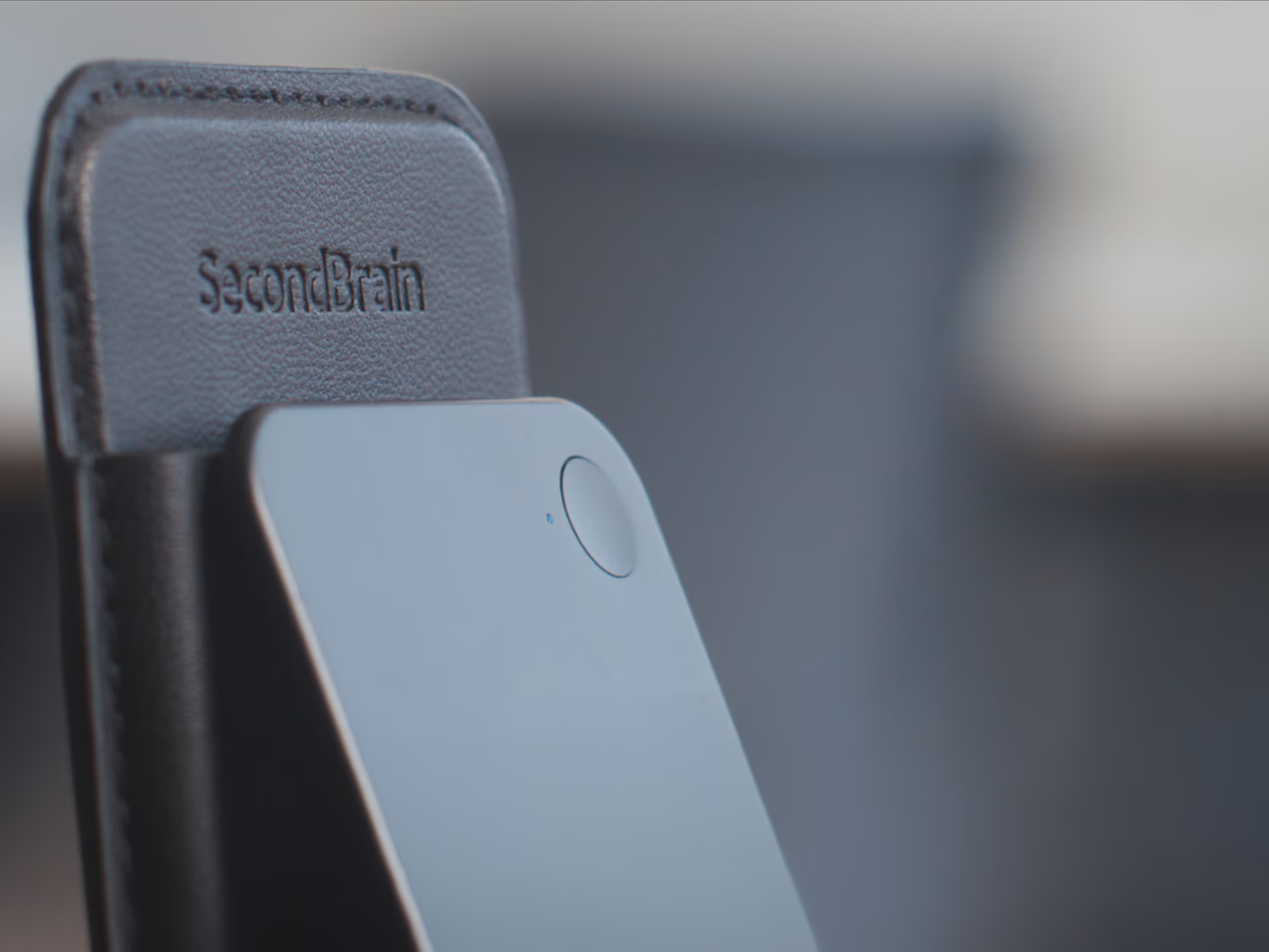
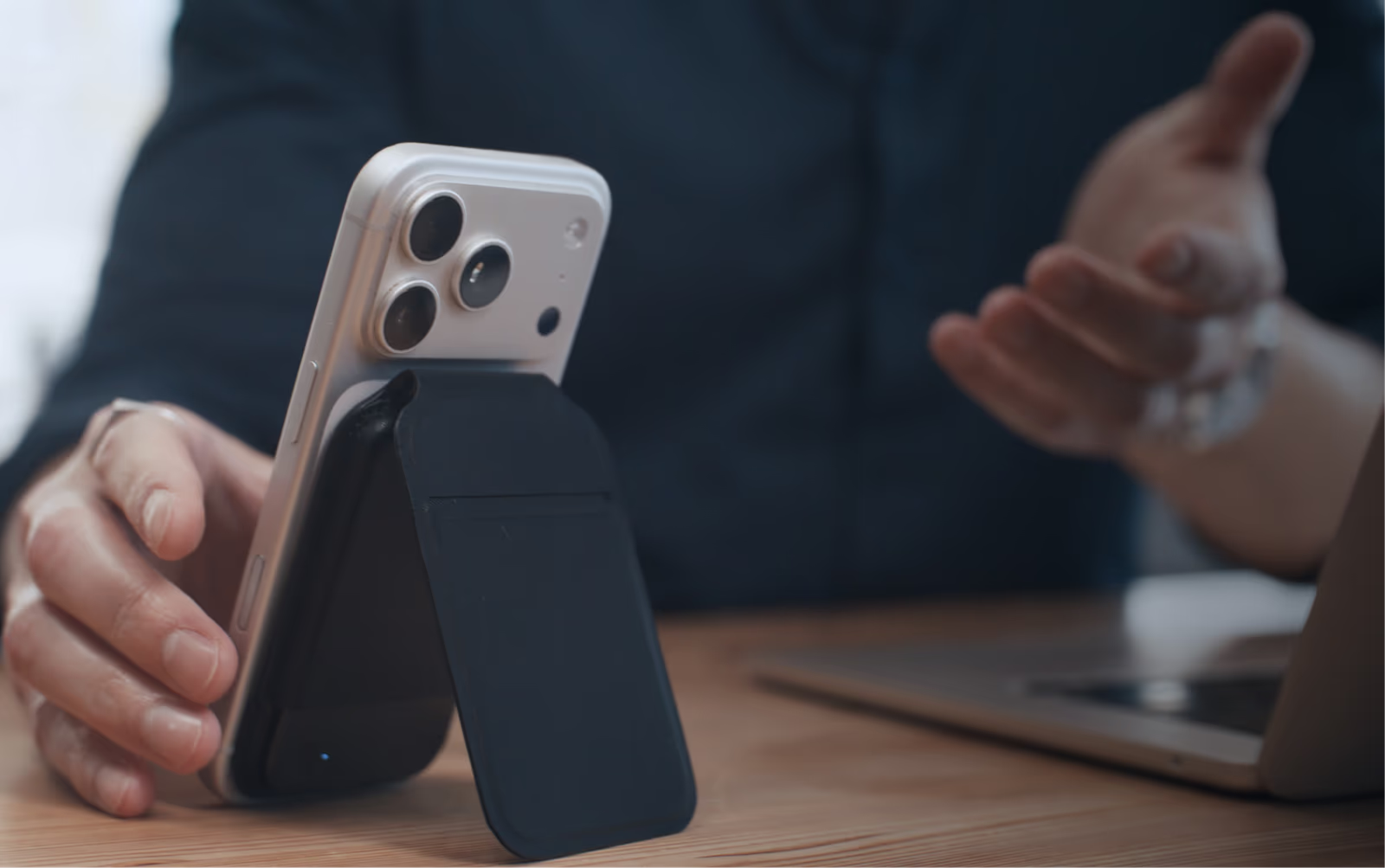
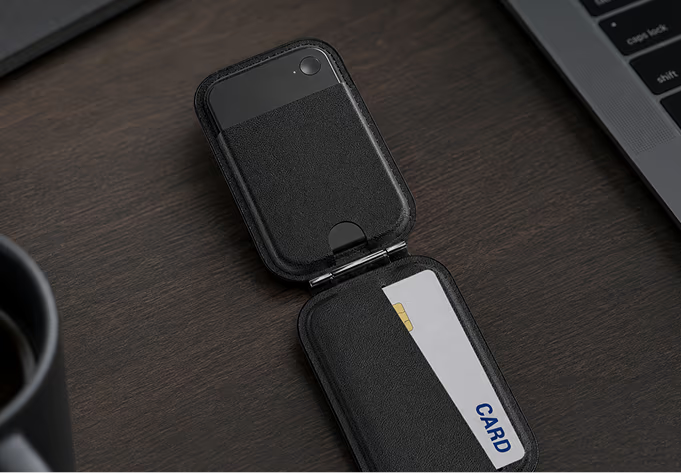
The headline spec is the form factor. At 85.6 x 54.1 x 2.95mm - the footprint of a standard credit card, at less than 3mm thick - and 26 grams, SecondBrain Note is built from aircraft-grade aluminium and designed to disappear into a wallet, a card holder, or the back of a phone via MagSafe. It ships with a magnetic leather wallet that works three ways: as a standalone card holder, as a MagSafe attachment stuck to the back of an iPhone, and folded into a kickstand.
Audio capture is handled by a four-microphone array with AI-assisted beamforming, rated to isolate voices from up to 5 metres (16 feet) away, plus a bone-conduction sensor that GenSpark says picks up both sides of a phone call through vibration alone - useful for capturing the other party's audio on a call without needing their permission to record on their end. A single visible LED serves as a privacy indicator, and a one-tap gesture lets you flag a moment as a highlight while recording, without needing to touch a phone.
- Battery: 500mAh, rated for up to 35 hours of continuous recording.
- Storage: 64GB onboard, roughly 7,000 hours of audio before a sync is required.
- Connectivity: Bluetooth 6.0, Type-C magnetic charging.
- Certifications: SOC 2 Type II and ISO 27001, with GDPR compliance work in progress.
How It Works: Capture to SecondBrain
The processing split is worth understanding before you buy one: capture is local, to the device's onboard storage, but the parts that make the recordings useful - transcription, summarisation, the "Super Agent" features - run through GenSpark's cloud-based SecondBrain system once the device syncs to the companion app. This is not a fully on-device AI pipeline in the way some privacy-focused competitors position themselves; it is closer to the standard pattern for this hardware category, where the recorder is a capture peripheral and the intelligence lives server-side.
Once synced, GenSpark's cross-app memory layer is the actual product differentiator. Voice recordings sit alongside emails, calendar entries and CRM records inside the same searchable index, connected to Gmail, Google Calendar, Slack, Notion, Google Workspace and HubSpot. That means a question like "what did we agree with this client last month?" can pull from a recorded call, the follow-up email thread, and the calendar invite in one answer, rather than requiring you to remember which tool holds which fact.
Capabilities Deep Dive
Automatic transcription and organisation
Recordings sync automatically to the SecondBrain mobile app, where they are transcribed to searchable, indexed text with voice-command support for hands-free interaction - asking the app a question about a past recording rather than scrubbing through audio manually.
The "Super Agent"
This is GenSpark's name for the layer that turns a raw transcript into work product: meeting summaries and concise overviews, drafted follow-up emails, project dashboards that track progress and milestones pulled from what was discussed, and pattern or trend analysis across recordings and connected data over time.
Workspace integrations
Opt-in connections to Gmail, Google Calendar and Google Docs let the Super Agent cross-reference a recording against what is already on your calendar or in your inbox - flagging, for example, that a commitment made verbally on a call was never followed up in writing.
Real-World Use Cases
The device's two capture modes map to two genuinely distinct use cases. The 4-metre-plus microphone range is built for in-person meetings - clipped to a wallet on the table, it is meant to capture a full room without being held up to anyone's face. The bone-conduction sensor targets phone calls specifically, picking up the other party's voice through vibration when the device is against your ear or the phone itself, which sidesteps the awkwardness of asking to record a call mid-conversation.
In both cases, the value proposition is the same one every AI-recorder product in this category is chasing: turning conversations - traditionally the least-searchable form of work information - into something that shows up in the same search as your emails and documents. Whether that is worth $179 plus a subscription depends entirely on how much of your actual work happens in meetings and calls versus text.
Security and Privacy
GenSpark cites SOC 2 Type II and ISO 27001 certification for the SecondBrain system, with GDPR compliance work described as in progress rather than complete at launch. A "personal data vault" model is used for access control, and workspace integrations are opt-in rather than automatically enabled.
Worth flagging plainly: recording someone else's side of a phone call or an in-person conversation without their knowledge raises real consent questions that vary significantly by jurisdiction - some regions require all-party consent to record a call, others only one-party. The device's visible privacy light is a reasonable design nod toward transparency in person, but it does not resolve the legal question, which sits with the user, not the hardware.
Pricing and What's in the Box
SecondBrain Note launched at $179 (a 10% discount off the $199 list price), which includes the device itself, a Type-C magnetic charging cable, and the three-way MagSafe leather wallet. The price also bundles a GenSpark app membership tier with a monthly transcription-minute allowance:
- Starter: 300 transcription minutes per month.
- Plus / Pro: effectively unlimited transcription, up to 24 hours a day.
As with most hardware-plus-subscription products in this category, the device price is really a down payment - the ongoing usefulness depends on staying on a paid transcription tier once the bundled allowance runs out.
Limitations
- Cloud-dependent intelligence: the transcription and Super Agent features that justify the device require syncing to GenSpark's servers - this is not a private, fully offline recorder.
- Consent and legality: the bone-conduction call-capture feature and 5-metre room pickup both raise recording-consent questions that vary by jurisdiction; the device does not solve this for you.
- Subscription-gated at scale: the free 300-minute Starter tier is thin for anyone in back-to-back meetings; realistic daily use requires Plus or Pro.
- New hardware category from a software company: GenSpark is a first-time hardware maker; long-term durability, firmware support and battery longevity have no track record yet.
- Ecosystem lock-in: the device's main advantage - a unified memory layer with email, calendar and CRM - only pays off if you are actually using GenSpark's wider Workspace platform.
How It Compares to Plaud Note
The most direct rival is Plaud Note, the recorder that established the card-format AI recorder category. Specs are close enough that the choice mostly comes down to ecosystem:
- Price: Plaud Note is $159 versus SecondBrain Note's $179.
- Battery: SecondBrain Note claims 35 hours of continuous recording versus Plaud's 30 hours; Plaud counters with a rated 60-day standby figure GenSpark has not published an equivalent for.
- Storage: both offer 64GB locally.
- Language support: Plaud advertises 112 languages with speaker labelling; GenSpark has not published an equivalent language count for SecondBrain Note.
- Software ecosystem: Plaud leans on its own "Ask Plaud" assistant and a library of 10,000+ transcription templates aimed at professionals working standalone. SecondBrain Note leans on GenSpark's broader AI Workspace - the recording becomes one input into a memory layer that already spans email, calendar and CRM, which Plaud does not offer natively.
- Compliance: Plaud publishes a broader compliance list (ISO 27001, ISO 27701, GDPR, SOC 2, HIPAA, EN 18031) than GenSpark has confirmed to date, where GDPR is still described as in progress.
In short: buy Plaud Note if you want a standalone, best-in-class recorder with the more mature compliance story. Buy SecondBrain Note if you are already using - or plan to use - GenSpark's AI Workspace and want your conversations folded into that same memory layer rather than living in a separate app.
Who Should Buy It
Buy it if you already use GenSpark's AI Workspace and want meetings and calls unified with your email, calendar and CRM in one searchable memory, or you specifically want the thinnest, most wallet-friendly form factor in this category.
Skip it if you want a fully private, on-device transcription pipeline, you need the broadest possible language support and the most mature compliance certifications today, or you are not otherwise invested in GenSpark's software - in which case Plaud Note's standalone approach is the simpler fit.
The Bottom Line
SecondBrain Note is a credible, well-specced first hardware effort - genuinely thin, genuinely long-lasting on battery, and built around a sound idea: make capture disappear and let the software do the work. It is not reinventing the AI-recorder category Plaud Note built; it is competing inside it, with GenSpark's broader Workspace ecosystem as the actual differentiator rather than the hardware itself.
Whether that differentiator matters to you is really a question about whether you are already a GenSpark user. If you are, SecondBrain Note is a sensible extension of a platform you already trust with your work data. If you are not, there is little reason to pick it over Plaud Note's more mature, standalone alternative.
Last updated: 5 August 2026. This review synthesises GenSpark's official product page and launch materials alongside independent hands-on coverage; figures may be refined as broader reviews and long-term reliability data land.
Get the free guide: Claude vs ChatGPT, Gemini & Grok
A 20-page playbook covering everything you need to choose and use the big four AI models in 2026, full cost and feature comparisons, what each is best (and worst) at, and how-tos for images, vectors, building a website, Claude Code and more.