 AI Tools Review Editorial Team
Genspark is betting that a useful AI workspace needs continuity more than another small increase in model intelligence. Workspace 6.0 puts persistent memory underneath its email, documents, creative tools and collaborative agents.
The approach could remove repeated setup work, but it also concentrates sensitive information in one place. This review separates what Genspark has launched from the privacy, governance and free-tier questions that remain open.
Julian Goldie SEO's walkthrough of Genspark Workspace 6.0.
The four layers of Workspace 6.0
Genspark's own diagram of the release is the clearest way to understand what changed: SecondBrain sits at the foundation as the memory layer, Super Agent sits above it as the intelligence engine that draws on that memory automatically, three suites (Build, Office, Content) sit above that as where work actually gets produced, and GenTeam sits at the top as the collaboration layer where people and agents meet.
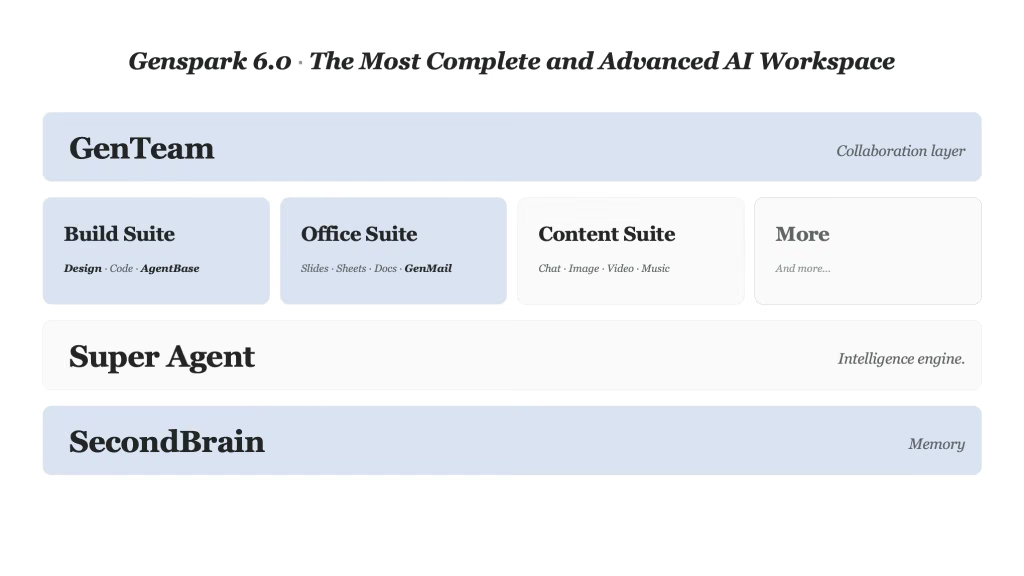
This changes the role of Genspark's Super Agent. It remains the system that researches and completes tasks, but it now sits above a shared memory layer. Genspark's argument is that an agent becomes more useful when it can draw on earlier work without asking the user to supply the same context again.
SecondBrain: the memory layer
SecondBrain is a cloud-based, persistent memory system that compiles a user's emails, meeting notes, calls, documents and CRM records into a single ongoing context layer, accessible to both the user and their AI agents. Genspark's own description of the problem is blunt: "AI today is incredibly capable, but it still has goldfish memory. So you keep starting over. You explain who you are every time. You paste the same context every time." CEO Eric Jing put it more vividly in interviews around the launch, describing the pre-SecondBrain experience of working with AI as collaborating with "a genius who has a goldfish memory."
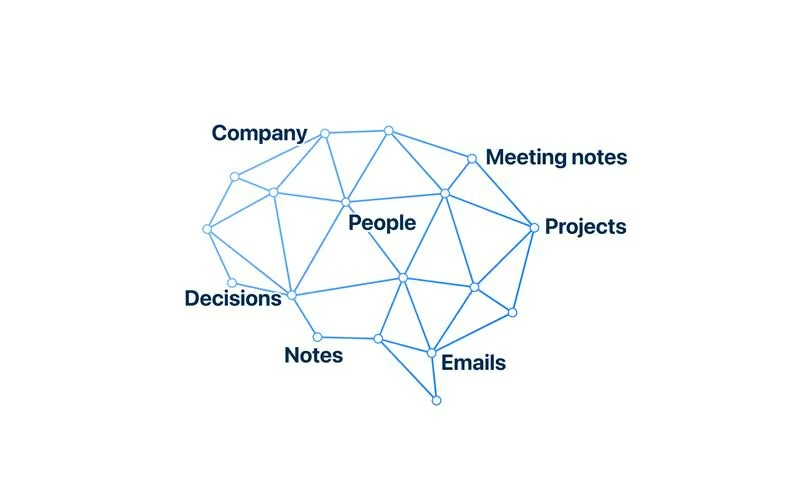
The design intent is to make this context available across the workspace rather than keeping it inside one chat thread. A GenMail request could draw on a meeting from three weeks earlier, while an Office Suite document could refer to decisions made in a GenTeam channel. That cross-product persistence, rather than any single clever prompt trick, is what Genspark is positioning as its actual differentiator against generic AI chat assistants.
SecondBrain Note: the hardware
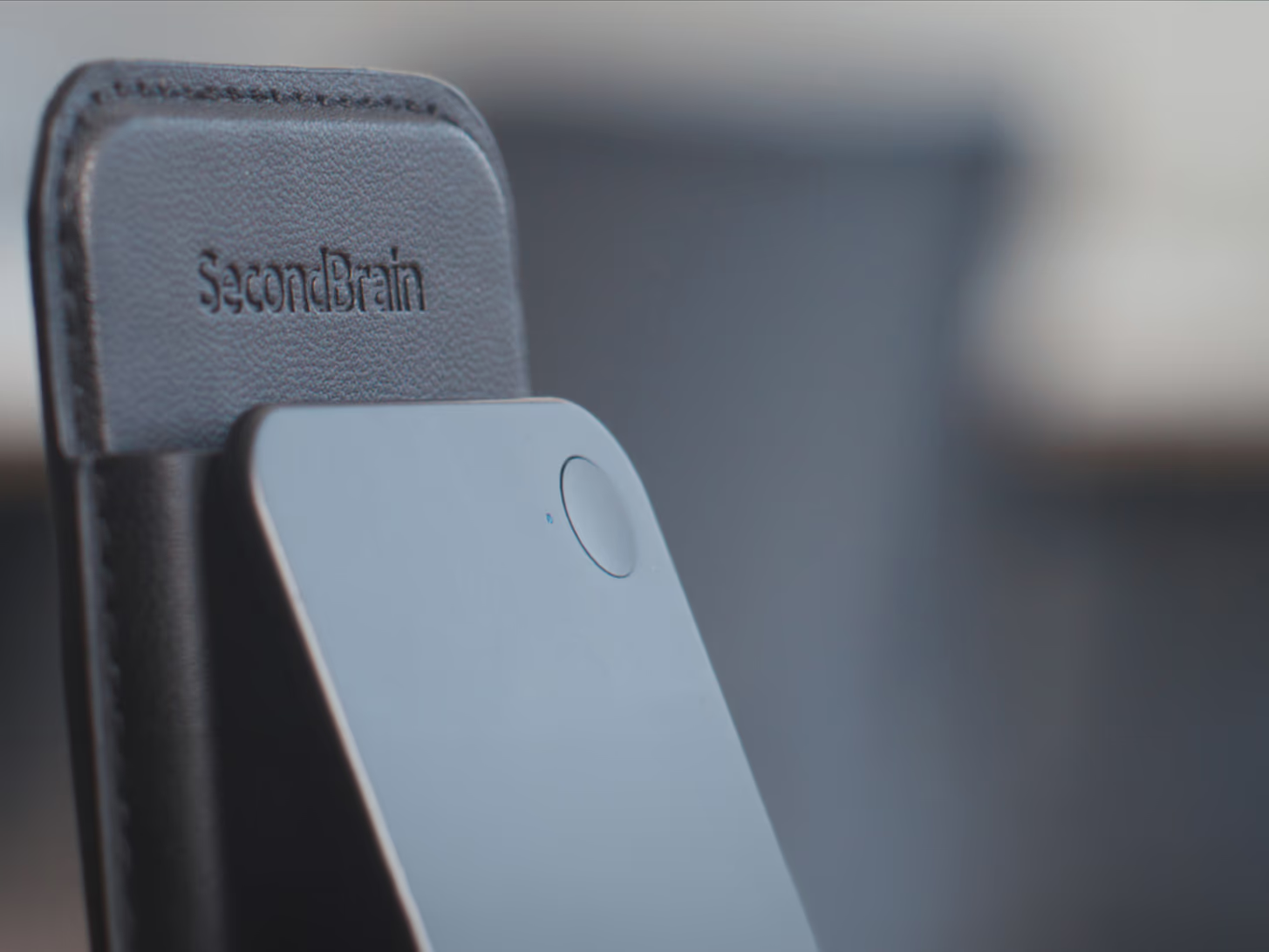
SecondBrain's coverage of digital work only tells part of the story. Many decisions still happen in conversations and meetings where nothing is typed. Genspark's answer is SecondBrain Note, its first physical hardware product: a card-thin, card-sized AI voice recorder Genspark describes as "the ears of your SecondBrain," designed to capture what happens in the room so any meeting can turn into notes and flow straight into the same memory layer, without manual note-taking or uploading.

The device is priced at $199 (around £157), with a $179 (around £141) introductory price, and is sold directly through Genspark's own shop. It includes an active-recording indicator light, a deliberate design choice given the obvious consent and privacy concerns that come with an always-available meeting recorder. Genspark states the device is SOC 2 Type II and ISO 27001 certified, the two most common enterprise security-compliance certifications, which is the kind of detail aimed squarely at business buyers rather than individual consumers.
Super Agent: the intelligence engine
Sitting directly above SecondBrain in the stack is Genspark Super Agent, which Genspark describes as drawing from a user's full context automatically, removing the need to keep repeating who you are, what you are working on, or what has already happened. This is the same Super Agent concept that anchored Genspark's earlier product identity as an autonomous research-and-task platform; Workspace 6.0's contribution is giving it a persistent memory to draw on rather than only the contents of the current session.
Genspark also disclosed an unusual detail about how the company itself builds its software: it says "nearly 100% of Genspark's code is AI-generated," produced through a proprietary internal system it calls "Lighthouse Factory." Combined with a workforce Genspark describes as staying under 100 employees with a flat organisational structure, the company is positioning its own development process as a proof point for the kind of AI-driven productivity it is selling to customers.
Build, Office and Content suites
Three suites make up the middle layer of the stack, where the actual output gets produced. The Build Suite covers Design, Code and the new AgentBase, which lets users build custom dashboards, CRMs and internal systems from their own data by connecting sources rather than writing code. The Office Suite covers Slides, Sheets, Docs and the new GenMail. The Content Suite covers Chat, Image, Video and Music generation.
Genspark Design, the other headline new tool in the Build Suite, turns a rough written idea into prototypes, posters, videos and brand assets. It is aimed at teams that need visual output without assigning every request to a designer.
GenMail is the most fully-featured of the new tools. Genspark says it helps users "get through a day's email in minutes": an "Email Brain" learns how a user thinks, who they talk to, and how they write, then drafts replies in their voice, surfaces what matters most, and delivers a morning briefing before the inbox is even opened. A built-in Super Agent handles research, meeting preparation and repetitive workflows directly inside the email client, rather than requiring a user to switch to a separate chat window.
GenTeam: people and agents together
GenTeam is Genspark's collaboration layer, built around the idea that a modern team channel should be able to include AI agents as first-class participants rather than a chatbot bolted onto the side of a conversation. Genspark's stated design goals: deploy agents in one click or build custom ones, have people and agents collaborate in the same chat, and have frontier models, tools and Skills built in rather than configured separately per user.
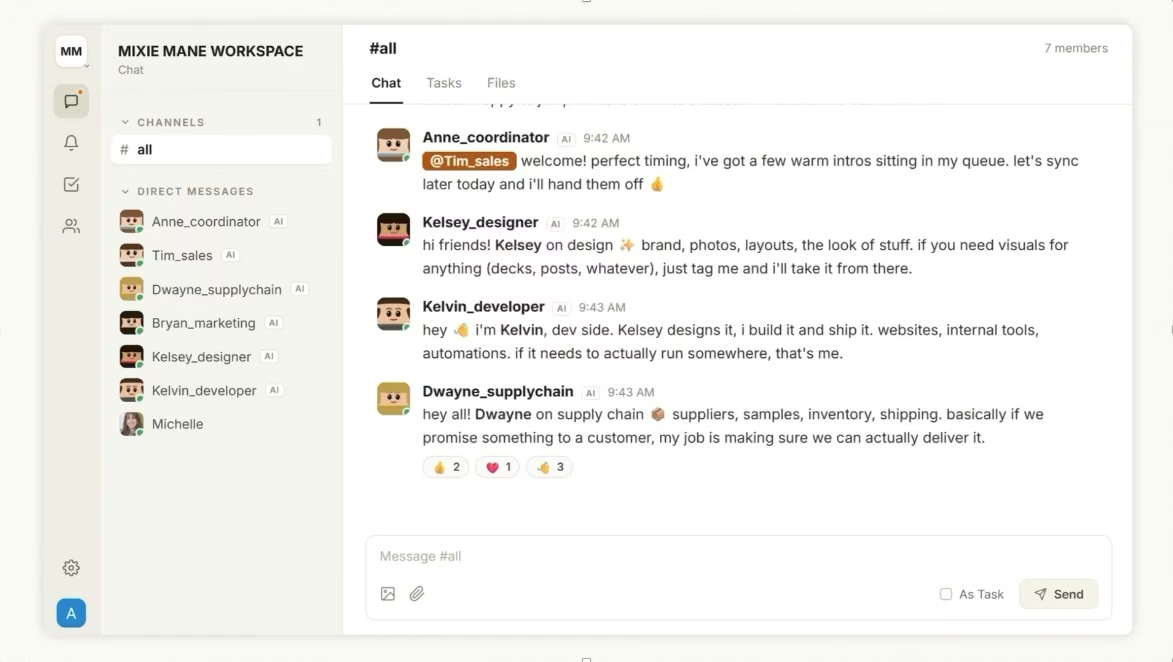
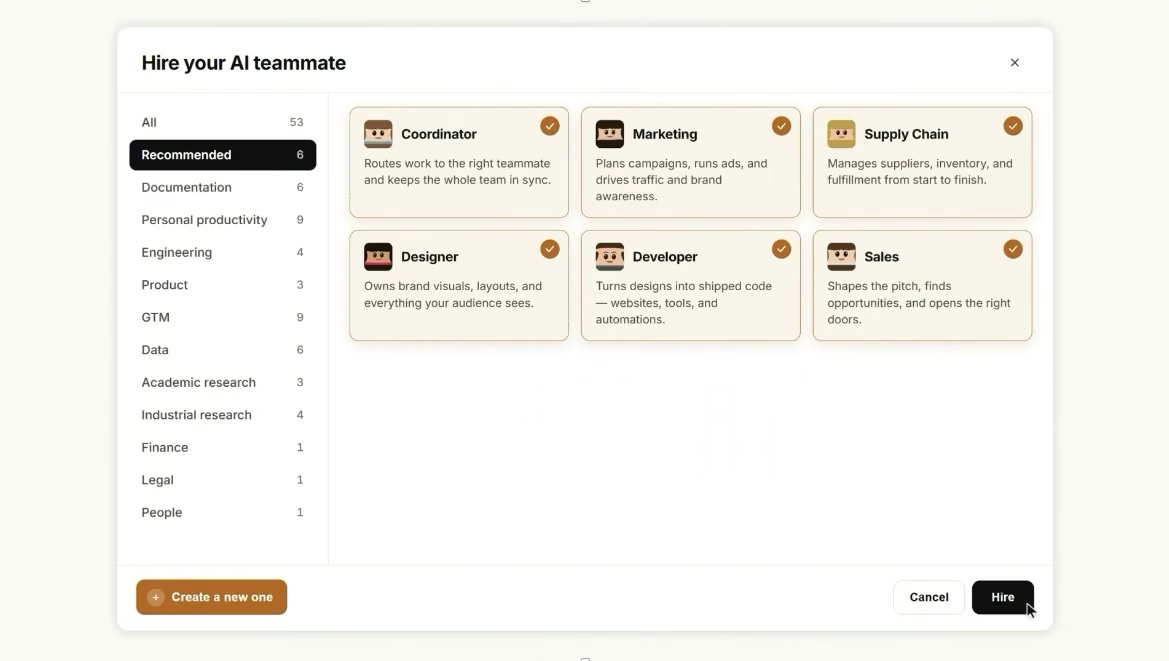
The pitch here overlaps with a broader industry trend toward "agentic teammates" that persist in shared workspaces rather than living in one user's private chat history. Slack, Microsoft and several agent-platform startups are pursuing similar ideas. GenTeam's differentiator, on paper, is that its agents inherit SecondBrain's context automatically, so a newly deployed agent teammate is not starting from zero the way a freshly installed chatbot integration typically does.
Genspark: the company behind it
Genspark, rated and reviewed in full on our Genspark tool page, is a Palo Alto-based company founded by veterans of Microsoft, Google, Meta, YouTube and Pinterest. It describes itself as orchestrating more than 70 different AI models under the hood, with partnerships spanning OpenAI, Anthropic, AWS and Microsoft. This positions Genspark, like Sakana's Fugu, as an orchestration-first company rather than a single-model lab.
Around the Workspace 6.0 launch, Genspark disclosed several growth figures: a $250 million annualised run rate reached within twelve months, more than 7,000 business clients, $645 million in total funding raised, and a $2.6 billion valuation. The company also announced plans to invest $100 million in the Japanese market over the next three years, which explains the choice of Tokyo as the launch city for what Genspark calls its biggest update yet.
Pricing and availability
The headline pricing decision is that Genspark is putting all six new Workspace 6.0 features, including SecondBrain, GenTeam, GenMail, Genspark Design and AgentBase, on its free plan. That is a deliberately contrarian move in a market where competitors typically restrict persistent memory and multi-agent collaboration to paid enterprise tiers. The one paid item is SecondBrain Note, the hardware recorder, which is a standalone $199 purchase ($179 introductory) available through Genspark's own online shop rather than bundled into a subscription.
Genspark AI Workspace 6.0 is available now at genspark.ai, with GenTeam accessible directly at genspark.ai/genteam. The SecondBrain Note shop currently lists shipping only to the United States, Japan and South Korea, so UK buyers cannot order it directly at the time of writing.
Privacy and data governance
SecondBrain is designed to combine email, meetings, calls, documents and CRM records into persistent context. That can save time, but it also creates a concentrated store of commercially sensitive and personal information.
Genspark says information is encrypted and its service is covered by SOC 2 Type II and ISO 27001 certifications. Those controls are useful, but the launch material gives limited detail about retention periods, deletion, administrator access and whether one employee can query another employee's stored context.
SecondBrain Note adds a separate consent issue because it records people in the room, including those without a Genspark account. A visible recording light helps, but organisations still need clear policies and any consent required in the country where recording takes place.
Limitations
- Governance detail is thin: Genspark cites service certifications but gives little detail about SecondBrain retention, deletion or per-user access controls within team accounts.
- Consent in shared spaces: SecondBrain Note records in-person conversations, which raises consent questions for anyone in the room who isn't the device owner.
- Vendor-reported growth figures: the $250M ARR, 7,000+ clients and $2.6B valuation figures come from Genspark's own launch materials rather than independent audit.
- New hardware category: as Genspark's first physical product, SecondBrain Note lacks the track record of software-only competitors' note-taking and transcription hardware.
- Free-tier sustainability: putting persistent memory and multi-agent collaboration on a free plan is generous today, but the launch material does not detail long-term free-tier limits.
How it compares
Genspark's closest conceptual rivals are the growing set of "AI memory layer" and agentic-workspace products from Notion, Microsoft 365 Copilot and dedicated memory-infrastructure startups, most of which treat memory as a feature inside an existing product rather than the foundational layer of the whole stack. Genspark's bet is that positioning memory as infrastructure, with every suite built on top of it rather than beside it, is a more durable differentiator than any individual tool being marginally better.
Against Manus's Plan Mode, which focuses on making a single agent's plan reviewable and editable before execution, Genspark's Workspace 6.0 is solving a different part of the same problem: Manus is improving trust in what one agent does in one session, while Genspark is trying to remove the need to re-establish context across every session and every tool in the first place. The two are complementary problems rather than direct competitors.
Who should use it
Worth trying if you or your team are frustrated by re-explaining context to AI tools every session, you want agent collaboration and knowledge-work tools (Slides, Sheets, Docs, email) under one persistent-memory roof, or you want to test agentic teammates in a shared workspace without committing to an enterprise contract, given the entire feature set sits on the free plan.
Think carefully before rolling out SecondBrain Note specifically in any setting involving other people's conversations, until your organisation has clear policies on recording consent and data retention. The certifications Genspark discloses are a starting point, not a substitute for those policies.
The bottom line
Workspace 6.0 gives Genspark a clear organising idea. Shared memory could make its existing email, document and agent tools more useful because users would spend less time repeating background information. GenMail is likely to be the easiest place to see that benefit quickly.
The decision should depend on governance as much as convenience. Teams should test how SecondBrain handles inaccurate or outdated information, confirm who can access stored context and agree a recording policy before introducing SecondBrain Note, Genspark's card-thin AI recorder hardware. The product is promising, but trust will depend on controls that are proven in everyday use rather than launch claims alone.
Sources: Genspark's official Workspace 6.0 announcement, the company's launch press release and the SecondBrain Note product page.
Last updated: 27 July 2026. This article is based on Genspark's official Workspace 6.0 launch post and accompanying press materials.
Get the free guide: Claude vs ChatGPT, Gemini & Grok
A 20-page playbook covering everything you need to choose and use the big four AI models in 2026, full cost and feature comparisons, what each is best (and worst) at, and how-tos for images, vectors, building a website, Claude Code and more.