 AI Tools Review Editorial Team
Update, 22 September 2026: Both shipped.
Grok 4.6 shipped 12 August 2026, five days later than Musk's 7 August target; see our full review in Grok 4.6 Review. Grok 4.7 shipped 21 September 2026, roughly six weeks after 4.6 rather than the "few weeks" Musk originally described, with xAI citing a new, larger base model and a longer reinforcement-learning run weighted toward difficult, hours-long tasks. Musk has since moved on to describing Grok 4.8 (in training as of 14 September) and Grok 5 as the next milestones, with Grok 5 the one he now says he expects to reach AGI; neither has a confirmed release date. The original, dated tracking of the 4.6/4.7 rumour is kept below.
Quick Answer (as originally published, 29 July 2026):
Grok 4.6 and Grok 4.7 have not shipped. On 28 July 2026, Elon Musk said Grok 4.6 would release around 7 August as a 1.5-trillion-parameter model with improved supervised fine-tuning and reinforcement learning. He said Grok 4.7 would follow a few weeks later with 2.1 trillion parameters, slightly slower serving and better token efficiency. These are first-party statements from Musk, but xAI has not published model cards, API documentation, prices or benchmarks for either model. Treat the dates and specifications as roadmap targets until the products are available.
xAI has not given Grok 4.6 or 4.7 a conventional product announcement. The available information comes from three posts on Musk's personal X account, with the latest adding a specific date and model sizes.
The new details are more useful than the earlier two-week estimate, but they are still targets rather than released specifications. This update separates Musk's statements from the information that xAI has yet to publish.
Julian Goldie SEO on Musk's Grok 4.6/4.7 timeline posts.
Summary
Artificial Analysis began tracking Grok 4.5 on 8 July 2026, while xAI's official launch page is dated 16 July. Musk then posted on 18 July that the next training run had finished and on 24 July said Grok 4.6 would arrive in two weeks, followed by Grok 4.7 two weeks later. His 28 July update narrowed Grok 4.6 to around 7 August and supplied the first stated parameter counts.
- Stated by Musk: Grok 4.6 is a 1.5T model targeted for around 7 August, with improved supervised fine-tuning and reinforcement learning.
- Stated by Musk: Grok 4.7 is a 2.1T model due a few weeks later, with better capability and token efficiency but slightly slower serving.
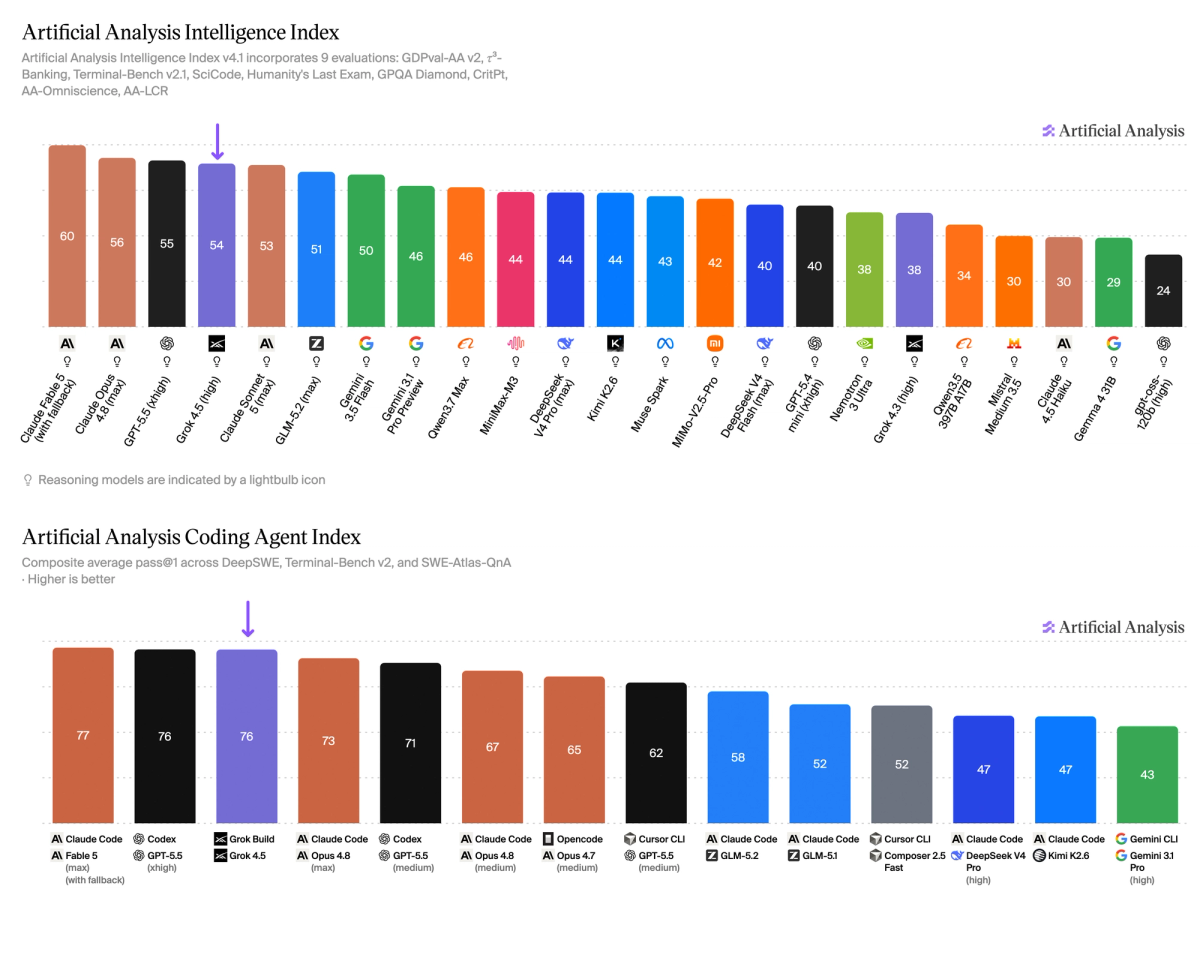
- Verified baseline: Grok 4.5 costs $2/$6 per million input/output tokens, supports a 500K-token context window and scores 54 on the Artificial Analysis Intelligence Index.
- Not published: Grok 4.6/4.7 prices, context windows, benchmarks, API identifiers, model cards or safety evaluations.
- Still uncertain: whether either target date will hold.
Musk's Three Public Updates
Musk first said on 18 July 2026 that the next training run had finished. On 24 July, he wrote: “Grok 4.6 in 2 weeks and Grok 4.7 in 4 weeks.” A third post on 28 July replaced that broad estimate with more detail: Grok 4.6 around 7 August using a 1.5T model, then a 2.1T Grok 4.7 a few weeks later.
The third post also says Grok 4.6 has significantly improved supervised fine-tuning and reinforcement learning. Musk describes Grok 4.7 as better than 4.6 in every way except serving speed, with improved token efficiency. None of the posts includes a benchmark, price, context window, API identifier or model card, and xAI has not published a corresponding product page.
What Is Actually Confirmed
The new post resolves the earlier parameter speculation, but it does not turn the models into released products. The evidence now falls into three groups:
- Stated directly by Musk: the 7 August target, the 1.5T and 2.1T parameter counts, and the training focus for both models.
- Published by xAI for Grok 4.5: $2/$6 per million-token pricing, 80-token-per-second serving claims and official coding benchmarks.
- Independently measured for Grok 4.5: a 54 Intelligence Index score, 500K context and a 54% hallucination rate on AA-Omniscience.
- Still unpublished for 4.6 and 4.7: architecture details, active parameters, context, pricing, benchmarks, API access and safety evaluations.
Parameter count alone does not establish capability or cost. Sparse mixture-of-experts models can activate only part of their total weights for each token, and xAI has not said how either model is structured. The useful comparison will begin when xAI publishes access, pricing and reproducible results.
The Baseline: Grok 4.5, Today
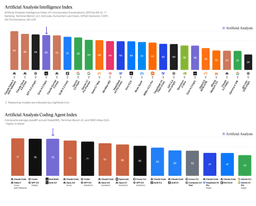
Because there is no Grok 4.6 benchmark to report, the only honest way to size up the claim is against what Grok 4.5 actually, verifiably does today. On the Artificial Analysis Intelligence Index, Grok 4.5 (high) scores 54, fourth place among tracked frontier models, behind Claude Fable 5, GPT-5.5 and Claude Opus 4.8. On the Coding Agent Index it scores 76, on par with GPT-5.5 in the Codex harness.
Grok 4.5's strongest independent result is efficiency. Artificial Analysis reports $0.31 per Intelligence Index task. xAI separately claims 80-token-per-second serving and roughly twice the token efficiency of comparable models. Those measures use different methodologies, so they should not be treated as interchangeable.
Grok 4.5 also carries a specific, documented weakness worth restating here because it directly bears on how much scrutiny 4.6 deserves at launch: on Artificial Analysis' AA-Omniscience Index, which tests whether a model knows what it doesn't know, Grok 4.5's accuracy improved from 35% to 52% versus Grok 4.3, but its hallucination rate rose even faster, from 25% to 54%. xAI has still not published a Grok 4.5-specific model card addressing that regression. Whether Grok 4.6 repeats, worsens or fixes that pattern is exactly the kind of question a proper launch document would need to answer, and exactly the kind of question a two-sentence X post cannot.
The Stated Model Sizes
Musk now says Grok 4.6 has 1.5 trillion parameters and Grok 4.7 has 2.1 trillion. That directly supersedes earlier reports which estimated 2T for Grok 4.6 and as much as 4T to 6T for Grok 4.7.
These figures now come from Musk, but xAI has not supplied a technical specification. Total parameters do not reveal active parameters, architecture, memory requirements or inference cost. Grok 4.7's larger number therefore supports only a limited conclusion: Musk expects it to trade some serving speed for greater capability and token efficiency.
Why Kimi K3 Is the Named Target
The one specific competitive target Musk has actually named is Kimi K3, Moonshot AI's open-weight model that has drawn intense attention in July 2026, both for its capability and for the US-China export-control dispute surrounding it. The stated framing: Grok 4.6 should “match or exceed Kimi K3's capability while keeping the generation speed and token efficiency of the smaller Grok 4.5.”
Naming a specific open-weight rival as the bar to clear, rather than simply claiming a new leaderboard-topping score, is notable framing in itself: it positions Grok 4.6 as a response to a competitor that shipped its weights openly and drew real developer attention, rather than as a pure internal capability milestone. It also means Grok 4.6's eventual reception will likely be judged directly against Kimi K3's independently verified benchmark numbers, whatever those look like by the time Grok 4.6 actually ships.
There is a second layer to why Kimi K3 specifically makes for a pointed target: its release has been entangled in a US-China export-control dispute over the Nvidia hardware used to train it, covered in detail in our separate piece on the story. A closed-weight, US-based lab explicitly naming an openly-weighted Chinese model as the capability bar to clear is itself a small data point in the broader 2026 narrative around open-weight models closing the gap to closed frontier labs faster than expected, a theme that has come up repeatedly across this year's releases from Moonshot, Alibaba's Qwen team, Zhipu's GLM line and DeepSeek, alongside the closed-lab frontier represented by Anthropic, OpenAI, Google and xAI itself.
xAI's Release History
The Grok line began with Grok 1 in November 2023, followed by Grok 1.5 and the multimodal Grok 1.5V in 2024. Grok 2 arrived in August 2024, Grok 3 in February 2025 and Grok 4 in July 2025. Grok 4 Fast and Grok 4.1 followed later that year. Artificial Analysis began reporting Grok 4.5 results on 8 July 2026, while SpaceXAI's own launch page is dated 16 July.
The sequence shows that xAI has shortened the gap between releases, so a rapid follow-up is plausible. It does not establish that the latest dates will hold. The absence of published Grok 4.6 and 4.7 documentation also means buyers cannot yet compare safety, price or deployment requirements.
xAI's Release Cadence, and Its Track Record on Deadlines
xAI has released Grok updates frequently since mid-2025. If Grok 4.6 appears around 7 August and Grok 4.7 follows within weeks, the pair would mark an unusually compressed public release cycle.
Musk's dates should still be treated as targets. The company has not added them to a public release schedule, and the latest post does not include the usual launch evidence such as API access, pricing or documentation.
Realistic Timeline
Musk's latest target is around 7 August 2026 for Grok 4.6. Grok 4.7 is described only as arriving “a few weeks later”, which points to late August or September if the first date holds.
The 7 August date is more precise than the earlier two-week statement, but it remains a founder-stated target. Availability in the SpaceXAI console, published API documentation and a dated xAI launch page will be stronger evidence that the model has shipped.
What Else Is Shipping at the Same Time
xAI's compressed timeline lands in the same few weeks as several other major moves: Claude Opus 5 shipped from Anthropic, Google confirmed Gemini 4 pre-training has begun (covered in our companion article), GPT-5.6 continues its rollout from OpenAI, and Kimi K3's open-weight release from Moonshot AI is the explicit benchmark xAI has named for Grok 4.6 to beat. Every major lab is, in effect, either shipping or pre-announcing its next move in the same narrow window, which is the real context for why xAI is racing to ship twice in one month rather than sitting on Grok 4.5's current, genuinely strong price-to-performance position.
That density of simultaneous announcements also means any Grok 4.6 benchmark, once it actually exists, will be judged against a moving target: whichever of Kimi K3, Opus 5, GPT-5.6 and (much further out) Gemini 4 has the strongest independently verified numbers at the moment Grok 4.6 ships, not against today's leaderboard.
For buyers, the sensible response is to compare released models against current workloads rather than plan around an unreleased leaderboard position. Grok 4.6 can be assessed properly only after access and independent results are available.
Open Questions
The gap between a founder's tweet and a shipped model with a published spec is where most of the real uncertainty in this story lives. Specifically unresolved:
- Will xAI publish a model card this time? Grok 4.5 shipped without one, a gap flagged in independent coverage and a departure from the model cards Grok 4, 4 Fast and 4.1 all received.
- What will pricing look like? Grok 4.5's $2/$6 per million tokens undercut every other frontier lab; whether that holds for a larger, more capable 4.6/4.7 is unstated.
- How are the 1.5T and 2.1T models structured? Total parameters are now stated, but active parameters, architecture and inference requirements remain unknown.
- Does the AA-Omniscience hallucination-rate regression seen in Grok 4.5 (which more than doubled versus Grok 4.3, from 25% to 54%) continue, worsen, or get addressed in 4.6/4.7? No safety-evaluation commitment has been made either way.
- Will both dates hold, slip together, or slip independently? Grok 4.7 was already described as trailing 4.6 by weeks before any slippage; a delay to 4.6 would presumably cascade.
Who Should Care Now
Teams currently evaluating Grok 4.5 for production agentic or coding workloads have no reason to pause on Grok 4.6's account: 4.5 is shipped, priced and independently benchmarked today, while 4.6 has none of those things yet. Anyone tracking the Kimi K3 story should note that xAI has now explicitly named it as a competitive target, which is likely to keep Kimi K3 benchmark comparisons relevant well beyond its own launch cycle. Compliance and procurement teams should specifically watch whether xAI publishes a model card at Grok 4.6's actual launch, given the gap left by Grok 4.5's release, rather than assuming a safety evaluation will simply appear.
Journalists and analysts citing this story should be careful to attribute the timeline correctly: it is accurate to say “Musk stated Grok 4.6 would ship in two weeks,” it is not accurate to say “xAI confirmed a release date,” and the distinction matters given how often the two get collapsed into one headline once a founder posts a number on X. Retail investors and SpaceXAI-adjacent readers should also note that a shipped-on-schedule Grok 4.6 and 4.7 would be a genuine, positive proof point for xAI's post-merger execution speed, which is presumably part of why Musk is stating the timeline publicly rather than letting it leak.
The Bottom Line
Musk has now given Grok 4.6 a specific target date and stated model sizes for both releases. That is a material update, but it remains a roadmap statement. Neither model is available, documented or independently benchmarked.
The practical position is unchanged: use Grok 4.5 if you need a model now, and reassess when Grok 4.6 has a public API identifier, price and independent results. For Grok 4.7, even the date remains broad. The next useful evidence will come from shipped products rather than further parameter claims.
Sources
- Elon Musk's 28 July 2026 update, stating the 7 August target and 1.5T/2.1T model sizes.
- Elon Musk's 24 July 2026 timeline post.
- SpaceXAI's official Grok 4.5 launch page, dated 16 July 2026.
- Artificial Analysis' independent Grok 4.5 evaluation.
Last updated: 22 September 2026. Grok 4.6 (12 August) and Grok 4.7 (21 September) have both shipped since this page was originally published on 29 July 2026, when neither had. The historical sections above are preserved as originally written and dated accordingly. Grok 4.8, 4.9 and Grok 5 remain in training with no confirmed release date.
Get the free guide: Claude vs ChatGPT, Gemini & Grok
A 20-page playbook covering everything you need to choose and use the big four AI models in 2026, full cost and feature comparisons, what each is best (and worst) at, and how-tos for images, vectors, building a website, Claude Code and more.