 AI Tools Review Editorial Team
Quick answer:
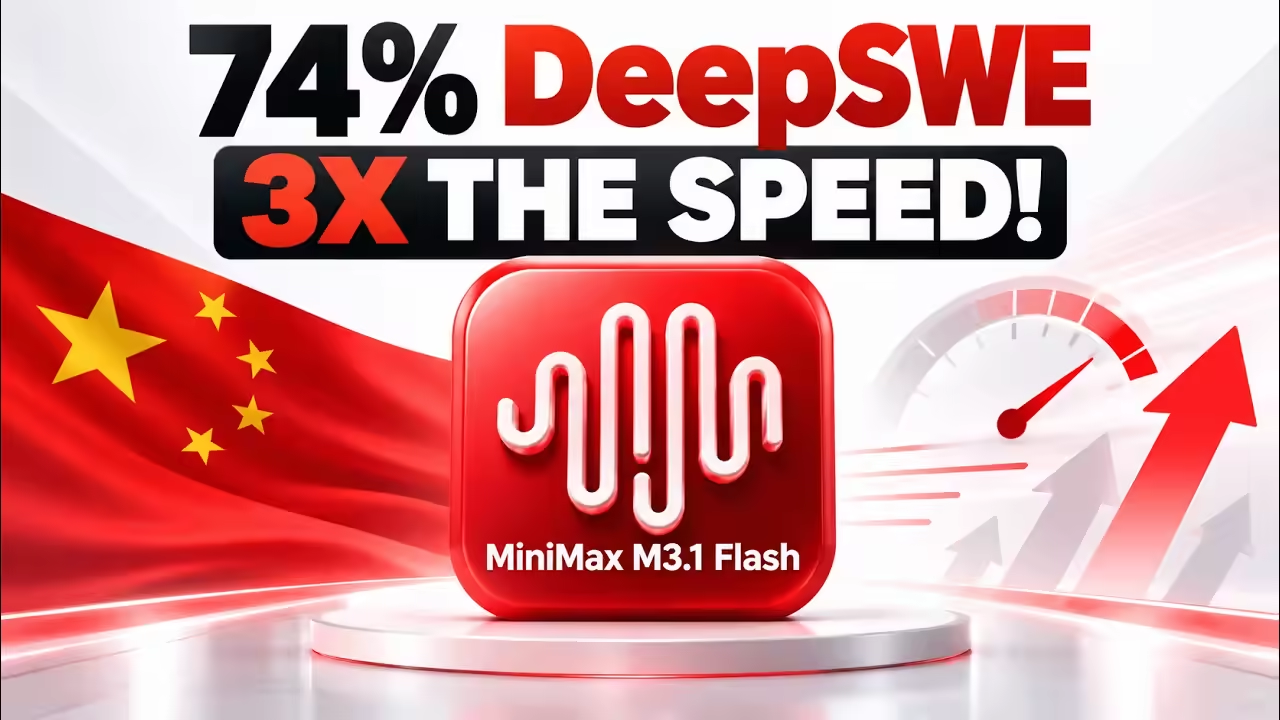
MiniMax M3.1 Flash, announced on 19 October 2026, is an agent-focused model that MiniMax says scores 73.7% on DeepSWE v1.1, runs nearly 3x faster online and costs about 70% less for agentic tasks than the previous generation. API pricing is 1 yuan input and 4 yuan output per million tokens. Open weights are promised but undated. Every number is MiniMax's own.
Chinese labs have spent 2026 competing on a different axis from their American rivals: not the single highest score, but the best score per pound. MiniMax M3.1 Flash is the latest and sharpest example. It is a fast, cheap model tuned for long agentic loops, and it arrives after weeks of anonymous testing under the codename Space Bunny.
This guide separates what MiniMax has actually published from what the YouTube coverage and aggregator write-ups have layered on top. Where a number is the company's own and unverified, we say so. Where a detail has not been published, we say that too.
WorldofAI puts M3.1 Flash through coding and agentic tests and comments on its speed.
Executive Summary
MiniMax M3.1 Flash is the fast tier of the MiniMax M3.1 family. Based on the company's announcement as reported by IT之家 and syndicated across Chinese tech media on 19/10/2026, the headline claims are straightforward. It reaches 73.7% on DeepSWE v1.1, which MiniMax places in the top tier of models. It leads Chinese models on OSWorld V2 with 61.7 and on Agents' Last Exam with 29.6. It posts 76.2 on BankerToolBench and 82% on CyberGym. Online inference is nearly three times faster than the previous generation, and overall cost for agentic tasks is said to be 70% lower.
Three things make this release worth attention even if you discount the self-reported scores. First, the price: 4 yuan per million output tokens is a fraction of what frontier Western models charge. Second, the focus: the benchmark list is almost entirely agentic (computer use, tool use, software engineering) rather than the general-knowledge tests that dominated 2024 and 2025 launches. Third, the promise of open weights, which, if delivered under a permissive licence, would put another strong agent model within reach of self-hosting teams.
Three things should temper enthusiasm: no independent evaluation exists yet, the 3x and 70% claims lack a published method, and the context window, parameter count and licence were not stated in the announcement we could verify. For the wider picture of how Chinese labs are racing on cost, read our coverage of DeepSeek V4.1 Flash 1017 and the Kimi K3 launch.
From Space Bunny to M3.1 Flash
Anonymous model testing has become a standard launch tactic. A lab ships a checkpoint under a whimsical codename to a model-comparison arena or a routing platform, lets users rate it blind, and reveals the identity later. The approach produces unbiased feedback, because users are not primed by a brand, and it generates a large volume of real-world traffic to stress the serving stack before launch.
Space Bunny followed that pattern. According to the Chinese-language announcement coverage, an early version of M3.1 Flash processed more than 200 trillion tokens while running anonymously, and MiniMax has now confirmed that Space Bunny was an early build of the model it is launching. Two hundred trillion tokens is an enormous figure, and while it is MiniMax's own statement, it is consistent with a model being offered free or very cheaply through aggregators for several weeks.
For readers, the practical lesson is that anecdotal impressions of "Space Bunny" from earlier in October now apply to a named product. If you tested it blind and liked its speed, M3.1 Flash is that model, though the shipping version may differ in post-training details from the checkpoint you used.
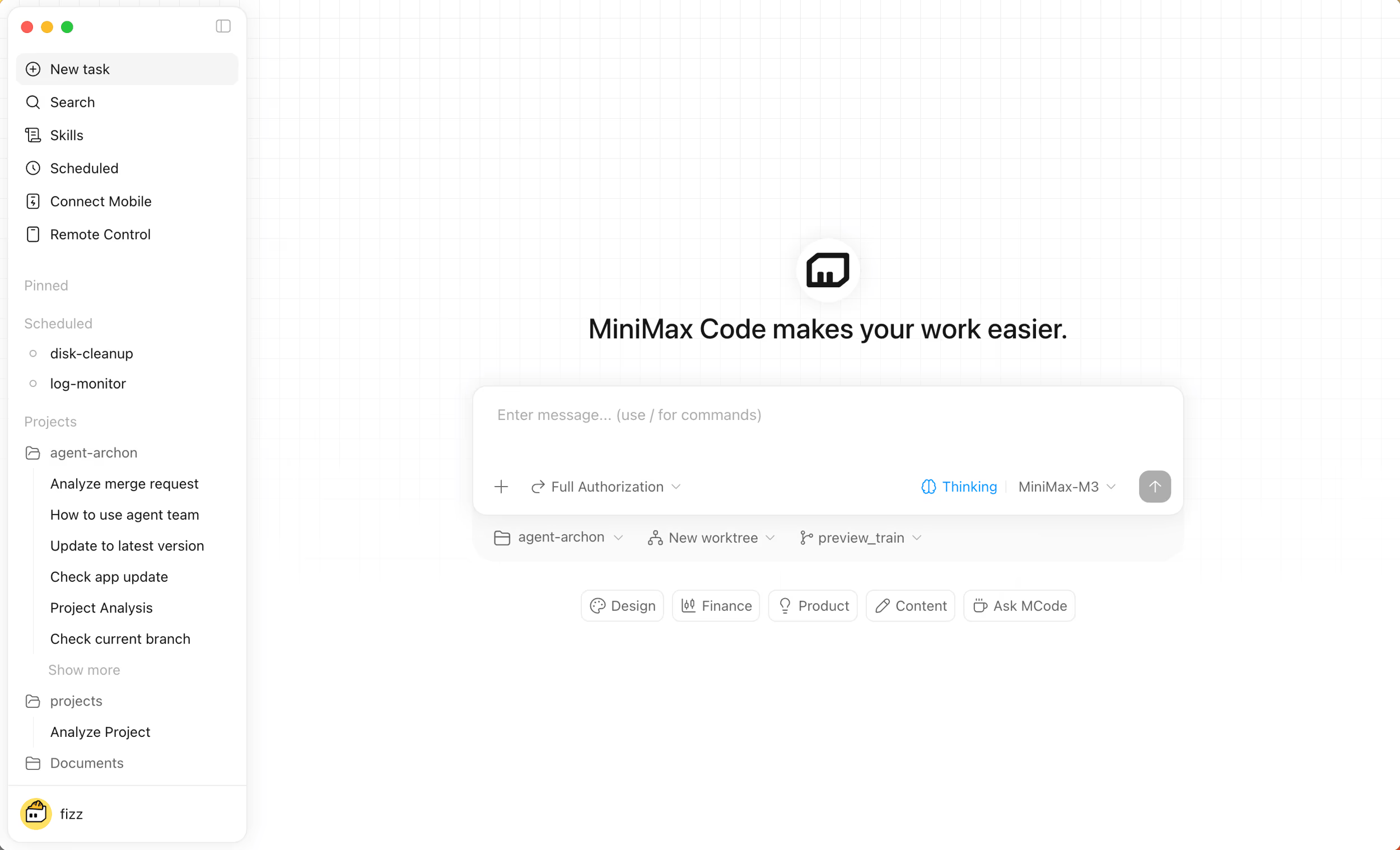
This is MiniMax's second notable agent release in recent months, following the harness rebuild we covered in MiniMax Code 2.0. M3.1 Flash is available in MiniMax Code as well as through the API and the MPlan subscription, which suggests the model and the coding harness are being developed together, a pattern that has served other labs well.
Benchmarks: What MiniMax Published
The table below lists every benchmark result we could verify from the announcement coverage. These are MiniMax's figures. We have not found third-party reproductions, and we have deliberately not filled gaps with estimates.
| Benchmark | M3.1 Flash result | What MiniMax says |
|---|---|---|
| DeepSWE v1.1 | 73.7% | Top-tier among models |
| OSWorld V2 | 61.7 | First among Chinese models |
| Agents' Last Exam (ALE) | 29.6 | First among Chinese models |
| BankerToolBench | 76.2 | Financial tool-use tasks |
| CyberGym | 82% | Cybersecurity tasks |
| AutomationBench-AA | Not stated | Ranked top |
Note the careful wording on two of the rows. "First among Chinese models" is a much narrower claim than "first overall", and it is a claim a lab makes when its result trails the best Western models. Similarly, the AutomationBench-AA ranking was announced without a score, so there is nothing to compare.
Understanding DeepSWE
DeepSWE, from Datacurve, consists of 113 original software-engineering tasks drawn from 91 open-source repositories in five languages. Unlike older benchmarks that reuse public GitHub issues the model may have seen in training, DeepSWE tasks are newly written, which reduces the contamination risk. With only 113 tasks, though, each task is worth almost 0.9 percentage points, so a score of 73.7% corresponds to roughly 83 tasks solved. Small differences between models, a point or two, are within the noise you would expect from run-to-run variation.
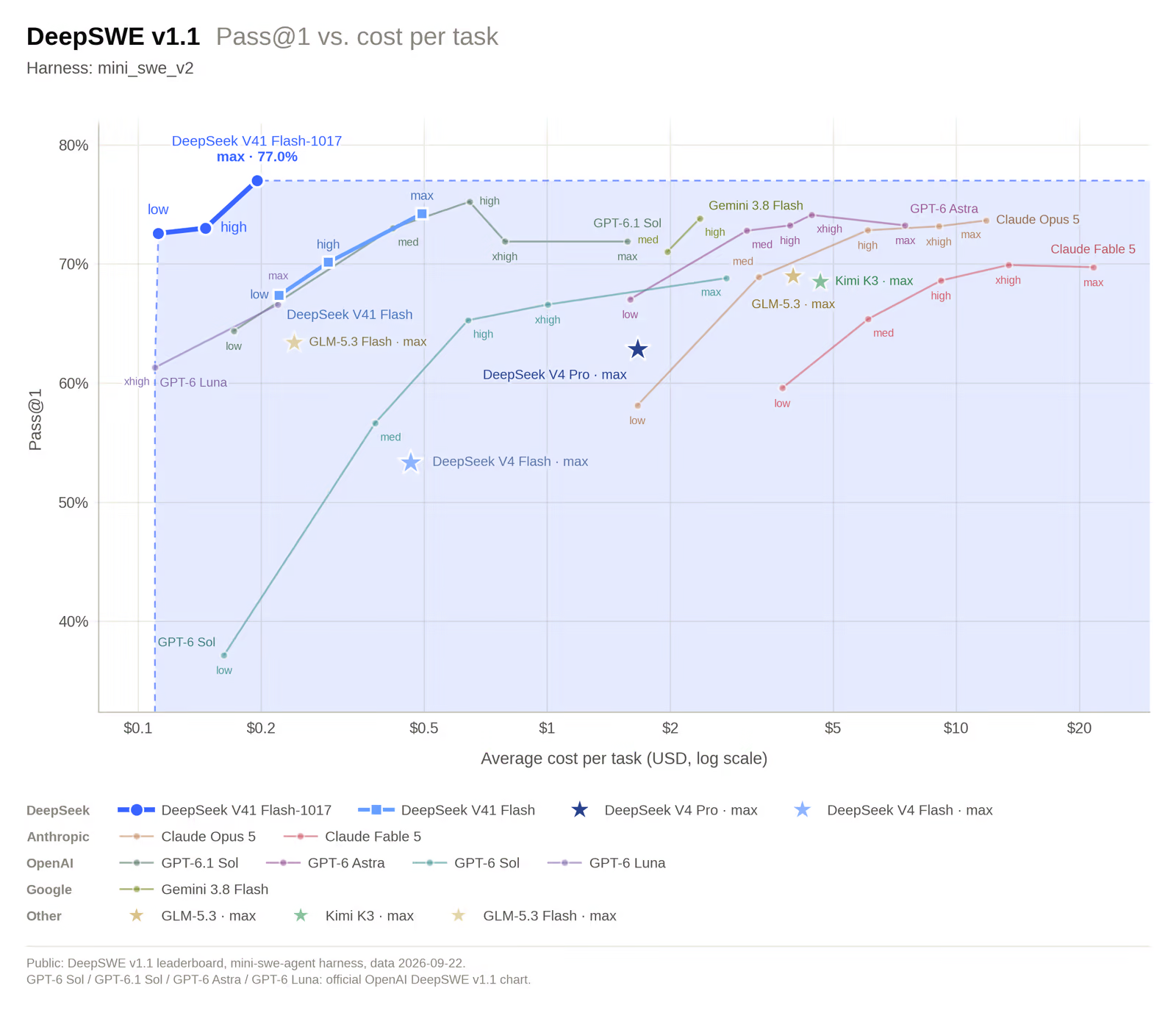
Our recent article on DeepSeek's update reported a DeepSWE v1.1 score of 77.0 for that model on its own table. If both numbers are accurate, M3.1 Flash is slightly behind but in the same band, at what MiniMax says is a lower cost. That comparison mixes two self-reported results, so treat it as directional only.
Computer Use and Agent Benchmarks
OSWorld V2 measures whether a model can operate a real desktop: clicking, typing, navigating applications and completing multi-step tasks. A score of 61.7 means the model completes a majority of tasks, which would have been state of the art not long ago. Agents' Last Exam is far harder, and 29.6 shows how much headroom remains for every lab. BankerToolBench, at 76.2, tests tool use in a financial context, relevant for the "Cowork" style assistants MiniMax is promoting.
For comparison with Western frontier systems on computer use, see our GPT-6 Astra review, though remember that OSWorld versions differ and numbers are not always comparable across releases.
Speed and Cost: The 3x and 70% Claims
MiniMax says online inference is nearly three times faster than before and agentic task cost is 70% lower. These are the two claims most likely to matter to a buyer, and both deserve scrutiny.
On speed, "online inference" speed depends on the serving hardware, batch size, and traffic load, none of which were specified. A model can feel fast on a quiet endpoint and slow at peak. On cost, a 70% reduction in the cost of an agentic task can come from three sources: a lower per-token price, fewer tokens per task because the model is more concise, or fewer failed attempts. Which of these MiniMax means, and what baseline it compares against, has not been stated. The cache-read price of just 0.1 yuan per million tokens does suggest that long agent sessions, which repeatedly resend context, benefit heavily from caching.
The sensible approach is to measure on your own workload: run a representative set of tasks, log tokens and wall-clock time, and compare cost per completed task, not cost per token.
Pricing
MiniMax's listed API prices per million tokens are 1 yuan for input, 4 yuan for output and 0.1 yuan for cached reads. At recent exchange rates that is about 11p (roughly $0.14) input, 44p ($0.55) output and 1p ($0.014) for cache reads. Exact conversions move with the exchange rate, so check at the time of purchase. Access is also bundled in the MPlan subscription and in MiniMax Code.
For a team running an always-on coding agent, output tokens dominate cost, so the 4 yuan figure is the one to model. A task that generates 50,000 output tokens would cost about 0.2 yuan, roughly 2p, before input and caching. Compare that with the pricing in our Claude Opus 5.5 review to see why cost-sensitive teams are watching Chinese releases closely.
The Cybersecurity Angle
MiniMax lists code auditing, vulnerability patching, penetration testing, malware analysis and reverse engineering among the model's target use cases, and cites 82% on CyberGym. That is notable because Western labs have increasingly gated their strongest cyber-capable models; OpenAI's handling of GPT-6 Astra is covered in our piece on Astra's Critical cyber rating.
We could not find a published safety or preparedness report for M3.1 Flash covering misuse of these capabilities. If open weights follow, defenders and attackers will gain the same capability, and the absence of a system card is a gap worth flagging. Organisations deploying it for security work should run their own evaluations and keep a human in the loop for any action with external effects.
Open Weights: What Is and Is Not Known
MiniMax says open weights will be released later. Some secondary reports give 23 October 2026, but the primary announcement coverage says only "later". No licence, parameter count, architecture or file format was given. A Pro version, aimed at maximum capability, is also promised without a date.
Until weights ship, you cannot verify the architecture, run the model offline or fine-tune it. Plan around API access, and revisit the self-hosting question once the licence terms are public.
Limitations and Caveats
- All benchmark figures are self-reported; no independent leaderboard entry was found.
- DeepSWE has only 113 tasks, so small gaps are not meaningful.
- "First among Chinese models" is not a claim of parity with the best Western systems.
- Context window, parameter count and licence are unpublished.
- No safety or system card was found for a model marketed for offensive-security tasks.
- Data handling and hosting jurisdiction matter for regulated workloads using a China-based API.
How It Compares
Against DeepSeek V4.1 Flash 1017, M3.1 Flash appears to trade a few points of DeepSWE for a lower listed price and a stronger computer-use pitch, though neither lab's numbers have been independently checked. Against Kimi K3, which is a far larger open model, it is the leaner option. Against Western frontier systems such as Claude Fable 5.1 or GPT-6 Astra, it is almost certainly behind on the hardest reasoning and safety-critical tasks but plausibly competitive on routine agentic coding at a fraction of the cost.
Who Should Use It
- Cost-sensitive agent builders: test it as a cheap executor behind a stronger planner model.
- Teams with high-volume, repetitive coding tasks: measure cost per completed task against your current model.
- Self-hosting teams: wait for the weights and licence before committing.
- Regulated or security-critical users: hold back until independent evaluations and data-handling terms are available.
The Bottom Line
MiniMax M3.1 Flash looks like a serious entry in the cheap, fast agent tier, with a credible DeepSWE score and unusually low prices. The evidence is, for now, the company's own. Treat it as a strong candidate to benchmark on your workload this week, not as a proven replacement for a frontier model.
Last updated: 21/10/2026. Sources: MiniMax announcement as reported by IT之家 (19/10/2026) and Datacurve DeepSWE documentation. We will update this article when independent evaluations and the open weights appear.