 AI Tools Review Editorial Team
Quick Answer:
Voters rejected data centres in 40 of 41 local US ballot measures on 03/11/2026, according to Ballotpedia figures cited by Nate B Jones (another tracker says 46 of 47; all results are preliminary). Nate argues the backlash will not stop AI demand but will shift advantage to well-funded Big Tech, while smaller AI clouds struggle with delay. It is a plausible argument, not a proven outcome.
Americans are using more AI than ever and voting against the buildings that power it. On 03/11/2026 that contradiction played out at the ballot box, from Ohio to California.
This article sets out what voters actually decided, what the polling says, the reasons communities give, and Nate B Jones's argument that the biggest AI companies may emerge stronger. We keep the sourced facts apart from the forecasting.
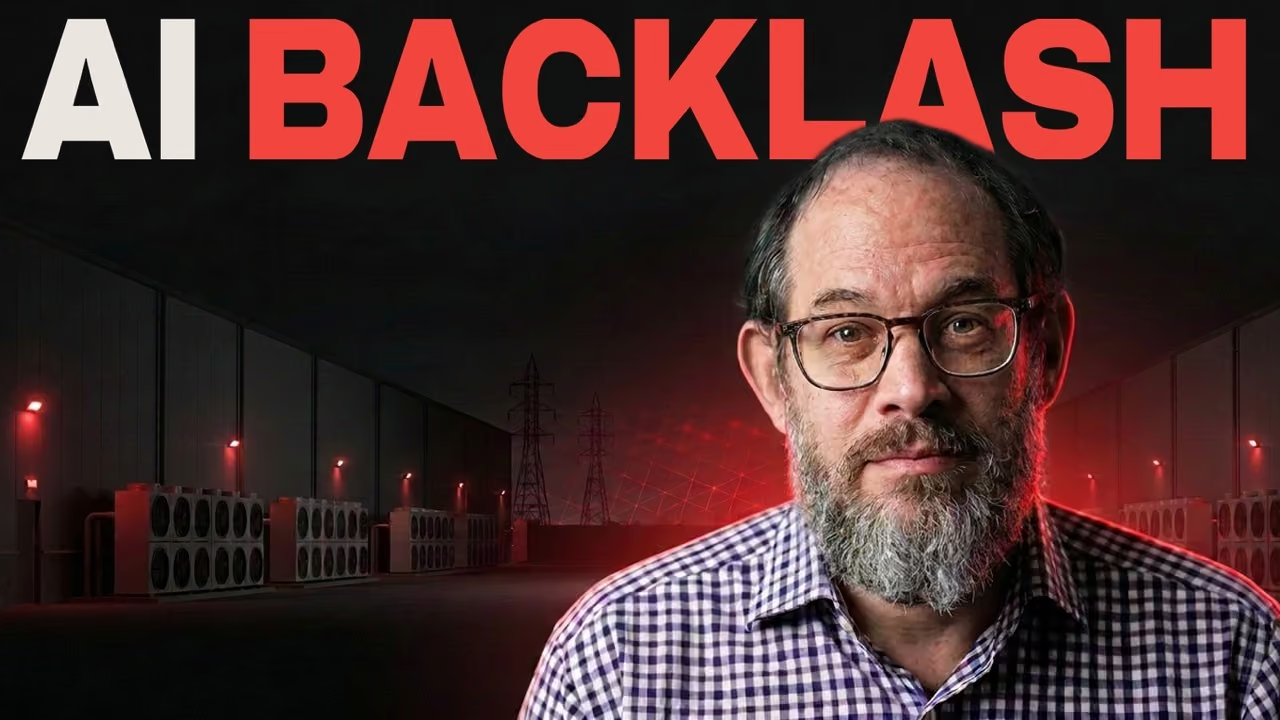
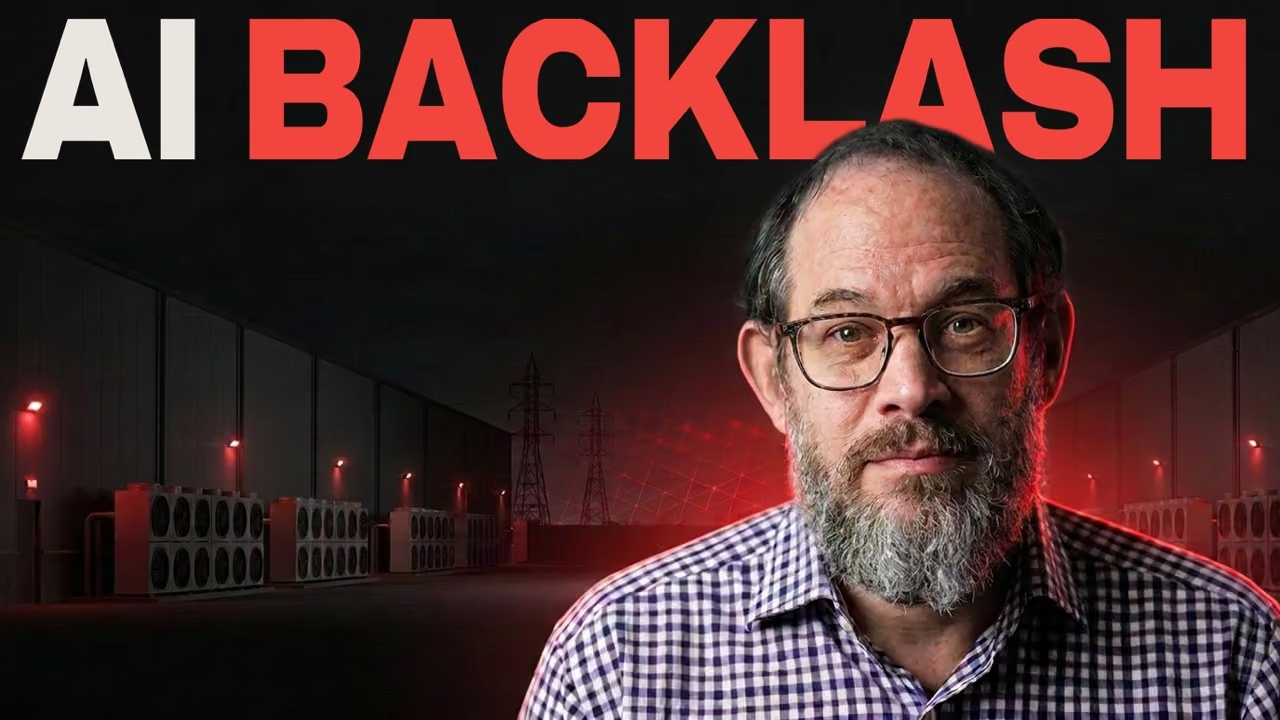
Nate B Jones (08/11/2026) on the data centre ballot results and who gains when computing power gets harder to build.
Executive Summary
- The vote: on 03/11/2026 voters in at least ten US states decided around 40 local data centre measures. Ballotpedia, as cited by Nate B Jones, counts 41 measures with a majority favouring tighter limits in 40. Other trackers differ slightly (47 votes, 46 restrictive), and all figures are preliminary.
- The argument: in a new video and newsletter, Nate B Jones says the backlash will not stop AI demand but will change who builds the capacity and who gets paid for it.
- Who gains: his thesis is that delays hurt smaller AI clouds and neoclouds most, leaving well-funded Big Tech operators stronger and more concentrated.
- The bubble angle: slower building may reduce the risk of overbuilding, which is one of the ways a bubble forms.
- The caveat: much of the second-order analysis is argument rather than data. We separate the sourced facts from the forecast throughout, and the detailed cost model in his newsletter is paywalled, so we do not reproduce it.
This article draws on Nate B Jones's video and newsletter, on Stateline and Route Fifty reporting, and on Ballotpedia counts. It is a news explainer, not investment advice.
What Voters Actually Decided on 3 November
Nate B Jones opens with a blunt line from his newsletter: the AI buildout had a terrible night on 03/11/2026. The raw numbers support the direction of that claim. Ballotpedia counted 41 local data centre measures across 10 states, and in 40 of them a majority favoured greater limits, according to the figures summarised in the video and in later coverage. A separate tracker reported the restrictive side ahead in 46 of 47 local votes as of 05/11/2026. The difference is down to what each counts as a measure, which is a reminder that these tallies are preliminary and uncertified.
The only clear exception reported by Route Fifty was Harwood, North Dakota. About 75% of 430 voters rejected a charter amendment that would have required independent review and a public hearing before approving large industrial projects. The amendment would not have affected the Applied Digital campus that had already been approved, so even this one result is less a pro-data-centre vote than a rejection of a procedural change.
Ohio had the most measures, with almost 20 towns, cities and counties voting. According to Route Fifty, opponents won every Ohio race. Defeats for data centres also occurred in California, Illinois, Kansas, Maine and New Jersey. In Emporia, Kansas, a prohibition on so-called high-impact data centres passed with just over 60% of the vote; the measure defined them as facilities needing more than 10 megawatts of peak load or drawing more than 100,000 gallons of water a day. In Monterey Park, California, voters overwhelmingly approved a permanent ban within city limits, reportedly the first such vote in the US.
It is important to be precise about what the measures did. Some were outright bans. Others were zoning amendments, charter questions or advisory votes that do not bind local officials. The headline of 40 out of 41 therefore tells you about sentiment far more reliably than it tells you about the number of projects that will actually be cancelled.
| Item | Reported figure | Source |
|---|---|---|
| Local measures (Ballotpedia count) | 41 across 10 states | Ballotpedia, via Nate B Jones and Route Fifty |
| Majority favouring limits | 40 of 41 | Same |
| Alternative tracker | 46 of 47 restrictive | 1023jack summary of the vote, 05/11/2026 |
| Ohio | Almost 20 measures; opponents won all | Route Fifty, 04/11/2026 |
| Only reported exception | Harwood, North Dakota (about 75% of 430 voted no on a charter change) | Route Fifty |
| NBC exit poll | 56% said AI and data centres were a crucial or major factor; 64% of those voted Democrat | Route Fifty |
The Polling Behind the Ballot Box
The votes did not come from nowhere. Stateline, republished by Route Fifty in October, reported a UMass Amherst poll directed by Tatishe Nteta, published in September 2026, in which 11% of Americans supported an AI data centre in their local community and 65% opposed construction. Nteta said: "The people are speaking, and they're speaking in one voice in opposition to this infrastructure."
Other polling points the same way. An ABC News, Washington Post and Ipsos survey in October found 72% opposed to a new data centre in their community, according to Nate B Jones. A Reuters and Ipsos poll in June reported 59% opposed to a data centre within 10 miles of their home, and Gallup found about seven in ten Americans opposed to local construction. Reuters and Ipsos also found a partisan gap in support for limits, at 69% of Democratic registered voters against 43% of Republicans, but opposition crosses party lines.
That cross-party feel is what makes the story politically potent. Stateline quoted Nick Owens, a Conserve Ohio attorney, a lifelong Republican and a 2024 Trump delegate, saying that "what we've become is a tech dump." Jen Belt of Protect Grove City said the opposition "is red, it is blue, it is every age, it is every socioeconomic status." The Ohio Senate race between Jon Husted and Sherrod Brown featured data centres as a campaign issue, with a Republican committee memo reportedly calling them an anchor on Husted.
Polls measure stated opinion, and wording matters. A question about a data centre near your home is not the same as a question about whether the country should build AI infrastructure. Nate B Jones draws exactly this distinction: people are finding AI useful in their own lives while rejecting the infrastructure being proposed down the road.
Why Communities Are Saying No
The reasons Stateline lists are practical, not ideological. Opponents cite pressure on the electricity grid and higher energy bills, water use, noise, pollution, loss of farmland and open space, and private "behind-the-meter" gas plants built to feed the sites. Some also connect data centres to wider anxieties about AI, including job displacement and mental health.
Scale explains part of the alarm. Stateline, citing US Data Center Map, reported that data centres currently use about 49 gigawatts, while projects planned or under construction total nearly 350 gigawatts, roughly a quarter of current US generating capacity. Ohio alone has 154 operational data centres and 84 more in the works, more than all but three other states, after offering sales tax exemptions in the 2010s.
Transparency is the other recurring complaint. Mark Muro of the Brookings Institution pointed to questionable deals shrouded in non-disclosure agreements, and Mitch Jones of Food & Water Action said voters "emphatically rejected the push for AI data centers". Charlie Lyons of Clean Power PA called for holding data centres accountable so families and small businesses are not stuck with their costs. The politics also reach the top of state government: Stateline reported that Texas Governor Greg Abbott issued a moratorium on new data centre permits, and New York has become the first state to pause new projects statewide for a year, according to coverage we reviewed.
The industry has tried to push back. Stateline reported that the tech-backed super PAC Leading the Future, whose co-leader Josh Vlasto said the issue could turn drastically in another direction if handled well, has been linked to a news site that used AI bots posing as journalists and to a dark-money group that paid influencers to stress competition from China. Those are reported allegations in the Stateline piece and should be read as such, but they show how contested the debate has become.
Nate B Jones's Thesis: Who Supplies the Compute Instead
The common story is that backlash slows AI down. Nate B Jones argues the better question is who supplies the computing power instead, and who gets paid for it. His starting point is demand. Edison Research and SSRS found that 65% of American adults had used an AI platform in the previous week in May, up from 52% in February. If people keep using AI while building gets harder, capacity becomes scarcer and more valuable.
The second-order effects he lists in the video are worth restating carefully:
- Construction delays can sink smaller AI clouds and neoclouds. Projects are financed with debt, and a year of delay means a year of interest without revenue. His newsletter includes a worked one-year-delay cost table for a hypothetical $500 million (about £395 million) project, but it sits behind a paywall, so we cannot verify or reproduce it.
- The backlash could leave Big Tech stronger and more concentrated. Well-funded operators can absorb delays, buy stalled projects cheaply and face less competition.
- Slower building may lower the risk of an AI bubble. Overbuilding is a classic bubble mechanism, and friction on supply can act as a brake.
- Investment and jobs move. Where communities say no, capital and data centre work go to places that say yes, which his newsletter says include Canada, the EU, the UK and Singapore, though the preview gives no detail.
This is a coherent argument, but it is an argument. It relies on assumptions about financing, the availability of alternative sites and how quickly permitting friction eases. It also cuts both ways: if grid constraints and local opposition slow everyone, large and small operators alike, then the capacity shortfall could raise prices for the AI services that depend on it. We would treat the thesis as a useful lens rather than a prediction.
One more line from the newsletter deserves attention: in large measure, Silicon Valley has itself to blame, for failing to explain how AI can expand people's opportunities. Whether or not you agree, it frames the backlash as a communications and benefit-sharing failure as much as an infrastructure one.
What This Means for AI Capacity and Pricing
For anyone building on AI, the practical question is whether capacity constraints show up in availability, rate limits or price. We have been tracking compute pressure for several months. Anthropic's own filings discussed in our Anthropic IPO prospectus analysis show how central long-term compute commitments have become, and a model provider that has secured capacity years ahead is less exposed to a local permitting shock than a start-up renting by the hour.
Geography matters too. Our coverage of China's AI chip race shows a different constraint, access to chips, while the US backlash is a constraint on sites and power. Both push in the same direction: toward scarce, strategically held capacity. Some companies are even looking beyond the ground, as we explain in our Google Suncatcher piece on running Gemma 4 in orbit, although that remains experimental.
If you buy AI services, the sensible response is not panic but optionality: avoid single-provider lock-in, keep a smaller or open-weight fallback model, and watch rate-limit and pricing announcements. Our enterprise AI pricing breakdown covers how Nate B Jones has argued about pricing pressure before, and it is a useful companion to this piece.
The Wider Debate: Pause Calls and Regulation
The data centre vote landed in the middle of a broader argument about regulating AI. World of AI's news video from 05/11/2026 describes a post-midterm debate over AI regulation and calls to pause superintelligence development. We cannot independently verify every claim in a news round-up, but the context is real: public opinion on AI infrastructure is hardening just as the largest labs warn about faster progress.
We have covered one lab's position on that in our analysis of Anthropic and a global AI pause. The point of connecting the two is that infrastructure politics and safety politics are no longer separate conversations. Voters who worry about electricity bills and water are the same constituency that pollsters ask about jobs and risk, and politicians are noticing.
World of AI (05/11/2026) covers the post-midterm AI regulation debate and calls to pause superintelligence development, alongside model leak news.
Where the Analysis Could Be Wrong
It is worth stress-testing the thesis rather than accepting it:
- The counts are preliminary. Different trackers report 40 of 41 and 46 of 47. Neither is certified, and the mix of binding and advisory measures is wide.
- Local votes are not national policy. Most measures covered towns, cities and counties. Statewide action is a different matter, although an Ohio constitutional amendment could reach the ballot in 2027 according to Route Fifty.
- Bans can be narrow. Several measures restrict only very large facilities, defined by megawatts or water use, and leave smaller projects possible.
- Big Tech may not be the winner. If the supply of power, chips and sites tightens for everybody, the largest firms still face the same physical limits, just with more money to deal with them.
- Demand data is self-reported. A survey saying 65% of adults used an AI platform in a week does not tell you how much compute that use consumes.
None of this refutes the central point, that the backlash redistributes advantage rather than simply stopping growth. It does mean the confident language of a video should be read as an informed opinion.
What to Watch Next
- The Ohio statewide amendment: Route Fifty reports a constitutional ban on new data centre construction could be on the 2027 ballot.
- Next month's votes in Arkansas and North Dakota.
- Certified results and any court challenges to the local measures.
- Whether developers respond with community benefit agreements, public disclosure of deals, or relocation to friendlier jurisdictions.
- Evidence of delay in capacity announcements from the large AI labs, or of acquisitions of stalled projects by well-funded operators.
- Pricing and rate-limit changes at model providers, which are the most direct signal of capacity scarcity for users.
The Bottom Line
The 3 November votes are the clearest sign yet that local opposition to AI infrastructure is broad, bipartisan and organised. Almost every measure that reached a ballot went against data centres, even though many were narrow or advisory. Nate B Jones's reading is that this does not end the AI boom but reshapes it, favouring the operators able to wait, and possibly lowering the risk of a bubble. That is a plausible argument and an unproven one. The facts to hold onto are the votes and the polls; the forecast is worth watching but not worth betting the business on.
For related reading, see how compute shapes Anthropic's finances, the China AI chip race and the debate over a global AI pause.
Sources
- Nate B Jones on YouTube: Is the AI Boom Over? Let's Talk About It (08/11/2026): the video that prompted this article; thumbnail used for illustration and credited to the creator.
- Nate's Newsletter: AI data centre backlash: the 40 of 41 figure, usage and polling data (preview only; paywalled analysis not reproduced).
- Route Fifty: Voters reject data centers in local ballot initiatives (04/11/2026): results, Harwood exception, Emporia and Monterey Park measures, exit poll.
- Route Fifty / Stateline: Data center backlash set to sway midterm elections (13/10/2026): UMass Amherst poll, power figures, Ohio politics, quotes.
- S&P Global: Data center backlash shapes midterm ballots (01/10/2026): pre-election overview of measures.
- Ballotpedia: Ohio leads states in local data centre ballot measures (21/09/2026).
- 1023jack: Voters said no in 46 of 47 local ballot votes: alternative tally.
- World of AI on YouTube: AI BOOM ENDING?! (05/11/2026): context on the post-midterm regulation debate (description only).
Last updated: 09/11/2026. Results were preliminary at the time of writing; we will update as counts are certified.
Get the free guide: Claude vs ChatGPT, Gemini & Grok
A 20-page playbook covering everything you need to choose and use the big four AI models in 2026, full cost and feature comparisons, what each is best (and worst) at, and how-tos for images, vectors, building a website, Claude Code and more.