 AI Tools Review Editorial Team
Quick Answer:
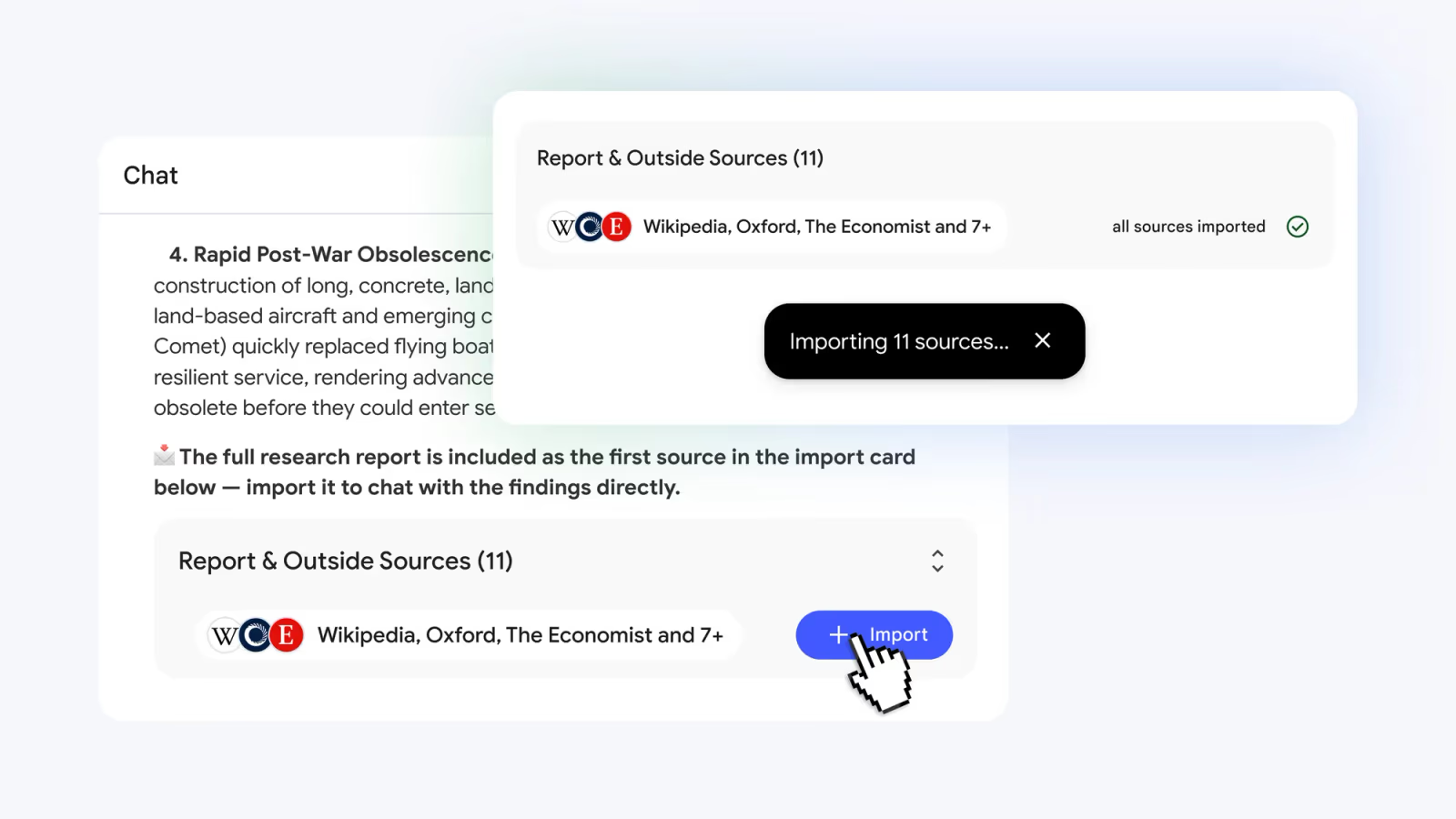
On 16 July 2026, Google renamed NotebookLM to Gemini Notebook, the same standalone research tool at the same web address, now folded into the unified Gemini brand alongside Bard and Duet AI before it. The name change itself is cosmetic, but it rode in on a genuine capability upgrade that actually shipped five weeks earlier, on 8 June: every notebook now runs on Gemini 3.5, gets a secure cloud computer that writes and runs code, and can produce eleven output formats (charts, PDFs, DOCX, Excel, PowerPoint and AI-generated images among them) instead of just text answers. It is currently available to Google AI Ultra subscribers and eligible Workspace customers, with a wider Pro rollout "over the coming weeks", serving a base Google says has already reached 30 million-plus users and 600,000-plus organisations.
"NotebookLM Is Now Gemini Notebook" sounds like a Tuesday-afternoon branding memo. Under the new name is a research tool that can now write its own code, and a rollout messy enough that Forbes ran a piece with "I'm Confused" in the headline.
Here is what actually changed, what shipped weeks before the name did, the benchmark numbers Google is citing (and the caveat attached to them), and one claim circulating in AI-YouTube coverage of this launch that has nothing to do with Google at all.
Note: facts below are sourced from Google's official blog.google announcement, its Google Workspace Updates post, the underlying 8 June 2026 upgrade post, and reporting from TechCrunch, Thurrott, ppc.land and SiliconANGLE. Figures Google has not independently verified (chiefly its own benchmark win-rates) are flagged explicitly rather than stated as fact.
Julian Goldie SEO covers NotebookLM Is Now Gemini in this video.
Summary
- The rename is real and live: announced 16 July 2026 by Josh Woodward, VP of Google Labs, Gemini app and AI Studio; notebooklm.google's own page title now reads "Gemini Notebook | AI Research Tool & Thinking Partner".
- The capability upgrade is older than the name. Gemini 3.5, the cloud computer, "100+ curated software skills" and the new output formats all shipped in an 8 June 2026 post, five weeks before the rebrand.
- Eleven new output formats, up from essentially text-and-audio: PNG/SVG charts, PDF/DOCX/Markdown documents, PNG/JPG/GIF images via Google's Nano Banana image model, CSV/JSON structured data, XLSX and PPTX.
- Google's own benchmarks claim a 65%+ average win rate across five evaluation dimensions versus its prior system: self-reported, not independently verified, a distinction press coverage has flagged explicitly.
- Staged rollout: AI Ultra subscribers and eligible Workspace customers now; all AI Pro users on web "over the coming weeks"; the free tier is not part of the initial rollout.
- 30 million-plus users, 600,000-plus organisations, up roughly sevenfold in organisational adoption since around October 2024.
- Gemini Notebook is not Google Antigravity, despite running on shared underlying infrastructure: they are separate products, and some launch-week coverage blurs the two.
- An "Agent OS" and memory "Vault" mentioned in some video coverage of this launch is a content creator's own separate product, not a Google feature: see the dedicated section below before repeating that claim anywhere.
The rename: NotebookLM is now Gemini Notebook
Google's own framing, from the official announcement: "We're renaming NotebookLM to Gemini Notebook. It's the same standalone product, now doing more across the Google ecosystem and updated with a secure cloud computer." The post traces the product's full lineage: "We introduced NotebookLM at Google I/O 2023 as Project Tailwind with a simple goal: help people learn. Now, more than 30 million people and over 600,000 organizations are using it to transform how they work."
Crucially, Google is explicit that this is not a repositioning into a feature of something else: "It remains a standalone product focused on being your premier research tool, but it will now do more across the Google ecosystem, including inside the Gemini app and Google Search." That last clause, surfacing inside Search's AI Mode, is described as coming "soon", with no date and no detail yet on how notebook content will actually appear there.
TechCrunch's coverage places the move inside a recognisable pattern: Bard became Gemini, Duet AI became Gemini for Workspace, and now NotebookLM becomes Gemini Notebook: the "LM" suffix, 2023-era shorthand for "language model", dropped in favour of the unified brand most of the 30-million-plus user base already associates with Google's AI products generally. The underlying Google Workspace Updates post confirms the mechanics are painless for existing users: rollout applies automatically to Workspace customers, Workspace Individual subscribers and personal accounts with no admin action required, and "automatic redirects will ensure existing shared notebooks and user links continue to work."
The real upgrade shipped five weeks earlier
The headline-grabbing capabilities (code execution, new models, the "100 skills" figure) did not originate in the 16 July rename post. They shipped in a separate official post on 8 June 2026, titled "Do better research with NotebookLM", written while the product still carried its old name. Google quietly updated that post's modification timestamp at the moment of the rename, folding the two announcements together in retrospect, but they are two distinct pieces of news, and worth treating that way.
The model change, in Google's own words: "we're upgrading NotebookLM to run on Gemini 3.5 and Antigravity, providing even more accurate and reliable information along with better visibility into the thinking process." The headline new capability is the cloud computer: "Each notebook is now equipped with a secure cloud computer, enabling NotebookLM to write and run code useful for helping you perform deeper research and more complex analysis." Google has not published technical detail on how that sandbox is isolated, what compute or time limits apply, or what happens to code and data once a session ends, an open question worth keeping in mind before feeding it anything sensitive.
Underpinning all of it: "The system includes more than 100 curated software skills, unlocking a wide range of new capabilities to help you more deeply understand the sources in your notebook." Google frames these as pre-built routines (for data cleaning, chart generation, document formatting and similar research tasks) rather than a general-purpose coding environment you prompt freeform.
A second, less-publicised addition from the same post: Gemini Notebook can now build a source repository for you, starting from "loose ideas and questions" rather than requiring you to upload documents first. It uses Google Search to find and add relevant sources on its own, while (Google is careful to specify) the user retains control and sources remain "clearly attributed".
Eleven new output formats
Before this upgrade, NotebookLM's outputs were essentially study guides, summaries and its well-liked Audio Overviews podcast-style feature. The cloud computer changes that: Google's official list of new output formats runs to eleven types, spanning data visualisation, documents, imagery and structured data.
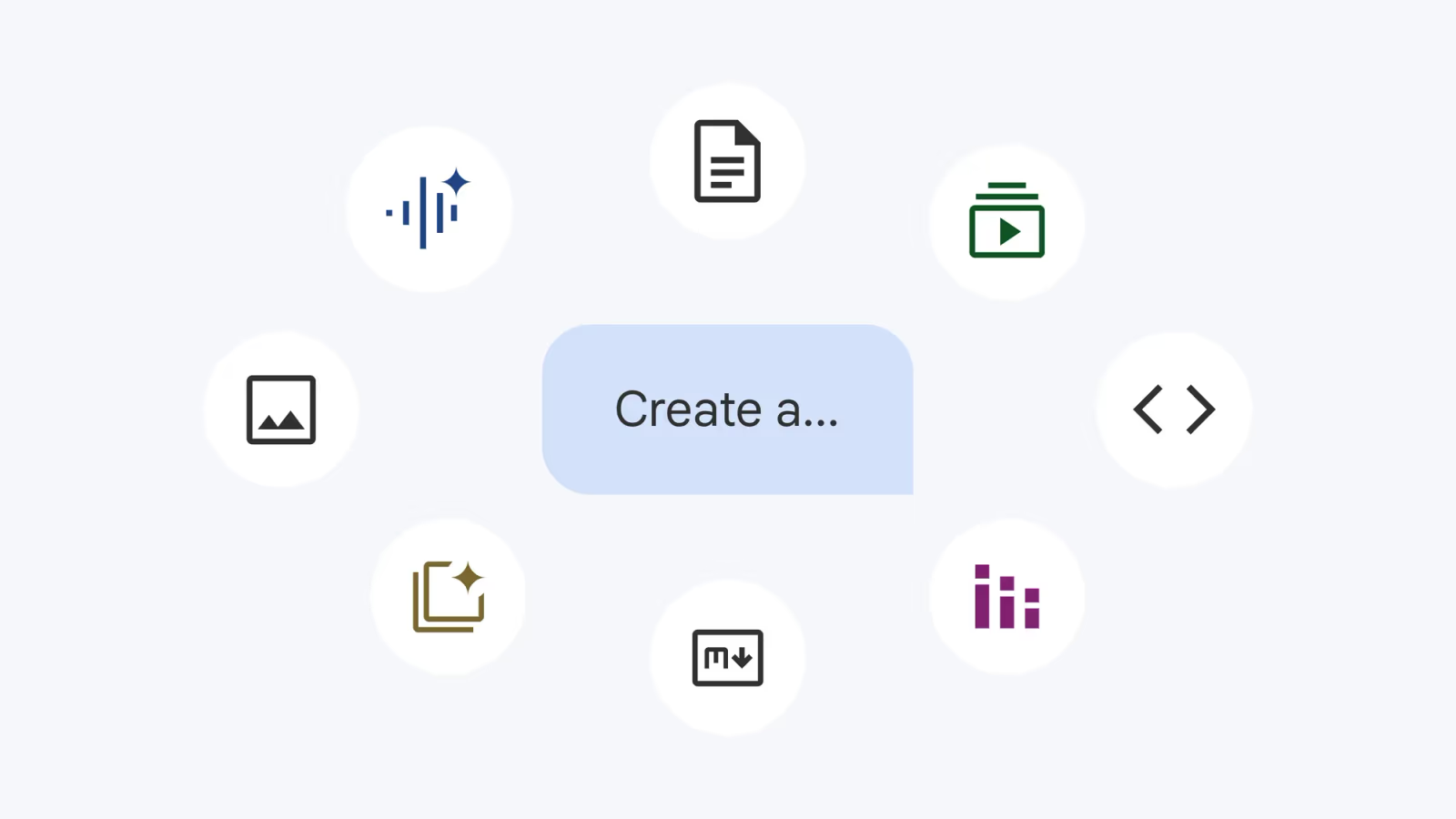
- Data visualisations and charts (PNG, SVG)
- Documents (PDF, DOCX, Markdown, plain text)
- Images, generated with Google's Nano Banana model (PNG, JPG, GIF)
- Structured data (CSV, JSON)
- Microsoft Excel (XLSX)
- Microsoft PowerPoint (PPTX)
Google states plainly it "plans to add additional formats in the future", so this list is a floor, not a ceiling. The named use cases in the official post give a sense of the intended range: a data analyst reconciling inconsistently formatted figures from several countries, researching additional context, running code for the analysis, and producing a chart-and-PDF report from one request; a technical programme manager turning a dense specification into a simplified guide, a slide deck and a step-by-step roadmap; and a small-business owner (Google's example is a gym owner), analysing raw sales data against ad spend to calculate campaign return on investment.
Google's own benchmark numbers
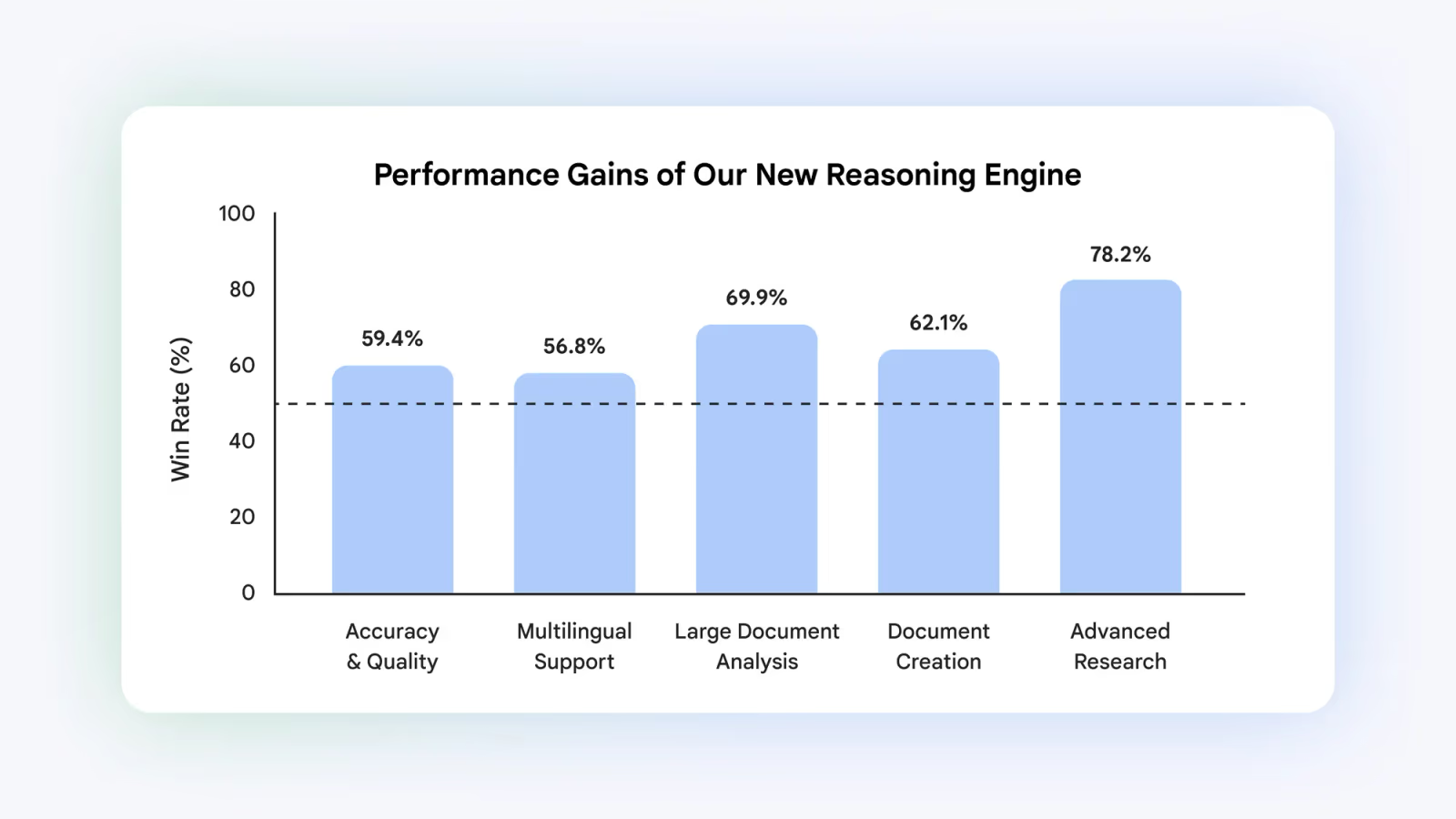
Google published win-rate figures for the new system against its own prior version, across five evaluation categories, claiming "an average win rate of over 65% (a 15 percentage point margin above parity) across our top five core evaluation dimensions."
| Evaluation dimension | Win rate vs prior system |
|---|---|
| Advanced web research and source discovery | 78.2% |
| Large document analysis | 69.9% |
| Document creation | 62.1% |
| Accuracy and quality | 59.4% |
| Multilingual support | 56.8% |
Read this table for what it is: every figure is Google's own internal side-by-side evaluation against its own predecessor, not a third-party benchmark and not a comparison against a competing product like ChatGPT or Perplexity. ppc.land's analysis of the launch flags this explicitly, noting Google "did not disclose full evaluation methodology beyond a brief footnote defining category names." The pattern across the five scores is still informative in its own right: the biggest jump is in exactly the area the cloud computer was built to improve (research and document analysis), while the smallest gain is in multilingual support, a reasonable trade-off for an upgrade centred on code execution rather than translation.
Rollout: who gets it, when
Directly from the 16 July announcement: "This is available today for Google AI Ultra users and Workspace business customers with AI Ultra Access and AI Expanded Access. It will roll out to all Pro users on the web over the coming weeks, enabling entirely new output formats and deeper analysis."
| Tier | Access |
|---|---|
| Google AI Ultra | Live now |
| Workspace (AI Ultra Access / AI Expanded Access) | Live now |
| Google AI Pro | Rolling out over the coming weeks, web only |
| Free tier | Not part of the initial rollout; no timeline given |
Two gaps worth flagging plainly: the free tier is excluded from this rollout with no announced date, and the original 8 June post did not mention the mobile app as a delivery surface for the new capabilities at all: it is unclear, as of this writing, whether the cloud computer and new output formats work on Android or iOS yet. For pricing context, Google restructured its AI subscription tiers back at I/O 2026: AI Pro runs about $19.99/month, and AI Ultra now starts at $99.99/month, down from a prior $250/month, with a separate $200/month tier unlocking additional agentic tools like Project Mariner. Neither price changed specifically for this launch.
30 million users, 600,000 organisations
Google's stated adoption figure ("more than 30 million people and over 600,000 organizations") is repeated unchanged across the official post and independent coverage from TechCrunch, 9to5Google, SiliconANGLE, Engadget and ppc.land, with no discrepancy found across sources. The organisational number in particular represents substantial growth: ppc.land's analysis notes the same figure stood at roughly 80,000 organisations around October 2024, meaning organisational adoption has grown close to sevenfold in about twenty months, a genuinely strong trajectory for a product Google introduced as an I/O 2023 experiment.
Gemini Notebook vs Google Antigravity: not the same product
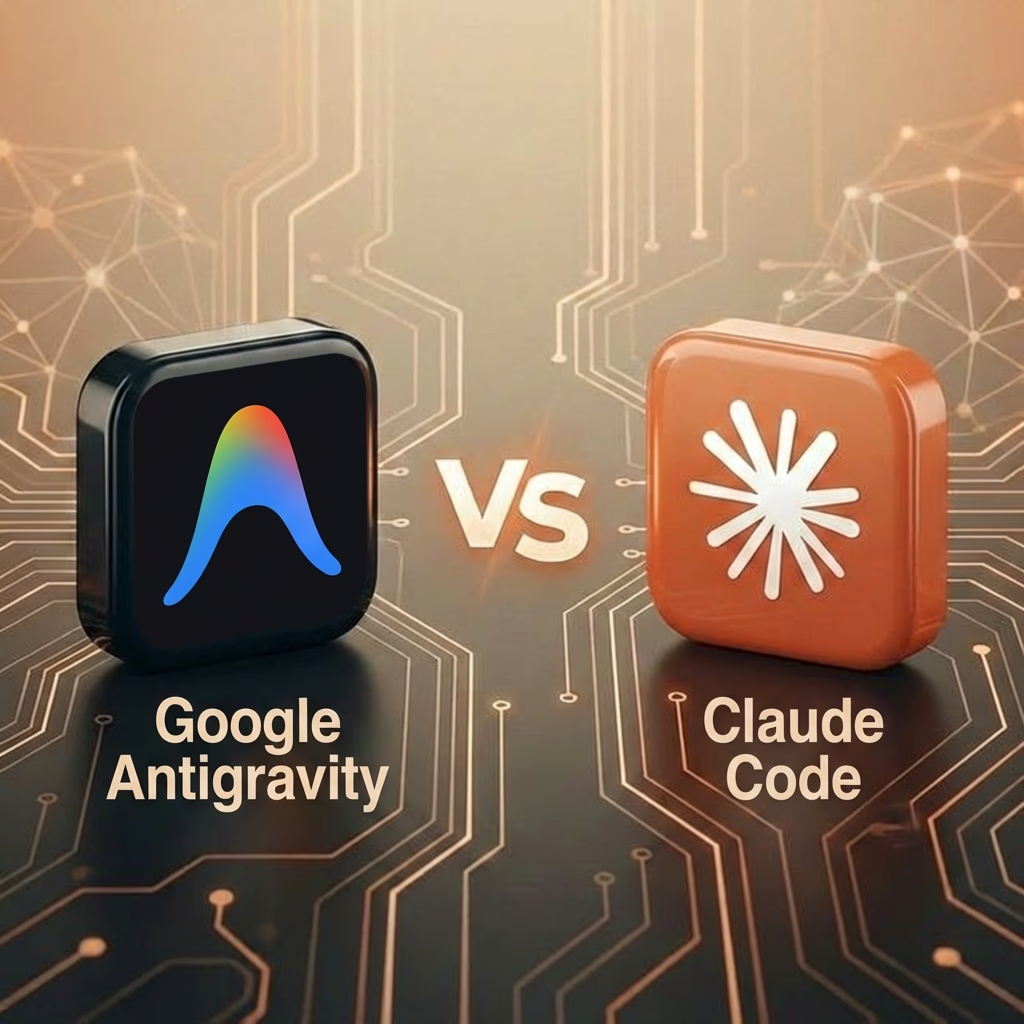
Google's own line, "upgrading NotebookLM to run on Gemini 3.5 and Antigravity", can easily read as though Gemini Notebook and Google Antigravity are the same thing, or that one absorbed the other. They are not. Antigravity is a separate, standalone Google product: an "agent-first" software development platform with its own desktop app, CLI and SDK, launched as "Antigravity 2.0" at Google I/O 2026 on 19 May, powered by Gemini 3.5 Flash and aimed squarely at developers building agentic coding workflows.
What Google's wording actually means is narrower and more technical: Gemini Notebook's cloud computer runs on the same underlying agentic orchestration infrastructure that powers Antigravity, sharing plumbing rather than being the same product wearing two names. If you are choosing between the two (a research tool that happens to run code, versus a dedicated coding agent platform) treat them as siblings in Google's broader agentic AI portfolio, alongside Gemini Deep Research (a web-research agent that produces structured reports) and Project Mariner (a Chrome-based browser-automation agent gated behind the $200/month AI Ultra tier), rather than as one product under two names.
The "Agent OS" claim you may have heard: not Google's
Some video coverage of this rename bundled in a claim about a shared-memory "Agent OS" and an "Obsidian Memory Vault" syncing across agents inside the new Gemini Notebook. Worth stating clearly: nothing in Google's official announcements, the underlying 8 June technical post, or any tier-one press coverage of this launch mentions an "Agent OS" or a "Vault" feature. That framing traces back to a content creator's own, separately branded personal product and workflow system, promoted in the same video as the Gemini Notebook coverage, not a Google feature, and not part of this release. If you encounter that claim elsewhere, treat it as unrelated marketing riding alongside genuine news, not as something Gemini Notebook actually does.
Press reaction: "I'm confused"
Reaction split between straightforward reporting and genuine confusion about product architecture. Forbes ran a piece under the headline "NotebookLM Is Now Gemini Notebook. I'm Confused", focused on naming overlap between the standalone Gemini Notebook app and a pre-existing "Notebooks" feature already inside the main Gemini app, the two sync with each other but are not the same product, which reviewers found genuinely difficult to explain to end users despite Google's insistence that Gemini Notebook "remains a standalone product".
Thurrott's coverage was similarly unconvinced on naming clarity, calling the resulting product "quite hard to explain" to anyone used to a single unified ChatGPT-style product, and speculated (explicitly as its own opinion, not a Google statement) that Google may eventually consolidate everything into one "superapp" and could someday even retire the standalone "Gemini" brand itself. SiliconANGLE added a competitive data point: Perplexity AI announced secure cloud computers for its own AI research agents in the same week, suggesting Google's move is partly a response to a broader industry shift toward giving research agents the ability to execute code, not a change made in isolation.
Limitations and open questions
- Benchmarks are self-reported. The 59–78% win-rate figures are Google's own internal comparison against its own prior system, with limited disclosed methodology, not an independent or third-party evaluation.
- Free tier excluded, no date given. Both the June capability upgrade and the July rollout expansion are gated behind AI Ultra and Workspace tiers, with Pro users waiting weeks and free users given no timeline at all.
- Mobile delivery is unclear. The official technical post did not confirm the mobile apps as a surface for the cloud computer or new output formats.
- No published sandbox detail. Google has not disclosed how the "secure cloud computer" is isolated, what limits apply, or what happens to code and data after a session, worth caution before using it on sensitive material.
- Search integration is a "soon", not a date. How notebook content will actually be surfaced inside Search's AI Mode (including ranking, visibility and data handling) has not been detailed.
- Naming overlap causes real confusion between the standalone Gemini Notebook app and the "Notebooks" feature already inside the main Gemini app, flagged independently by more than one outlet.
Who should use it
Use it now if: you already subscribe to Google AI Ultra, or your organisation has Workspace AI Ultra or AI Expanded Access, and your work involves synthesising your own documents into a chart, report, spreadsheet or slide deck rather than open-ended chat: this is exactly the workflow the cloud computer and new output formats were built for.
Wait, or keep expectations modest, if: you are on AI Pro and want the new capabilities specifically, since the timeline is only "coming weeks" with no firm date, or if you were hoping to use it on mobile, which is unconfirmed as a delivery surface for the upgrade.
Treat with appropriate caution if: you were planning to feed the cloud computer sensitive or regulated data: Google has not published the sandboxing and data-handling detail a security-conscious team would want before doing that.
The bottom line
Strip away the branding and this is a genuinely substantive upgrade wearing a rename as its headline: a research tool that could previously only give you text, audio and slides can now write code, reconcile messy data and hand back a finished chart, spreadsheet or slide deck. The rename itself changes nothing functional and comes with working redirects, so existing users have nothing to fix. What is worth being precise about (because launch-week coverage repeatedly wasn't) is that Gemini Notebook is not Google Antigravity, its benchmark figures are Google grading its own homework, and the "Agent OS" some coverage attached to this story belongs to a YouTuber, not to Google.
Sources for this article include Google's official Gemini Notebook rename announcement, its 8 June 2026 capability upgrade post, the Google Workspace Updates rollout notice, and independent analysis from ppc.land.
For the Gemini stack's other early-September releases, agentic video understanding, WeatherNext 3 and Lyria 3.5's full-length song generation, see our round-up of Google's September Gemini update.
Last updated: 19 July 2026, three days after the rename announcement. Rollout timing (Pro access, free-tier availability, and the Search AI Mode integration) is still in motion: check Google's official blog for the latest before assuming a feature described here is available on your account.
Get the free guide: Claude vs ChatGPT, Gemini & Grok
A 20-page playbook covering everything you need to choose and use the big four AI models in 2026, full cost and feature comparisons, what each is best (and worst) at, and how-tos for images, vectors, building a website, Claude Code and more.