
 AI Tools Review Editorial Team
Quick Answer:
On 2 November 2026 Elon Musk wrote on X that the cost of serving Grok Bot was unsustainably high relative to revenue, after subscribers complained that weekly usage limits were running out days early. Plans start at $30 a month (about £23), with $100 and $200 tiers. Reported paid weekly users are about 800,000. At the same time, xAI-linked material says the agent saved $14,220 by finding 43 idle software seats. The lesson: an agent can create real value and still cost more to run than it is charged for.
Agents were supposed to be the easy business model. Instead of a chat reply that costs a fraction of a penny, you sell a worker that runs for hours. Then the bill arrives. This week the founder of xAI said it out loud: serving Grok Bot costs too much for the revenue it earns.
This article separates what is confirmed from what is commentary, explains why agent workloads burn so much more compute than chat, and borrows a three-number framework from Nate B Jones to help you decide whether any agent, Grok Bot included, is worth running. Three creators covered the story this week and we embed two of them.
Nate B Jones separates cost, price and value, and asks what an agent's work is really worth.
Executive Summary
What happened: xAI launched Grok Bot in August 2026, covered in our launch explainer. Early in November, paying users reported hitting weekly caps far sooner than before. On Sunday 1 November, according to reporting dated 2 November, Musk replied to a user on X: "The cost of serving Grok Bot was unsustainably high relative to revenue."
- Confirmed: Musk's quote, the user complaints, and Grok's own account attributing the changes to adjusted allocations because of high serving costs.
- Also reported: a billing and usage dashboard bug that briefly displayed inaccurate high readings, since described as resolved and not affecting actual metering.
- Not disclosed: any figures for serving costs or revenue, and whether xAI will reset affected accounts or change prices.
- Counter-signal: Nate B Jones cites an xAI procurement write-up saying Grok Bot found 43 paid seats with no activity in 90 days, producing $14,220 in savings. We could not verify that document.
Our view: this is less a Grok story than an agent-economics story. The same dynamic will hit every provider that sells fixed-price access to long-running agents, and buyers should plan for caps, throttling and repricing as normal features of the category.
What Happened, in Order
- August 2026: xAI launches Grok Bot as an early-beta app for Mac and iPhone, with agents that each use a cloud computer. One reviewer dates the launch to 11 August. Bundled access comes with SuperGrok and Cursor plans.
- Earlier in 2026: Musk floats putting ads in Grok answers to help pay for what he called expensive GPUs.
- Around 1 to 2 November: subscribers report tighter limits. One says usage hit 100% with four days left before the weekly reset. Another says usage rose from 44% to 87% within 24 minutes and that limits seemed roughly halved.
- Same days: Musk answers a user asking whether the weekly allowance will be reset, saying serving costs were unsustainably high relative to revenue. His past-tense wording led observers to read the tighter limits as deliberate.
- Grok's official explanation: allocations were adjusted because of high serving costs, and a separate dashboard bug had shown inaccurate readings.
Some commentators called the change an indirect rug pull, since the price stayed the same while the usable allowance fell. We would not pass judgement on intent. What is clear is that the product's economics shifted without a price change, and that xAI had announced no new caps or resets at the time of the reports we reviewed.
Julian Goldie SEO shows what Grok Bot can do as an always-on agent on its own cloud computer.
How Grok Bot Works, and Why It Is Expensive
Grok Bot is a roster of named agents that share one dedicated cloud computer tied to your account. They can sign in to apps and websites, including ones with no API, and keep working after you close the app. That is what makes the product useful, and it is also what makes it costly. We covered the design, security trade-offs and comparison with Hermes Agent in the launch article and in Hermes Agent Explained.
A chat reply versus an agent run
A chat answer is one model call. An agent run is a loop: read the screen or page, reason, act, observe the result, reason again, and repeat, often for dozens or hundreds of steps. Every step re-reads the accumulated context, so tokens consumed grow faster than the number of steps. One analysis of the Grok Bot story made exactly this point, that a single agent run can consume far more GPU time than a one-off reply. The same logic applies to every agent product, including the browser agents in our browser automation guide.
Always on means always billing
An agent that keeps working in the background has no natural stopping point. Chat usage is bursty, and a flat monthly price works because most subscribers send few messages. Agents flip that assumption, because the heaviest users are exactly the ones who give the agent the most to do. Flat pricing plus heavy, long-running workloads is the classic recipe for losing money on the best customers.
The Numbers We Can and Cannot Check
| Item | What was reported | Status |
|---|---|---|
| Musk quote | Serving cost unsustainably high relative to revenue | Reported by several outlets, no figures given |
| Entry price | Paid plans from $30 a month (about £23); $100 and $200 tiers | Reported; separate pools from other Grok limits |
| Paid weekly users | About 800,000 | Attributed to Startup Fortune, not verified by us |
| User usage jump | 44% to 87% in 24 minutes | One user's account |
| Seat savings | 43 idle seats, $14,220 (about £10,900) | Per Nate B Jones citing xAI's procurement write-up; unverified |
| xAI 2025 cash burn | $6.4bn | Single secondary report; treat with caution |
Conversions are approximate at roughly £1 to $1.30. The point of the table is to show how thin the public evidence is. We know the direction, which is higher cost than expected, but not the scale. Nobody outside xAI can say what a Grok Bot subscriber costs to serve.
Cost, Price and Value: Nate's Framework
Nate B Jones's video, and the newsletter it links to, separates three numbers that people routinely blur together. We have only the free preview of the newsletter, so the following summarises the framing, not the paywalled detail.
- Cost: what it takes the provider to do the work.
- Price: what you are charged.
- Value: what it is worth to you that the work gets done.
His argument is that an agent can create real value for its user while costing the provider more than the price covers. Both things can be true at once, and that is exactly the situation the Musk quote describes. The xAI procurement example illustrates the value side: finding 43 seats with no activity in 90 days, and cutting them, is a task a person would find tedious and an agent can do cheaply, yielding $14,220 in savings.
A working range for your own time
Nate suggests valuing your time by its next best use and testing everyday decisions against a working range of about $20 to $50 an hour (roughly £15 to £38). His weekly-report example pays back by the second week. We would treat those as rules of thumb, not data, but the habit is sound: write down the hours an agent saves, price them conservatively and compare with the subscription and the time you spend supervising it.
A Simple Way to Test Whether Your Agent Pays
Here is the arithmetic we would use. The figures below are illustrative, not taken from any vendor.
- Step 1, hours saved per week. Suppose an agent drafts a weekly report that takes you 2 hours.
- Step 2, value of those hours. At £20 an hour that is £40 a week.
- Step 3, supervision. Subtract the time you spend checking it, say 20 minutes, worth about £7.
- Step 4, price. A £23 a month plan is about £5.30 a week.
- Result. £40 minus £7 minus £5.30 leaves roughly £28 a week of net value, so the plan pays back inside the first week.
Now stress-test it. If the provider halves your allowance, can you still finish the report? If the price doubles, does the sum still work? If the answer is yes in both cases, you are exposed to repricing only mildly. If the agent is doing work of marginal value and only just clears its price, a cap change will turn it from a bargain into a loss. That is a sensible way to read the Grok Bot episode as a buyer.
Also budget attention, not just cash. Nate's advice to set a maximum amount of money and attention for testing a new idea is the right discipline. Give an agent one narrow job for two weeks, record time saved and incidents, and decide on evidence.
Why Flat Pricing Struggles With Agents
Consider how a subscription is priced. A provider estimates the average cost of serving a subscriber, adds margin and sets a price. For chat that works because usage clusters tightly: most people ask a handful of questions a day. For agents, usage has a long tail. A small share of subscribers will keep several agents busy for most of the working week, and they cost many times the average. The average cost then drifts upwards faster than the price.
Providers have only three levers. They can raise the price, cut the allowance, or make the work cheaper to serve. Raising prices is visible and unpopular. Cutting allowances is quieter, which is why users describe it as an indirect price rise. Making work cheaper, through smaller models, caching and routing, is the best outcome but takes engineering time. The Grok Bot reports suggest xAI reached for the second lever first. The same pattern has played out across consumer AI, and it is why usage meters have become a product feature.
Three pricing models you will meet
- Seat pricing: a fixed monthly fee per user. Simple to buy, but exposed to the long tail described above.
- Usage pricing: you pay for tokens or compute consumed. Fair to the provider, but your bill can spike if an agent loops.
- Outcome pricing: you pay per completed task, such as a resolved ticket. Aligns cost with value, but requires a clear definition of done.
For a buyer, the best structure depends on how predictable the work is. A steady weekly report suits a seat. An unpredictable research task suits usage with a cap. A repeatable, measurable task such as clearing idle licences, which is the example behind the $14,220 figure, is the natural candidate for outcome pricing.
A Checklist Before You Roll Out an Agent
- Write down the task, the manual time it takes today and who checks the output.
- Set a trial budget in money and hours, and a date to decide.
- Record usage weekly. Note any week where the meter jumps without a change in your workload, because that is the signature of an allowance change or a looping agent.
- Ask the vendor how limits are defined, how they can change and what notice you get.
- Keep a fallback: a cheaper model, a manual process or a rival agent that could take the job within a week.
- Review access. List every account the agent can sign in to and remove anything it does not need.
None of this is specific to xAI. It is the sort of basic discipline that turns an agent from an experiment into a dependable part of the business, and it is what makes the difference between the buyer who is surprised by a limit change and the one who has already planned for it.
The Wider Pattern: Inference Costs Bite
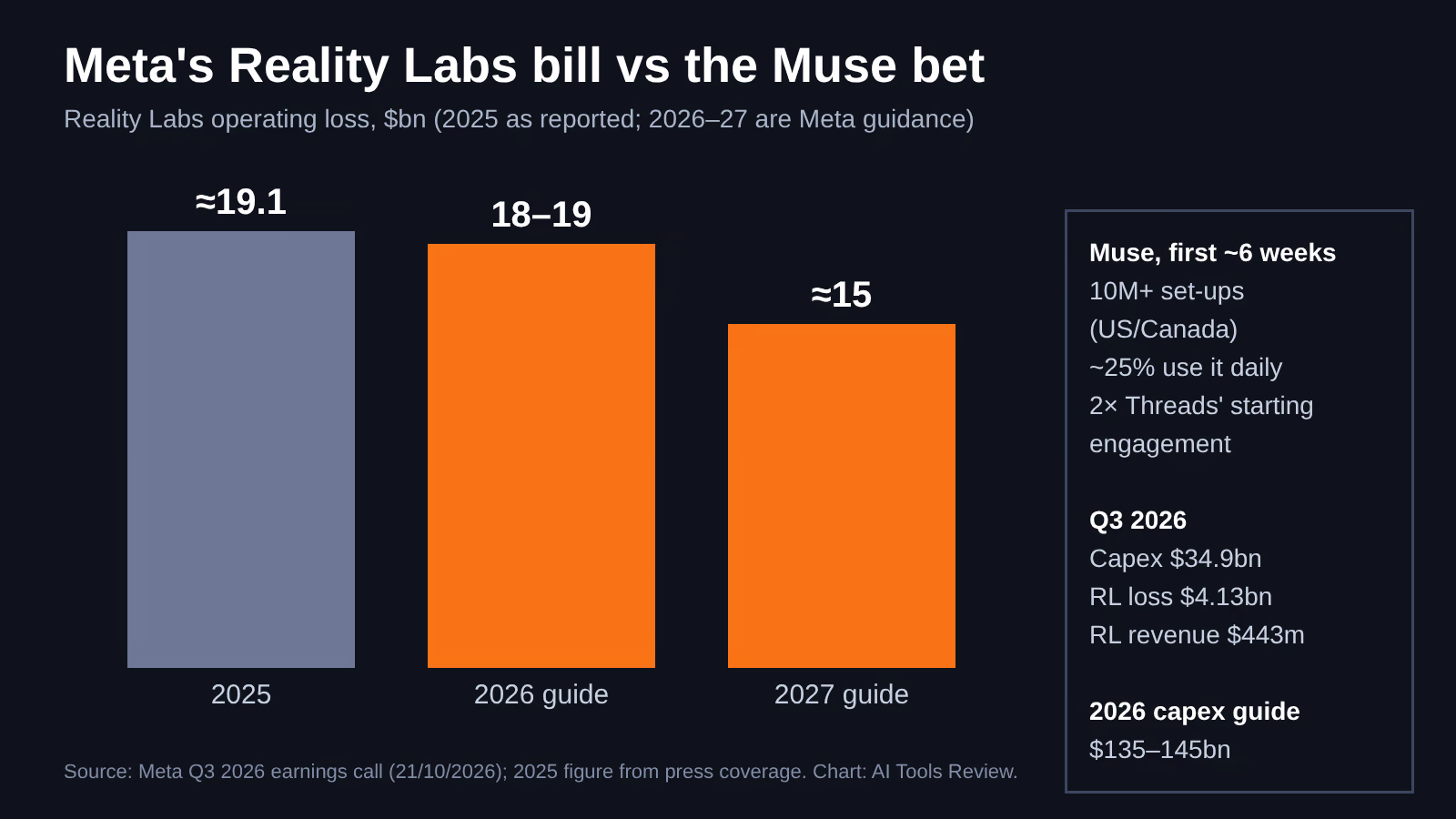
Grok Bot is not unique. Reporting on the story linked it to broader strain from high inference costs and to investor concern about AI capital spending at larger platforms. Heavy agent usage is the hardest workload to price. We have seen the same tension in model pricing across providers, set out in AI API pricing compared, and in Muse and Meta's Reality Labs lesson, which looks at how Meta is funding its own agent push.
Investor Martin Casado put a practical question to xAI after the Musk reply: could a cheaper model provide a downgraded service, given that much of his usage was basic? That is probably where the market goes. Expect tiered routing, with simple tasks sent to small models and only hard ones to the frontier model, plus clearer usage meters. Several users asked xAI for exactly that visibility, a way to see how much of the weekly allowance each task consumes.
Risks for Buyers and Teams
- Silent repricing: a fixed price with a shrinking allowance is a price rise. Check usage meters weekly.
- Lock-in: agents that live on a provider's cloud computer hold your logins and workflows. Keep exportable records of what they do.
- Concentration: one machine per account means one misbehaving bot shares its blast radius with all of them, as noted in coverage of the launch.
- Measurement: without baselines you cannot tell whether the agent saves money. Record the manual time before you start.
- Cost spikes: loops that fail repeatedly burn compute for no result. Set step and spend limits where the product allows.
There is also the question of corporate use. If you plan to give agents access to business systems, read our article on AI containment failures and the companion piece on Cathedral's AI agents breaching Anthropic. Cost is one risk. Access is another.
How Grok Bot Compares
- Hermes Agent: a desktop and gateway agent you run on your own devices, so you control more of the compute bill but also the setup. See Hermes Agent Explained.
- Meta Muse: a consumer and small-business agent that Meta says is free for most uses, with approval gates for sensitive actions. See Muse and Meta's Reality Labs lesson.
- Cursor bundle: Grok Bot is offered through Cursor plans, which makes pricing partly a bundling decision rather than a pure usage one.
- Direct API use: pay-per-token, transparent but unbounded. Good for teams who can monitor spend.
Limitations of This Analysis
We have relied on secondary reporting and on a preview of a paywalled newsletter. The $14,220 figure comes from a document we have not seen. The 800,000 user figure and xAI's 2025 spend are single-source. We have no data on what Grok Bot costs to run per user, and neither does anyone else outside xAI. If xAI publishes pricing changes or resets, this article will be updated.
What To Do Now
- Current subscribers: track your weekly usage against tasks and decide whether the value still clears the price.
- Prospective buyers: run a two-week pilot on one narrow task before paying for a higher tier.
- Teams: budget for cap changes. Treat any flat-price agent plan as variable cost.
- Builders: design for cheap routing, spend limits and visible meters from day one.
The Bottom Line
Musk's remark confirms what many suspected: long-running agents are expensive to serve and flat subscriptions strain under heavy use. It does not show that Grok Bot is a bad product. The same agent that costs xAI more than it earns can still find a customer $14,220 of savings.
The practical takeaway is Nate B Jones's three numbers. Know the cost, the price and the value, test with a small budget, and expect the terms to move. In a market where inference is the scarce input, the buyer who measures wins.
Last updated: 05/11/2026. Sourced from reporting on Musk's remarks (02/11/2026), Nate B Jones's video and newsletter preview and our earlier Grok Bot coverage. Some figures are single-source and unverified; conversions are approximate.
Get the free guide: Claude vs ChatGPT, Gemini & Grok
A 20-page playbook covering everything you need to choose and use the big four AI models in 2026, full cost and feature comparisons, what each is best (and worst) at, and how-tos for images, vectors, building a website, Claude Code and more.