 AI Tools Review Editorial Team
Quick answer:
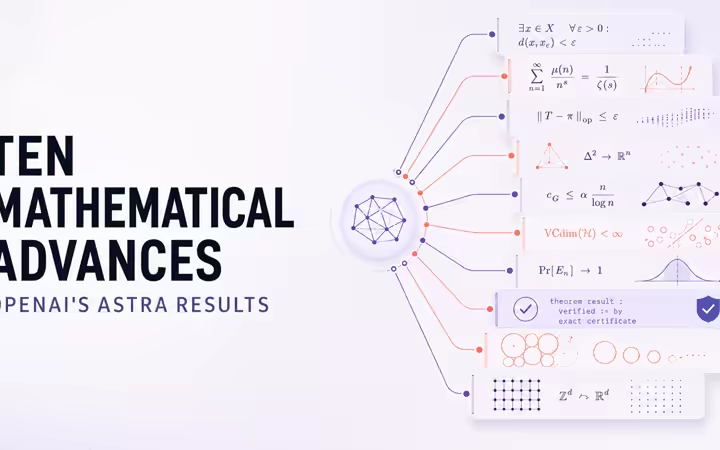
On 26 October 2026, OpenAI announced three research-level results from its internal models: a claimed proof of Sogge's local smoothing conjecture (mathematics), a claimed refutation of the Exponential Time Hypothesis (computer science), and a claimed existence proof for interacting four-dimensional quantum field theories including quantum chromodynamics (physics). OpenAI calls the manuscripts "raw research data" and has asked outside experts to act as unpaid "shepherds" to verify them. None of the three is independently confirmed yet, the ETH result does not solve P versus NP, and the viral claim that AI "broke physics" is a mislabel: the headline result is complexity theory.
If you saw a thumbnail this week saying OpenAI "broke physics", the real story is stranger and more interesting: a company claiming its models have overturned a conjecture that shaped decades of computer science, and then handing the verification problem to the academic community instead of the press.
Here is what OpenAI actually announced, what each of the three claims means in plain English, why checking a proof is now harder than producing one, and how to read the next few weeks of reaction.
Wes Roth unpacks the Exponential Time Hypothesis claim, its link to P versus NP and what a practical breakthrough could mean for encryption and AI.
Summary
OpenAI's announcement is unusual in form as much as in substance. Rather than publishing three polished papers with press releases and waiting for peer review, it published a post describing a new way to release AI-generated research: treat the manuscripts as raw material, recruit respected outside researchers as "shepherds" who convene colleagues, and commit to making the raw data public so the community can check the work. OpenAI also says it is not seeking academic credit.
- Mathematics: a proof of local smoothing for the Euclidean wave equation, which would imply versions of the Kakeya and Stein restriction conjectures.
- Computer science: a deterministic algorithm that counts satisfying assignments of fixed-width CNF formulas in subexponential time and polynomial space, which refutes the Exponential Time Hypothesis for 3-SAT.
- Physics: a rigorous existence proof for certain interacting four-dimensional quantum field theories, including quantum chromodynamics.
- Status: unverified. Treat every claim here as OpenAI's, until the experts say otherwise.
What OpenAI Announced
The post, titled "Working with academic communities to build scientific understanding", appeared on 26 October 2026. We could not retrieve the OpenAI page directly (it returned an access error to our fetcher), so the account below is assembled from independent write-ups that summarise it, principally Shattered.io and Hyper.ai, plus search-engine summaries of the page. Where those sources disagree, we say so.
The three results, and the paper title attached to each according to the Shattered.io summary, are:
| Field | Claim | Named reviewers |
|---|---|---|
| Mathematics | "Local smoothing for the Euclidean wave equation": Sogge's local smoothing in every spatial dimension of at least two | None named in the sources we read |
| Computer science | "The Exponential Time Hypothesis is false" | Russell Impagliazzo, Ramamohan Paturi, Ryan Williams |
| Physics | Rigorous existence of interacting 4D theories with gauge fields and fermions, including QCD | A group reportedly led by David Gross (single source) |
Dates differ slightly between summaries. One source says the computer science result was found on 16 October 2026 and formalised in Lean on 17 October, with the papers dated 25 October and the OpenAI post on 26 October. Another says OpenAI published natural-language and Lean versions of the mathematics proof instead. Who has a Lean formalisation is therefore not settled in the secondary coverage, and it is exactly the sort of detail to check against OpenAI's page itself.
OpenAI's own framing, as quoted by the same write-ups, is that "these manuscripts are best understood as a form of raw research data". That sentence matters. It signals that OpenAI is not claiming settled science, only handing over material for experts to evaluate.
The Exponential Time Hypothesis
What ETH actually says
Some problems are famously hard. 3-SAT asks whether a logical formula made of clauses with three variables each can be made true by some assignment of true and false values. The obvious method is to try every assignment, which takes time that doubles with every extra variable. The Exponential Time Hypothesis, formulated by Russell Impagliazzo and Ramamohan Paturi, says there is no fundamentally better method: no algorithm solves 3-SAT in subexponential time. It is stronger than the famous P versus NP assumption, and it is a hypothesis, not a theorem.
Its importance is practical, not abstract. Hundreds of results in theoretical computer science say "problem X cannot be solved faster than Y, unless ETH is false". It is the backbone of the field's picture of fine-grained complexity: which problems are truly hard, and exactly how hard. The stronger Strong Exponential Time Hypothesis (SETH) implies ETH, so if ETH falls, SETH goes too, and the conditional lower bounds that depend on either are in question.
What OpenAI says its model found
According to the Shattered.io summary, the manuscript describes a deterministic algorithm that exactly counts the satisfying assignments of fixed-width CNF formulas in subexponential time and polynomial space. The 3-SAT case then refutes ETH. Two details make the claim stronger than it first sounds. Counting solutions is generally harder than deciding whether one exists, and requiring only polynomial space rules out the usual trick of buying speed with enormous amounts of memory.
OpenAI says this does not resolve P versus NP, and that is correct as a matter of logic: a subexponential algorithm is still slower than a polynomial one. Wes Roth's video, embedded above, discusses the connection to P versus NP and to what he calls a "cheat code" to the universe: the idea that if hard problems have shortcuts, the consequences for encryption, optimisation and AI could be large. That is a legitimate thought experiment, but a speculative one. Refuting ETH would not by itself break any deployed cipher, since practical cryptography relies on other problems such as factoring and elliptic curves.
Who is checking it
A group including Russell Impagliazzo, Ramamohan Paturi and Ryan Williams is named for the computer science result, and one summary adds that researchers at UC San Diego and MIT will oversee it. Shattered.io makes a sharp observation: Impagliazzo and Paturi helped formulate ETH, so the reviewers are not disinterested. That is not an accusation of bias, it is a reminder that the verification group has a personal stake in the answer, which is why independent confirmation from outside that group will matter. Lean verification helps by checking that the argument is logically valid, but experts must still confirm the formal statement matches the claim in the title, which is a different and subtler check.
The Mathematics Result
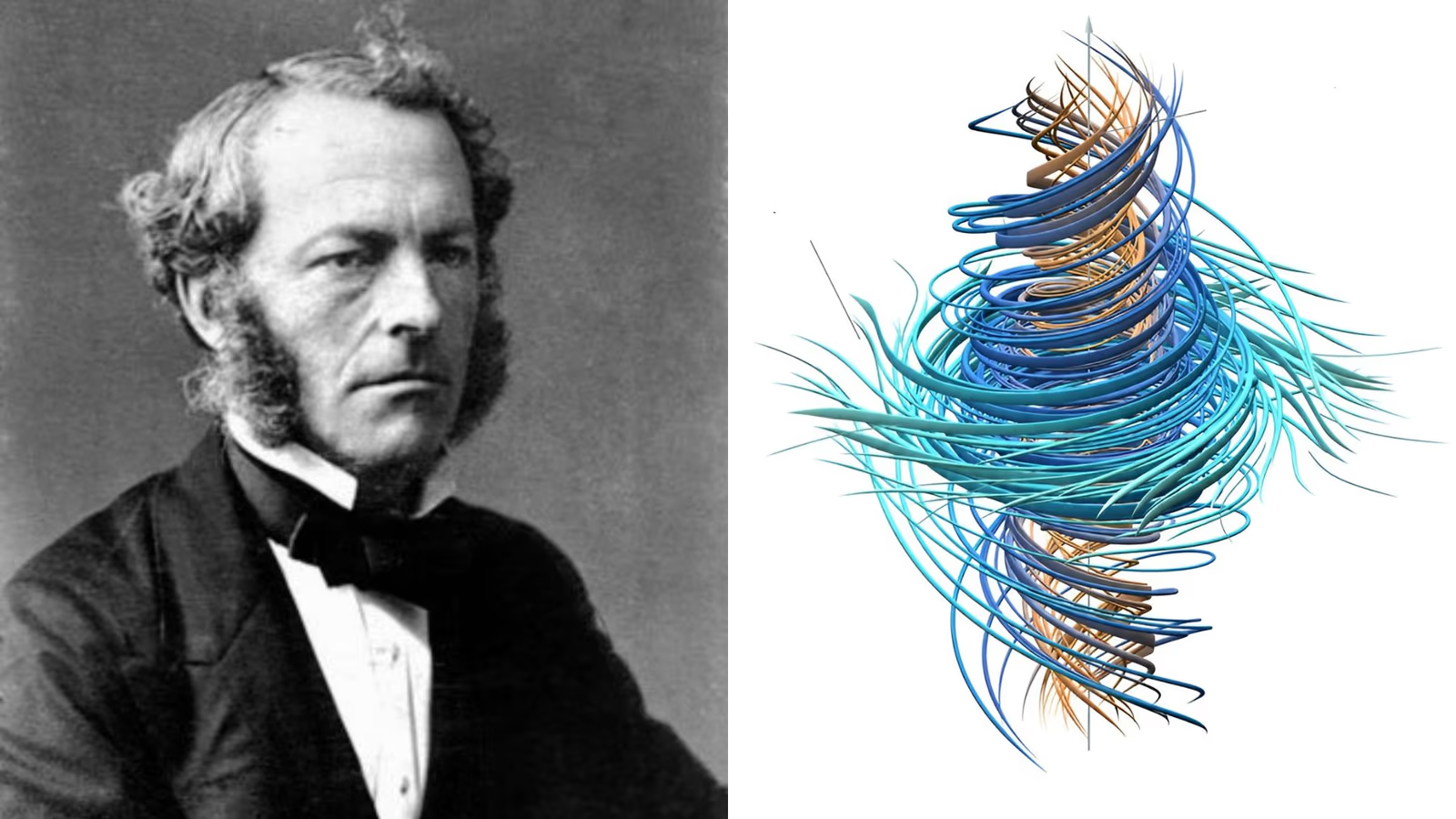
The mathematics claim concerns local smoothing, a conjecture of Christopher Sogge about how solutions to the wave equation behave when averaged. It sits in harmonic analysis, a field that studies how functions decompose into waves, and it connects to some of the best-known open problems in the area. According to the sources, if the proof holds it would imply the Kakeya maximal and dimension conjectures and Stein's spherical restriction estimates in the interior of the conjectured range.
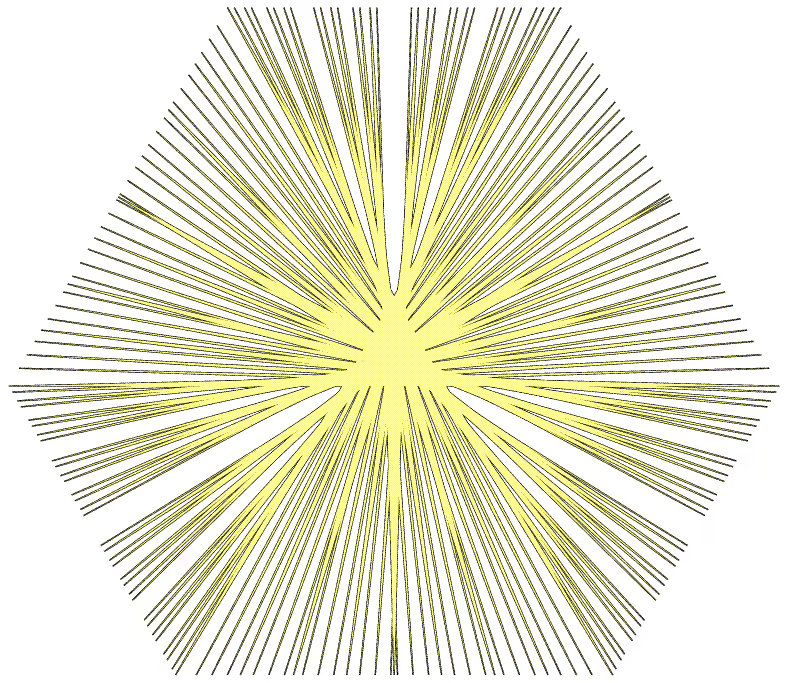
The Kakeya problem has a charming origin. Imagine a needle of unit length lying on a table; how little area can you sweep while rotating it to point in every direction? Remarkably, you can make the area as small as you like, which is what the picture above hints at. The Kakeya conjectures ask the higher-dimensional version: how small can such a set be, measured by dimension? A full resolution in three dimensions was reported in 2025 by Hong Wang and Joshua Zahl, according to the Shattered.io write-up, and a proof of local smoothing in all dimensions would go well beyond that.
That scope is also the risk. The claim covers every dimension from two upward, so one error in a general argument could break it. The sources note that no named expert has publicly backed the proof yet, and that OpenAI released this one directly rather than through a named reviewer group.
The Physics Result
The physics claim is the one most likely to be mislabelled online. It is a rigorous existence proof for interacting quantum field theories in four dimensions that contain gauge fields and fermions, including quantum chromodynamics (QCD), the theory of the strong nuclear force. Physicists use these theories every day to make predictions, but mathematically constructing them from first principles has resisted decades of effort. Showing they exist, in a rigorous sense, is different from using them.
One summary says the argument covers pure Yang-Mills theory and that a team led by David Gross, a Nobel laureate, will first study and organise the materials. We could only find that detail in one source, so treat it with caution. The Shattered.io write-up adds an important correction: none of its sources connect this result to the Clay Mathematics Institute's Yang-Mills mass gap prize problem, and an existence proof is a different statement from that problem. If you see the claim described as "OpenAI solved the million-dollar Yang-Mills problem", it is not what OpenAI said.
The AI-generated physics manuscripts were reported as not yet public at the time of the announcement, which means outside experts cannot yet assess them. That makes this the least checkable of the three claims today.
The Shepherd Model
The process innovation may outlast the individual results. OpenAI asked external experts to act as shepherds: people who gather colleagues to read the manuscripts, work out what they say, and decide what is worth building on. According to the summaries, OpenAI published principles covering:
- Transparency: outside readers should see how results were produced and handled, and OpenAI committed to making raw data public.
- No credit claimed: OpenAI says it claims no academic credit for discoveries produced by its internal models.
- Recognition: explanatory work, not just proof-finding, earns recognition.
- Independence: OpenAI cannot dictate conclusions or timing in groups it convenes.
- Unpaid participation: participation is voluntary and unpaid, which the Shattered.io piece expects to draw criticism over fairness. OpenAI also agreed to fund a conference on the work's implications.
Whether academics accept a model where a private company generates a mass of manuscripts and asks the community to do the labour of understanding them is an open question. There is a fair case for it: if the proofs are correct, the benefit to the field is large. There is also a fair case against: unpaid expert time is a scarce resource, and a flood of AI manuscripts could overwhelm the people best placed to judge them.
Why Verification Is the Bottleneck
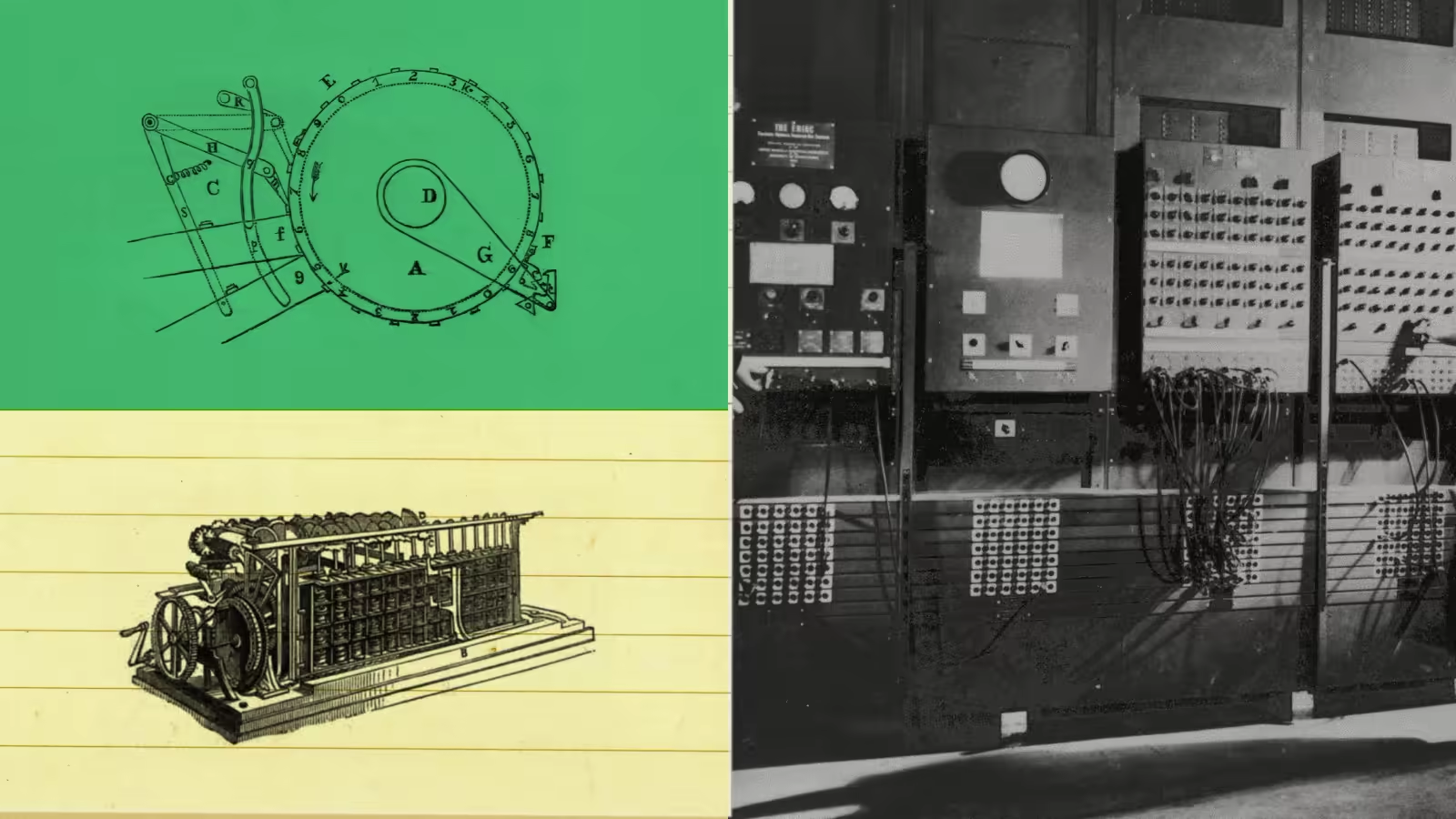
The deeper point of the announcement is an economic one. Generating a plausible proof is now cheap; checking one is expensive. Mathematics has faced this before. The 1976 proof of the four colour theorem relied on computer checking that many mathematicians initially distrusted. The Kepler conjecture on sphere packing needed a years-long formal verification project. In each case the community eventually built tools and norms to accept the result.
Lean, the proof assistant mentioned in the coverage, is the modern answer: if a proof compiles in Lean, its logic is checked by a small trusted kernel. But Lean checks logic, not meaning. If the formal statement subtly differs from the intended claim, a verified proof can still prove the wrong thing. That is why the sources stress that experts must confirm the formal statement matches the title claim, and why human reviewers remain essential even for formalised results.
The same dynamic runs through our earlier coverage of OpenAI's mathematical claims in OpenAI Astra Maths and Astra maths breakthroughs, and the more contested Navier-Stokes claim. The pattern is consistent: bold announcement, then a long verification phase that decides what survives.
Separating Claims from Hype
A useful checklist for the next few weeks:
- "Broke physics" is wrong. The most-discussed result is about computational complexity. The physics result is an existence proof, not a new physical law or a prize-winning solution.
- "722 papers" is unsourced here. An AI Revolution X video published the same day refers to OpenAI producing 722 AI-generated research papers in October. The Shattered.io page we read does not describe that figure; it appears only as a related-article headline. We have not verified it and do not rely on it.
- Expert reactions are thin so far. The sources include no named expert reaction to these three papers. Earlier comments cited on OpenAI's site, such as Tim Gowers calling an earlier AI solution to the Erdős unit-distance problem "a milestone in AI mathematics" and Terence Tao's March 2026 view that AI is "ready for primetime" in mathematics and theoretical physics, concern earlier work.
- The claims are OpenAI's. Until named, independent experts confirm them, the right word is "claimed".
The AI Revolution X video embedded below bundles this story with several others from October, including Anthropic's quantum-circuit work and Google's Gemini 4 Argon. Our Mythos 5 and Google Willow piece covers the quantum thread in detail.
A round-up of nine October 2026 AI stories, including OpenAI's maths papers, Anthropic's quantum circuits and Google's Argon demo.
Context: AI and Mathematics in 2026
This announcement lands in a year when AI-generated mathematics has gone from curiosity to a regular news item. The Shattered.io article lists earlier episodes, from an AI solution to the Erdős unit-distance problem to claims about Navier-Stokes and the formation of an OpenAI-backed maths review board, and OpenAI's page quotes mathematicians welcoming the direction of travel. Optimists see an accelerant for science. Sceptics see a verification crisis and an incentive for companies to announce first and check later.
Both can be true. The interesting variable is institutional: whether the academic community builds fast, fair processes for evaluating machine-made results. The shepherd model is a first attempt. If it works, results flow faster; if it fails, researchers may simply ignore AI manuscripts until a human champions them. Related questions about who steers this progress appear in our coverage of Sam Altman's endgames and recursive self-improvement and OpenAI's "alien mind" framing.
Why It Matters Beyond Academia
For readers who build or buy AI tools rather than prove theorems, there are three practical takeaways. First, claims of AI-generated research are becoming a routine part of model launches, so learning to read them critically is now a core skill: ask who has verified the result, whether a formal check exists, and what exactly the formal statement says. Second, the shepherd model hints at how AI labs may release other high-stakes outputs, such as security findings or biological research, through trusted external groups rather than straight to the public. Third, if hard-problem shortcuts do exist, the downstream effects would arrive first in optimisation, scheduling, chip design and verification software, long before they touched cryptography.
None of that is certain. It is a reason to follow the verification story closely rather than the headlines, and to treat every confident social-media summary, including thumbnails promising that physics has been broken, as a prompt to go and read the primary source.
What to Watch Next
- A first verdict on ETH. The Shattered.io piece expects the computer science result to get the first public verdict, because it has a named group and a formal check. A confirmed refutation would be a major event; a found gap would be an instructive failure.
- Release of raw data. OpenAI promised to make all raw data public. Whether and when that happens is the first test of the transparency principle.
- Independent reactions. Look for named complexity theorists, harmonic analysts and mathematical physicists outside the shepherd groups.
- The physics manuscripts. Their public release will let others judge the least-checkable claim.
- Community norms. Journals and conferences may issue guidance on AI-generated submissions in response.
The Bottom Line
OpenAI has made three very large claims and, unusually, framed them as questions for the community rather than conclusions. If the refutation of the Exponential Time Hypothesis stands, it would reshape a chunk of theoretical computer science, though it would not solve P versus NP or break encryption. If it does not, the episode will still have shown how hard it is to verify AI-generated research at scale. For now the sensible reading is neither "AI broke physics" nor "AI hype": it is "claimed, plausible enough to take seriously, and unverified". Check back as the shepherds report.
Last updated: 28 October 2026. OpenAI's own page returned an access error to our fetcher, so this article relies on independent summaries (Shattered.io, Hyper.ai) and search summaries of OpenAI's post; check the original for exact wording. Hero image: Wikimedia Commons (public domain).
Get the free guide: Claude vs ChatGPT, Gemini & Grok
A 20-page playbook covering everything you need to choose and use the big four AI models in 2026, full cost and feature comparisons, what each is best (and worst) at, and how-tos for images, vectors, building a website, Claude Code and more.