
 AI Tools Review Editorial Team
Quick Answer:
Kling Image 4.0 is Kuaishou's new image model, announced on 18/11/2026. It is the first Kling model to generate images natively at 8K, it can place up to 2,000 characters of text in one image, and that text can be edited after generation. On Artificial Analysis's text-to-image arena it scores 1,181 Elo, seventh overall, at $63 (about £48) per 1,000 images. HeyGen Avatar 6, described in a technical report dated 17/11/2026, turns a single photo or a short recording into a talking-head video at up to 2K, with no fixed length limit. In HeyGen's own side-by-side test, raters picked the AI clip as the real one in 42.2% of 270 choices, where 50% would mean they could not tell the difference. Both are impressive, both sets of figures come mostly from the vendors, and in the UK both now sit inside a tighter legal framework for deepfakes.
Two launches in the same week show how close synthetic media has come to the real thing. Kling Image 4.0 renders freckles, stray hairs and the grain of a leather bag at 8K. HeyGen Avatar 6 produces half-hour talking-head videos that, placed next to genuine footage of the same person, are hard to pick out. This guide sets out what each model does, the specifications and benchmark figures from the official pages, what they cost in pounds, how they compare with the other image and avatar models we have covered, and what UK law now says about realistic AI images and video of real people.
8K
Kling Image 4.0 native output
First time Kling has offered native 8K; 2K and 4K also available
2,000
Characters of text in one Kling image
Prompts up to 15,000 tokens; 70+ preset fonts; 7 languages
42.2%
Avatar 6 clips picked as the real one
Side by side with real footage; 114 of 270 choices; 50% = indistinguishable
1,181
Kling Image 4.0 text-to-image Elo
Seventh on Artificial Analysis; GPT Image 2.6 Sunburst leads at 1,261
Source: Kling AI blog (18/11/2026); HeyGen Avatar 6 technical report (17/11/2026); Artificial Analysis text-to-image leaderboard (accessed 20/11/2026).
AI Revolution X's round-up of 19/11/2026 covers Kling Image 4.0's native 8K output and editable text, and HeyGen Avatar 6's 42.2% real-footage result, alongside Gemini 4 Neon and Microsoft's new models.
Executive Summary
- Kling Image 4.0 is an image generation model from Kuaishou's Kling AI, built on what Kling calls a "Native Unified Understanding and Generation Architecture": one autoregressive model that both reads images and makes them.
- Its three headline upgrades are more camera-like realism with native 8K output; text rendering of up to 2,000 characters per image in seven languages, with editable text and fonts; and sets of up to 10 consistent images, plus long-form images such as full e-commerce product pages.
- Independent ranking: 1,181 Elo on the Artificial Analysis text-to-image arena (95% interval 1,168 to 1,194, 5,585 votes), seventh overall and level, within the margin of error, with Google's Nano Banana 2.1 on 1,177.
- HeyGen Avatar 6 is a talking-avatar video model that learns a person's appearance, voice and movement from a single photo or a short recording, and generates video natively at 1080p or 2K (2880×1620) for as long as the audio runs.
- The 42.2% figure comes from HeyGen's side-by-side Turing-style test with 20 external raters. Shown on its own, an Avatar 6 clip was judged real in 65.1% of answers, against 78.9% for genuine recordings.
- Against rivals, HeyGen reports wins over Synthesia, VEED, Creatify, Akool, D-ID, Colossyan and Kling 4.0 video, and a statistical tie with Wan 3.0 when working from a photo.
- Consent gate: before an avatar built from someone's footage can render, that person must record an on-camera consent statement containing a one-time code.
- UK law: sharing intimate deepfakes is an offence under the Online Safety Act changes in force since 31/01/2024, and creating them without consent has been an offence since 06/02/2026. Watermarks and C2PA metadata help but, as Ofcom has found, can be stripped.
What Is Kling Image 4.0?
Kling Image 4.0 is Kuaishou's fourth-generation AI image model, designed to produce photographic images at up to 8K resolution with accurate, editable text. The official announcement, dated 18/11/2026, says it is "now live on Kling Creative Studio and available via API to enterprises and developers", and closes by saying it "is now available to all users". Third-party gateways such as Runware and LMSpeed give the launch date as 17/11/2026.
Kling is best known for video. We have listed Kling AI in our tools directory since its early text-to-video releases, and the company's Kling 4.0 video model is one of the systems HeyGen benchmarks against later in this article. Image 4.0 is a separate model, and the naming overlap causes confusion in some coverage.
The architectural claim is the interesting part. Kling says the model "brings visual understanding and image generation together in a single autoregressive framework". In plain terms, an autoregressive image model builds a picture piece by piece, the same way a language model writes text one token at a time, rather than refining random noise as diffusion models do. Kling says this lets the model draw on "both text prompts and visual information to better understand the relationships between people, objects, and their surroundings". OpenAI's GPT Image models, which we reviewed in ChatGPT Images 2.5, follow a similar unified approach. Kling has not published a technical report, parameter count or training details.
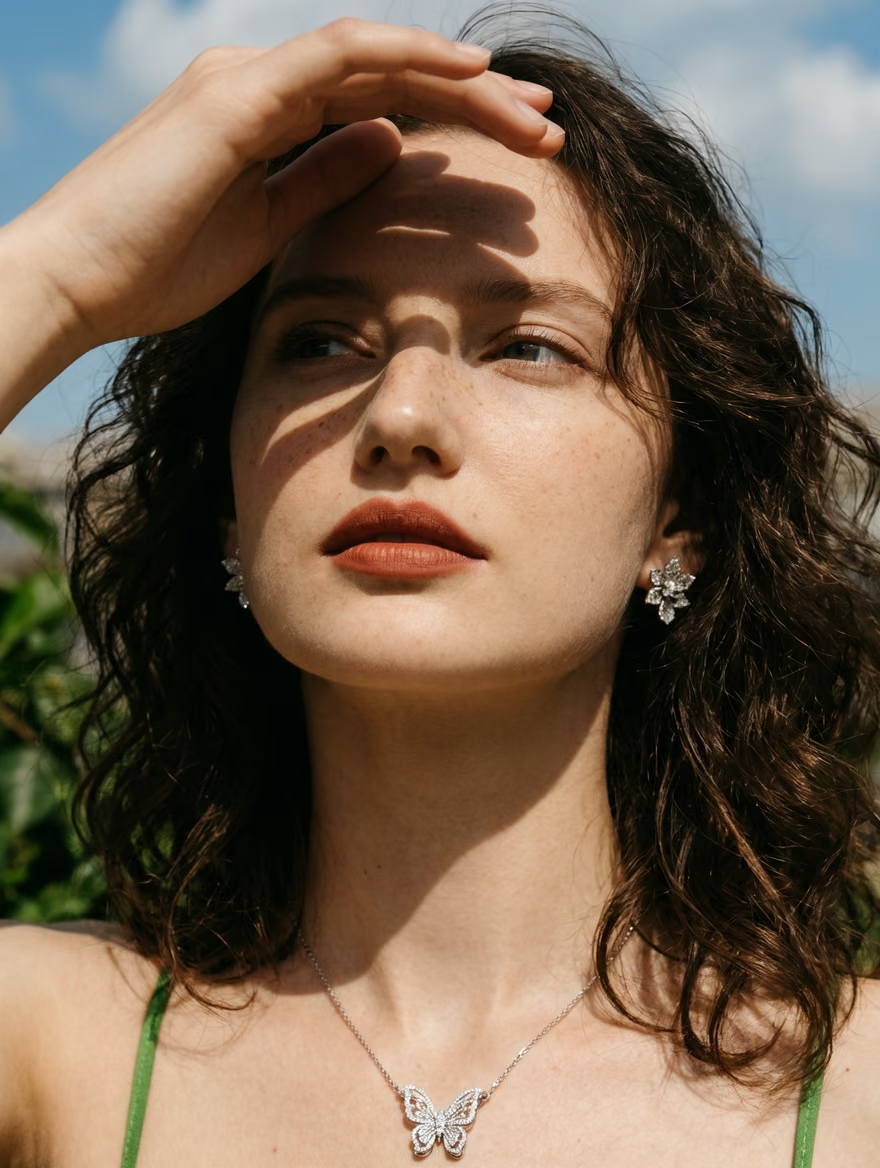
Kling Image 4.0 specifications at a glance
| Specification | Kling Image 4.0 | Source |
|---|---|---|
| Architecture | Unified understanding and generation, single autoregressive framework | Kling blog |
| Resolutions | 2K HD, 4K UHD, 8K UHD (4K and 8K marked VIP in the app) | Kling blog and app screenshot |
| Largest square output | 8,192 × 8,192 pixels (67 megapixels) | API gateway documentation, via aireiter.com |
| Aspect ratios | Auto, 9:16, 2:3, 3:4, 1:1, 4:3, 3:2, 16:9, 21:9 | Kling app screenshot |
| Text in one image | Up to 2,000 characters | Kling blog |
| Prompt length | Up to 15,000 tokens | Kling blog |
| Fonts and colour | 70+ preset commercial fonts; 110+ colour grading presets; palette extraction from a reference image | Kling blog |
| Text languages | Simplified Chinese, Traditional Chinese, English, Japanese, Korean, Spanish, Portuguese | Kling blog |
| Image sets | Up to 10 consistent images from one prompt, planned by the model's "native agentic capabilities" | Kling blog |
| Long-form images | E-commerce product detail pages and web layouts as a single tall image (1K or 2K only on gateways) | Kling blog; aireiter.com |
| Reference images | Up to 10 (JPG or PNG, 30 MB each) on gateway APIs | aireiter.com |
Two points need care. First, the 15,000-token prompt limit comes from Kling, while one gateway describes the limit as 50,000 characters of English, which is broadly consistent but not the same unit. Second, the long-form "web design" output is a single PNG, not editable HTML, so it is a mock-up rather than a working page.
Is Native 8K Worth It?
Native 8K means the model generates the full-resolution image directly, rather than producing a smaller image and enlarging it with a separate upscaler. Kling says that "even when zoomed in, details like freckles, windblown strands of hair, and the grain and creases of a leather bag remain crisp and clear", and pitches the extra resolution for "high-resolution displays and post-production cropping". Our cover image is that leather-bag example, reduced for the web.
An 8,192-pixel-wide image is roughly four times the pixel count of 4K and 16 times that of a 2K image. For most social posts, websites and slide decks that is far more than needed. It matters in three cases:
- Print. Large-format posters, packaging and point-of-sale displays need high pixel counts to stay sharp at viewing distance.
- Cropping. One 8K render can supply a wide banner, a square social crop and a tight product detail without regenerating.
- Video and screens. Backgrounds for 4K video, LED walls and digital signage benefit from headroom.
The trade-off is cost and file size. Gateway pricing puts an 8K image at about two and a half times the cost of a 2K one (see pricing), and the Kling app marks 4K and 8K as VIP options. A sensible workflow is to iterate at 2K and render the chosen image at 8K once.
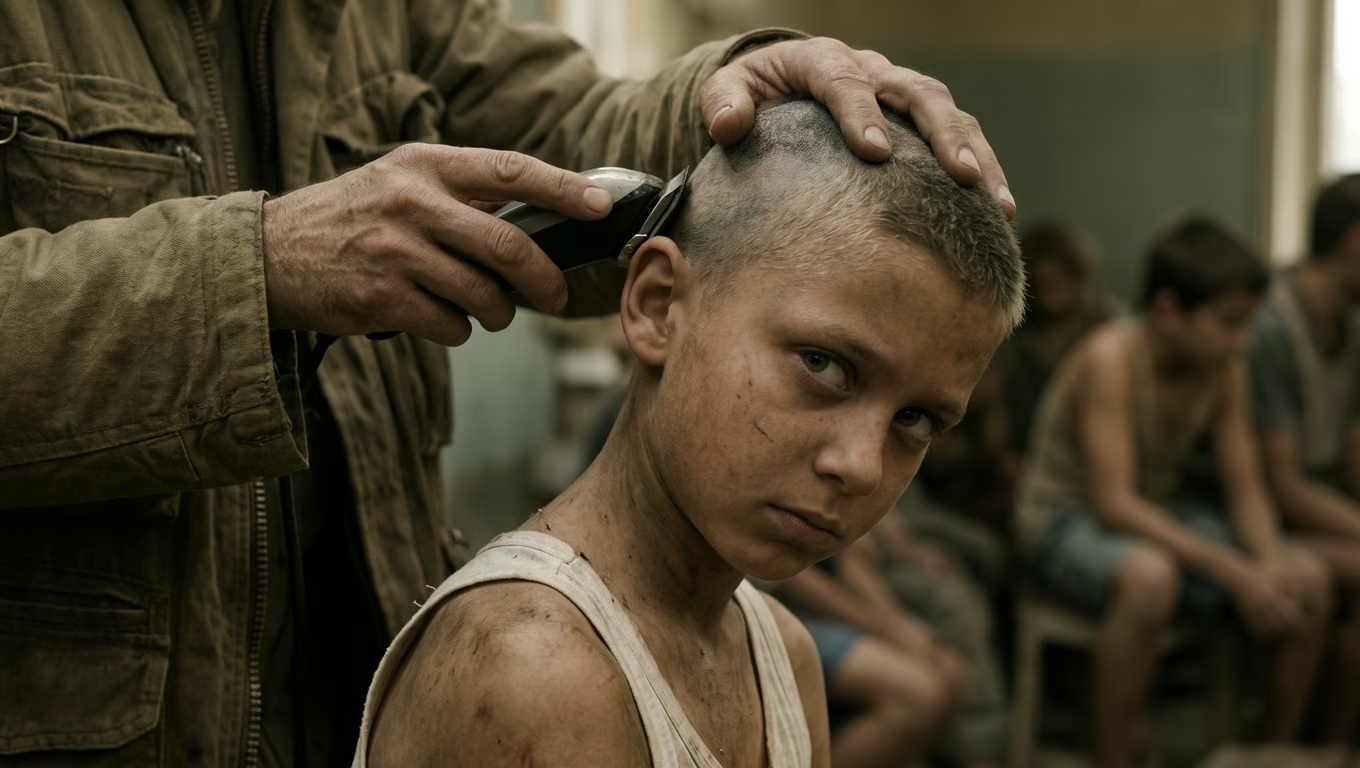
Colour control by hex code and reference
Kling Image 4.0 adds 110+ preset colour grades and lets you upload a reference image to copy its palette and grading. The launch post also shows prompts that specify exact hex colours, such as a vintage sedan in #F0C030 and a shirt in #C41230, and an output that follows them. For brand work, where a logo yellow must be the logo yellow, that is a practical improvement. Always check the result with a colour picker; the demo is Kling's own chosen example.
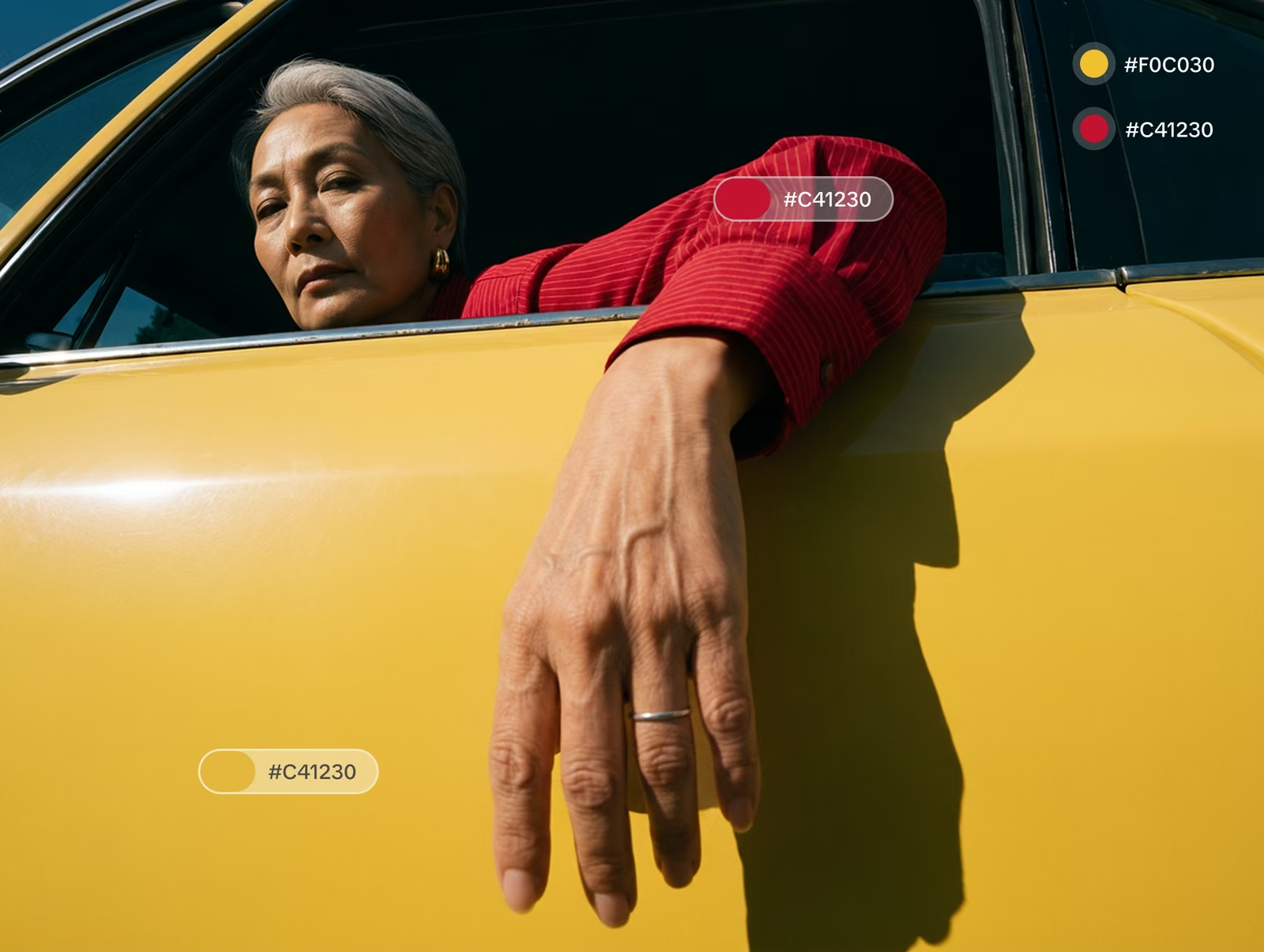
How Good Is Kling Image 4.0's Text Rendering?
Text has been the weak spot of image models for years: misspelt menus, melted letters and invented characters. Kling Image 4.0 claims it can "generate up to 2,000 characters in a single image, with improved clarity for small text and better handling of complex layouts with multiple text sections". The launch examples include menus, explainer graphics and product detail pages.
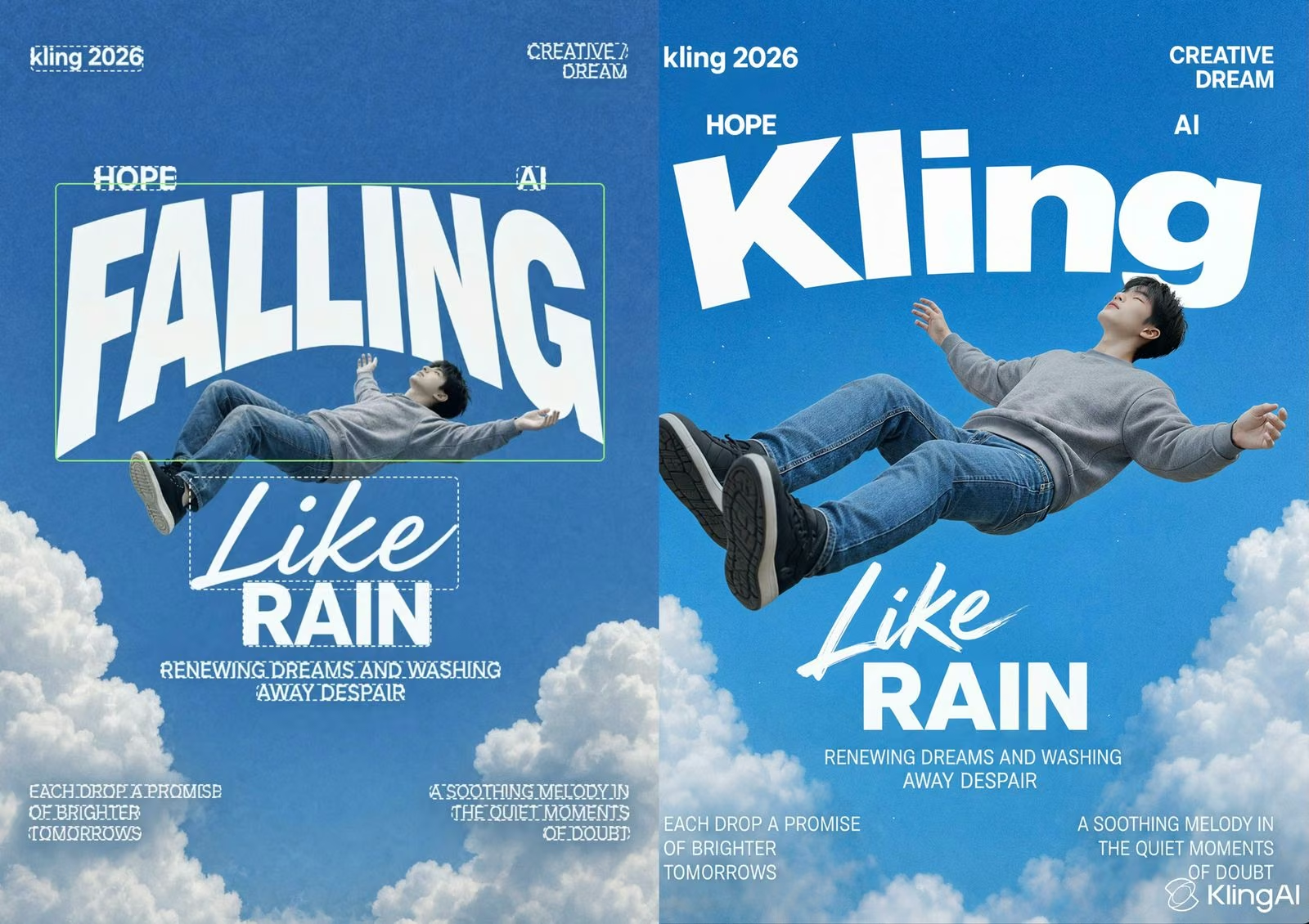
The more useful feature for working designers is that text stays editable. Kling says you can "edit text and font styles directly in images generated on the platform". In the example below, the same poster is shown with editable text boxes overlaid (left) and as a revised version with a new headline (right).
Independent evidence on text accuracy is still thin. An aireiter.com review cites one public test in which a 287-character sale flyer came out with no errors, including tax-inclusive prices, while dense vertical newspaper text failed. That is one uncontrolled test. As of 18/11/2026, the same review found no gateway publishing a text-accuracy (OCR) benchmark for the model. By contrast, ByteDance did publish text-corruption rates for Seedream 5.5, so like-for-like comparisons on text are not yet possible.
Image sets and long-form pages
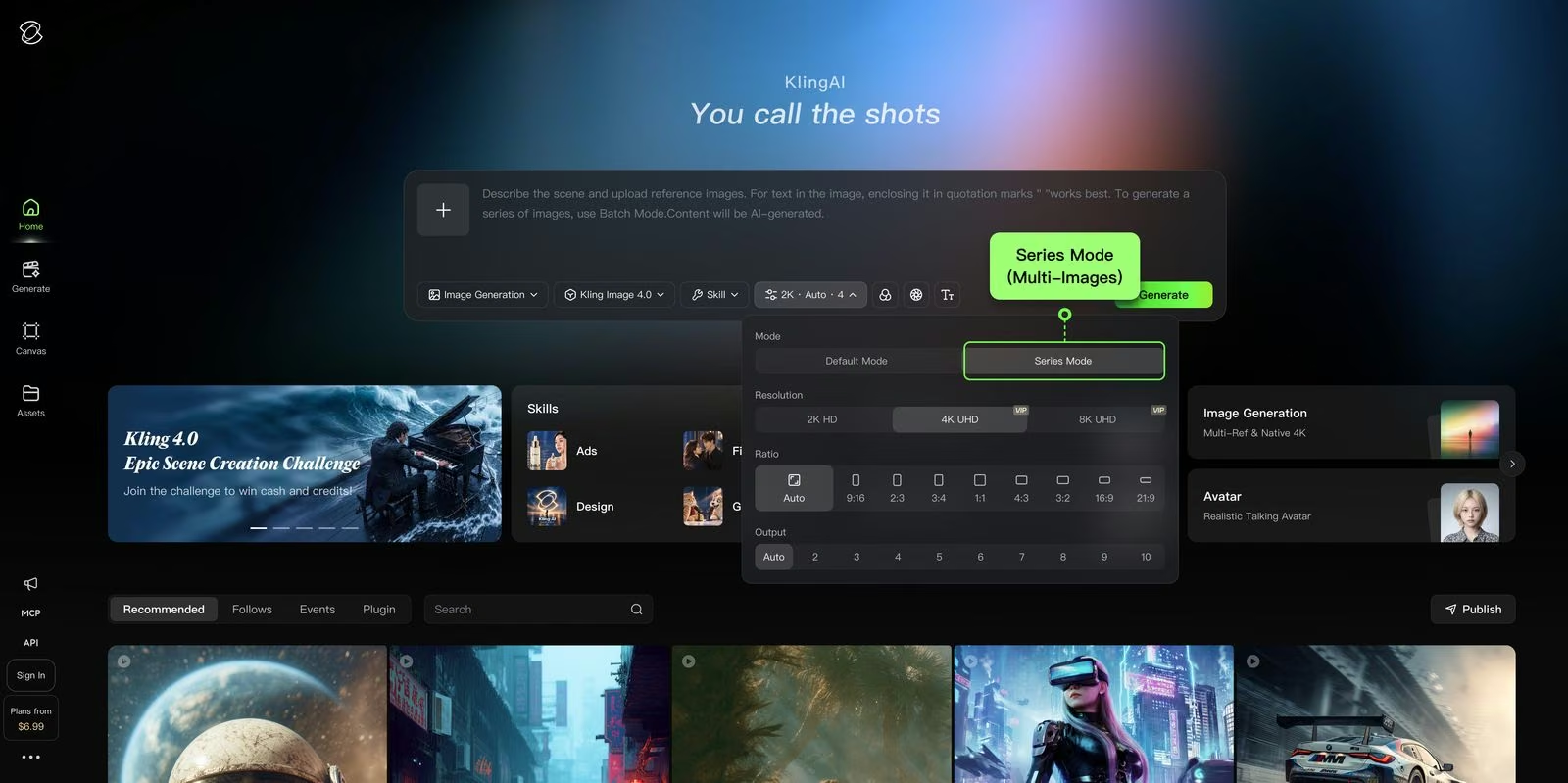
Series mode generates up to 10 related images from one prompt, for storyboards, product showcases or slide decks. The app screenshot below shows the controls: default or series mode, three resolutions and nine aspect ratios, and an output count from auto to 10. Long-form mode produces one very tall image, such as a full perfume product page from a single prompt.
Where Does Kling Image 4.0 Rank Against Other Image Models?
Kling did not publish benchmarks with the launch, so the best independent signal is the Artificial Analysis text-to-image arena, where people vote blind between pairs of images from the same prompt. Votes become an Elo score: a 100-point gap means the higher model wins roughly 64% of head-to-heads.
Text-to-image arena Elo: Kling Image 4.0 vs other recent image models
AA-Image-T2I v2.1, blind pairwise human votes. Higher is better.
GPT Image 2.6 Sunburst (max)
MAI-Image-2.7
GPT Image 2 (high)
Kling Image 4.0
Nano Banana 2.1
Grok Imagine Image 2.0
MAI-Image-2.7-Flash
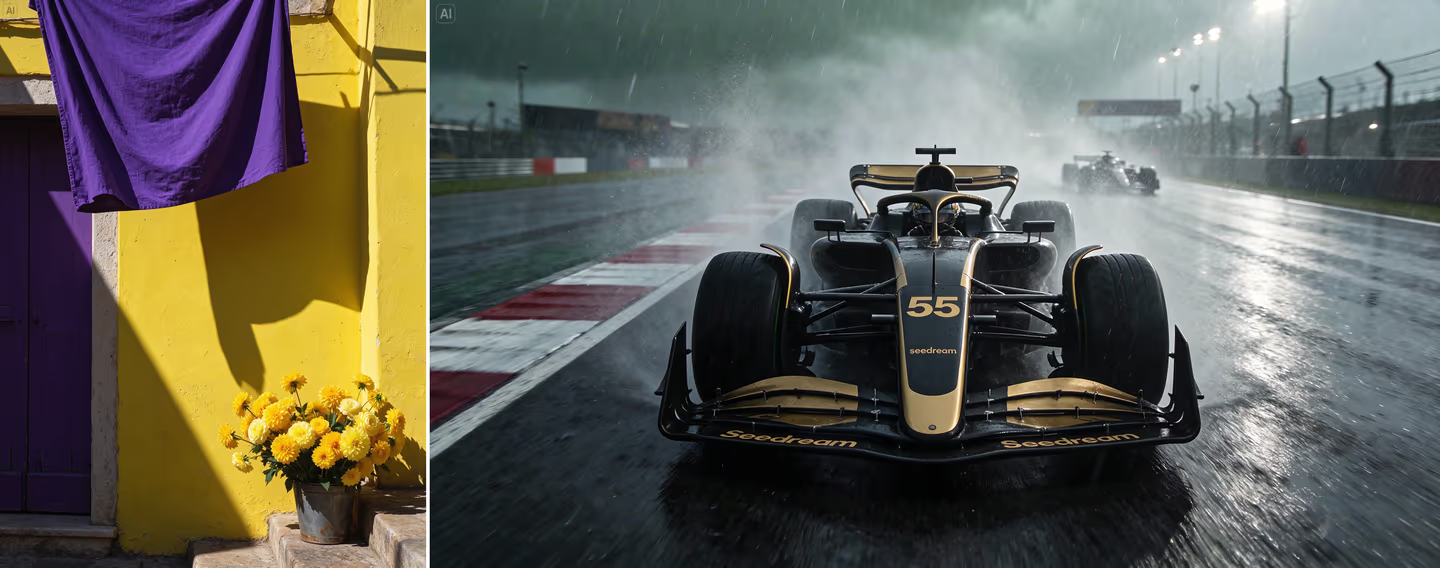
Seedream 5.5
Show data table
| Benchmark | Elo (AA-Image-T2I v2.1) |
|---|---|
| GPT Image 2.6 Sunburst (max) | 1,261 |
| MAI-Image-2.7 | 1,215 |
| GPT Image 2 (high) | 1,193 |
| Kling Image 4.0 | 1,181 |
| Nano Banana 2.1 | 1,177 |
| Grok Imagine Image 2.0 | 1,167 |
| MAI-Image-2.7-Flash | 1,159 |
| Seedream 5.5 | 1,134 |
Source: Artificial Analysis text-to-image leaderboard, accessed 20/11/2026.
Kling Image 4.0 is a strong top-ten entrant, not the leader. OpenAI's GPT Image 2.6 Sunburst is 80 points clear, and Microsoft's MAI-Image-2.7, which we covered in our MAI Image 2.7 analysis, is 34 points ahead. The gap to Nano Banana 2.1 (4 points) and Grok Imagine Image 2.0 (14 points) is inside or close to the confidence intervals, so treat those as roughly level. WaveSpeed, citing the same leaderboard a few days earlier with fewer votes, reported Kling sixth on both text-to-image (1,180) and image editing (1,182). The arena tests images at default settings, typically around 1024×1024 pixels, so it says nothing about the 8K advantage.
Price changes the picture. Plotting Elo against the listed price per 1,000 images shows where each model sits on value:
Arena Elo vs price per 1,000 images
Up and to the left is better value. Prices are Artificial Analysis listings at default settings.
- Kling Image 4.0
- OpenAI GPT Image
- Other models
Show data table
| Model | Setting | Elo | Cost per task |
|---|---|---|---|
| Kling Image 4.0 | Kling Image 4.0 | 1,181 | $63 |
| OpenAI GPT Image | GPT Image 2.6 Sunburst | 1,261 | $211 |
| OpenAI GPT Image | GPT Image 2.6 Flare | 1,227 | $211 |
| OpenAI GPT Image | GPT Image 2 (high) | 1,193 | $211 |
| Other models | MAI-Image-2.7 | 1,215 | $35 |
| Other models | Nano Banana 2.1 | 1,177 | $34 |
| Other models | Grok Imagine Image 2.0 | 1,167 | $60 |
| Other models | MAI-Image-2.7-Flash | 1,159 | $10 |
| Other models | Seedream 5.5 | 1,134 | $20 |
Source: Artificial Analysis text-to-image leaderboard, accessed 20/11/2026.
| Model | Arena Elo | 95% interval | Price per 1,000 images | Our coverage |
|---|---|---|---|---|
| GPT Image 2.6 Sunburst (max) | 1,261 | 1,247 to 1,275 | £160 ($210.72) | ChatGPT Images 2.5 |
| MAI-Image-2.7 | 1,215 | 1,201 to 1,229 | £26 ($34.82) | MAI Image 2.7 |
| Kling Image 4.0 | 1,181 | 1,168 to 1,194 | £48 ($63) | This article |
| Nano Banana 2.1 | 1,177 | 1,165 to 1,189 | £26 ($33.60) | Nano Banana 2 |
| Grok Imagine Image 2.0 | 1,167 | 1,155 to 1,179 | £46 ($60) | Grok Imagine 2.0 |
| Seedream 5.5 | 1,134 | 1,122 to 1,146 | £15 ($20) | Seedream 5.5 |
On these listings, Kling Image 4.0 is about a third of the price of GPT Image 2.6 at default settings, but nearly twice the price of MAI-Image-2.7 and Nano Banana 2.1, which score as well or better in the arena. Kling's case therefore rests on what the arena does not measure: 8K output, very long text, editable typography and series generation. Pound figures use a rate of about £0.76 to the dollar and are rounded.
Wes Roth's June 2026 walkthrough of building a HeyGen digital twin avatar from a short clip, the workflow Avatar 6 now upgrades.
What Is HeyGen Avatar 6?
An AI avatar is a generated video of a person, real or invented, who speaks a script in a synthetic or cloned voice with matching lip movements, expressions and gestures. HeyGen Avatar 6 is HeyGen's sixth-generation avatar model. According to its research page and technical report (17/11/2026), it learns "a person's appearance, including skin texture, hair and clothing, together with their manner of speaking and the motion of their head, face, hands and body" from either one photo or a short identity recording.
The system has three in-house parts: the video generation model, which includes a super-resolution stage and outputs 1080p and 2K natively; a motion planner that drives performance from speech and optional written prompts; and HeyGen Voice for voice cloning. It comes in two configurations, Avatar 6 Quality and the lower-latency Avatar 6 Turbo. HeyGen says it is available in the web app, mobile app and API "from mid-November 2026". Its pricing page calls the top tier "Avatar 6 Pro", which appears to correspond to Quality.
What can Avatar 6 do?
- Any identity from one photo: real people and AI-generated characters, including stylised ones, in studios, offices, stages and concerts.
- Native 2K, unlimited duration: the report's showcase videos run 25 to 28 minutes at 2880×1620, each from one continuous audio track. HeyGen says a 30-minute sequence is generated in a single pass "without identity drift or late-stage loss of sharpness".
- Motion prompts: you write a gesture next to a word, such as a thumbs-up on "Hello", and the avatar performs it in that person's style.
- Multi-speaker dialogue: two people in one frame, such as a host and guest in a two-minute podcast generated in one pass.
- Talking video editing: change specific words in a real recording and only those moments are regenerated, in the speaker's own voice.

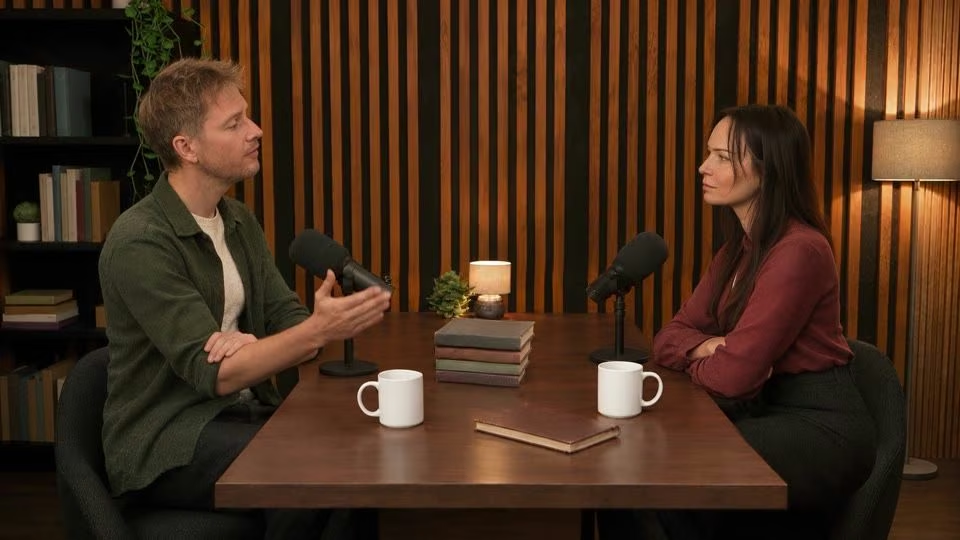
HeyGen states that everyone shown in its report is a HeyGen employee or a contracted actor who consented, and that the AI avatars in its showcase are synthetic characters or HeyGen public stock avatars.
What Does the 42.2% Result Actually Mean?
The headline that Avatar 6 is mistaken for real footage 42.2% of the time is accurate, but it comes from one specific test design. HeyGen split real recordings of its employees in two. Avatar 6 saw only the first part and generated the second; the real second part was held back for comparison. Recordings ranged from 32 to 239 seconds per person (median 66 seconds), and evaluated segments from 11.6 to 44.9 seconds (median 28.6 seconds).
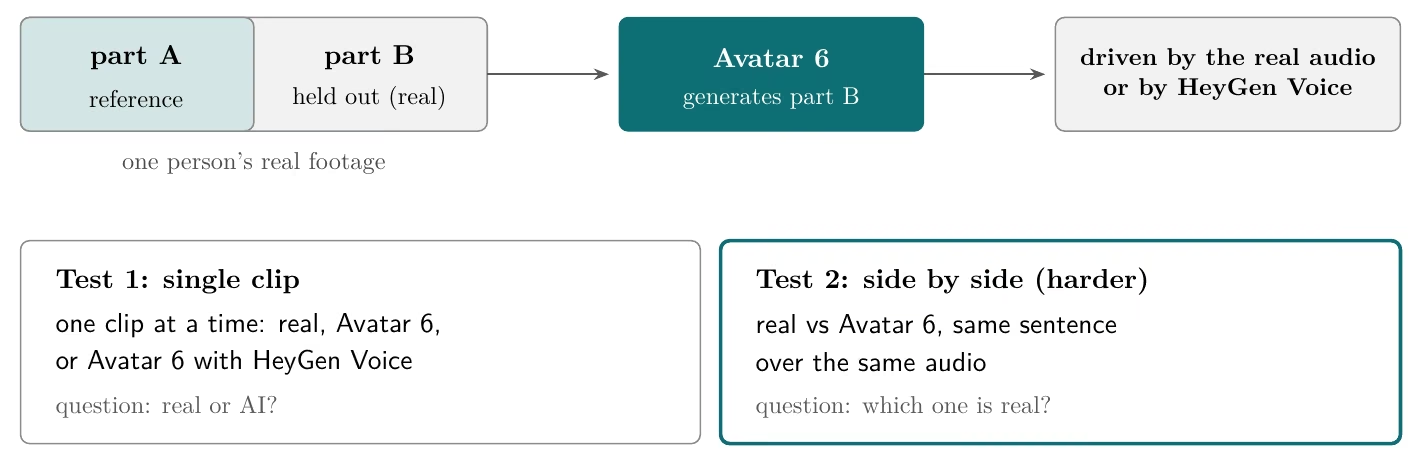
There were two tests, with 20 external raters and about four raters per clip or pair:
- Single clip (77 people): raters saw one clip and answered "real or AI?".
- Side by side (76 people): raters saw the real clip and the Avatar 6 clip saying the same sentence over the same audio, and picked the real one. HeyGen calls this the harder test.
Share of clips judged real when shown alone
Single-clip test, 20 external raters. Higher means more convincing.
Genuine recording · 612 answers
Avatar 6, person's own voice · 304 answers
Avatar 6, HeyGen Voice clone · 308 answers
Show data table
| Benchmark | Judged real |
|---|---|
| Genuine recording | 78.9% |
| Avatar 6, person's own voice | 65.1% |
| Avatar 6, HeyGen Voice clone | 56.5% |
Source: HeyGen Avatar 6 technical report, Table 4 (17/11/2026). Vendor-run study.
In the side-by-side test, raters picked the real recording in 57.8% of 270 choices and the Avatar 6 clip in 42.2% (114 choices). If raters could not tell the two apart at all, the split would be 50/50. HeyGen doubles 42.2% to report an "indistinguishability" rate of 84.4%, against 44.4% for its previous model, Avatar V. A further 11.2% of the 304 side-by-side answers were "can't tell".
Three caveats matter when you repeat the figure:
- HeyGen designed and ran the study. No independent lab has replicated it, and the raters, prompts and clip selection were HeyGen's.
- The sample is modest. 270 side-by-side answers from 20 raters is enough to show a clear effect, not enough to pin the number to a decimal place.
- Short clips favour the model. Median segments were under 30 seconds. Long viewing, unusual lighting or a viewer who knows the person well may expose differences.
Even with those caveats, the single-clip result is the more important one for everyday risk. Most people see a video on its own, without a real version to compare against. Under those conditions, nearly two-thirds of Avatar 6 clips with the person's own voice passed as real, only 14 points below genuine footage. For context, Tavus claimed in October 2026 that 48% of people talking live to its Griffin model thought it was human, a different design that is not directly comparable.
WorldofAI runs the same prompt through Kling 4.0, Seedance 2.5, Wan 3.0 Prime, MiniMax H3 and others, the general video models HeyGen benchmarks Avatar 6 against.
How Does HeyGen Avatar 6 Compare With Other AI Avatar Tools?
HeyGen compares Avatar 6 with three groups: general video models (Seedance 2.5 and Wan 3.0), its own earlier avatars, and commercial products including Kling 4.0, Synthesia, VEED, Creatify, Akool, D-ID, Colossyan, Hedra, OmniHuman and Argil. The fairest comparison is the side-by-side test by external raters who had never met the people shown:
Side-by-side overall quality: Avatar 6 vs rivals
Share of answers. The remainder is 'no preference'. Higher Avatar 6 share is better for HeyGen.
- Avatar 6 preferred
- Other product preferred
Wan 3.0 · from a photo
Seedance 2.5 · from a photo
Kling 4.0 · from a photo
Synthesia Express-2 photo avatar
Kling 4.0 reference-to-video · from the person's footage
Wan 3.0 reference-to-video · from the person's footage
VEED Preset avatars
Synthesia Personal video avatar
Show data table
| Benchmark | Avatar 6 preferred | Other product preferred |
|---|---|---|
| Wan 3.0 | 45.8% | 45.5% |
| Seedance 2.5 | 55.2% | 37.5% |
| Kling 4.0 | 66.5% | 24.0% |
| Synthesia Express-2 photo avatar | 82.2% | 12.2% |
| Kling 4.0 reference-to-video | 48.0% | 39.4% |
| Wan 3.0 reference-to-video | 67.4% | 23.6% |
| VEED Preset avatars | 78.3% | 11.1% |
| Synthesia Personal video avatar | 87.1% | 5.9% |
Source: HeyGen Avatar 6 technical report, Figure 4 (17/11/2026). Vendor-run study with external raters.
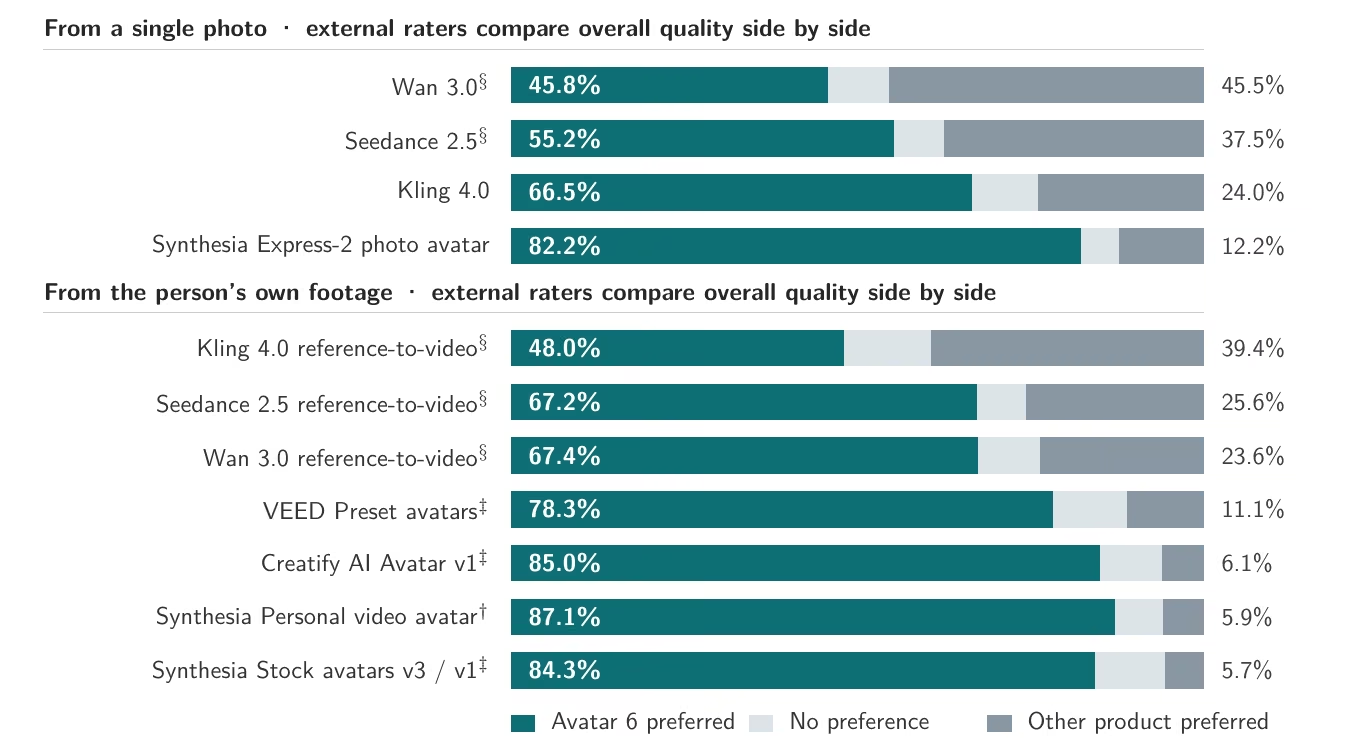
The pattern is clear. Against dedicated avatar products from Synthesia, VEED and Creatify, Avatar 6 wins by wide margins. Against the best general video models the gap narrows sharply: Wan 3.0 from a photo is a dead heat, and Kling 4.0 working from a person's footage is close (48.0% to 39.4%). General video models such as MiniMax H3 and the Seedance line we covered in our Seedance 2.0 review are catching up on talking heads, but they are not built for 30-minute presenter videos, consent checks or word-level editing.
In absolute ratings on a 0 to 5 scale, from a single photo, Avatar 6 scored 4.00 overall against 3.68 for the closest product, VEED Fabric 1.0, and 3.32 for OmniHuman v2. From a person's footage it scored 3.98 against 2.93 for Akool Talking Avatar. HeyGen also says Avatar 6 ranks first on the independent Avatar Arena leaderboard on both its Twins and Stock avatars boards, at the time of writing.
| From a single photo (0 to 5) | Overall | Visual quality | Identity | Lip sync | Motion |
|---|---|---|---|---|---|
| HeyGen Avatar 6 | 4.00 | 4.33 | 4.39 | 4.12 | 4.01 |
| VEED Fabric 1.0 | 3.68 | 3.96 | 4.20 | 3.71 | 3.74 |
| Argil image avatar | 3.46 | 3.76 | 4.32 | 3.52 | 3.55 |
| OmniHuman v2 | 3.32 | 3.70 | 3.97 | 3.44 | 3.41 |
| Creatify Aurora | 3.29 | 3.33 | 3.99 | 3.48 | 3.40 |
| Hedra Character 3 | 3.16 | 3.62 | 4.05 | 3.24 | 3.21 |
| D-ID V2 Talks | 1.48 | 3.43 | 3.07 | 2.18 | 0.94 |
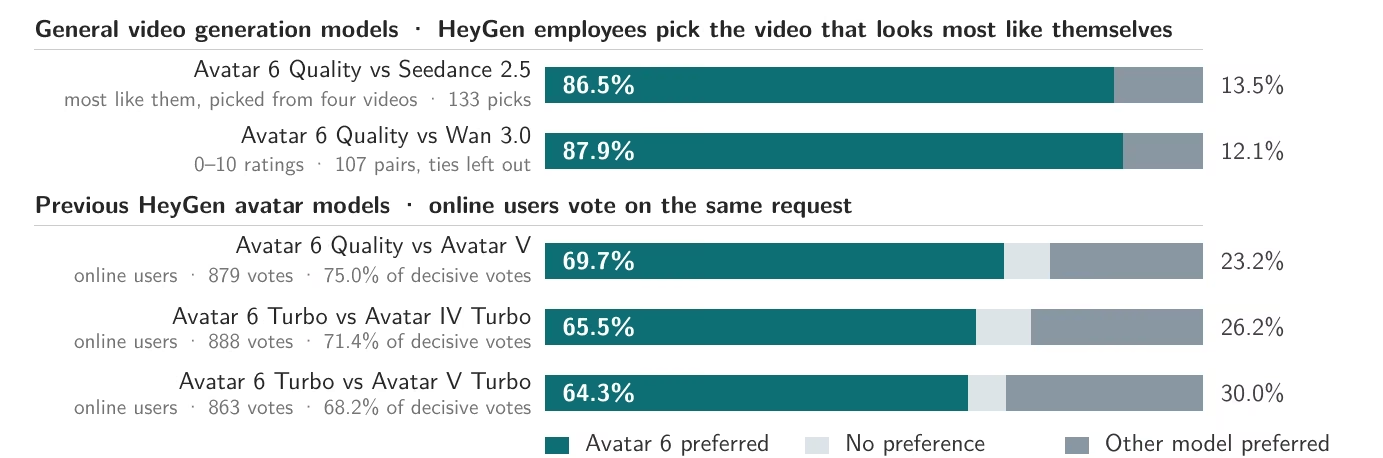
Against its own predecessors, HeyGen's online users preferred Avatar 6 Quality over Avatar V in 69.7% of 879 votes (75.0% of decisive votes), and Avatar 6 Turbo over the Avatar IV and Avatar V Turbo tiers in 65.5% and 64.3% of votes. When HeyGen employees judged videos of themselves, they picked Avatar 6 over Seedance 2.5 in 86.5% of 133 picks and over Wan 3.0 in 87.9% of 107 pairs. Because the judges were HeyGen staff, treat those last two figures as the least independent in the report.
Can Avatar 6 Edit Real Video Word by Word?
Talking video editing is the feature most likely to change everyday production, and the one with the most obvious misuse potential. You take a real recording, change some words in the transcript, and Avatar 6 regenerates only the affected moments in the speaker's cloned voice, leaving the rest of the footage "as filmed".
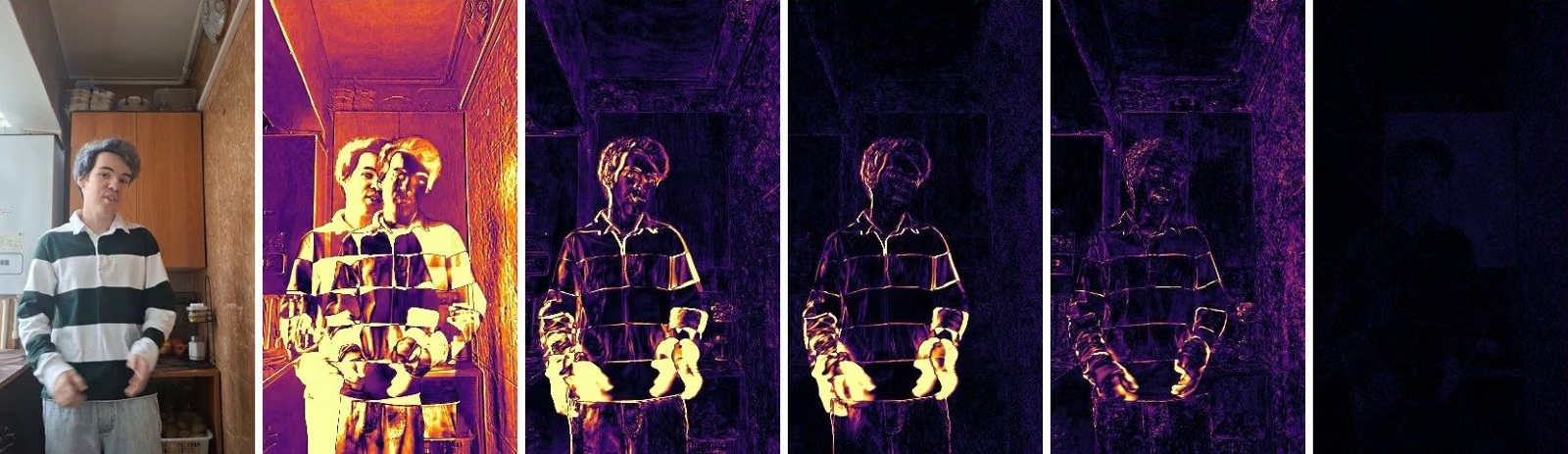
HeyGen's measurements across 20 edits show why this matters. Every rival regenerated almost every frame of the clip, while Avatar 6 changed 34.4% of frames and kept untouched footage at 48.3 dB PSNR (peak signal-to-noise ratio, where higher means closer to the original):
Untouched-footage fidelity after a word edit
PSNR of frames outside the edit vs the original recording, in decibels. Higher is better.
Avatar 6 · 34.4% of frames changed
Seedance 2.5 · 99.7% of frames changed
Wan 3.0 · 100% of frames changed
HappyHorse Edit · 100% of frames changed
MiniMax H3-max · 100% of frames changed
Show data table
| Benchmark | Untouched PSNR (dB) |
|---|---|
| Avatar 6 | 48.3 dB |
| Seedance 2.5 | 29.3 dB |
| Wan 3.0 | 25.8 dB |
| HappyHorse Edit | 22.8 dB |
| MiniMax H3-max | 19.5 dB |
Source: HeyGen Avatar 6 technical report, Table 5 (17/11/2026). Vendor-run, 20 edits.
Avatar 6 also led on face similarity (0.913), voice similarity (0.763) and lip-sync confidence (LSE-C 7.67) on the new words. For a training team fixing one wrong figure in a 20-minute module, that saves a reshoot. It also means a genuine recording of a real person can be made to say something different, with the surrounding footage untouched. That is exactly the scenario disclosure rules are written for.
How Much Do Kling Image 4.0 and HeyGen Avatar 6 Cost?
Neither launch page includes a price, so the figures below come from Artificial Analysis, API gateways and HeyGen's pricing page. Both companies charge in US dollars; pound figures use roughly £0.76 per dollar, rounded, and exclude VAT.
| Product and tier | Price | What you get | Source |
|---|---|---|---|
| Kling Image 4.0, 2K image (API) | about 5p ($0.063) | One output image; matches the $63 per 1,000 listed by Artificial Analysis | Gateways via aireiter.com; Artificial Analysis |
| Kling Image 4.0, 4K image (API) | about 7p ($0.094) | One output image | Gateways via aireiter.com |
| Kling Image 4.0, 8K image (API) | about 12p ($0.157) | One output image | Gateways via aireiter.com |
| Kling Image 4.0, long e-commerce page (API) | about 18p to 66p ($0.235 to $0.862) | Short to long page, 1K or 2K | Gateways via aireiter.com |
| HeyGen Free | £0 | Limited Avatar 6 access; 3 watermarked videos a month, up to 1 minute each | HeyGen pricing page |
| HeyGen Creator | about £22 ($29) a month | Avatar 6 Turbo; 1080p; videos up to 30 minutes; 600 credits | HeyGen pricing page |
| HeyGen Pro | from about £37 ($49) a month | Avatar 6 Turbo and Avatar 6 Pro; 4K export; 30 minutes; from 1,000 credits | HeyGen pricing page |
| HeyGen Business | about £113 ($149) a month plus £15 ($20) per seat | 4K; videos up to 60 minutes; 1,500 credits | HeyGen pricing page |
| Avatar 6 via a reseller API | about 7.6p ($0.10) per second | About £4.56 ($6) per minute of video | AI/ML API listing |
Treat the Kling API prices as indicative. Runware's own page still described the model as "coming soon" when we checked, and Picsart lists far higher credit prices. HeyGen's API is billed separately from its subscriptions, and we could not find an official per-second rate for Avatar 6. Note also that the pricing page lists 4K export on Pro, while the technical report describes native generation at up to 2K; HeyGen does not say how 4K exports are produced.
Is It Legal to Make Realistic AI Images and Avatars of People in the UK?
Using either tool for your own likeness, a consenting colleague or a fictional character is generally lawful. The risk begins when the image or video shows a real person who has not agreed, or when it is used to deceive. Earlier this year we covered a case of hyper-realistic AI influencers used in a scam; models at Avatar 6's level make that easier. The key UK rules are below. This is general information, not legal advice.
| Law | What it covers | In force |
|---|---|---|
| Online Safety Act 2023, s.188, inserting s.66B into the Sexual Offences Act 2003 | Sharing, or threatening to share, a photo or film that "shows, or appears to show" another person in an intimate state without consent. The "appears to show" wording covers deepfakes. | 31/01/2024 |
| Data (Use and Access) Act 2025, s.138 | Creating, or requesting the creation of, a purported intimate image of an adult without consent or a reasonable belief in consent. This closed the gap where only sharing was illegal. | 06/02/2026 (SI 2026/31) |
| Online Safety Act 2023, platform duties | User-to-user services and search engines must assess and reduce the risk of illegal content, including intimate image abuse and fraud, under Ofcom's codes. | Illegal content duties enforced by Ofcom |
| UK GDPR and Data Protection Act 2018 | A person's face and voice are personal data. Building an avatar of an employee or customer needs a lawful basis, and biometric processing to identify someone attracts stricter rules. | In force |
| Fraud Act 2006, harassment and defamation law | Using a fake video or image to deceive for gain, harass or damage reputation is covered by existing law regardless of how it was made. | In force |
For UK businesses with EU audiences, the EU AI Act's Article 50 transparency rules applied from 02/08/2026. According to Morgan Lewis, deployers "must make appropriate human-facing disclosures" for deepfakes, and providers must mark synthetic outputs in a machine-readable format, with a grace period to 02/12/2026 for systems already on the market. We explained how one AI company is approaching this in Claude's invisible AI watermark.
HeyGen's consent gate is a meaningful safeguard for its footage-based avatars. The person must record an on-camera statement including a one-time code, so "footage recorded in advance or taken from elsewhere cannot satisfy the check", and the avatar cannot render until HeyGen confirms the face matches. The report does not describe the same check for photo-based avatars, which HeyGen says can be made of "real people" from a single photo. That is the gap worth watching.
Do Watermarks and C2PA Content Credentials Solve the Problem?
C2PA (the Coalition for Content Provenance and Authenticity) is an open standard for attaching signed metadata, called Content Credentials, that records who or what made a piece of media and how it was edited. A watermark, by contrast, is a signal hidden in the pixels or audio themselves. They complement each other, and neither is foolproof.
- Kling: Kling publishes an AI Content Detection page and says it embeds an invisible watermark and metadata in AI-generated images and videos, with a public detector at kling.ai/detection. An academic study of platform labelling found AI-related metadata on Kling Image 3.0 and Video 3.0 outputs, but the C2PA Content Credentials check returned "error". We found no confirmation that Image 4.0 attaches C2PA credentials.
- HeyGen: the Avatar 6 research page does not mention watermarking or C2PA. Free-plan videos are visibly watermarked, according to the pricing page; we found no official statement on invisible watermarks for paid exports.
- Ofcom's view: in its Deepfake Defences 2 attribution toolkit (11/07/2025), Ofcom's technical tests found that watermarks can often be stripped after basic edits. It recommends a mix of watermarking, provenance metadata, AI labels and context notes, and says the paper is not formal guidance under the Online Safety Act.
The practical conclusion: do not rely on the tool to label your content. If you publish AI-generated people, add your own visible disclosure, keep the original files with any metadata intact, and record which model, prompt and consent applied to each asset.
Who Should Use Kling Image 4.0 and HeyGen Avatar 6, and How?
Good fits for Kling Image 4.0
- E-commerce and retail: product detail pages, lifestyle shots and sets of 10 consistent images for a listing.
- Print and out-of-home: posters and displays where 8K resolution earns its cost.
- Text-heavy marketing: menus, flyers, infographics and multilingual packaging, with editable text for late changes.
- Storyboards and pitch decks: series mode keeps characters and style consistent across frames.
Good fits for HeyGen Avatar 6
- Training and internal communications: long modules presented by a consenting subject-matter expert, updated word by word instead of reshot.
- Localisation: the same presenter in several languages, paired with voice tools such as ElevenLabs or HeyGen Voice.
- Sales and customer education: personalised explainers and product walkthroughs.
- Podcasts and interviews: two-speaker formats generated in one pass, clearly labelled as AI.
A practical checklist
- Get written consent from anyone whose likeness or voice you use, covering scope, duration and withdrawal. HeyGen's consent check is not a substitute for your own.
- Never generate real, identifiable people in Kling or any image tool without permission, and never in intimate, defamatory or misleading contexts.
- Disclose clearly in the video or caption, for example "This presenter is an AI avatar of [name], used with permission."
- Proofread all generated text, especially prices, legal wording and small print. A 2,000-character limit is not a 2,000-character accuracy guarantee.
- Iterate cheaply, render once: work at 2K in Kling and 1080p Turbo in HeyGen, then produce finals at 8K or with Avatar 6 Pro.
- Keep a provenance log of prompts, model versions, consent records and original files.
If you are building a full production process, our guides to creating professional videos with AI and managing AI-generated image assets cover the surrounding workflow. For alternative image tools, see Midjourney, Ideogram and FLUX in our directory.
Limitations and Open Questions
- No Kling technical report. There is no published benchmark for text accuracy, 8K fidelity or editing. The arena rank is the only independent quality signal so far, and it does not test 8K output.
- Unofficial Kling pricing. API prices come from gateways, not a Kling rate card.
- Vendor-run avatar studies. HeyGen designed every Avatar 6 evaluation except the Avatar Arena ranking, and some studies used HeyGen employees as judges.
- Short test clips. The Turing test segments had a median length of 28.6 seconds, much shorter than the 30-minute videos HeyGen advertises.
- Photo-avatar consent. The consent gate described in the report covers footage-based avatars; HeyGen does not say how photo-based avatars of real people are verified.
- Provenance gaps. Neither launch page commits to C2PA Content Credentials, and Ofcom has shown that watermarks can be removed.
The Bottom Line
Kling Image 4.0 is a strong, practical image model rather than a new leader. It sits seventh on the Artificial Analysis arena, close to Nano Banana 2.1 and well behind GPT Image 2.6, but it offers things the leaderboard does not measure: native 8K, very long and editable text, colour control by hex code and consistent 10-image sets. If you produce print, e-commerce pages or text-heavy marketing, it is worth testing. If you need the best general image quality per pound, MAI-Image-2.7 and Nano Banana 2.1 currently score as well or better for less.
HeyGen Avatar 6 is the more significant release. On HeyGen's own evidence, it leads dedicated avatar products by wide margins, produces half-hour videos without drift, and passes as real in nearly two-thirds of single-clip viewings. Word-level editing of real footage is genuinely useful and genuinely risky. For UK organisations, the technology is ready for consented, clearly labelled training and communications video. Using it any other way now carries real legal exposure, and the burden of disclosure falls on you, not the tool.
Last updated: 20/11/2026. Kling Image 4.0 details from Kling AI's announcement of 18/11/2026; Avatar 6 figures from HeyGen's technical report of 17/11/2026; leaderboard data from Artificial Analysis, accessed 20/11/2026. Pound conversions are approximate.
Sources
- Kling AI: Meet Kling Image 4.0, Stunningly realistic. Sharp. Precise. (18/11/2026)
- HeyGen Research: Avatar 6 technical report, Talking Avatars That Are More Like You (17/11/2026)
- HeyGen: Pricing plans
- Artificial Analysis: Text to Image Leaderboard (accessed 20/11/2026)
- WaveSpeed AI: Kling Image 4.0 Preview Ranks Sixth on the Artificial Analysis Image Leaderboards
- aireiter.com: Kling Image 4.0 API pricing review
- AI/ML API: HeyGen Avatar 6 API listing
- legislation.gov.uk: Online Safety Act 2023, section 188
- legislation.gov.uk: Data (Use and Access) Act 2025, section 138
- legislation.gov.uk: The Data (Use and Access) Act 2025 (Commencement No. 5) Regulations 2026
- Ofcom: Deepfake Defences 2, The Attribution Toolkit (11/07/2025)
- C2PA: Coalition for Content Provenance and Authenticity
- arXiv: Drowning in AI Slop, How Social Media Platforms (Do Not) Label AI and Deepfake Content under EU law
- Morgan Lewis: EU AI Act's transparency rules, what went into effect on 2 August
- Decrypt: Tavus Griffin video Turing test claim