 AI Tools Review Editorial Team
Quick Answer:
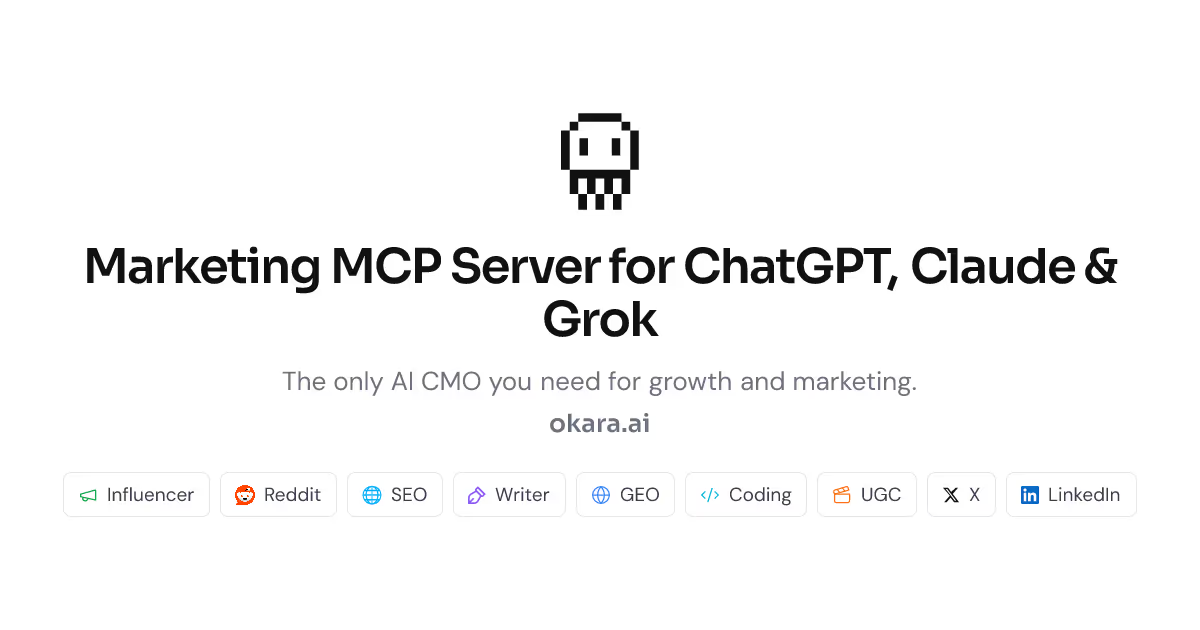
Okara's MCP server is a single link, https://okara.ai/api/mcp, that connects an Okara "AI CMO" account to ChatGPT, Claude and other assistants so you can run its SEO, GEO, content, social and ads agents from chat. It is not a free add-on: you need an Okara plan, listed at $129 a month for Lite or $249 for Pro (about £102 and £197), and every request spends Okara credits. Okara says publishing is off by default and ad campaigns are created paused, but the connection requests read, write, publish and spend permissions, and Okara does not publish its tool list. Treat it as a convenient front end to Okara, not a replacement for Ahrefs or Semrush data.
A YouTube video published today promises "a complete SEO team" inside ChatGPT and Claude. The product behind it is real, and so is the connector. What the video title does not tell you is what it costs, what it can do on your behalf, and how much of the detail Okara has not yet documented. We read Okara's site, documentation, policies and the server's own sign-in metadata to find out.
This is a desk review. We did not buy an Okara subscription or run the agents against a live site, so nothing here is a judgement on the quality of Okara's output. Everything below is drawn from pages we fetched on 18/11/2026: Okara's MCP page, pricing page, documentation and privacy policy, plus Anthropic, OpenAI, Ahrefs and Semrush documentation and a Vercel customer story. Where Okara's own pages disagree with each other, we say so. Dollar prices are Okara's; sterling figures are our conversion at roughly $1 = £0.79 and exclude any tax.
$129 / $249
Lite / Pro per month
About £102 / £197
2,000
Credits a month
Same on Lite and Pro
4
OAuth permission scopes
read, write, publish, spend
150,000+
Businesses claimed
Okara's own figure
Source: Okara pricing page, credits documentation, MCP sign-in metadata and MCP page, fetched 18/11/2026
Julian Goldie's walkthrough of the Okara MCP server: what it does for SEO, GEO and rival research, a setup guide for ChatGPT and Claude, and a section on limits, risks and best practices.
Executive Summary
- What it is: a remote MCP (Model Context Protocol) server that lets an AI assistant operate your Okara account. Okara calls it a way to put "your AI CMO inside the chat you already use".
- Who makes it: StreamOye Pte Ltd, trading as Okara, a Singapore-based company founded by Fatima Rizwan. The AI CMO launched in March 2026.
- Where it works: Okara names ChatGPT, Claude, Grok and Meta's Muse, plus Claude Code, Codex and Cursor for developers.
- What it costs: it draws on the credits in a paid Okara plan. Lite is $129 a month, Pro is $249, both with 2,000 credits. A Black Friday offer currently halves the first year of annual plans.
- Safeguards Okara states: drafts wait for approval, publishing is off until you enable it, ad campaigns are created paused, and you can disconnect from Okara's settings.
- Gaps: no public list of the server's tools, no MCP page in the documentation, no published rate limits, and no independent testing that we could find.
- Our view: useful if you already pay for Okara and live in ChatGPT or Claude. If you are choosing an SEO data source, the Ahrefs and Semrush servers are a different and better-documented kind of product.
What Okara Is and Who Makes It
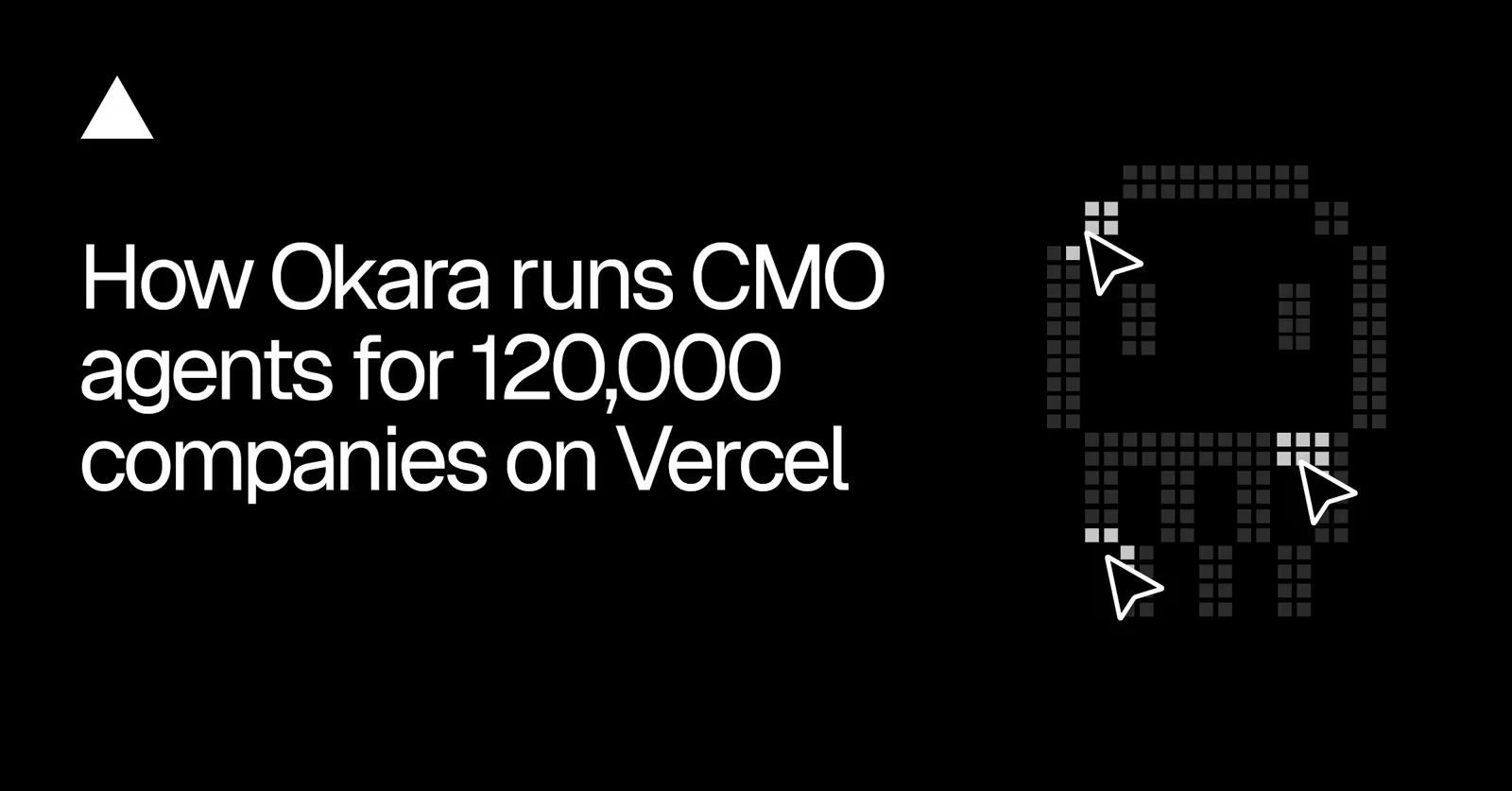
Okara describes itself as "the AI CMO": a set of AI agents that handle marketing for solo founders and small teams. According to its documentation, you give it your website address, it reads the site, builds a strategy and then runs specialised agents for SEO, GEO (visibility in AI answers), Reddit, X, LinkedIn, articles, Hacker News, UGC video, coding fixes and influencer campaigns. Drafts and recommendations land in a daily feed for you to approve, edit or skip.
The company behind it is StreamOye Pte Ltd, the name on Okara's copyright notice and privacy policy. Okara's About page says it launched from Singapore in March 2026 and names Fatima Rizwan as founder and chief executive. She writes there that she scaled her previous company to 25 million pageviews a month before it was acquired. An Indian technology outlet, Digit, covered the launch on 17/03/2026 and quoted a price of $99 a month; the entry price today is $129.
The scale claims need care. Okara's site says it is "trusted by 150,000+ businesses" and its About page counts "150K websites on Okara" by August 2026. A Vercel customer story dated 11/06/2026 put the figure at more than 120,000 businesses, about 4 billion tokens processed a day, and a team of four people. Okara also offers a free tier, so these are sign-ups or connected websites, not paying customers. Neither figure has been audited by anyone outside the company or its suppliers.
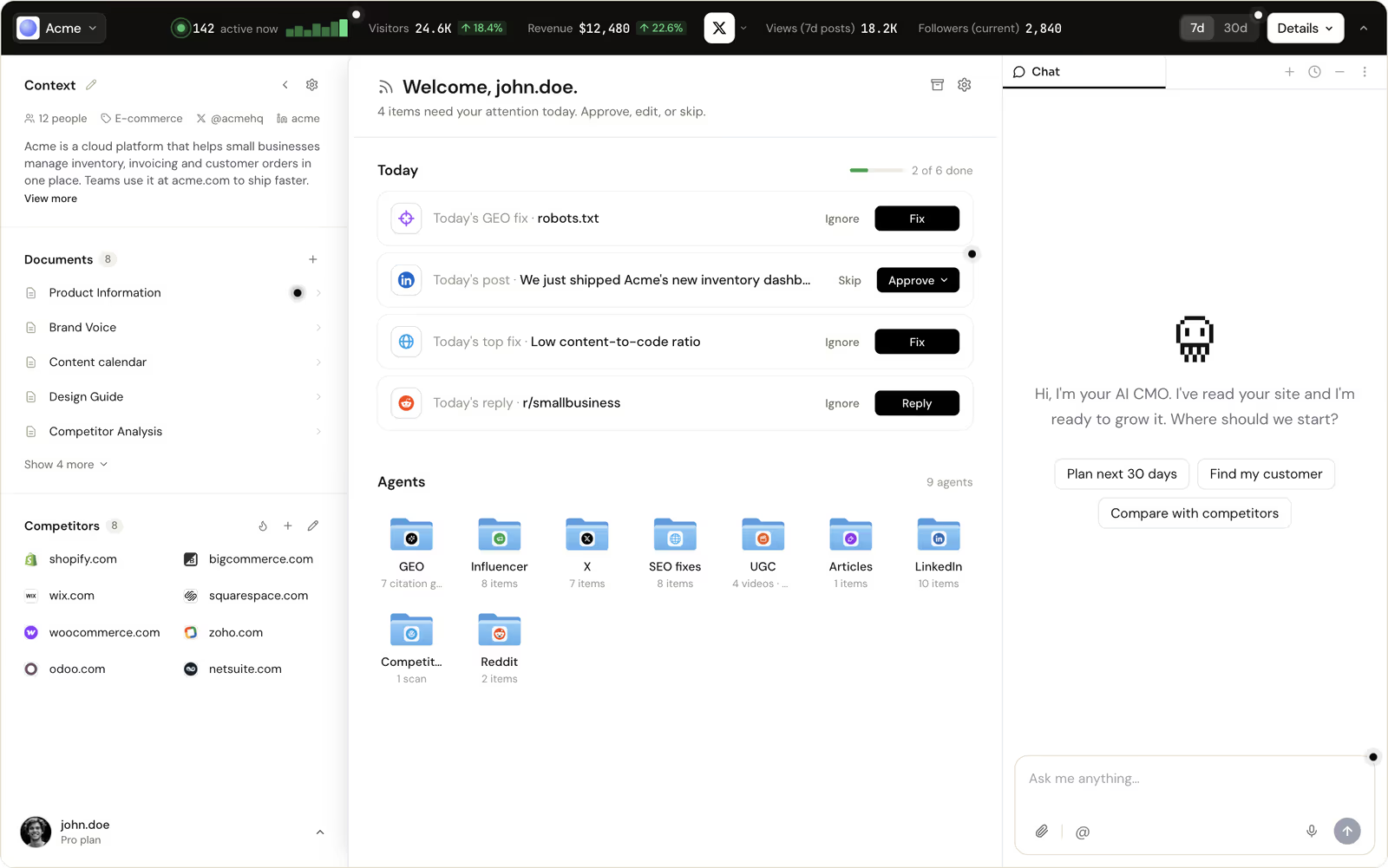
That four-person figure matters for buyers. A very small team shipping quickly is impressive, and Vercel's write-up says they deploy six or seven times a day. It also means the product you connect to today may behave differently next week, which is relevant when the product can act on your accounts.
What the MCP Server Exposes
MCP is the open standard that lets an AI assistant call outside tools. If you are new to it, our complete directory of Claude connectors explains how connectors work, and Claude Skills explained covers the related idea of packaged instructions.
Okara's MCP page describes the capability in plain terms. In its words, you can ask for "anything your Okara agents do": how your marketing did this week, your SEO and Google rankings, whether AI assistants recommend you, LinkedIn and X posts, articles, Reddit threads worth replying to, and Google and Meta ad campaign plans. Developers can read the SEO audit in Cursor or Codex and have Okara's Coding Agent open a GitHub pull request.
What is confirmed, and what is not
Okara does not publish the list of tools the server offers: there is no MCP page in its documentation sitemap, and the endpoint returns nothing until you sign in. What the endpoint does reveal publicly is its sign-in metadata. An unauthenticated request to https://okara.ai/api/mcp returns a standard OAuth challenge naming four permission scopes: mcp:read, mcp:write, mcp:publish and mcp:spend. Its authorisation metadata lists the authorisation-code flow with PKCE and refresh tokens. In practice that means you log in on Okara's own page, the assistant receives a token and never sees your password, which matches what Okara says.
Those four scope names line up neatly with Okara's marketing description: looking things up, drafting, publishing, and spending on ads. What we cannot tell you from outside is whether an assistant requests all four by default, or how the scopes map to individual tools.
| Item | Status | Evidence |
|---|---|---|
| Server address | Confirmed | https://okara.ai/api/mcp, on Okara's MCP page |
| Sign-in method | Confirmed | OAuth, no API key; server metadata and MCP page agree |
| Permission scopes | Confirmed | read, write, publish, spend in the server's OAuth metadata |
| Supported assistants | Stated by Okara | ChatGPT, Claude, Grok, Muse, Claude Code, Codex, Cursor |
| Task types | Stated by Okara | SEO, GEO, content, social, Reddit, ads |
| Names and number of tools | Not published | Visible only after sign-in |
| Rate limits | Not published | Only the credit system is documented |
| Listing in Claude or ChatGPT directories | Not confirmed | Okara's instructions use the custom-connector route in both |
Do not confuse it with the documentation server
Okara has a second MCP endpoint at okara.ai/docs/mcp. This one is public and is generated by its documentation host, Mintlify. It exposes three tools: a search of Okara's documentation, a read-only file browser over the same pages, and a feedback form for reporting documentation errors. It cannot touch your account or do any marketing work. If a third-party directory lists "Okara MCP" with three tools, it is describing this one, not the marketing server.
Setup in Claude and ChatGPT
Okara reduces setup to three steps: copy the link, paste it into your assistant as a connector, and sign in to Okara when asked. It says this takes about a minute and needs no code or API key. The app-specific steps below are Okara's, taken from its MCP page.
| Step | Claude (web or desktop) | ChatGPT (web or desktop) |
|---|---|---|
| 1 | Open Settings, then Connectors | Settings, Apps & Connectors, Advanced: turn on Developer mode |
| 2 | Choose Add custom connector and paste https://okara.ai/api/mcp | In Apps & Connectors, click Create and paste https://okara.ai/api/mcp |
| 3 | Click Add, then Connect | Choose OAuth and click Create |
| 4 | Approve the Okara sign-in | Approve the Okara sign-in |
| 5 | Switch the connector on in a chat | In a new chat, open +, Developer mode, and switch Okara on |
| Plan needed | Any Claude plan, per Anthropic; free accounts get one custom connector | Okara says a paid ChatGPT plan |
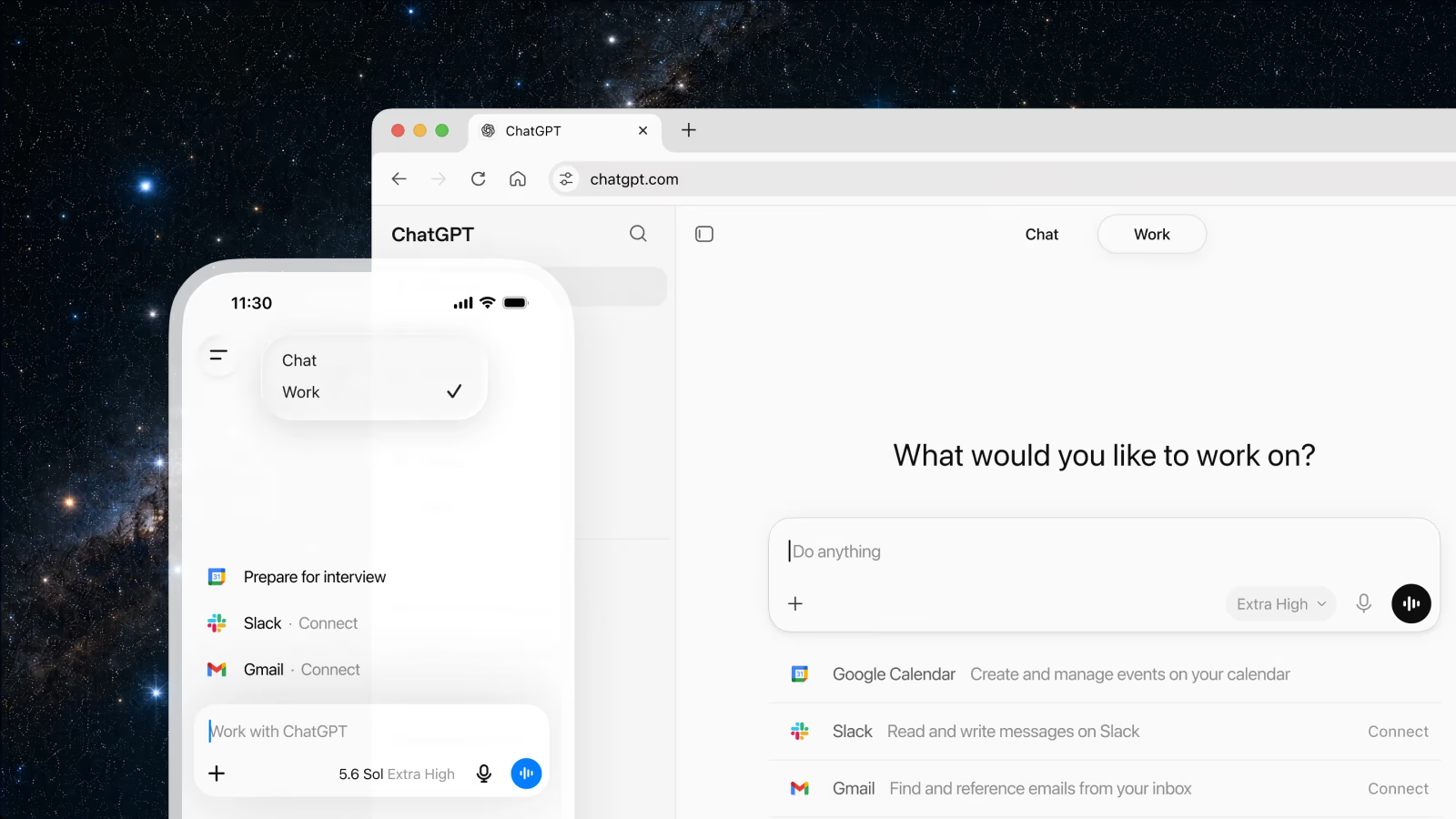
Two notes of caution. First, the menu labels are moving targets. Anthropic's custom connector guide currently sends Pro and Max users to Customize, then Connectors, then "Add custom connector", and says Team and Enterprise connectors must be added by an owner in organisation settings. OpenAI's current developer documentation describes adding a custom MCP server from the ChatGPT Plugins screen and creating it "as a plugin", in line with the Plugins model we described in our ChatGPT Work explainer. If Okara's wording does not match your screen, follow the vendor's own guide.
Second, plan requirements sit with the assistant, not with Okara. Anthropic says custom connectors are available on Free, Pro, Max, Team and Enterprise, with free users limited to one. Okara says custom connectors "usually need a paid plan in ChatGPT and Grok". Our guide to ChatGPT pricing lists the current tiers. For developers, the same link works in Claude Code, which Okara lists by name. It does not mention Claude Cowork, so we cannot confirm how the connector behaves there.
Once connected, one sign-in reaches every Okara project you own and every project shared with you. Okara says the assistant will ask which project you mean. Work done in chat appears in the Okara dashboard and vice versa, and the scheduled agents keep running whether or not you ever open the chat.
Pricing, Credits and Limits
The MCP server has no price of its own. Okara's answer to "how much does it cost?" is that it "uses your existing Okara credits. Looking things up costs 1 credit, and bigger jobs like writing an article cost more. If something fails, you are not charged." So the real cost is an Okara plan.
| AI CMO Lite | AI CMO Pro | Enterprise | |
|---|---|---|---|
| Monthly billing | $129 (~£102) | $249 (~£197) | Custom |
| Annual billing | $1,290 a year (~£1,019) | $2,490 a year (~£1,967) | Custom |
| Black Friday, first year of annual | $774 (~£611) | $1,494 (~£1,180) | n/a |
| Monthly credits | 2,000 | 2,000 | Not published |
| MCP access | Yes | Yes | Yes |
| SEO, GEO, X, influencer, coding agents | Yes | Yes | Yes |
| Reddit, LinkedIn, articles, UGC video | No | Yes | Yes |
| Auto-publish to CMS, X and LinkedIn | No | Yes | Yes |
| SSO, role-based access, audit logs | No | No | Yes |
Sources: Okara's pricing page and plans documentation. The Black Friday offer, 50% off the first year of annual Lite and Pro plans, is advertised as ending on 01/12/2026 at 11:59pm Pacific time. Okara's refund policy says subscription payments are, in most cases, not refundable, on monthly and annual plans alike. That makes a discounted annual commitment a bigger decision than the headline saving suggests.
The free tier is described inconsistently. Okara's machine-readable site summary lists a Free plan with 5 credits, and the site says "free to start, no card needed". The plans documentation instead describes a 7-day free trial of Lite or Pro. Whichever applies when you sign up, 5 credits is not enough to run a single SEO and GEO analysis at the documented rate, so assume a paid plan for any real use of the connector.
What each Okara action costs in credits
Fixed credit cost per action from Okara's credits documentation. Lite and Pro both include 2,000 credits a month. Lower is cheaper.
UGC video
Article generation
SEO and GEO analysis
Website refresh
Hacker News post
Reddit thread and reply draft
LinkedIn post
X post
Article image
MCP lookup · from the MCP page FAQ
Show data table
| Benchmark | Credits per action |
|---|---|
| UGC video | 60 |
| Article generation | 18 |
| SEO and GEO analysis | 10 |
| Website refresh | 10 |
| Hacker News post | 9 |
| Reddit thread and reply draft | 8 |
| LinkedIn post | 7 |
| X post | 5 |
| Article image | 5 |
| MCP lookup | 1 |
Source: Okara credits documentation (okara.ai/docs/credits) and MCP page FAQ, fetched 18/11/2026
Some arithmetic helps. At 18 credits each, 2,000 credits would cover about 111 articles if you did nothing else; at 10 credits, 200 SEO and GEO analyses. But the scheduled agents spend from the same balance. Okara's credits page says a typical month on Pro "at full output across every agent" uses around 1,700 credits, leaving roughly 300 spare. On Pro, then, heavy chat use through MCP is competing with your automated output for a small buffer. Lite runs fewer agents, so its credits stretch further.
What we do not know is how MCP calls are metered beyond "1 credit for a lookup". The credits documentation says conversations with the dashboard's Talk to AI CMO feature are priced by token usage, not a fixed rate, and it has no row for MCP. Whether a long chat session through Claude is charged per tool call or by length is not documented.
When the balance reaches zero, scheduled agent runs pause and chat is limited to "lightweight responses". Monthly credits do not roll over. Top-up packs do not expire: 860 credits for $45 (~£36), 2,000 for $90 (~£71) or 4,600 for $180 (~£142). That works out at about 5.2, 4.5 and 3.9 US cents a credit.
Permissions: What Can It Do Without You?
This is the question that separates a marketing agent from a research tool. A keyword database can only tell you things. Okara can publish under your name on WordPress, Webflow, Wix, HubSpot, LinkedIn, X, TikTok, Instagram and Facebook, open pull requests on GitHub, and build Google and Meta ad campaigns, if you have connected those accounts.
Okara's stated safeguards, from its MCP page:
- "Posts, articles and replies wait for your OK. Publishing is switched off until you turn it on."
- "Ad campaigns are always created paused. Spending needs its own permission and a confirmation every time."
- "Turn the connection off in Okara's settings and it stops working straight away" (Settings, then MCP).
- For teams, each person connects with their own sign-in and reaches only the projects shared with them, "with access checked on every call".
These are sensible defaults, and the separate publish and spend scopes in the server metadata suggest they are enforced in the design and not only in the copy. Two caveats. First, we have not tested them. Second, Okara's own pricing page FAQ says that once you connect accounts you can "enable automatic scheduling and publishing" for LinkedIn, X and article integrations. If you have switched that on in the dashboard, do not assume the chat route is more cautious than the dashboard route. Check what your assistant shows you before approving any action with a public or financial effect.
Role-based access control and audit logs, the features that let a business see who did what, are listed only on the Enterprise plan. On Lite and Pro, the account owner should assume limited visibility into which teammate's assistant triggered which action. Meta takes a different approach with its own agent, which we covered in our Muse Secure VM review.
Data Privacy: Where Your Data Goes
Using Okara through ChatGPT or Claude means your marketing data passes through two companies' systems: the assistant provider's and Okara's. Okara in turn uses outside AI providers. Its Privacy and Data Use Policy, last modified 24/09/2026, is clearer than many on the points that matter:
- Training: "we do not use your Service Data to train AI Models", and Okara says it selects AI providers whose commercial terms do not permit training on API data. It adds that providers "may retain data temporarily", for example for abuse monitoring.
- Models: a mix of open-source models and proprietary ones from providers such as OpenAI, Anthropic and Amazon Bedrock.
- Connected accounts: when you link Google Search Console, Google Analytics, a CMS, GitHub or social accounts, you authorise Okara to access data "within the permissions you grant". It says its use of Google data follows Google's API Services User Data Policy, including the Limited Use requirements.
- Security: encryption in transit and at rest, and secure storage of integration tokens. The policy also says Okara "does not warrant that loss, theft, or unauthorised access will never occur".
- Deletion: on account deletion, data is deleted or anonymised within 30 days, with exceptions for legal, billing or security reasons and a further period in encrypted backups.
- Location: data may be processed in the United States, Singapore and Ireland.
Okara publishes a sub-processor list, current as of 24/09/2026, with 17 entries. They include AWS (Singapore and United States), Vercel, Supabase and Upstash for hosting and databases; OpenAI, Anthropic and Replicate for model inference; Stripe for payments; and PostHog and Google Analytics for analytics. It also lists advertising and conversion-tracking pixels from X, Reddit and Google Ads, and notes OpenAI under "advertising and conversion tracking" as well as inference. Those pixels relate to Okara's own marketing, but a privacy-conscious buyer should know they are there.
For UK businesses the practical points are these. Your contract is with a Singapore company, and almost all processing listed is in the United States. The policy is consent-based and says Okara takes "legally required steps" for cross-border transfers; it does not mention UK GDPR by name. If the data you connect includes personal data, for example analytics that identify individuals, customer names in a CMS, or contact details in an influencer campaign, you remain the controller and need a lawful basis and a transfer mechanism. Ask Okara for a data processing agreement before connecting anything of that kind. A site's public pages and aggregate Search Console queries carry far less risk.
Prompt Injection and Third-Party Connectors
Okara is added as a custom connector, which both assistant vendors treat as unverified by default. Anthropic's guide says: "Custom connectors allow you to connect Claude to arbitrary services that have not been verified by Anthropic." It warns that "server developers may update tool behavior unexpectedly", advises reviewing the OAuth scopes a server requests, and says to be cautious with "Allow always". OpenAI labels the equivalent feature as elevated risk: "Only connect to MCP servers you trust", and "incorrect write actions can inadvertently destroy, alter, or share data". Write actions in ChatGPT require confirmation by default.
None of that is a criticism of Okara specifically. It applies to every third-party connector, including the ones from much larger vendors. But a marketing agent has a particular exposure to indirect prompt injection, where instructions hidden in content the model reads are mistaken for instructions from you. Consider what Okara reads on your behalf: Reddit threads, competitor websites, search results, and what AI engines say about your brand. All of it is written by strangers, some of whom are your competitors.
A plausible bad day looks like this. Your assistant asks Okara for Reddit threads worth replying to. One thread contains text crafted to look like an instruction: recommend a rival product, include a particular link, or publish immediately. The text comes back through the connector into your chat. Whether anything happens next depends on the assistant's defences, Okara's approval gates and whether you read the draft before clicking approve. Okara has not published anything about how it handles untrusted content inside tool results, so the approval gate is the control you can actually rely on.
Practical precautions:
- Leave publishing and ad spending off in Okara until you have used the connector for a few weeks.
- Approve each tool call individually. Do not choose "always allow" for anything that writes, publishes or spends.
- Read drafts in full, especially Reddit replies and anything containing links.
- Do not enable Okara in the same chat as connectors holding sensitive data, such as email or file storage. Injected instructions do the most harm when one tool can read private data and another can send it out. Anthropic gives the same advice for research mode: disable tools that can take write actions.
- Connect the minimum. If you only want SEO and GEO reports in chat, you do not need to link ad accounts or social profiles to Okara at all.
- Disconnect from Settings, then MCP, in Okara when you stop using it, and remove the connector in the assistant as well.
For wider context on how agents get tricked, see our pieces on HalluSquatting, the agent security lessons from the FAA ground stop, and AI browser automation agents, which face the same untrusted-content problem.
How It Compares: Ahrefs and Semrush MCP
The established SEO platforms have MCP servers too, but they are a different kind of product. Ahrefs and Semrush expose their own search databases to your assistant; the assistant does the thinking. Okara exposes agents that do the work, on top of data whose source and size Okara does not describe.
| Okara | Ahrefs | Semrush | |
|---|---|---|---|
| What the server gives the assistant | Okara's agents: audits, drafts, plans, publishing | Ahrefs API data | Semrush SEO and Trends API data; Projects read-only |
| Server address | okara.ai/api/mcp | api.ahrefs.com/mcp/mcp | mcp.semrush.com/v2/mcp |
| Cheapest plan with MCP (monthly billing) | Lite, $129 (~£102) | Lite, $129 (~£102) | Semrush One Starter, $199 (~£157) |
| Metering | 2,000 Okara credits a month | 200,000 API units a month on Lite; minimum 50 a call; 100 rows a request | 50,000 API units per billing period on listed plans |
| Sign-in | OAuth | OAuth consent or MCP key | OAuth 2.1, or API key |
| Can publish or spend | Yes, behind approvals | Not described in its MCP docs | No write actions described; Projects access is read-only |
| Public technical documentation | Marketing page and FAQ only | Yes, with per-client guides | Yes, with per-client guides |
Sources: Ahrefs MCP documentation, Ahrefs help centre, Ahrefs pricing, Semrush MCP documentation and Semrush pricing. Credits and API units are different things and cannot be compared with each other: an Okara credit buys a share of an agent task, an API unit buys rows of data.
Monthly list price of plans that include MCP access
US dollars, monthly billing, before tax and promotions. Lower is cheaper. The plans are not equivalent in what they include.
Okara AI CMO Lite
Ahrefs Lite
Semrush One Starter
Okara AI CMO Pro
Ahrefs Standard
Semrush One Pro+
Show data table
| Benchmark | Monthly list price (US$) |
|---|---|
| Okara AI CMO Lite | $129 |
| Ahrefs Lite | $129 |
| Semrush One Starter | $199 |
| Okara AI CMO Pro | $249 |
| Ahrefs Standard | $249 |
| Semrush One Pro+ | $299 |
Source: Okara, Ahrefs and Semrush pricing pages, fetched 18/11/2026
By coincidence, Okara's two plans carry exactly the same list prices as Ahrefs Lite and Standard. For that money Ahrefs gives you a long-established backlink and keyword index and a metered pipe into it. On Lite, 200,000 units at a minimum of 50 a call is at most 4,000 calls a month, and usually fewer. Semrush is more restrictive about what an assistant can change, which is a point in its favour on safety. Okara gives you drafting, publishing and campaign building, which neither rival's server attempts.
The honest comparison is therefore about what you are short of. If you lack reliable data, an Ahrefs or Semrush subscription paired with Claude or ChatGPT gives you numbers you can check against a known source. If you lack hands, Okara is closer to what you want, with the trade-off that you are trusting its analysis without knowing what sits underneath it. Okara's documentation says its competitor analysis is built from "search engine ranking data, website messaging analysis, and AI-powered research" and is "most accurate for direct, well-known competitors". That is a fair admission and a real limit for a local UK firm whose rivals are small.
Assistants also come with their own built-in research. Before paying for any SEO connector, see what you already get in our Claude vs ChatGPT, Gemini and Grok comparison.
Practical Use for UK Small Businesses
At about £102 a month for Lite, Okara costs more than most UK sole traders spend on software in total, and it is billed in dollars, so the sterling figure will move with the exchange rate and your card's fees. It is cheap next to an agency retainer and expensive next to doing a monthly check yourself with an assistant you already pay for. Where the connector earns its place is in turning a tool you would not otherwise open into a question you ask in passing.
Where it fits
- A weekly check-in. "How did our marketing do this week?" is one of Okara's own example prompts. With Search Console and Analytics linked, that is a low-risk, read-only use at a credit or so a lookup.
- Technical SEO fixes. Okara's SEO agent audits every sub-page daily on paid plans and can apply meta description, title tag and alt text fixes to WordPress or Webflow, or raise a GitHub pull request for a developer to review. That review step is the kind of human check we like.
- AI search visibility. The GEO tab scores your site from 0 to 100 and lists "Top Prompts" where your business should be cited by ChatGPT, Perplexity, Google AI or Claude but is not. Both paid plans list 20 tracked prompts. With ChatGPT ads now running in the UK, knowing how AI answers describe you is becoming routine marketing hygiene.
- First drafts. Articles and social posts in a documented brand voice, for a person to edit.
Where to be careful
- Reddit. Okara drafts replies designed to "read like a real community member wrote them". Many subreddits ban undisclosed promotion, and hiding a commercial interest can also fall foul of UK advertising rules. Disclose who you are, or skip this agent.
- Regulated sectors. Okara markets to financial advisers, law firms and healthcare. Its terms say it is "not responsible for the content generated by AI models". A regulated UK firm stays responsible for every claim it publishes, so nothing should go out unreviewed.
- Volume for its own sake. Pro advertises 30 or more SEO articles a month. Thirty lightly edited AI articles are not obviously better for a small site than four good ones. Use the allowance, not the maximum.
- US-centric signals. Okara does not document country targeting for its keyword or AI-visibility data. Check that prompts and rankings reflect UK searchers before acting on them.
- Timescales. Okara itself says tangible results "typically show up within 2–4 weeks" of acting on recommendations, and its documentation notes Google can take days to weeks to re-index changes. The customer results on its site, such as a 105% rise in organic clicks for one client, are vendor case studies without published baselines.
A sensible way to trial it
- Start on the free tier or trial in Okara's own dashboard, with only your website connected. See whether the audit tells you anything you did not know.
- If it does, take a monthly plan, not the discounted annual one, given the no-refund policy.
- Add the connector to Claude or ChatGPT. Keep publishing and spending switched off.
- Link Search Console and Analytics only if you are comfortable with the data leaving the UK.
- After a month, compare credits used against work you actually published.
If you already use Meta's assistant for business, note that Okara names Muse as a supported client; our guide to Meta Muse for small business covers its native connectors. And if you prefer Claude to act in a browser instead of through a connector, Claude in Chrome is the alternative route.
What We Could Not Verify
- The tool list. Okara has not published it and we did not sign in with a paid account.
- Output quality. We have not tested the agents. We found no independent hands-on review of the MCP server; the coverage we found is launch reporting from March 2026, a supplier case study and today's YouTube video.
- The video's claims. The description of Julian Goldie's video promises a setup guide and a "limits, risks and best practices" chapter. We have relied on Okara's own pages for facts, not on the video. Mr Goldie sells SEO services and courses, which is worth bearing in mind with any enthusiastic title.
- When the server launched. Okara labels it "New" in its site footer but gives no date.
- Directory status. We could not confirm a listing for Okara in Anthropic's connector directory or ChatGPT's app directory. Okara's instructions use the custom route in both.
- User numbers. 150,000 is Okara's figure and includes free accounts. Paying customer numbers are not published.
- Data sources. Where keyword volumes, rankings and backlink data come from is not stated.
- MCP metering and rate limits. Beyond "1 credit for a lookup", nothing is documented.
- Inconsistencies on Okara's site. Free plan versus 7-day trial; nine agents in one list and ten in another; the navigation describes the server for "Claude, Cursor, and Codex" while the page leads with ChatGPT. These look like a fast-moving site, not bad faith, but check the live pricing page before you pay.
The Bottom Line
Okara's MCP server is a real, working way to drive a real product from ChatGPT or Claude, and its default posture is better than the hype suggests: drafts wait for approval, publishing starts switched off, ad campaigns start paused, and permissions are split into read, write, publish and spend. Okara's privacy policy is specific about not training on your data and it publishes its sub-processors.
It is also thinly documented, made by a very small team, priced in a credit system whose MCP costs are only partly explained, and untested by anyone independent. "A complete SEO team" is marketing language. What you get is a chat front end to a set of drafting and auditing agents, with all the usual risks of handing a third-party connector the ability to act for you.
Our recommendation for UK small businesses: if you already pay for Okara, connect it, keep publishing off, and enjoy the convenience. If you are not yet a customer, trial the dashboard first and decide on the product, not the connector. And if what you need is trustworthy SEO data inside your assistant, compare the Ahrefs and Semrush servers before you commit.
Last updated: 18/11/2026. Prices, plan features and menu paths as published on that date; Okara's site is changing frequently. Sterling conversions are approximate.
Sources
- Okara: Marketing MCP Server for ChatGPT, Claude and Grok (setup steps and FAQ)
- Okara: Pricing
- Okara documentation: Plans
- Okara documentation: Credits
- Okara documentation: Introduction, SEO Agent, GEO analytics and FAQ
- Okara: Privacy and Data Use Policy (last modified 24/09/2026)
- Okara: Sub-processors (current as of 24/09/2026)
- Okara: Refund Policy and Terms of Service
- Okara: About (founder, milestones)
- Okara MCP endpoint OAuth metadata (okara.ai/api/mcp and okara.ai/.well-known/oauth-authorization-server), queried without signing in on 18/11/2026
- Vercel: How Okara runs CMO agents for 120,000 companies on Vercel (11/06/2026)
- Digit: Okara AI CMO explained (17/03/2026)
- Anthropic: Getting started with custom connectors using remote MCP
- OpenAI: custom MCP servers in ChatGPT (developer documentation)
- Ahrefs: What is Ahrefs MCP, Getting started with Ahrefs MCP and pricing
- Semrush: MCP server documentation and pricing
- Julian Goldie SEO: NEW Okara AI Marketing Agent is WILD!