
 AI Tools Review Editorial Team
Quick Answer:
Perplexity Teammates are persistent AI agents for ongoing work, launched on the web on 04/11/2026 and added to the Perplexity Mac app on 13/11/2026. Instead of answering one prompt, a teammate takes a role, such as marketing manager or on-call engineer, plans the work, remembers goals and history across runs, watches for changes and acts without being asked, and returns finished work for review. Each teammate runs in its own isolated cloud environment with separate browser sessions, and teammates can join Slack channels and pass work to each other. They require Perplexity Max at $200 a month or $2,000 a year (about £158 or £1,580). The promise is big; the evidence so far is mostly Perplexity's own examples.
"Give AI a job, not a prompt." That is the pitch for Perplexity Teammates, and it captures where every major AI company is heading this autumn. OpenAI has Dots, xAI has Grok Bot, Meta has Muse, and Anthropic has Duet. Perplexity's twist is a whole staff of named agents, each with its own computer, that remember their work and hand tasks to one another.
This guide is based on Perplexity's launch post "Teammates are agents for complex, ongoing work" (04/11/2026), Perplexity's Mac announcement on 13/11/2026, reporting from Digital Trends, TestingCatalog and AI Weekly, and Julian Goldie's walkthrough. Perplexity has not published usage limits or independent performance data, and we have not been able to benchmark Teammates ourselves, so treat the use cases below as the company's claims. For background on the underlying agent, see our coverage of Perplexity's local AI engine.
Julian Goldie explains Teammates as AI you give a job title rather than a prompt, shows them running in the Mac app, and covers who can use them.
Executive Summary
- What: personal AI agents "purpose-built for work" that coordinate Perplexity Computer sessions and other teammates to keep projects moving.
- Launch: web on 04/11/2026 (CEO Aravind Srinivas: "Today, we're launching Perplexity Teammates"); Mac app on 13/11/2026; iOS announced for Max subscribers.
- Ownership: teammates plan work, check results, add more agents if needed and notify you when done.
- Memory: project goals, task history and shared files persist across runs; feedback shapes future tasks.
- Proactive: teammates monitor ongoing work and act when things change, without a new prompt.
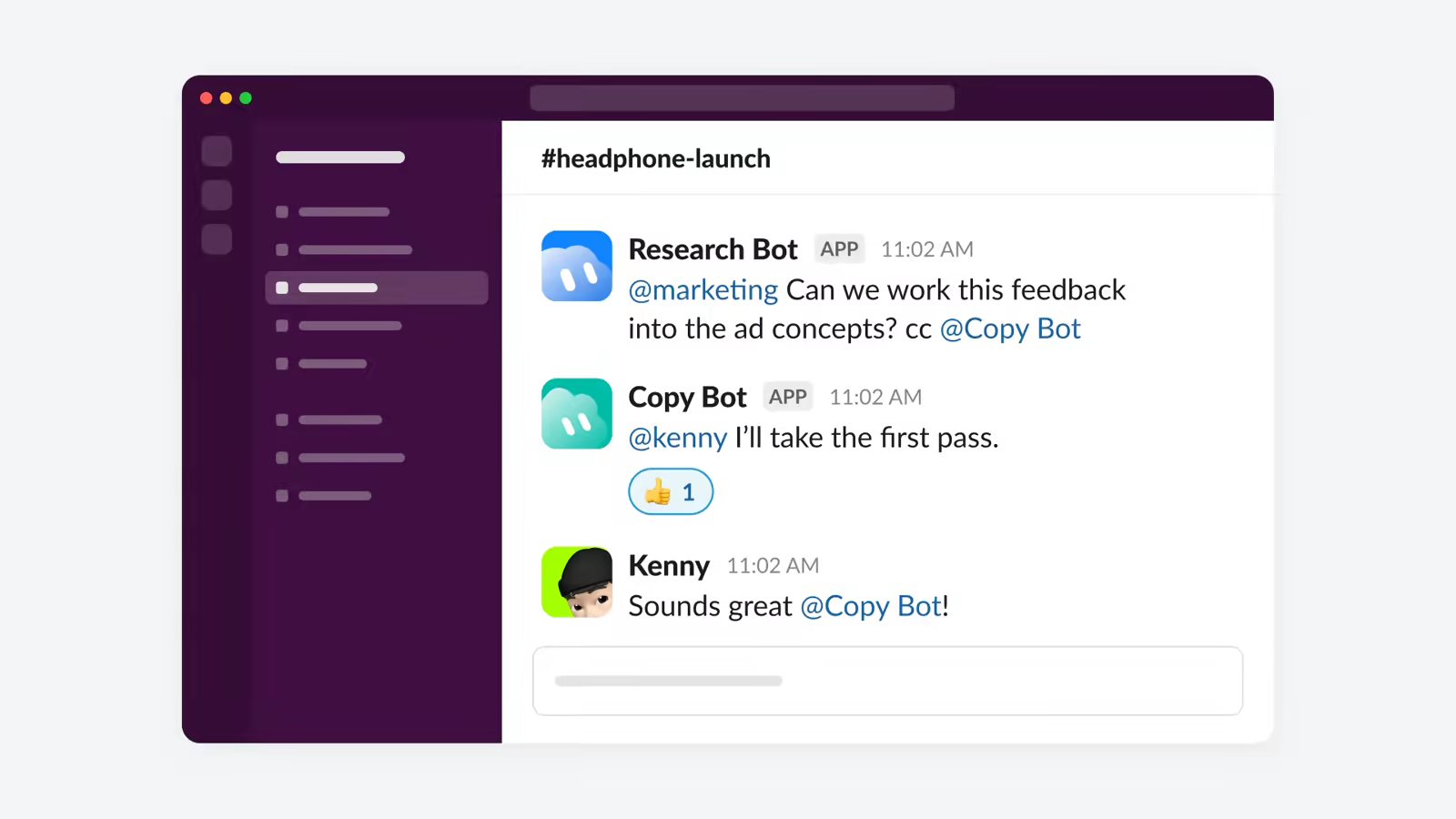
- Collaboration: add teammates to Slack channels, take tasks from colleagues and pass work between teammates.
- Isolation: each teammate has its own environment and separate browser sessions; credentials are encrypted.
- Integrations: Slack, GitHub and Gmail plugins at launch, plus Computer's existing tools and Projects.
- Price: Max only, $200 a month or $2,000 a year. No published cap on number of teammates.
Timeline: From Computer to Teammates
Teammates are the third step in a year-long build-out. In February 2026, Perplexity unveiled Computer, a cloud agent that coordinates specialised sub-agents across several companies' models. PCWorld reported that Perplexity's Dmitry Shevelenko called it a "general-purpose digital worker that operates the same interfaces you do" and said work "that would take weeks for a team was getting done overnight while we slept."
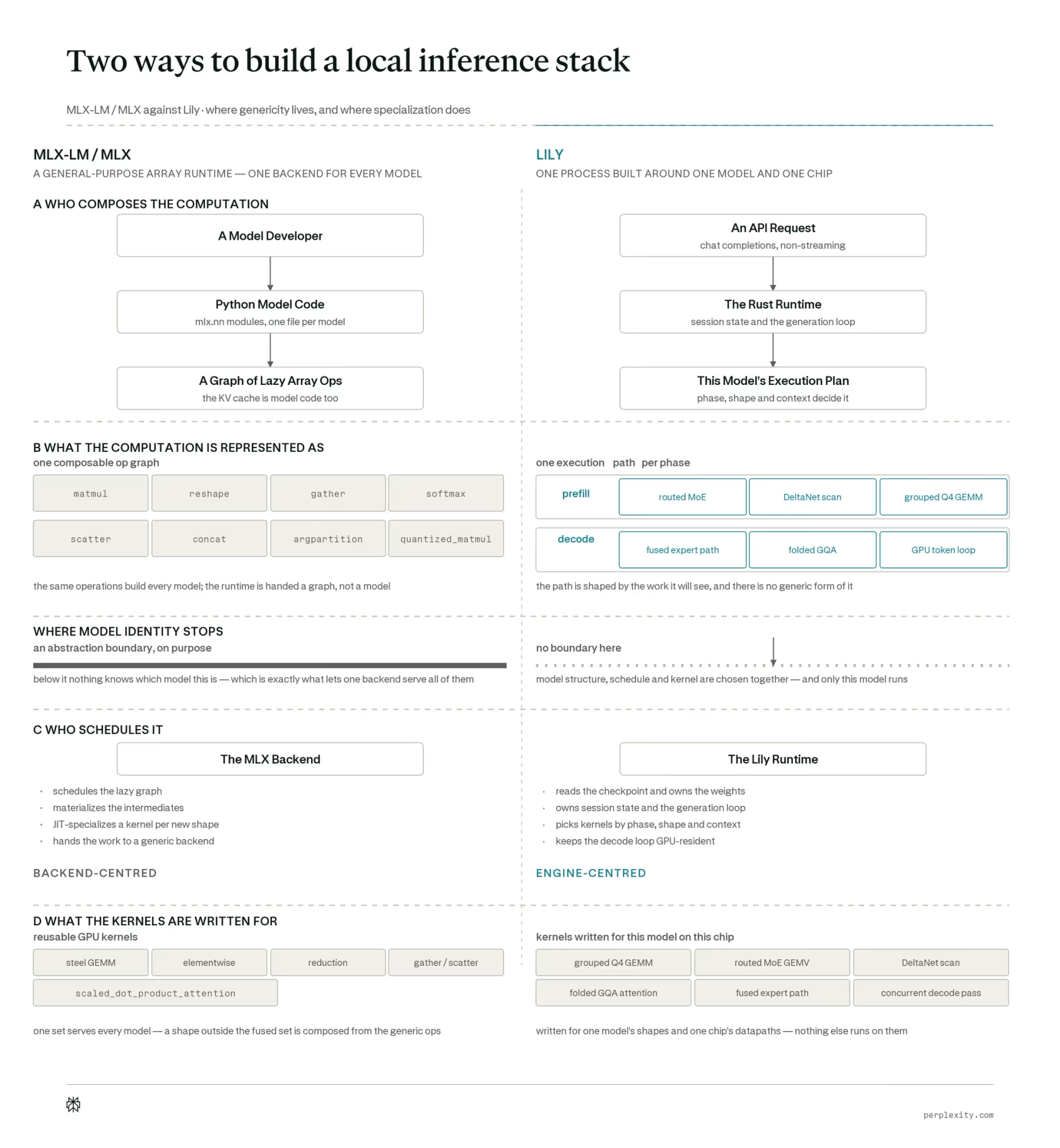
Through the spring and summer Perplexity added a Mac app with a "Personal Computer" mode, then a fully local option on Apple Silicon, which we covered in our Perplexity Lily review. In July, The Next Web reported Perplexity was building a coding tool also called Teammate. The 04/11/2026 launch turned that work into a general product: persistent, role-based agents layered on top of Computer, Projects, skills and memory.
The Mac release on 13/11/2026 brought nothing new in pricing or scope, according to AI Weekly, but it made Teammates the third surface in about two weeks. Perplexity's message on X was simple: "Teammates are now available in the Perplexity Mac app for Max subscribers."
Background: Perplexity Computer's local mode on the Mac, the foundation that Teammates build on.
What Teammates Actually Are
The easiest way to understand a teammate is to compare it with a normal AI chat. In chat, you ask, it answers, and the conversation ends. With a teammate, you hand over a continuing responsibility. Perplexity's examples are written as job descriptions, not prompts: manage social posts, email, ads and SEO; find sales opportunities in inquiries and stalled conversations; review support complaints every day.
Perplexity describes teammates as agents that "coordinate Computer sessions and other teammates to keep projects moving". Under the hood, each teammate is a manager of agent sessions. When it gets a task, it plans the work, spins up Computer sessions (each a cloud agent with a browser and tools), checks the results and, if needed, brings in more agents. Digital Trends notes that teammates can communicate with each other and set up dedicated task channels.
This matches a pattern we described in our guide to always-on agents: an agent that lives on, reacts to events, keeps memory and reports through an outbox. Perplexity has packaged that architecture for business users who will never write code.
Capabilities Deep Dive
Perplexity lists six behaviours that separate teammates from one-off agent runs.
Ongoing ownership
You delegate continuing actions, and teammates plan the work, check results along the way and return completed work for review. The emphasis on checking is important. Long agent runs tend to drift; a teammate that verifies its own intermediate steps should produce fewer confident but wrong deliverables. Perplexity has not published any data on how well this works.
Memory and feedback
Teammates keep project goals, task history and shared files across runs, so each new task builds on earlier work. They also apply your feedback to future tasks. Perplexity's example is scheduling: tell a teammate once that a vendor needs extra lead time and it will factor that in next time. This is the feature that most justifies the "teammate" label, because it means the agent gets more useful with use rather than starting cold each time.
Proactive monitoring
Teammates watch ongoing work and act when things change, without waiting for a new prompt. Perplexity's sales example: a teammate notices that a regular customer has stopped buying, reviews their history and support issues, then drafts an offer or flags problems to fix. The operations example: when a deadline is 72 hours away, it follows up on missing items. This is the "always-on" part, and also the part that needs the clearest boundaries, because a proactive agent with access to your email can act on its own judgement.
Collaboration and hand-offs
Teammates can be added to Slack channels, receive tasks from colleagues and pass work to other teammates. A support teammate can hand a pricing question to the sales teammate, for example. 9to5Mac, cited by AI Weekly, highlighted that you can run several teammates at once, which it said sets Perplexity apart from single-agent products such as Grok Bot, Meta Muse and ChatGPT Dots.
Control
You can inspect and guide work, review results, take over a teammate's desktop or redirect it. Taking over the desktop is a useful safety valve when an agent is stuck on a login or a fiddly web form.
Use Cases by Department
Perplexity's launch post sets out four example roles. We have added what to watch for in each.
| Role | What Perplexity says it does | What to watch |
|---|---|---|
| Marketing | Manages social posts, email, ads, SEO and review notes; monitors performance and competitor promotions; drafts fixes when results slip. | Keep publishing and ad spend behind approval. |
| Sales | Finds opportunities in inquiries, past purchases and stalled conversations; prepares outreach and quotes; flags support issues first. | Check quotes and discounts; respect UK PECR rules on marketing email. |
| Customer support | Reviews daily complaints, summarises trends, flags cases needing a personal response from the CEO, drafts replies and tracks cases to resolution. | Review drafts before sending; consumer law applies to what is promised. |
| Operations | Tracks deadlines, checklists, vendors and paperwork; follows up on missing items when a deadline is 72 hours away. | Make sure vendor follow-ups go from a monitored inbox. |
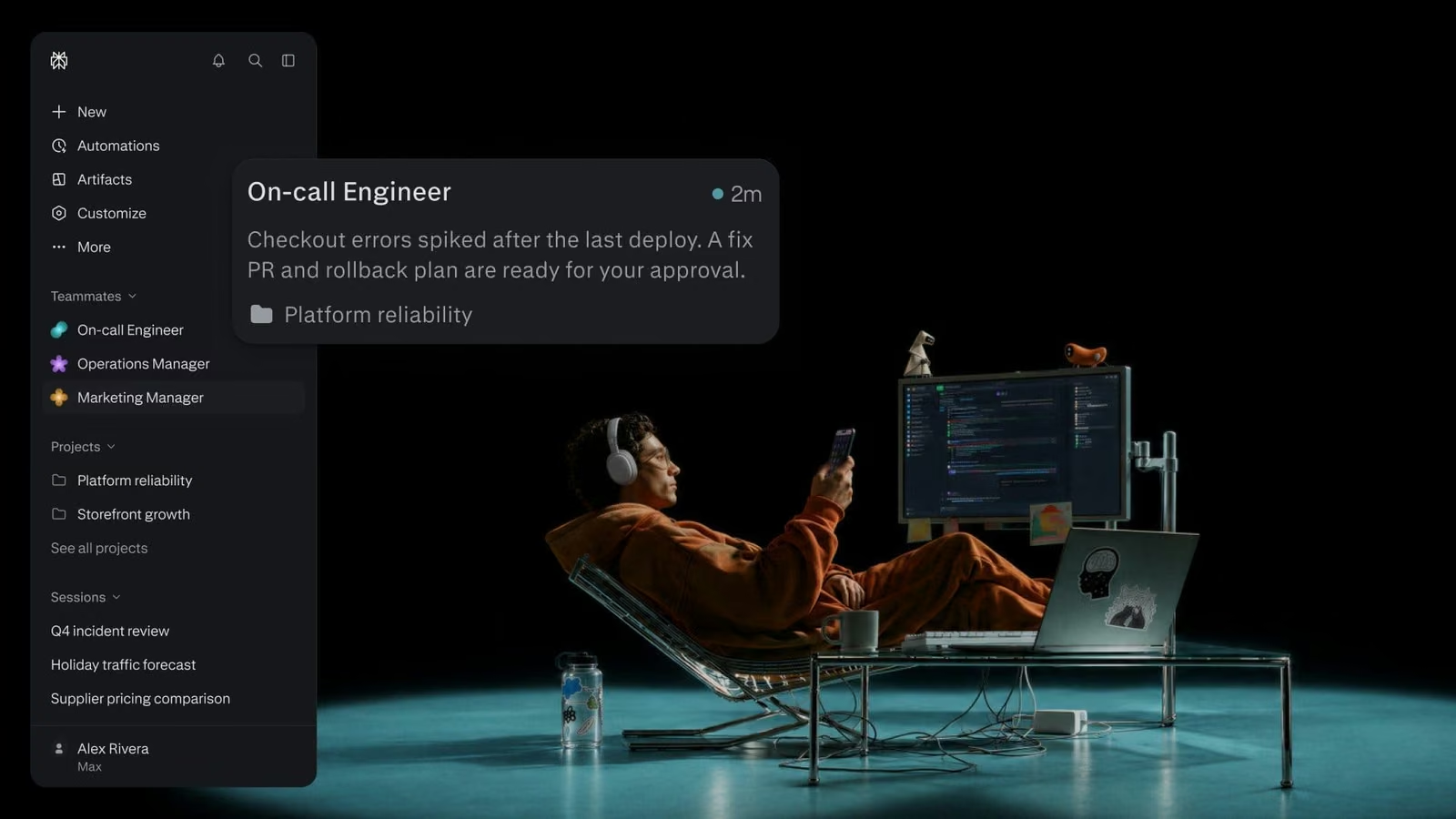
Coverage of the Mac launch adds QA, research, growth marketing, bug triage and metrics monitoring. Perplexity's own Mac screenshot shows an "On-call Engineer" teammate that spotted checkout errors after a deploy and prepared a fix pull request and rollback plan for approval. That is a sensible pattern: the agent investigates and prepares, a human approves.
For UK small businesses, the strongest early use is probably the support and operations roles. They are repetitive, rule-based and easy to check. Marketing and sales roles touch customers and money directly, so start them in draft-only mode. Our agentic future of work analysis covers how roles like these are changing.
Setting Up Your First Teammate
Perplexity describes a five-step setup:
- Name the teammate, ideally after the role, such as "Support Lead".
- Connect tools. Plugins at launch include Slack, GitHub and Gmail. For GitHub, choose exactly which repositories the teammate can access.
- Describe the work: where the inputs come from, what the deliverables are and when they are due.
- Assign a Project, so the teammate shares files and context with your existing Perplexity work.
- Give an initial task to get it started.
Our advice on the brief: write it like a job description for a new starter. Include what good looks like, what must always go to you for approval (anything sent to customers, anything that spends money), and what to do when information is missing. The same principle runs through Anthropic's guidance for Claude Code Projects: tell agents to stop and say what is missing rather than guess.
Teammates on the Mac
Since 13/11/2026, Max subscribers can create and manage teammates in the Perplexity Mac app as well as on the web. The app lists teammates in the sidebar alongside Projects and recent sessions, and surfaces their updates as notifications. Digital Trends reports that each agent runs on its own cloud computing instance, so teammates keep working after you close your computer; the Mac app is a control surface rather than the place the work happens.
There is some confusion in early reports. TestingCatalog notes that Perplexity has not said whether Teammates will reach Pro or free users, or Windows. Some coverage says Perplexity's Help Center still described Teammates as running on the website without mentioning the Mac app. Do not confuse Teammates with "Personal Computer", Perplexity's separate Mac feature from earlier in 2026, which lets the agent work on your local machine.

Security and Control
Perplexity gives three security assurances in its launch post: "Each teammate runs in a separate environment, with browser sessions separate from other teammates"; teammates use Computer's existing tool and Project permissions; and saved credentials are encrypted and entered securely. Coverage adds that each teammate has its own isolated desktop and browser with independent sessions and cookies, and that teammates cannot view stored credentials.
Isolation between teammates is good practice. It limits how far a mistake or a malicious web page can spread. But it does not protect you from what a teammate does with the access you give it. An agent that reads Gmail and can reply is exposed to prompt injection: a crafted email could try to instruct it. Our coverage of hallusquatting, agent security after the FAA ground stop and the Cathedral breach explains the risks.
Practical rules for UK teams:
- Least privilege: one teammate per role, with only the tools and repositories that role needs.
- Approval gates: require review for anything sent externally or anything that spends money.
- Dedicated accounts: where possible, connect teammates to shared role inboxes rather than personal ones.
- UK GDPR: teammates process personal data in the cloud. Update your records of processing, check Perplexity's data processing terms, and do a DPIA for customer-facing roles.
- Audit: review what each teammate did at least weekly in the early weeks.
Pricing and Access
| Plan | Teammates? | Price |
|---|---|---|
| Free | No | £0 |
| Pro | No (upgrade prompt) | See Perplexity's UK pricing |
| Max | Yes: web and Mac; iOS announced | $200/month (about £158) or $2,000/year (about £1,580) |
Perplexity has not said how many teammates one Max account can run, nor published usage caps. Its launch post says access and features will expand in the coming weeks. At about £158 a month, Teammates cost far more than a typical AI subscription, but far less than a part-time hire. The value depends on whether one or two teammates genuinely take a role off someone's plate. If you are only going to use one occasional teammate, cheaper options such as ChatGPT Dots or Grok Bot may suit you better.
Promise vs Reality
Everything Perplexity has shown so far is a curated example. There is no public benchmark for "ongoing work", no published failure rate, and no independent long-term test yet. Early reviewers, including Julian Goldie, focus on setup and potential rather than weeks of real use.
The wider evidence on agents suggests caution. Our report on an AI coding agents productivity study found that measured gains are often smaller than perceived ones, and our analysis of agent economics shows how always-on agents can be expensive to run. Long-running agents also face drift: small errors compound over days unless someone checks the work.
Perplexity's design does address these issues on paper, with self-checking, memory of feedback and human review of results. The way to find out is a time-boxed pilot: one role, clear success measures (hours saved, response times, error rate), and a review after two to four weeks.
Limitations
- Price: Max-only at $200 a month puts it out of reach for most individuals.
- No published limits: number of teammates, usage caps and run-time limits are undisclosed.
- No independent evaluation: all examples come from Perplexity.
- Few integrations at launch: Slack, GitHub and Gmail. Microsoft 365 users will find gaps.
- Platform gaps: no Windows or Android announcement; iOS was announced but timing varies by report.
- Proactive risk: agents that act without prompts need careful approval rules.
- Data residency: cloud processing may complicate compliance for regulated UK firms.
- Single-user plan: Max is a personal subscription; there is no announced team plan with shared administration for Teammates.
How It Compares
Against ChatGPT Dots: Dots are always-on agents inside ChatGPT, with rules and approval settings you control. They benefit from ChatGPT's vast user base and lower entry price. Teammates offer more explicit multi-agent structure, with several named roles that hand work to each other.
Against Grok Bot 1.0: Grok Bot focuses on shared team bots in Slack, Microsoft Teams and other chat tools. It is the more natural fit for whole teams working in chat. Teammates are more personal and more tightly tied to Perplexity's research and browsing strengths.
Against Claude Duet and Claude Cowork: Anthropic's Duet is a proactive personal agent and Cowork handles desktop work. For software teams, Claude Code Projects is the closer rival to the "On-call Engineer" style teammate, and costs less.
Against Google Antigravity workflows: Dynamic Workflows are for developers who want scripted, repeatable agent teams. Teammates are for business users who want an agent to own a role. Different audiences, same underlying idea.
Against Perplexity's own Comet browser: Comet is an AI browser for tasks you do yourself. Teammates work in their own isolated browsers while you do something else.
Who Should Use It
- Good fit: founders and small-business owners already on Perplexity Max who want help with support triage, operations follow-ups or marketing reporting.
- Good fit: growth and research teams that rely on Perplexity for web research and want it running continuously.
- Pilot carefully: sales and customer-facing roles. Keep everything in draft until you trust it.
- Look elsewhere: Microsoft 365-centred organisations, teams needing shared administration, and anyone unwilling to pay £158 a month for an unproven product.
The Bottom Line
Perplexity Teammates are a well-designed take on the idea of the year: AI agents that own a role rather than answer a question. Memory, proactive monitoring, isolated environments and hand-offs between named teammates are the right ingredients, and the Mac app makes them easier to manage day to day.
The weaknesses are price, a short list of integrations, undisclosed limits and a lack of independent evidence. At $200 a month, Teammates need to replace real hours of work to pay for themselves. If you are already a Max subscriber, set up one teammate for a contained, checkable role this week and measure the results. If you are not, wait for independent long-term reviews or try a cheaper always-on agent first.
Last updated: 17/11/2026. Prices from Perplexity and launch coverage on 17/11/2026; sterling conversions at approximately $1 = £0.79, excluding VAT.
Sources
- Perplexity: Teammates are agents for complex, ongoing work (04/11/2026)
- Digital Trends: Perplexity Teammates bring autonomous AI agents to the Mac app (13/11/2026)
- TestingCatalog: Perplexity brings Teammates to Mac for Max subscribers
- AI Weekly: Perplexity Brings Teammates Agents to Mac, $200 Max Plan Only
- PCWorld: Perplexity's new tool deploys teams of AI agents (Computer launch)
- Julian Goldie SEO: Perplexity Just Took AI Automation to the NEXT LEVEL!
More from AI Tools Review: OpenAI Dots, Grok Bot 1.0, Claude Duet, always-on agents guide, Perplexity Lily, Manus 2 Cue agents. Tools: Perplexity Comet, Claude Code.