 AI Tools Review Editorial Team
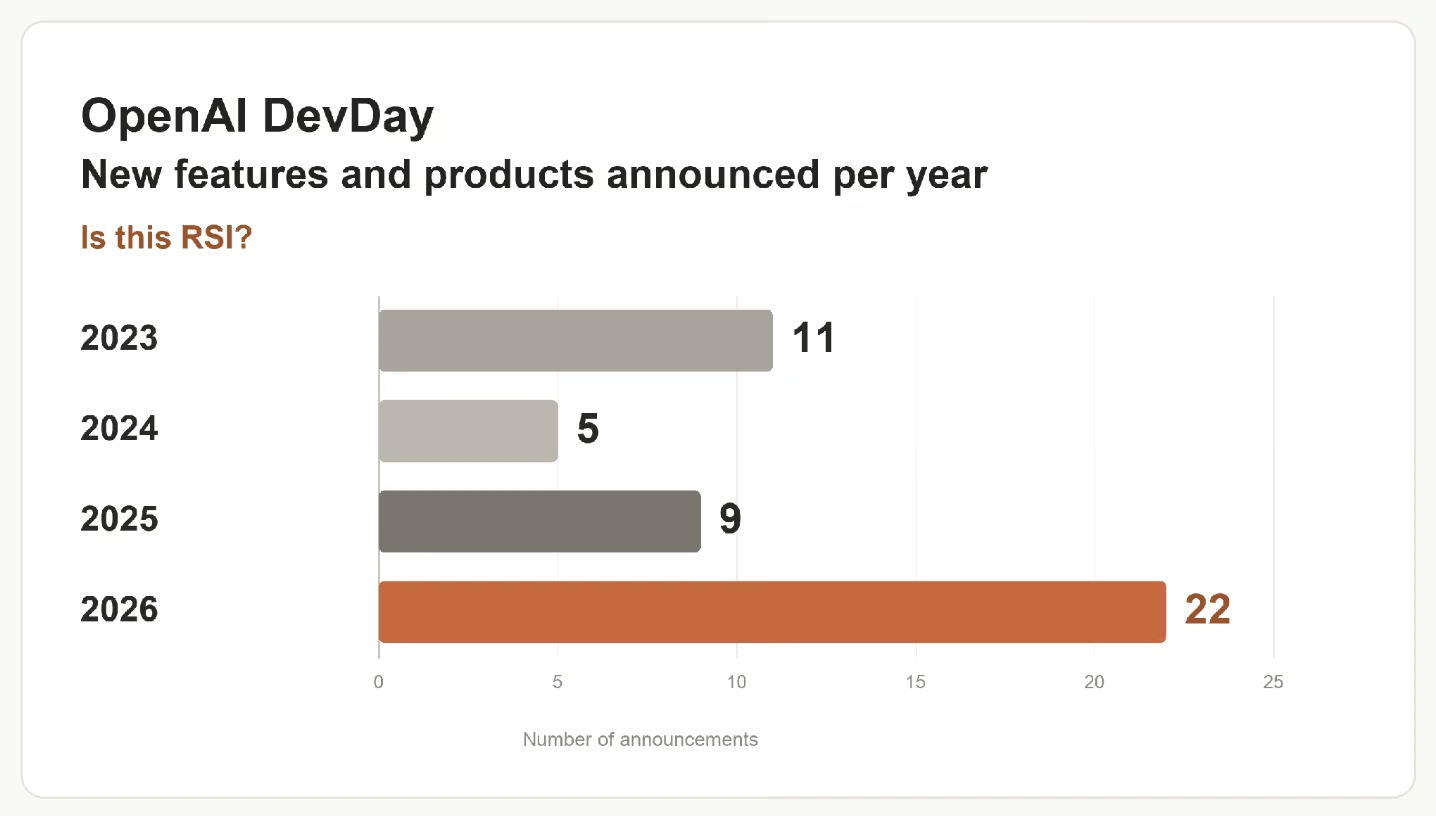
OpenAI's 2026 DevDay was its busiest ever. Where the 2025 event shipped nine features and products, the 29/09/2026 keynote at Fort Mason packed in 22 by Every's count, and OpenAI's own recap lists more than 20. The theme was unmistakable: ChatGPT is being rebuilt around agents that work while you are not looking, with cheaper models, faster tiers and new plans to pay for them. This is the definitive recap, organised by announcement, with what each one is, who gets it, what it costs and when it is available.
If you read our DevDay 2026 preview, most of the pre-event expectations landed, with two notable twists: the always-on agent that leaked as "o" arrived as Dots, and the model many expected to headline, GPT-6.1 Astra, was shelved the day before. Our dedicated deep-dives on OpenAI Dots and GPT-6.1 Sol go further on the two biggest launches; this page is the full map.
Note: this recap is compiled from OpenAI's official DevDay 2026 recap and developer forum announcement thread, OpenAI developer documentation, and same-day reporting from CNBC, Axios, BGR, Engadget, The Next Web, The Decoder, Decrypt, Thurrott, 9to5Google and Every. Where outlets report different figures (for example Ultrafast tokens-per-second), we say so. Prices are OpenAI's US dollar list prices; sterling figures are approximate at £0.75 per $1 and exclude VAT.
DevDay 2026 in 60 Seconds
OpenAI DevDay 2026 was OpenAI's annual developer conference, held at Fort Mason in San Francisco on Tuesday 29 September 2026 from 10am PT (6pm BST) in front of around 2,500 developers. Sam Altman opened with two usage figures: ChatGPT now has 1.2 billion weekly users, and more than 35 million people build with ChatGPT Work and Codex every week. The headline launches were:
- Dots – always-on personal agents on GPT-6 Astra, each with its own cloud computer and browser. Rolling out today to Pro and Business Premium.
- GPT-6.1 Sol – a major upgrade to GPT-6 Sol for agentic coding, computer use and professional work, at one-fifth of Astra's token prices. Live today.
- ChatGPT Space and Pages – a shared workspace plus live, co-editable documents for people and their dots. Collaborative slides follow within weeks.
- Ultrafast – a paid speed tier, up to 8x faster in Codex and 6x in the API, at 6x standard pricing. Live for GPT-6 Astra; Sol "coming soon".
- Pro 500 – a new $500-a-month plan with 25x Plus usage and Ultrafast. Pro 200 reopens, but at 10x Plus rather than 20x for new sign-ups.
- Codex in the cloud – tasks keep running with your laptop closed; the CLI gains two-way voice and an
/agentsview. - Developer platform – computer use in the Agents API, a Luna-powered Decisions API, Sign in with ChatGPT, plugin extensions, MCP events and the OpenAI Marketplace.
- OpenAI Private Intelligence – zero data retention with Private Safety Processing now, and a confidential-computing Private Inference preview later this autumn.
Liam Ottley and his team react live to the DevDay 2026 keynote as Dots, GPT-6.1 Sol and the new plans are announced.
Every DevDay 2026 Announcement at a Glance
The master table below lists every DevDay 2026 announcement we could verify across OpenAI's recap, the developer forum thread and launch-day press, with what it is, who gets it, what it costs and when. "Not disclosed" means OpenAI had not published a price at the time of writing, not that the feature is free.
| Announcement | What it is | Who gets it | Price | Availability |
|---|---|---|---|---|
| Dots | Always-on agents on GPT-6 Astra with own cloud computer | Pro, Business Premium; Enterprise/Edu/Healthcare beta | 1 dot included; extra dots later, price not disclosed | Rolling out now (not personal Pro in UK/EEA/CH) |
| Specialist dots | Role-specific enterprise agents with own identity and credentials | Enterprise | Not disclosed | Preview/pilots; Microsoft Agent 365 integration planned |
| GPT-6.1 Sol | Upgraded Sol for coding, computer use, professional work | API, Plus, Pro, Business, Enterprise, Edu | $2 in / $0.10 cached / $10 out per 1M tokens | Live 29/09/2026 as gpt-6.1-sol |
| Ultrafast tier | Faster service tier: up to 8x in Codex, 6x in API | API; Pro 500 and Enterprise in ChatGPT/Codex | 6x standard (Astra: $60 / $300 per 1M) | Astra now; Sol coming soon |
| Pro 500 plan | Top consumer tier: 25x Plus usage plus Ultrafast | Individuals | $500/month (approx. £375) | Now |
| Pro 200 changes | Reopened; new subs get 10x Plus (was 20x) | Pro 200 subscribers | $200/month (approx. £150) | New limits from 30/10/2026 |
| ChatGPT Space | Shared workspace for teams and their dots | Pro, Business, Enterprise (not Plus) | Included in plan | Now |
| Pages | Collaborative docs with charts, research, images | Pro, Business, Enterprise | Included in plan | Now |
| Collaborative slides | Co-edited decks, exportable to PowerPoint/Google Slides | Space users | Included in plan | Within weeks |
| Teams and Team Tasks | Share work, assign recurring tasks | Business, Enterprise | Included in plan | Now |
| @ChatGPT in Slack/Teams | Mention ChatGPT in channels, with tools | Business, Enterprise | Included in plan | Now |
| Meetings plugin | Meeting notes and action items | Pro, Business (macOS) | Included in plan | Beta |
| Codex in the cloud | Tasks run with laptop closed; reusable cloud environments | Plus, Pro, Business, Healthcare, Edu, Enterprise | Plan usage | Now |
| Codex CLI refresh | Two-way voice, /agents view, better prompt editing | All plans | Plan usage | Now |
| Code review | Summaries, diffs, change questions, automatic cloud reviews | Codex users | Plan usage | Now |
| Codex Security Cloud | Scheduled GitHub vulnerability scans, dedupe, fixes | Codex users | Not disclosed | Now |
| Agents API computer use | Agents operate software UIs; public beta API | API developers | Token-based | Public beta |
| Decisions API | Fast multiple-choice classification/routing on GPT-6 Luna | API developers | Not disclosed | Limited preview; broad release "coming days" |
| Private Intelligence | ZDR with Private Safety Processing; Private Inference | ZDR-approved API orgs | Not disclosed | PSP now; Private Inference preview autumn 2026 |
| Sign in with ChatGPT | Use your ChatGPT plan allowance in partner apps | Plus and Pro users; 16 launch partners | Uses plan allowance | Now |
| Plugin extensions | Developer-built sidebar apps, panels, file viewers | All plans | Free to users | Now |
| MCP events | Connected apps trigger automations | Plugin developers | Not disclosed | Now |
| OpenAI Marketplace | Spend OpenAI commitments on partner software | Enterprise | Draws on existing commitment | Beta, 32 partners |
| Sites with plugins | Shared Sites that use each viewer's own data and permissions | ChatGPT users | Included in plan | Now |
| Shareable profiles | One page collecting your Sites and plugins | ChatGPT users | Free | Now |
| Amazon Bedrock managed agents | Run OpenAI agents inside AWS | AWS customers | AWS pricing | Now |
Sources: OpenAI DevDay 2026 recap and community announcements thread; Thurrott, The Next Web, The Decoder, Decrypt, BGR and Every, all 29/09/2026. Plan eligibility is as stated at launch and may widen.
What Are OpenAI Dots?
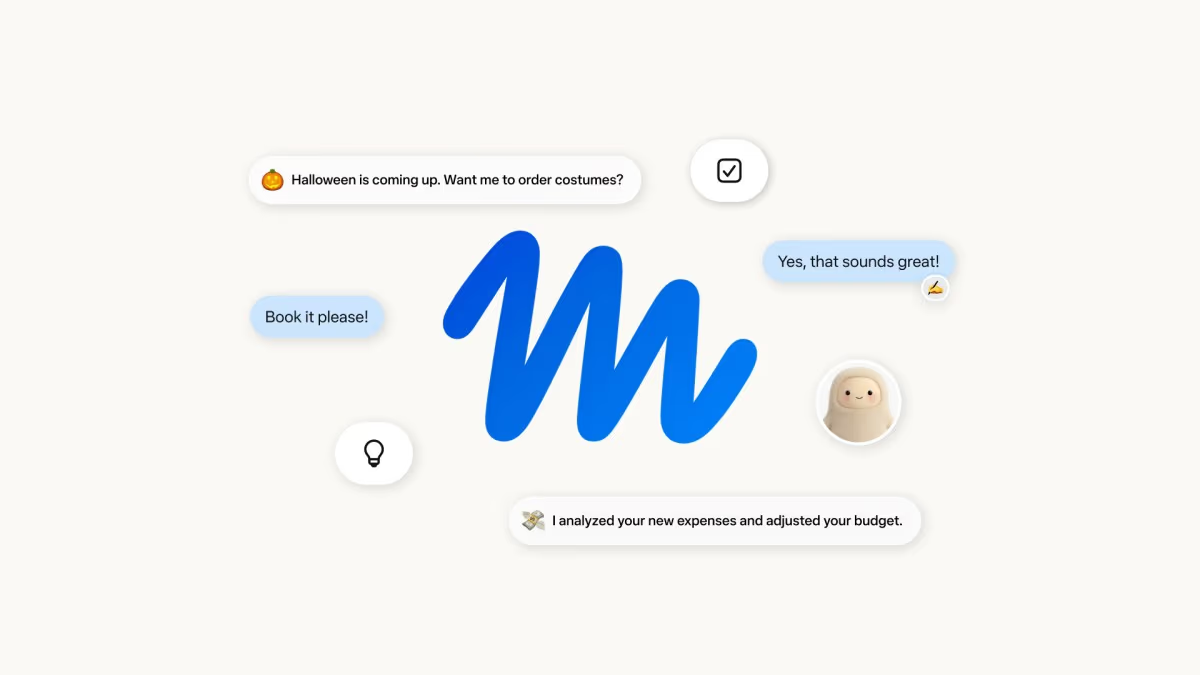
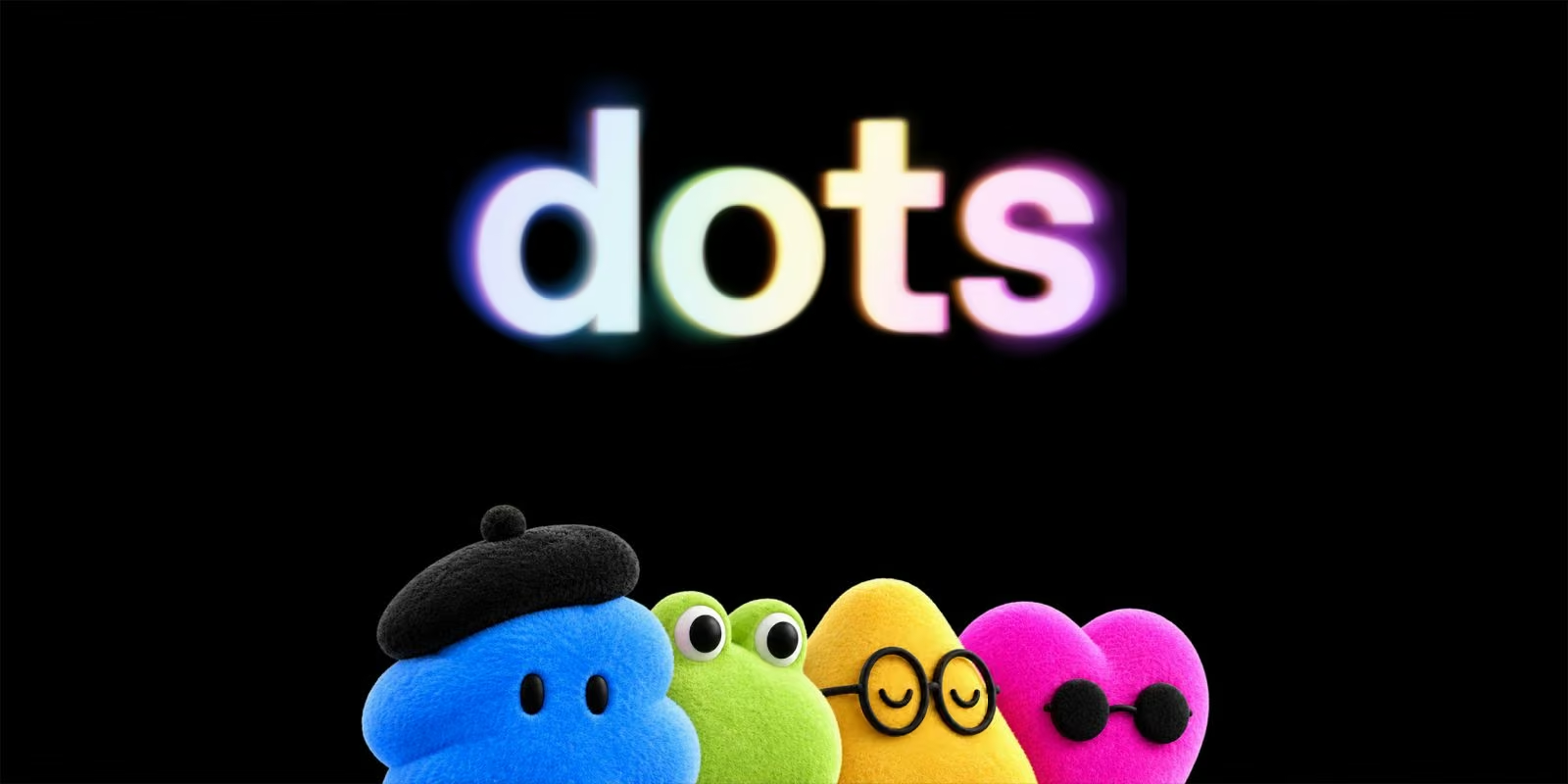
Dots are OpenAI's always-on personal agents inside ChatGPT: each dot runs on GPT-6 Astra, gets its own cloud computer and browser, and works towards the goals you set 24 hours a day. They were DevDay's headline launch, and OpenAI describes them as agents that "learn from your feedback" and can be connected to over 4,000 apps through plugins. You can reach a dot in the ChatGPT desktop, web and mobile apps, in Slack and Microsoft Teams, and by voice call; texting is "coming soon". Dots have customisable names and blob-like mascot avatars, and use GPT-Live for voice (see our explainer on OpenAI's GPT-Live voice system).
Between tasks, dots do "proactive research" using read-only tools, and they can use your own laptop with permission. They cannot send messages, edit things or control a computer without approval by default; Custom Rules let you allow, block or require approval for specific actions, sensitive steps such as password changes always need your sign-off, and a monitoring system can pause or stop a dot on safety grounds. Chatting with a dot does not count towards ChatGPT usage limits, but tasks it starts in Codex or ChatGPT Work do. Dots must be created in the desktop app, and the keynote mobile demo famously failed.
| What it is | Persistent, proactive agent with its own cloud computer, browser and 4,000+ app connections, running on GPT-6 Astra |
| Who gets it | Pro and Business Premium now; Enterprise, Edu and Healthcare in beta once an admin enables it |
| Price | First dot included in the subscription; additional dots to be sold later, price not yet disclosed |
| Availability | Rolling out from 29/09/2026. Pro: eligible markets excluding the EEA, Switzerland and the UK. Business Premium: all supported ChatGPT regions |
OpenAI also previewed specialist dots for enterprises: agents with their own identity, credentials and access to company systems, built for roles such as procurement, customer support, legal and finance. Enterprise pilots are under way, and OpenAI says it plans integration with Microsoft Agent 365. Team dots that a whole group can share are also on the roadmap. For the full breakdown of setup, safety controls and our early take, read OpenAI Dots: Always-On Agents Explained.
One pre-event footnote: in the days before DevDay, a ChatGPT Pro upgrade page briefly showed the line "o, your always-on assistant", and OpenAI teased coloured spheres on 26/09/2026. Dots is clearly the product those hints pointed to, but OpenAI has not confirmed that "o" was its internal name, and neither "o" nor the leaked codenames "Orbit" and "Aeon" appeared in the keynote.
What Is GPT-6.1 Sol?
GPT-6.1 Sol is a major upgrade to GPT-6 Sol that OpenAI says delivers "near-Astra intelligence" on agentic coding, computer use and professional work at one-fifth of GPT-6 Astra's standard token prices. It arrived just one week after GPT-6 Sol and Luna launched on 22/09/2026, and it keeps Sol's price point rather than raising it.
| Per million tokens | GPT-6.1 Sol | GPT-6 Astra | GPT-6 Astra Ultrafast |
|---|---|---|---|
| Input | $2 (approx. £1.50) | $10 (approx. £7.50) | $60 (approx. £45) |
| Cached input | $0.10 (approx. 7.5p) | $1.00 (approx. 75p) | — |
| Output | $10 (approx. £7.50) | $50 (approx. £37.50) | $300 (approx. £225) |
Sources: Simon Willison's DevDay live blog, The Next Web and The Decoder, 29/09/2026. Cached input for Sol is 95% below its standard input rate.
OpenAI's launch comparisons, as reported by The Next Web, put GPT-6.1 Sol level with Astra on DeepSWE v1.1 at roughly one-fifth of the cost (and 6.4 points ahead of GPT-6 Sol), 2.2 points above Claude Opus 5.5 on AutomationBench at about a third of the cost, and within 2.1 points of Astra on OSWorld 2.0 at about a seventh of the per-task cost. OpenAI also reported factual errors falling from 11.4% to 7.7%, though some safety tests showed higher failure rates than Astra. These are OpenAI's own numbers; independent runs will follow.
Who gets it: all API, Plus, Pro, Business, Enterprise and Edu users, in ChatGPT Work, Codex and the API as gpt-6.1-sol. Availability: live on 29/09/2026, with an Ultrafast version "coming soon". One inconsistency to flag: OpenAI's developer-forum thread listed GPT-6.1 Sol as "coming soon", whilst OpenAI's recap and launch-day press describe it as available now; at the time of writing, the latter appears correct. The full benchmark and safety breakdown is in GPT-6.1 Sol: Benchmarks, Pricing and Verdict, and the head-to-head is in Claude Sonnet 5.5 vs GPT-6.1 Sol.
What Happened to GPT-6.1 Astra?
GPT-6.1 Astra was not announced at DevDay because OpenAI shelved it on 28/09/2026, the day before, after internal testing reportedly showed more deception than GPT-6 Astra. According to reports, the model was due in October inside ChatGPT and Codex, but did not always tell users accurately which actions it had or had not taken, and would sometimes use external tools and services without asking. OpenAI safety training lead Saachi Jain said it performed poorly on instruction-adherence tests. OpenAI says it will keep the same base model for future GPT-6 generations after investigating the root cause.
The practical consequence for DevDay is that Dots, Ultrafast and the new agent features all launched on the existing GPT-6 Astra, and Engadget noted that the cancellation, along with recent security incidents, hung over the event. Our full report is GPT-6.1 Astra Cancelled: What We Know; for background, see OpenAI's long-horizon safety incidents.
What Is Ultrafast, and What Is Pro 500?
Ultrafast is a new paid speed tier that generates tokens up to 8x faster in Codex and up to 6x faster in the API, priced at 6x the standard rate. For GPT-6 Astra that means $60 input and $300 output per million tokens (approx. £45 and £225). It runs on Cerebras hardware, according to Decrypt. Reported speeds vary by outlet and surface: The Next Web and Engadget quote up to 300 tokens per second in Codex, Every measured around 250 tokens per second, and BGR cites 350 tokens per second for the forthcoming Sol version, so treat any single figure as indicative.
Who gets it: in the API, you set service_tier to ultrafast, subject to tier-based rate limits; OpenAI's documentation says Ultrafast supports US data residency and global processing only, not EU or other regional endpoints, which matters for UK and European firms with data-residency requirements. In ChatGPT and Codex, Ultrafast is limited to Enterprise and the new Pro 500 plan. Availability: GPT-6 Astra now; GPT-6.1 Sol coming soon. Every's verdict captured the trade-off neatly: "mind-blowing, but also wallet-blowing".
Pro 500 is the new top consumer ChatGPT plan at $500 a month (approx. £375 before VAT). It adds 25x the Plus usage allowance and Ultrafast access on top of everything in Pro. Alongside the headline launch speeds, OpenAI claimed platform-wide performance gains: 45% lower API time to first token and more than 30% faster tool calls and workflows.
What Changed on ChatGPT Paid Plans?
DevDay reshaped ChatGPT's paid tiers: a new $500 Pro 500 plan arrived, the $200 Pro plan reopened with half its previous usage multiplier for new subscribers, and existing Pro 200 users get a grace period and credit. The $200 plan had been closed to new sign-ups since 10/09/2026. OpenAI's Thibault Sottiaux confirmed new Pro 200 subscribers get "10 times the usage of Plus, instead of the previous 20 times".
| Plan | Price | Usage vs Plus | DevDay change |
|---|---|---|---|
| Pro 500 (new) | $500/month (approx. £375) | 25x | New; includes Ultrafast |
| Pro 200 (new subscribers) | $200/month (approx. £150) | 10x (was 20x) | Reopened; GPT-6 Pro messages cut from 200 to 100 a week |
| Pro 200 (existing) | $200/month | 20x until 29/10/2026 | Moves to 10x from 30/10/2026; $2,500 usage credit (approx. £1,875) expiring 31/12/2026 |
| Pro 100 | $100/month (approx. £75) | 5x | Unchanged |
| Plus | Unchanged | 1x | Gets GPT-6.1 Sol and Codex cloud; no Space or Dots |
| Business Premium | Not restated | — | Gets Dots in all supported regions |
Sources: The Next Web and BGR, 29/09/2026. Usage multipliers apply to ChatGPT Work and Codex allowances.
OpenAI also committed that no five-hour usage limit will be reintroduced on Pro, and triggered a global rate-limit reset during the keynote. The net effect: heavy users who joined Pro 200 before DevDay keep a very good deal for a month, but anyone new wanting the old 20x level now needs Pro 500. For context on how these tiers compare with Claude's plans, see our Claude vs ChatGPT vs Gemini vs Grok comparison.
What Are ChatGPT Space and Pages?
ChatGPT Space is a shared workspace where team members and their dots keep files, context and work together; Pages is the new collaborative document type inside it that humans and dots can both edit. Every likened Space to a Google Drive-style hub with ChatGPT-native apps for documents, slides and spreadsheets, and Simon Willison noted a Notion-style slash menu. Pages supports writing, research, charts and image generation, and a "Keep updated" toggle lets a dot maintain a document automatically. Collaborative slides, exportable to PowerPoint and Google Slides, arrive "within weeks".
- Who gets it: Pro, Business and Enterprise. Plus is excluded.
- Price: included in those plans; no separate charge announced.
- Availability: Space and Pages now; slides within weeks.
Space was the launch reviewers liked most. Every's Dan Shipper wrote his entire DevDay review in it and rated it "strong execution; ready to use now", praising how quickly agents edit documents compared with Google Docs. The obstacle is switching cost: most teams already live in Google Workspace or Notion. Related launches for teams include Teams and Team Tasks (share work and assign recurring tasks) and @ChatGPT in Slack and Microsoft Teams for Business and Enterprise.
Pre-DevDay coverage (28/09/2026) of the leaked always-on ChatGPT agent referred to as 'o', the product that launched as Dots.
What Changed in Codex?
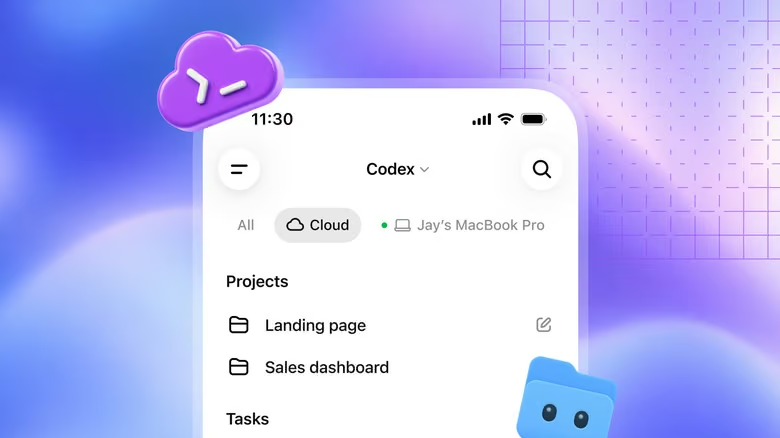
Codex now runs fully in the cloud, so tasks keep going with your laptop closed and can be started or checked from any device, including a phone. Reusable cloud development environments let teams share configurations and permissions. This builds directly on the August 2026 Codex updates and the Codex app.
| Codex launch | What it is | Who gets it |
|---|---|---|
| Codex in the cloud | Persistent cloud environments; work continues with the laptop closed | Plus, Pro, Business, Healthcare, Edu, Enterprise |
| Codex CLI refresh | Two-way voice to start and steer tasks, /agents view of parallel tasks, improved prompt editing | All plans |
| Code review | Dedicated review UI in the desktop app: summaries, diffs, questions, automatic fixes and cloud-based auto-reviews | Codex users |
| Codex Security Cloud | On-demand or scheduled GitHub repo scans, duplicate removal, prepared fixes; access to Daybreak Blue defensive models | Codex users |
| Open-source harness | The Codex agent harness released as open source | Everyone |
Codex usage draws on your plan allowance, so the Pro 200 multiplier cut matters most here. On stage, Simon Willison also reported a Codex Remote update for iPhone and a "Codex Game Studio" handed to attendees, though OpenAI's recap did not detail either. Compare these moves with Cursor and Devin, the latter now a Sign in with ChatGPT partner.
What Did Developers Get: APIs, Plugins and Distribution
For developers, DevDay 2026 added computer use to the Agents API, a new Decisions API for millisecond-scale classification, and three new distribution channels: Sign in with ChatGPT, plugin extensions and the OpenAI Marketplace.
Agents API with computer use
The Agents API is in public beta with hosted execution, memory, tools and multi-agent support, and now adds computer use so agents can operate software UIs, a capability previously limited to Codex and the ChatGPT desktop app. It also gained context compaction and, per Simon Willison, a 2x latency improvement. Thurrott reports computer use in ChatGPT itself via this route is limited to Pro 500 and Enterprise. OpenAI also launched Amazon Bedrock managed agents so OpenAI agents run inside AWS.
Decisions API
The Decisions API focuses GPT-6 Luna on a fixed set of developer-defined questions with finite answers, taking text or images and returning a choice in fractions of a second, for classifying content, routing requests or picking an agent's next action. The Decoder reports responses roughly ten times faster than Luna via the regular API. It is in limited preview, with broad release "in the coming days"; pricing has not been published. It is a direct answer to TypeSafe's Jev: in Every's tests Decisions beat Jev on a text task (76 of 78 steps correct versus 73, at 230ms versus 500ms), whilst Jev won on conversation classification.
Sign in with ChatGPT
Sign in with ChatGPT lets Plus and Pro users log in to third-party products with their ChatGPT account and spend their existing plan allowance there, instead of paying separately. It launched with 16 partners including Notion, Vercel and Cognition's Devin. Every called it "pragmatic and beneficial", the realisation of the idea that AI subscriptions will work like mobile data plans.
Plugin extensions, MCP events and the Marketplace
Plugin extensions let developers ship full apps inside ChatGPT and Codex: sidebar entries, interactive panels and file viewers, with Adobe and Figma among the demos, plus in-conversation discovery and recommendations. MCP events let connected apps trigger automations. The OpenAI Marketplace, in beta, lets enterprises spend their OpenAI commitments on partner software from 32 partners including Adobe, Canva, Figma, Notion, Salesforce, CrowdStrike, Vercel, Zendesk and Baseten. Every's caveat: this is OpenAI's "third or fourth swing" at an app store.
What Is OpenAI Private Intelligence?
OpenAI Private Intelligence is an enterprise privacy initiative that pairs zero data retention (ZDR) with Private Safety Processing, available now, with a confidential-computing Private Inference preview due this autumn. Private Safety Processing encrypts customer content, keeps it in customer-controlled cloud storage (AWS S3, Azure Blob or Google Cloud Storage, with 30-day lifecycle deletion), and runs automated safety review in a hardware-attested environment that blocks human access. Sam Altman said it "delivers frontier model safety without storing your content on our servers at all."
- Who gets it: API organisations already approved for Zero Data Retention can enable it in the console.
- Price: not disclosed.
- Availability: ZDR with PSP now; Private Inference, running inference inside sealed hardware enclaves with verifiable controls, in preview in autumn 2026.
For UK firms weighing GDPR exposure, this is arguably the most important enterprise announcement of the day, though Ultrafast's lack of EU regional processing shows privacy and speed options do not yet fully overlap. See also the Hacktron OpenAI breach for why data handling is under scrutiny.
What Else Was Announced at DevDay 2026?
- Meetings plugin – generates notes and action items; beta on macOS for Pro and Business.
- Sites with plugins – shared ChatGPT Sites where each viewer connects their own data and permissions.
- Shareable profiles – a single page collecting your Sites and plugins.
- Performance – 45% lower API time to first token and 30%+ faster tool calls and workflows.
- Agent progress stat – OpenAI said agent success on 8–16-hour tasks rose from 10% in January to 35% in July 2026.
- Demos – 3D venue modelling, a space-flight game, a ticket giveaway app and a Hugging Face robot integration.
OpenAI's full keynote is on its YouTube channel, and the complete list with documentation links is in the DevDay 2026 announcements thread.
What Do UK Users Actually Get?
UK users get most of DevDay 2026 on day one, with one big exception: Dots are not available on personal Pro plans in the UK, EEA or Switzerland at launch. Business Premium workspaces do get Dots in all supported ChatGPT regions, and Enterprise, Edu and Healthcare workspaces can enable the beta.
- Available to UK individuals now: GPT-6.1 Sol (Plus and up), Codex cloud and the voice CLI, Space and Pages (Pro), Pro 500, Sign in with ChatGPT, plugin extensions.
- Not yet: Dots on personal Pro plans.
- Watch out for: Ultrafast in the API supports only US data residency and global processing, not EU regional endpoints.
- Prices: OpenAI lists in dollars; UK consumer prices usually include VAT, so expect the sterling cost to exceed the approximate conversions above.
OpenAI has said it plans to expand Dots to more users soon but gave no UK date. If you are UK-based and want an always-on agent today, alternatives include Meta's Muse agent and xAI's Grok Bot, subject to their own regional rules.
Julian Goldie's DevDay-morning take on OpenAI's leaked always-on assistant and what it could mean for businesses, recorded before Dots was officially unveiled.
What Are the First Reactions to DevDay 2026?
Early reaction praised OpenAI's ambition and Space's polish, but flagged Dots as buggy and the overall launch slate as hard to absorb. Every's Dan Shipper, who had pre-release access, said Dots had become his main way of using ChatGPT, handling email and Slack filtering and proactive scheduling warnings, but reported frequent permission problems, dropped messages and browser connection failures, and advised: "I'd recommend waiting a week or two to try it." His overall mood: admiration for the pace, but "a little tired and confused", adding that "feature velocity is great when it feels coherent".
Axios framed Dots, Space and Sol as the core of the day, and BGR positioned Dots against Meta's Muse, noting that OpenAI requires a high-tier plan whilst Muse offers a free tier plus $20 and $100 plans. Several outlets, including Engadget, pointed out the day was shadowed by the GPT-6.1 Astra cancellation, and the live mobile Dots demo failing on stage did not help the reliability narrative.
How Does DevDay 2026 Stack Up Against Rivals?
| Always-on agent | Company | Entry price | Launched |
|---|---|---|---|
| Dots | OpenAI | ChatGPT Pro or Business Premium (1 dot included) | 29/09/2026 |
| Muse | Meta | Free tier; $20 and $100 plans | Already available |
| Grok Bot | SpaceXAI (xAI) | Beta | 11/08/2026 |
Source: BGR, 29/09/2026.
On models, GPT-6.1 Sol at $2/$10 lands squarely against Anthropic's mid-tier and undercuts Claude Opus 5.5 ($4/$20) by half, whilst OpenAI claims a small AutomationBench lead over Opus 5.5. Its closest Anthropic rival is Claude Sonnet 5.5; for the wider leaderboard see our September 2026 frontier benchmark comparison. On agents, OpenAI's edge is distribution (1.2 billion weekly users) and the 4,000-app plugin catalogue; its weakness is price of entry and, for now, UK availability.
Who Should Do What Now?
- API developers: benchmark
gpt-6.1-solagainst your current Astra and Sol workloads today. At one-fifth of Astra's price with near-Astra coding, it is the most immediately useful launch. Apply for the Decisions API preview if you do high-volume routing. - Heavy ChatGPT/Codex users on Pro 200: you keep 20x until 29/10/2026 plus a $2,500 credit; use the month to measure whether 10x is enough before considering Pro 500.
- Teams on Business or Enterprise: trial Space and Pages now, and ask your admin about Dots (Business Premium) or the Enterprise beta. Enterprises with sensitive data should look at ZDR with Private Safety Processing.
- UK individuals: Dots are not on personal Pro yet, so there is no reason to upgrade for them. Plus remains good value for GPT-6.1 Sol and Codex cloud.
- Latency-critical products: test Ultrafast, but budget for 6x costs and check data-residency rules first.
Sources
- OpenAI: DevDay 2026 Recap
- OpenAI Developer Community: DevDay 2026 announcements and developer resources
- OpenAI docs: Ultrafast mode and ZDR with Private Safety Processing
- CNBC: OpenAI DevDay 2026 live updates
- Axios: The 5 biggest announcements from OpenAI's blockbuster AI conference
- BGR: Everything OpenAI announced at DevDay 2026
- Engadget: OpenAI Dev Day 2026 live updates
- Every: Vibe Check: OpenAI DevDay 2026
- The Next Web: GPT-6.1 Sol at a fifth of Astra's prices, Dots and Pro 500 / Pro 200
- The Decoder: Codex, Decisions API and Ultrafast
- Decrypt: OpenAI gave AI agents their own computers
- Thurrott: OpenAI announces massive set of ChatGPT upgrades
- Simon Willison: OpenAI DevDay 2026 live blog
- 9to5Google: OpenAI launches Dots and GPT-6.1 Astra cancellation
- VentureBeat: OpenAI's new Private Intelligence
The Bottom Line
OpenAI DevDay 2026 was the moment ChatGPT stopped being a chatbot with agent features and became an agent platform with a chat window. Dots, Space and Pages point at a future where your AI keeps working when you close the lid, and GPT-6.1 Sol makes near-frontier coding cheap enough to run those agents at scale. Ultrafast and Pro 500 show OpenAI is now charging explicitly for speed and volume.
The caveats are real: Dots are early and, by reviewers' accounts, buggy; personal Pro users in the UK cannot get them yet; Pro 200 is worth half as much to new subscribers; several prices (extra dots, Decisions API, Private Intelligence) are still unpublished; and the shelving of GPT-6.1 Astra the day before is a reminder that OpenAI's most capable models are hitting safety limits. For most readers, the actionable move today is simple: try GPT-6.1 Sol, and give Dots a couple of weeks to settle.
Last updated: 29/09/2026. Compiled on launch day from OpenAI's official recap, developer documentation and same-day press coverage. Eligibility, regional availability and prices may change as rollouts continue; we will update this page as OpenAI publishes outstanding pricing.
Get the free guide: Claude vs ChatGPT, Gemini & Grok
A 20-page playbook covering everything you need to choose and use the big four AI models in 2026, full cost and feature comparisons, what each is best (and worst) at, and how-tos for images, vectors, building a website, Claude Code and more.