 AI Tools Review Editorial Team
Quick Answer:
Qwen4-Max is Alibaba's new flagship model, released on 16/11/2026. It is a 2.4-trillion-parameter mixture-of-experts model with 71 billion parameters active per token, native image input and a one-million-token context window. It is available through QwenCloud's API and Token Plan, and in Qwen Studio, QwenWork and Qoder. Artificial Analysis lists the price at $1.50 input and $4.50 output per million tokens (about £1.19 and £3.56). In Alibaba's own tests it leads on DeepSWE, Agents' Last Exam and legal and SaaS automation work, but trails Claude Opus 5.5 and Kimi K3.1 clearly on Terminal-Bench 4.0 and ProgramBench. Unlike Qwen3.8-Max, it has no open weights.
Alibaba has spent two months promising that Qwen 4 was "currently in training". Today it shipped. Qwen4-Max is not pitched as a chatbot upgrade but as a "24/7 AI teammate" for long, messy work: building games in Unreal Engine, writing 86-page due-diligence reports and running 48-hour lab experiments. The question is whether the benchmarks back that up, and whether a cheaper, closed Qwen is a better deal than the open one it replaces.
This review is based on the Qwen team's launch post ("Qwen4-Max: Your New Teammate Has Arrived", 16/11/2026), TechNode's launch report, the Artificial Analysis model page, and launch coverage from WorldofAI, who tested an early checkpoint. All benchmark figures below come from Alibaba's own chart unless we say otherwise. AI Tools Review has not reproduced them. For the build-up, read our Qwen 4 release guide and our Qwen 3.8 Max review.
WorldofAI tests Qwen4-Max on front-end builds, Unity games and a macOS clone, and compares its Artificial Analysis score and price with GPT-6.1 Sol.
Executive Summary
- Release: announced and generally available on 16/11/2026, after a limited preview from 11/11/2026 (TechNode).
- Size: 2.4 trillion backbone parameters, 71 billion activated per token, plus 328 billion N-gram Embedding parameters. Its predecessor activated about 95 billion.
- Context and inputs: one million tokens (Artificial Analysis measures 984,000 usable), with native image input. Output is text.
- Headline wins (Alibaba's chart): DeepSWE v1.1 75.7, Agents' Last Exam v1.1 46.7, HLAB-Vals legal work 21.3, AutomationBench-AA 72.5 and BioMysteryBench 85.0, all ahead of Claude Opus 5.5.
- Clear losses: Terminal-Bench 4.0 48.5 (Opus 5.5 59.6, Kimi K3.1 67.2), ProgramBench 31.5 (Opus 5.5 65.0), Humanity's Last Exam 51.7 (Opus 5.5 59.8).
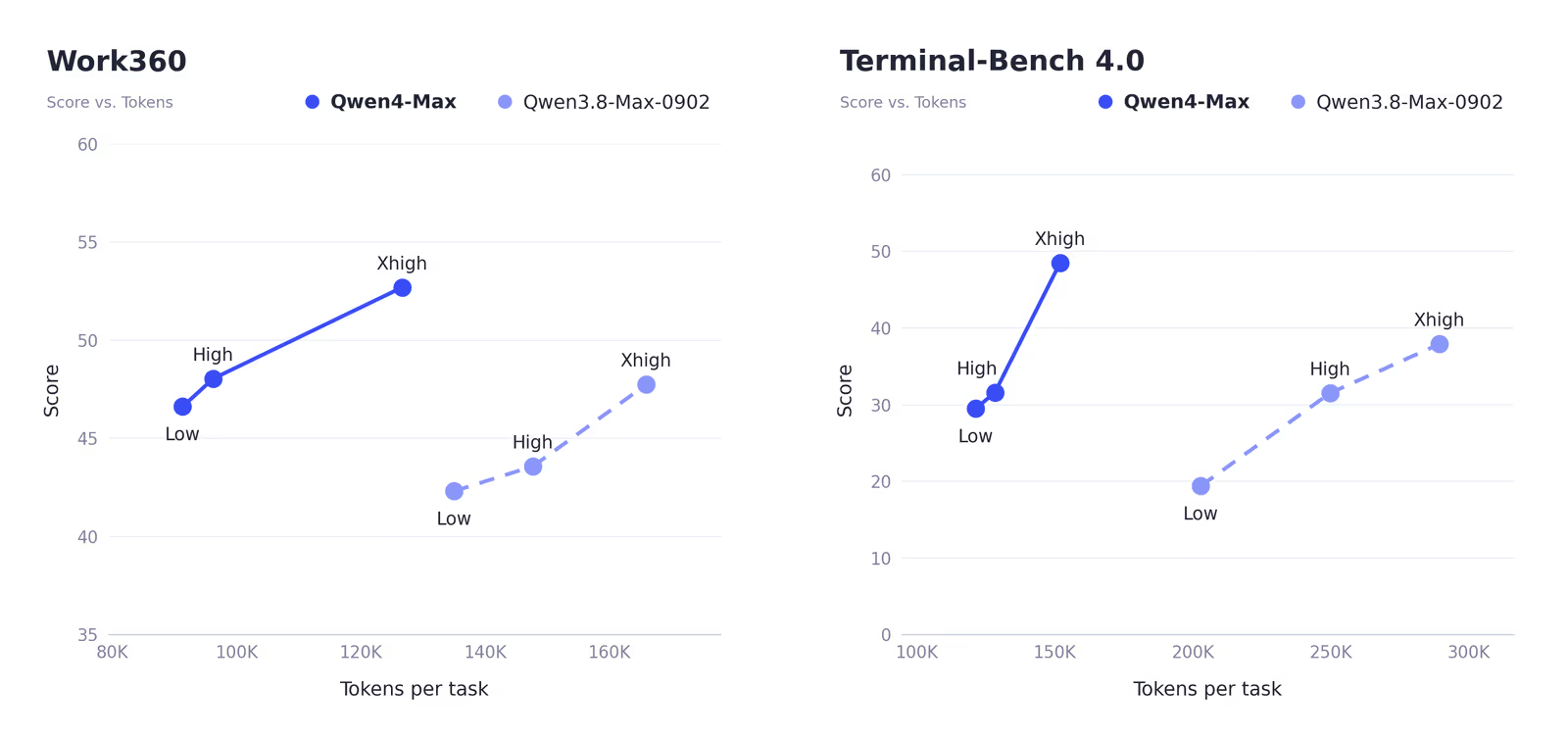
- Efficiency: about 48% fewer tokens than Qwen3.8-Max on Terminal-Bench 4.0 at Xhigh effort, and average Work360 cost per task down 62%, from $4.43 to $1.67.
- Price: $1.50 input / $4.50 output per million tokens, per Artificial Analysis; Qwen3.8-Max was $2 / $6.
- Independent view: Artificial Analysis gives it 43 on its Intelligence Index, 38th of 81 models listed. It is also unusually verbose.
- Weights: closed. Alibaba says smaller Qwen4 models will be open-sourced, with no date.
Lineage: From Qwen3.8-Max to Qwen4
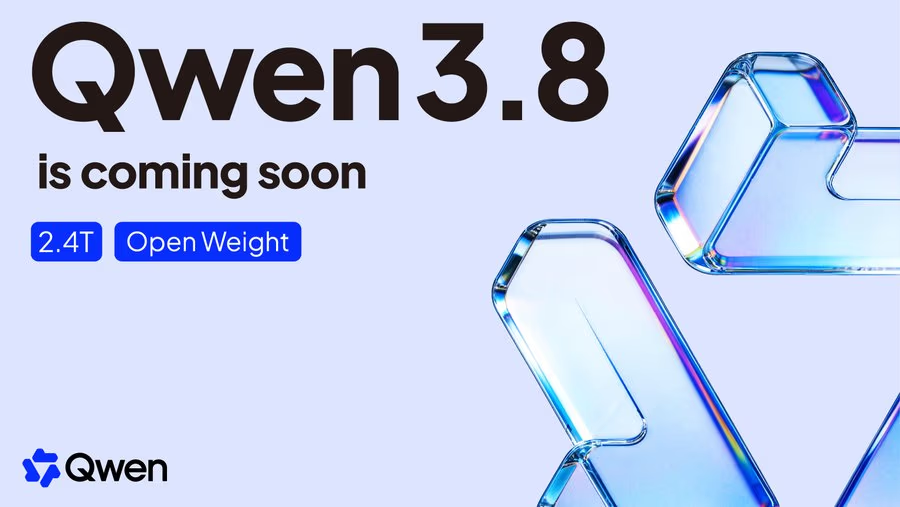
Qwen4-Max is the end of a fast, public run-up. Alibaba made Qwen3.8-Max generally available on 03/08/2026 at $2 input and $6 output per million tokens, then released its 2.4-trillion-parameter weights and a smaller 27B model within weeks (see our Qwen 3.8 27B guide). In August it also shipped Qwen3.8-Flash-Next, an open model it described as a preview of the Qwen 4 architecture.
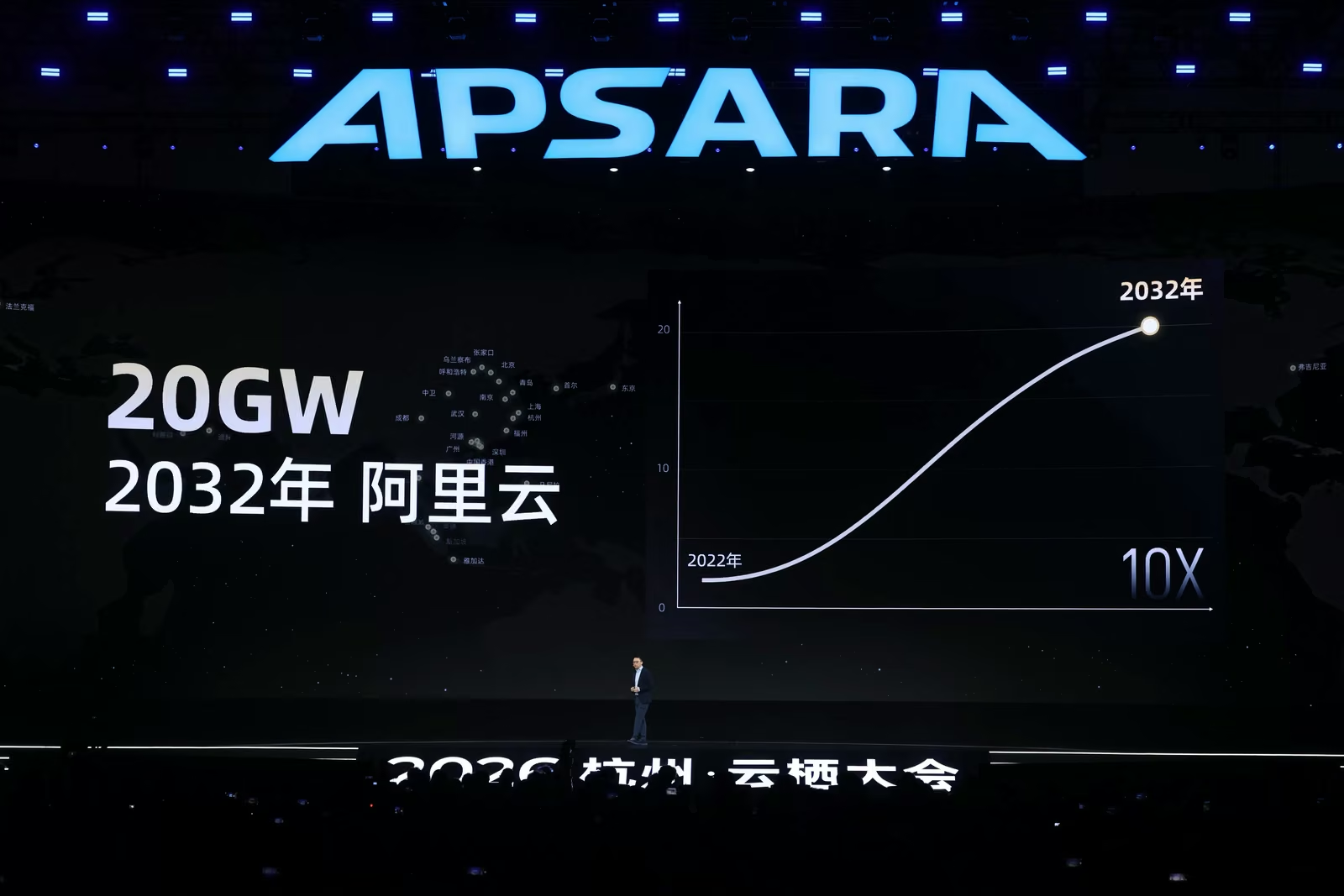
At the Apsara Conference on 22/09/2026, Alibaba said Qwen 4 was "currently in training" and named four tiers: Max, Plus, Flash and 27B. Our Qwen 4 guide tracked that period, when there was no date, price or model card. Leaks followed through October, and a preview checkpoint reached testers on 11/11/2026.
| Date | Milestone |
|---|---|
| 03/08/2026 | Qwen3.8-Max generally available at $2 / $6 per million tokens |
| August 2026 | Qwen3.8 2.4T and 27B open weights; Qwen3.8-Flash-Next previews the Qwen 4 architecture |
| 22/09/2026 | Apsara Conference: Qwen 4 "in training"; Max, Plus, Flash and 27B tiers named |
| 11/11/2026 | Limited Qwen4-Max preview begins (TechNode) |
| 16/11/2026 | Qwen4-Max launch post and general availability on QwenCloud |
The biggest change in strategy is openness. Qwen3.8-Max was a frontier-scale model you could download. Qwen4-Max is cloud-only. Alibaba's post ends with a promise that "smaller models in the family are coming to open source", but it gives no names or dates. If you built on open Qwen weights, plan on staying with Qwen3.8 for now. Our piece on the open-weights debate explains why labs on both sides of the Pacific are rethinking how much they release.
Architecture and Training
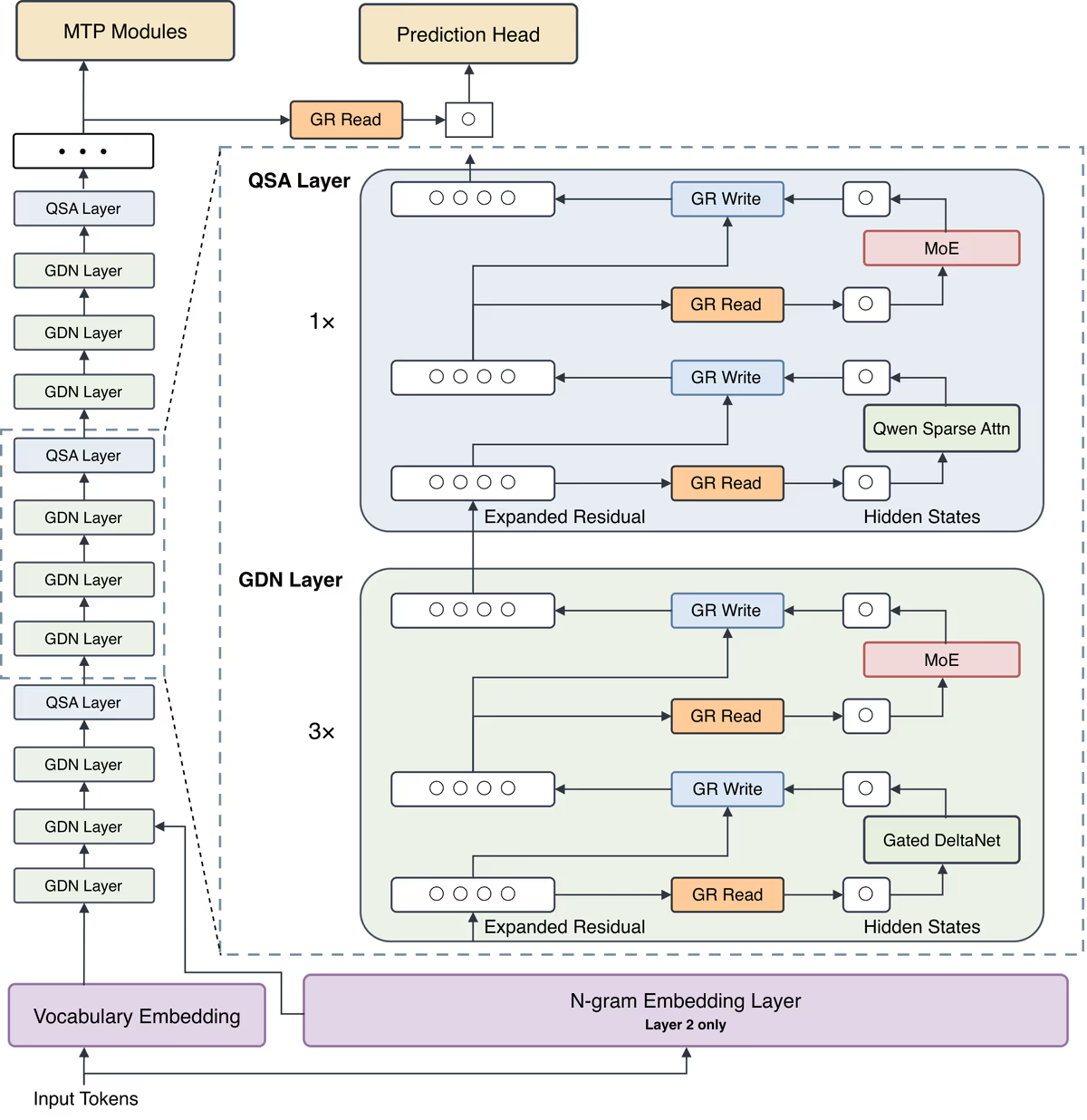
Qwen4-Max keeps the same 2.4-trillion-parameter scale as Qwen3.8-Max but changes almost everything inside it. Alibaba says it upgraded the sparse mixture-of-experts design "across attention, residual connections, and embeddings". There are three main changes.
1. Hybrid attention: Gated DeltaNet plus Qwen Sparse Attention
Standard attention gets very expensive on long inputs, because every token looks at every other token. Qwen4 mixes two kinds of layer. For every Qwen Sparse Attention (QSA) layer there are three Gated DeltaNet layers. Gated DeltaNet is a form of linear attention: it squeezes the history into a fixed-size state, so its cost does not grow with the length of the context. QSA then uses a small "indexer" to pick out only the relevant blocks of the context to attend to. This is how Alibaba makes a one-million-token window affordable. It follows the same broad direction as DeepSeek's sparse attention work, which we covered in our DeepSeek V4 Pro review.
2. Gated Residual connections
Instead of a single residual path between layers, Qwen4 uses four parallel residual branches with "read and write gates" that decide how much information flows through each. Alibaba says this improves information flow and training stability. Its training-loss chart shows a smooth curve with no loss spikes across the full run, which is notable at this scale, where spikes often force teams to roll back and restart.
3. N-gram Embeddings
The third change adds 328 billion parameters of N-gram Embeddings at the second layer. These are lookup tables for common local token patterns. They add a lot of capacity for very little compute, because a lookup is cheap. This is why Alibaba quotes three numbers: 2.4 trillion backbone parameters, 71 billion active per token, and 328 billion N-gram parameters on top.
Fewer active parameters, better base model
The most interesting claim is about efficiency. Qwen4-Max activates 71 billion parameters per token, against about 95 billion for Qwen3.8-Max, roughly 25% fewer. Yet on Alibaba's internal tests the base model scores 5% to 13% better on bits per byte (BPB), a measure of how well a model predicts text where lower is better.
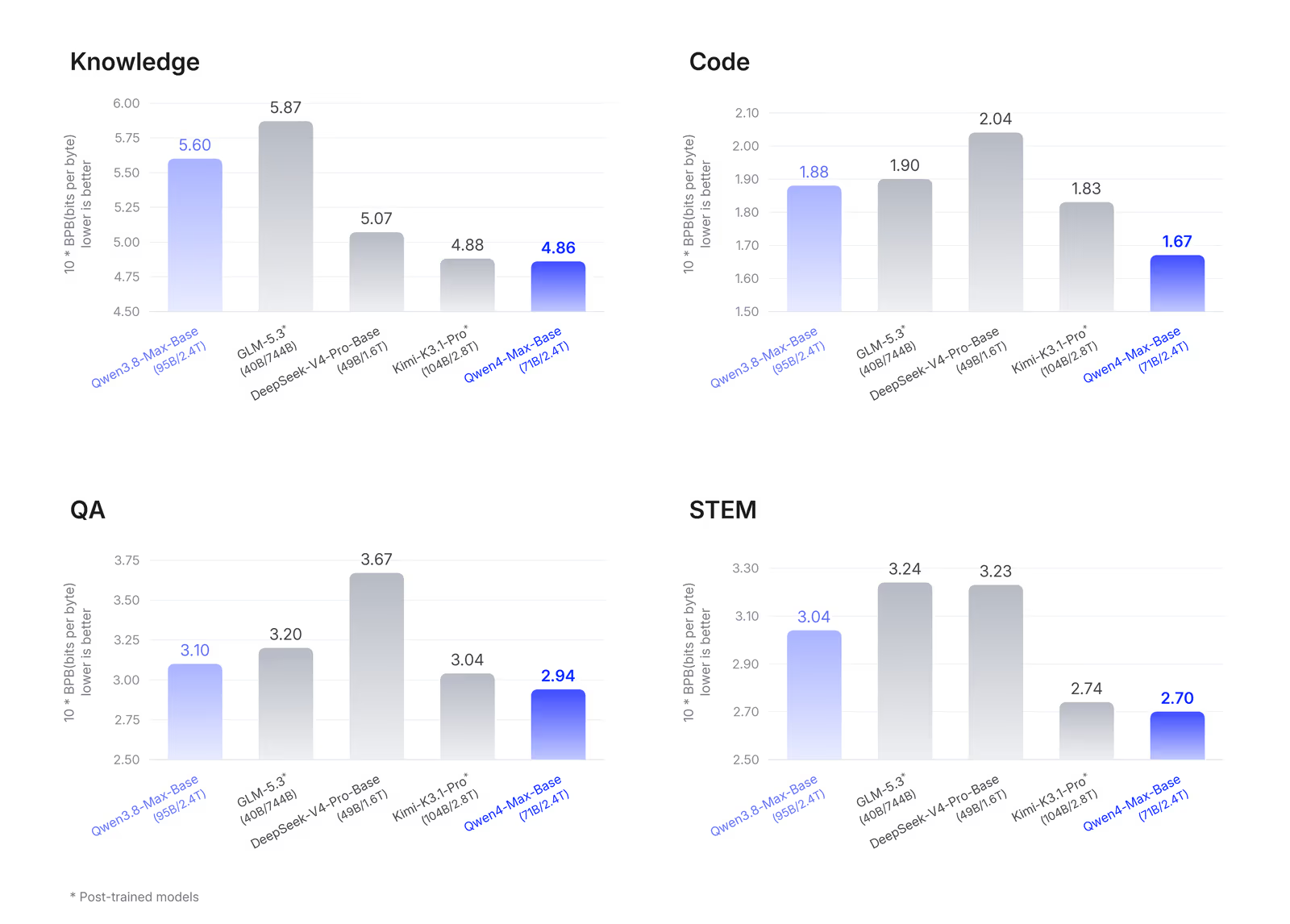
| Domain (10 × BPB, lower is better) | Qwen3.8-Max-Base | DeepSeek-V4-Pro-Base | Kimi-K3.1-Pro* | Qwen4-Max-Base |
|---|---|---|---|---|
| Knowledge | 5.60 | 5.07 | 4.88 | 4.86 |
| Code | 1.88 | 2.04 | 1.83 | 1.67 |
| QA | 3.10 | 3.67 | 3.04 | 2.94 |
| STEM | 3.04 | 3.23 | 2.74 | 2.70 |
*Post-trained model. GLM-5.3 (5.87, 1.90, 3.20, 3.24) is also in Alibaba's chart. All figures are Alibaba in-house evaluations.
Two cautions. First, these are in-house test sets that nobody outside Alibaba can check. Second, the margin over Kimi K3.1 Pro is small in Knowledge and STEM. The bigger story is the jump from Qwen3.8 to Qwen4 with fewer active parameters, which supports the claim that the new architecture, not just more compute, is doing the work.
Capabilities Deep Dive
Alibaba's launch post is unusual. Most of it is not about benchmarks but about long, real-world projects. It is worth separating what these show from what they prove. Each is a showcase chosen by Alibaba, often with partners. None comes with a success rate.
Coding and Game Development
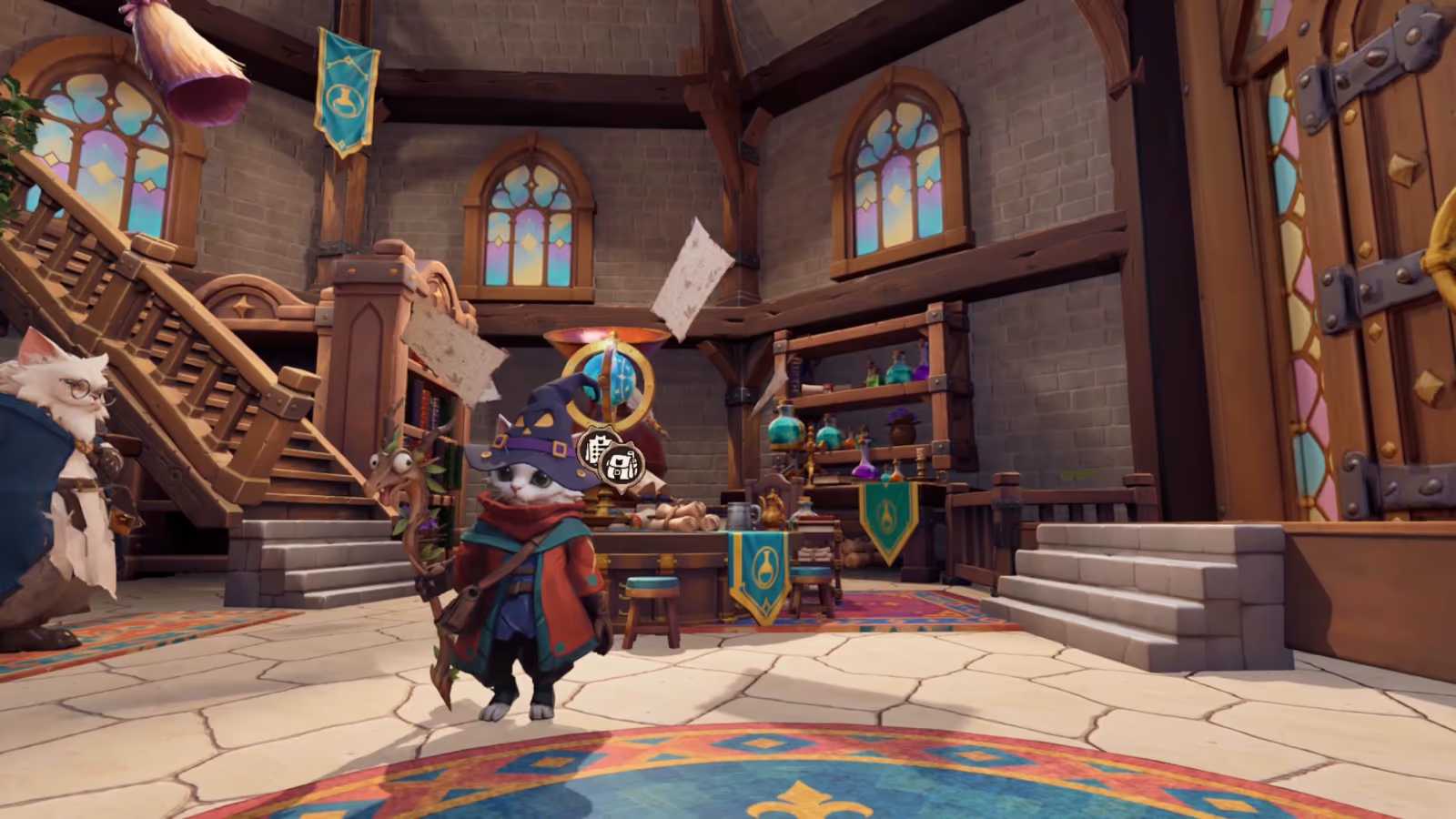
The cover image on this page comes from Meow of Magic, a cat-wizard action game that Alibaba says Qwen4-Max built in Unreal Engine. Players cast spells, pick upgrades and fight waves of enemies and bosses. Alibaba says the model works with Unity, Unreal Engine and Godot. From a plain-English brief it handles scene building, gameplay logic, external assets, materials, the HUD and visual effects. It then runs the game and uses what it sees to fix camera tracking, animation, hit feedback, lighting and pacing.
The model also drives Blender for 3D modelling: geometry, scene layout, materials, lighting and rendering. Alibaba says some of these assets have been used in games and 3D-printed. In automotive manufacturing work with SANF and Pacific Union, it says the manual effort to program one workpiece fell from about 475 minutes to 24, a 95% cut.
The coding benchmarks are mixed. Qwen4-Max scores 75.7 on DeepSWE v1.1, the best figure in Alibaba's chart, just ahead of Kimi K3.1 (75.5) and GPT-6.1 Sol (75.2). On CodeArena, a web-development Elo ranking, it scores 1,750, behind Opus 5.5 (1,816) and GPT-6 Astra (1,763). WorldofAI found front-end work to be its strongest area in hands-on tests. If you mainly want an agent for large existing codebases, compare it with our best AI coding agents guide first.
Professional Work: Finance, Law and Healthcare
Alibaba built a new benchmark, Work360, to measure professional tasks. It covers 26 top-level domains, 182 subdomains and 721 specialised fields. Qwen4-Max scores 52.69, up from 47.74 for Qwen3.8-Max. This is Alibaba's own benchmark, so it is useful for comparing Qwen generations but not for comparing Qwen with rivals.
The showcases are detailed:
- Finance: the model calls 90 MCP tools to collect prices, financials, rates and dividend data across Chinese, Hong Kong and US markets. It delivers Excel workbooks and editable PowerPoint decks where every chart links back to the workbook and every cell links to its source.
- Law: given 198 badly named working papers for pre-IPO due diligence, it sorted them into 14 folders, built an index, checked public records and produced an 86-page report of more than 60,000 Chinese characters, with every conclusion cited.
- Healthcare: in a critical-care case it reviewed lab reports, more than 10,000 characters of notes and 1,433 medical images. It used subagents to read hundreds of CT slices in parallel. Alibaba says its four recommendations matched the doctor's actual orders that day.
The independent professional benchmarks in Alibaba's chart are more useful. Qwen4-Max leads on HLAB-Vals-1.1 legal agent work with 21.3, against 9.2 for Opus 5.5 (scores cited from the Vals Index), and on APEX-Agents v1.1 with 72.1, just behind Opus 5.5's 73.5 (scores from Mercor's leaderboard). On JobBench it trails Opus 5.5, 68.5 to 75.4. On HealthBench Professional it scores 60.0, level with Opus 5.5 (59.9) but behind both OpenAI models (65.1 and 66.0).
The medical demo is impressive, but it is one case, chosen by the vendor. No UK clinician should use a general-purpose model for clinical decisions without proper governance, and Alibaba itself says human expertise "remains essential" in high-stakes work.
Long-Running Agents and Live Delivery
Alibaba calls Qwen4-Max a "24/7 AI teammate". The practical feature behind that is Live Delivery. Instead of working for hours and handing back one final result, the agent delivers a usable first version early, then improves it in stages. You can step in after any release to correct it or change direction. Alibaba is open-sourcing a Qwen-Live-Delivery-Plugin so that developers can add this pattern to their own agents.
This is a sensible answer to a real problem. Long agent runs fail in ways that are hard to undo: if an agent misreads the brief at minute five, you find out at minute 300. Staged delivery is the same principle as the always-on agents from Anthropic, xAI and others. It fits the trend we covered in Grok Bot 1.0 and in our Hermes Agent explainer.
Alibaba has also used the model on its own infrastructure. It says Qwen4-Max, working with Alibaba's MindOpt solver, cut model-call scheduling costs for data annotation by an average of 10.42%, increased GPU idle capacity by 4.62%, and solved an offline CPU rescheduling problem more than 14.61 times faster. On Agents' Last Exam v1.1, a test of long, valuable tasks, it scores 46.7, the highest in Alibaba's chart and up from 27.9 for Qwen3.8-Max.
Scientific Discovery Claims
Two science demos stand out. In the first, Qwen4 used Deep Principle's Mira platform, which links computer simulation to an automated lab, to design a new coolant for data-centre chips. Over a 48-hour run it built a set of 2.7 million candidate molecules, screened them, predicted their properties, planned synthesis and directed the robot lab. After four rounds it produced a new coolant molecule that was tested in the lab.
In the second, on DP Technology's PharmMaster platform, Qwen4-Max worked on NLRP3, a protein linked to inflammation in Alzheimer's disease. It made 454 tool calls, ran 3,239 computational checks and designed 24 candidate molecules. Calculations suggest the best one binds about 3.6 times more strongly than the patent-derived starting molecule. These are computer estimates. The molecule has not been tested in a lab, and DP Technology's experts say only that it warrants further testing.
On BioMysteryBench, a bioinformatics research test, Qwen4-Max scores 85.0, the best in the chart, though the top six models sit within about six points of each other.
Benchmarks
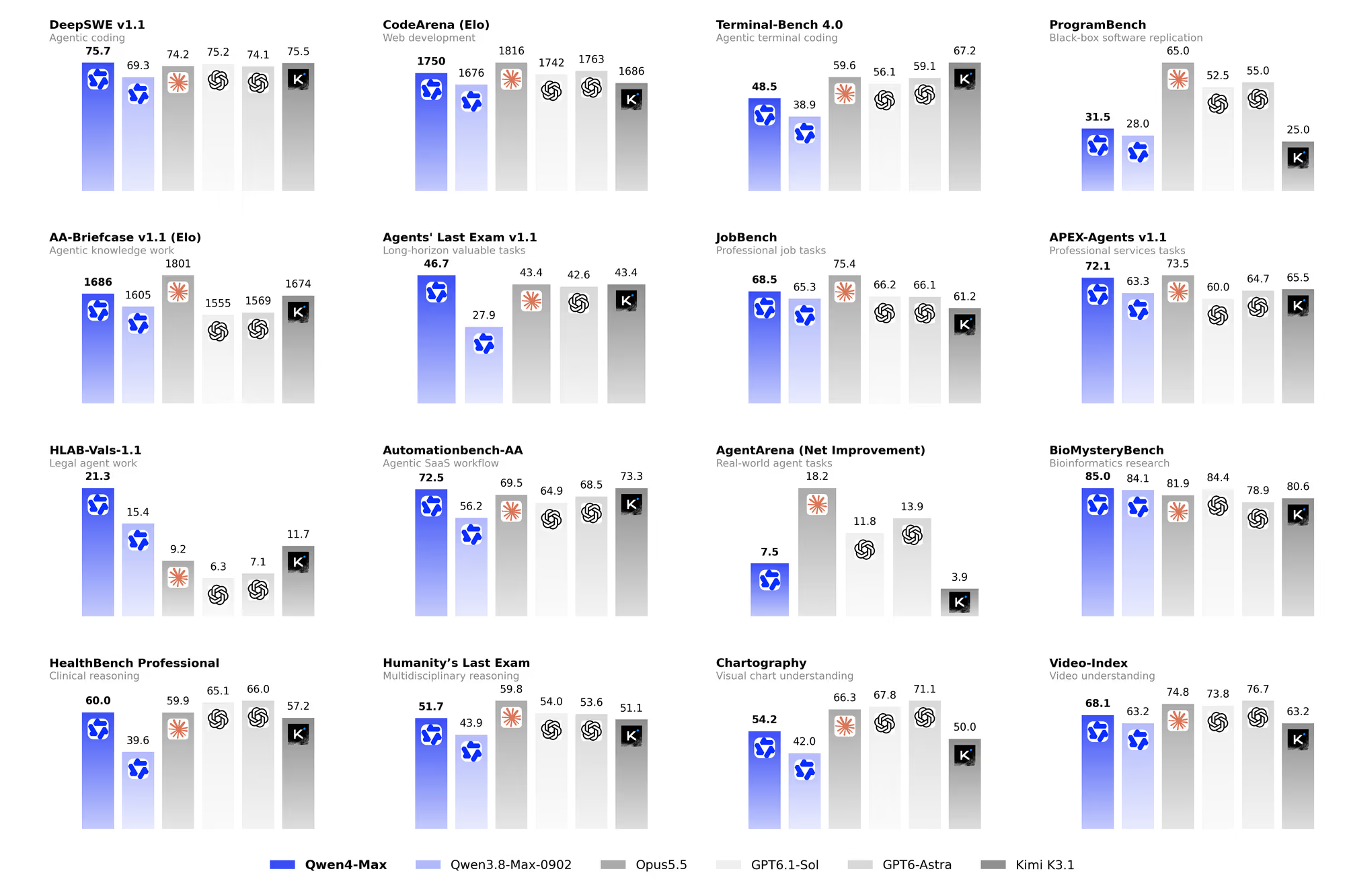
Alibaba compares Qwen4-Max with its predecessor and four frontier rivals: Claude Opus 5.5, GPT-6.1 Sol, GPT-6 Astra and Kimi K3.1. Several third-party scores are cited from public leaderboards (Artificial Analysis, Arena, the Vals Index, Mercor and the Agents' Last Exam board), which makes them more credible than purely in-house numbers. Here are the figures from the chart.
| Benchmark | Qwen4-Max | Qwen3.8-Max | Opus 5.5 | GPT-6.1 Sol | GPT-6 Astra | Kimi K3.1 |
|---|---|---|---|---|---|---|
| DeepSWE v1.1 (agentic coding) | 75.7 | 69.3 | 74.2 | 75.2 | 74.1 | 75.5 |
| CodeArena Elo (web dev) | 1750 | 1676 | 1816 | 1742 | 1763 | 1686 |
| Terminal-Bench 4.0 | 48.5 | 38.9 | 59.6 | 56.1 | 59.1 | 67.2 |
| ProgramBench | 31.5 | 28.0 | 65.0 | 52.5 | 55.0 | 25.0 |
| AA-Briefcase v1.1 Elo | 1686 | 1605 | 1801 | 1555 | 1569 | 1674 |
| JobBench | 68.5 | 65.3 | 75.4 | 66.2 | 66.1 | 61.2 |
| APEX-Agents v1.1 | 72.1 | 63.3 | 73.5 | 60.0 | 64.7 | 65.5 |
| HLAB-Vals-1.1 (legal) | 21.3 | 15.4 | 9.2 | 6.3 | 7.1 | 11.7 |
| AutomationBench-AA | 72.5 | 56.2 | 69.5 | 64.9 | 68.5 | 73.3 |
| BioMysteryBench | 85.0 | 84.1 | 81.9 | 84.4 | 78.9 | 80.6 |
| HealthBench Professional | 60.0 | 39.6 | 59.9 | 65.1 | 66.0 | 57.2 |
| Humanity's Last Exam | 51.7 | 43.9 | 59.8 | 54.0 | 53.6 | 51.1 |
| Chartography (charts) | 54.2 | 42.0 | 66.3 | 67.8 | 71.1 | 50.0 |
| Video-Index | 68.1 | 63.2 | 74.8 | 73.8 | 76.7 | 63.2 |
Figures read from Alibaba's launch chart. Bold marks the best score in each row. Two further panels are not in the table because not every model was shown: on Agents' Last Exam v1.1 Qwen4-Max scores 46.7 (Qwen3.8-Max 27.9, Opus 5.5 43.4, Kimi K3.1 43.4); on AgentArena net improvement it scores 7.5, behind Opus 5.5 at 18.2.
What the numbers say
It is a big step over Qwen3.8-Max. Qwen4-Max beats its predecessor on every test in the chart, often by a lot: +9.6 points on Terminal-Bench 4.0, +18.8 on Agents' Last Exam, +20.4 on HealthBench Professional, +16.3 on AutomationBench.
It is not a frontier leader overall. Opus 5.5 wins more rows than any other model, and Qwen4-Max trails it by wide margins on Terminal-Bench (11.1 points) and ProgramBench (33.5 points). ProgramBench asks a model to rebuild software it can only observe from outside, so the gap suggests weaker deep software engineering. On Terminal-Bench 4.0, Kimi K3.1, another Chinese model, scores 18.7 points higher.
Its wins are in agentic office work. The legal (HLAB-Vals), SaaS automation (AutomationBench-AA) and long-horizon (Agents' Last Exam) results line up with Alibaba's "teammate" pitch. The legal score of 21.3 is more than twice Opus 5.5's, though all scores on that test are low.
Vision lags. Despite "native vision", Qwen4-Max is last or near last among the frontier models on chart and video understanding. If your work depends on reading charts, GPT-6 Astra scores 71.1 to Qwen4-Max's 54.2.
Independent scores
Artificial Analysis gives Qwen4-Max 43 on its Intelligence Index, ranking it 38th of 81 models it lists and just above the median of 41 for comparable models. It also flags high verbosity: the model used 127 million output tokens to complete the Index, against a median of 78.6 million. WorldofAI's video highlights the same point, saying the model sits about 12 points below GPT-6.1 Sol on the Index. Reports of other independent tests vary. Kingy.ai cites a Vals evaluation of 48.48% (±0.88) on Terminal-Bench 4.0, very close to Alibaba's own 48.5, which is encouraging for the honesty of the chart.
Token Efficiency and Cost per Task
Alibaba's strongest argument is cost. Compared with Qwen3.8-Max, it says Qwen4-Max uses about 24% fewer tokens on Work360 at Xhigh effort and 35% fewer at High effort. On Terminal-Bench 4.0, the savings are about 48% and 49%. The chart above shows the effect: Qwen4-Max at Xhigh effort uses roughly 150,000 tokens per Terminal-Bench task and scores about 48, while Qwen3.8-Max at Xhigh uses nearly 290,000 tokens and scores about 38.
Fewer tokens plus lower prices add up. On Work360, Alibaba says the average cost per task fell from $4.43 to $1.67 (about £3.50 to £1.32), a 62% reduction. TechNode reports the Chinese-market figure as RMB 26.58 to RMB 11.16, about 58%.
There is a tension here with the Artificial Analysis data. Qwen4-Max is more efficient than Qwen3.8-Max, but it is still verbose compared with other models. Efficiency is relative. Against rivals that answer in fewer tokens, the lower per-token price may not translate into a lower bill. Always test cost on your own tasks. Our analysis of agent economics explains why tokens per task matter more than price per token.
Safety and Security
Alibaba has not published a full system card of the kind Anthropic or OpenAI release. Its launch post has a safety section that covers three areas.
- Secure coding: Alibaba added security checks to its coding training. On the Last Secure Code Bench, the share of functions that are both correct and secure rose from 22.0% to 31.8%. Code that was secure at function, file and repository level rose from 8% to 14.7%. These are improvements, but they also mean most generated code still fails the joint test. Review AI-written code as you would a junior developer's.
- Cybersecurity: Alibaba says it kept training data for defensive tasks such as finding and fixing vulnerabilities, and removed data aimed at improving attacks. Internal experts reviewed long agent runs, including the full chain of thought, and found "no capabilities posing large-scale cybersecurity risks".
- CBRN (chemical, biological, radiological and nuclear): Alibaba says it added specific safety training. Internal experts found the model's proposed solutions "are not genuinely innovative and cannot complete the task end-to-end", and identified no significant uplift risk. It also says the model did not over-refuse.
Compare this with the cyber and autonomy testing in our Claude Opus 5.5 review or the third-party testing in our Kimi K3.1 Pro review. Alibaba gives conclusions but little method: there are no named external testers, no published scores on standard cyber or bio evaluations, and no capability thresholds. Given that the model can run for 48 hours, call 90 tools and direct a robotic lab, that is a thin disclosure. It does not mean the model is unsafe. It means buyers have to take Alibaba's word for it.
For UK organisations there is also a data question. Qwen4-Max runs on Alibaba Cloud. Check which region processes your data, what the retention terms are, and whether your sector rules allow it, before sending personal or confidential data.
Real-World vs Benchmarks
The early hands-on picture is consistent with the chart. WorldofAI, who had access to an early checkpoint, found Qwen4-Max strongest at front-end work. Their tests included a macOS-style desktop clone, a game built in Unity, a dungeon-crawler and a short film. Their conclusion was that it is "not a bad model", but they questioned whether it makes sense when it scores below GPT-6.1 Sol on Artificial Analysis while costing more to run the Index.
That point needs care. Per token, Qwen4-Max is cheaper than GPT-6.1 Sol ($1.50 / $4.50 against $2 / $10). But Artificial Analysis measures total cost to run its tests, and Qwen4-Max's verbosity pushes that up. Which matters depends on your work. Short, structured tasks favour the low token price. Long reasoning tasks may not.
Coverage of Alibaba's showcase projects has been positive, but they are demonstrations, not deployments that outside parties have measured. The manufacturing (95% time saving), legal (86-page report) and lab (new coolant) claims are all reported by Alibaba and its partners. Treat them as proof of what is possible, not what is typical.
WorldofAI's weekly round-up, recorded during the Qwen4-Max preview week, covers the Qwen 4 Max preview update and the new Qwen agentic computer alongside Gemini 4 Krypton and GPT-6.2.
Pricing and Access
Alibaba's post says only that API prices are lower than Qwen3.8-Max, "with particularly large reductions in cached-input pricing". Artificial Analysis lists the Alibaba API price as follows. We could not load QwenCloud's own price list at the time of writing, so check it before budgeting.
| Model | Input (per 1M tokens) | Output (per 1M tokens) | Weights |
|---|---|---|---|
| Qwen4-Max | £1.19 ($1.50) | £3.56 ($4.50) | Closed |
| Qwen3.8-Max | £1.58 ($2.00) | £4.74 ($6.00) | Open |
| GPT-6.1 Sol | £1.58 ($2.00) | £7.90 ($10.00) | Closed |
| Kimi K3.1 Pro | £1.58 ($2.00) | £7.90 ($10.00) | Open |
| Claude Opus 5.5 | £3.16 ($4.00) | £15.80 ($20.00) | Closed |
Qwen4-Max price from Artificial Analysis; others from our earlier reviews of each model. Sterling at about $1 = £0.79, excluding VAT.
Artificial Analysis also lists a 95% discount for cached input, and a blended price of $0.80 (about £0.63) per million tokens using its standard mix of cached, fresh and output tokens. For agent work, where the same long context is sent again and again, the cache discount matters more than the headline rate.
You can use Qwen4-Max in four ways:
- QwenCloud API, billed per token, or the prepaid Token Plan.
- Qwen Studio, Alibaba's chat and creation app.
- QwenWork, the workplace agent (see our QwenWork review).
- Qoder, Alibaba's AI coding tool, whose team helped design the model's agent behaviour.
Limitations
- No open weights. The biggest change from Qwen3.8. You cannot self-host it, fine-tune it or run it in a private data centre.
- Weak deep coding. 31.5 on ProgramBench and 48.5 on Terminal-Bench 4.0 put it well behind Opus 5.5 and Kimi K3.1 on demanding software work.
- Verbose. Artificial Analysis measures far more output tokens than the median, which eats into the price advantage.
- Weak chart and video understanding compared with the OpenAI and Anthropic models.
- Thin safety disclosure. No system card, no external testers, no published scores on standard risk evaluations.
- Vendor benchmarks. Work360 and the BPB tests are Alibaba's own. The showcases are hand-picked.
- Data location and compliance. Processing on Alibaba Cloud may not suit regulated UK sectors without careful review.
- Family gaps. Qwen4 Plus, Flash and 27B still have no release dates.
How It Compares
Against Claude Opus 5.5: Opus 5.5 is the stronger all-rounder in Alibaba's own chart and far ahead on hard coding. Qwen4-Max costs about 63% less per input token and 78% less per output token, and leads on legal and automation tasks. For cost-sensitive office agents, Qwen4-Max is worth testing. For critical code, Opus 5.5 remains the safer pick. See our Fable 5.2 vs Opus 5.5 comparison for Anthropic's range.
Against GPT-6.1 Sol and GPT-6 Astra: The OpenAI models lead on vision, health and reasoning. Qwen4-Max leads on DeepSWE, legal work and Agents' Last Exam. Sol scores higher on Artificial Analysis. Read our GPT-6.1 Sol review for details.
Against Kimi K3.1: This is the key Chinese comparison. Kimi K3.1 is open, far stronger on Terminal-Bench 4.0 (67.2 against 48.5) and slightly ahead on SaaS automation. Qwen4-Max is much stronger on ProgramBench, legal work and long-horizon tasks, and cheaper on output. If open weights matter, Kimi wins.
Against Qwen3.8-Max: Qwen4-Max is better everywhere and cheaper to run. The only reason to stay on 3.8 is if you need the open weights.
Who Should Use It
- Good fit: teams building office and research agents that run many steps, call many tools and produce documents, spreadsheets or decks, where cost per task matters.
- Good fit: front-end, prototype and game builders who want a cheap, capable model for interactive work.
- Good fit: existing Qwen API users. The upgrade is clear and cheaper.
- Test first: legal and finance teams. The benchmark leads are real, but check results against your own work and governance rules.
- Look elsewhere: anyone who needs open weights, top-tier software engineering, strong chart reading, or published third-party safety testing.
The Bottom Line
Qwen4-Max is a genuine leap over Qwen3.8-Max. A new architecture gives better results with 25% fewer active parameters, uses about half the tokens on terminal tasks, and cuts Alibaba's own cost per task by 62%. On long-horizon, legal and automation work it now matches or beats the best Western models in Alibaba's chart.
It is not the best model overall. Claude Opus 5.5 wins more benchmarks, Kimi K3.1 is much better in the terminal, and Artificial Analysis places Qwen4-Max in the middle of the pack. The bigger story may be strategic: Alibaba's flagship is now closed. For a family that won developers by giving its best work away, that is a significant change.
Our advice: if you run agents that produce business documents at volume, put Qwen4-Max on your shortlist and test cost per completed task, not price per token. If you need open weights, wait for the smaller Qwen4 models or use Kimi K3.1.
Last updated: 16/11/2026. Benchmarks from Alibaba's launch post. Prices from Artificial Analysis on 16/11/2026; sterling conversions at approximately $1 = £0.79, excluding VAT.
Sources
- Qwen team: Qwen4-Max: Your New Teammate Has Arrived (16/11/2026)
- TechNode: Alibaba launches Qwen4-Max with lower API prices and a million-token context window
- Artificial Analysis: Qwen4 Max intelligence, performance and price
- Kingy.ai: Qwen4-Max vs Claude Opus 5.5
- WorldofAI: Qwen 4 Max IS OUT! (Fully Tested)
More from AI Tools Review: Qwen 4 release guide, Qwen 3.8 Max review, Kimi K3.1 Pro review, GLM 5.3 review, Gemini 4 Hydrogen review. Compare models in our directory: Qwen3.7-Max, Claude Opus 5.5, DeepSeek V4 Pro and Kimi K2.6.