
The Command of OpenAI
In 2026, OpenAI has moved beyond the chatbot. With GPT-5.6 (launched publicly on 9 July 2026 in three variants, Sol, Terra and Luna) alongside the Codex tooling and the Operator ecosystem, the company is building an operating system for the agentic age.
The Executive Arc
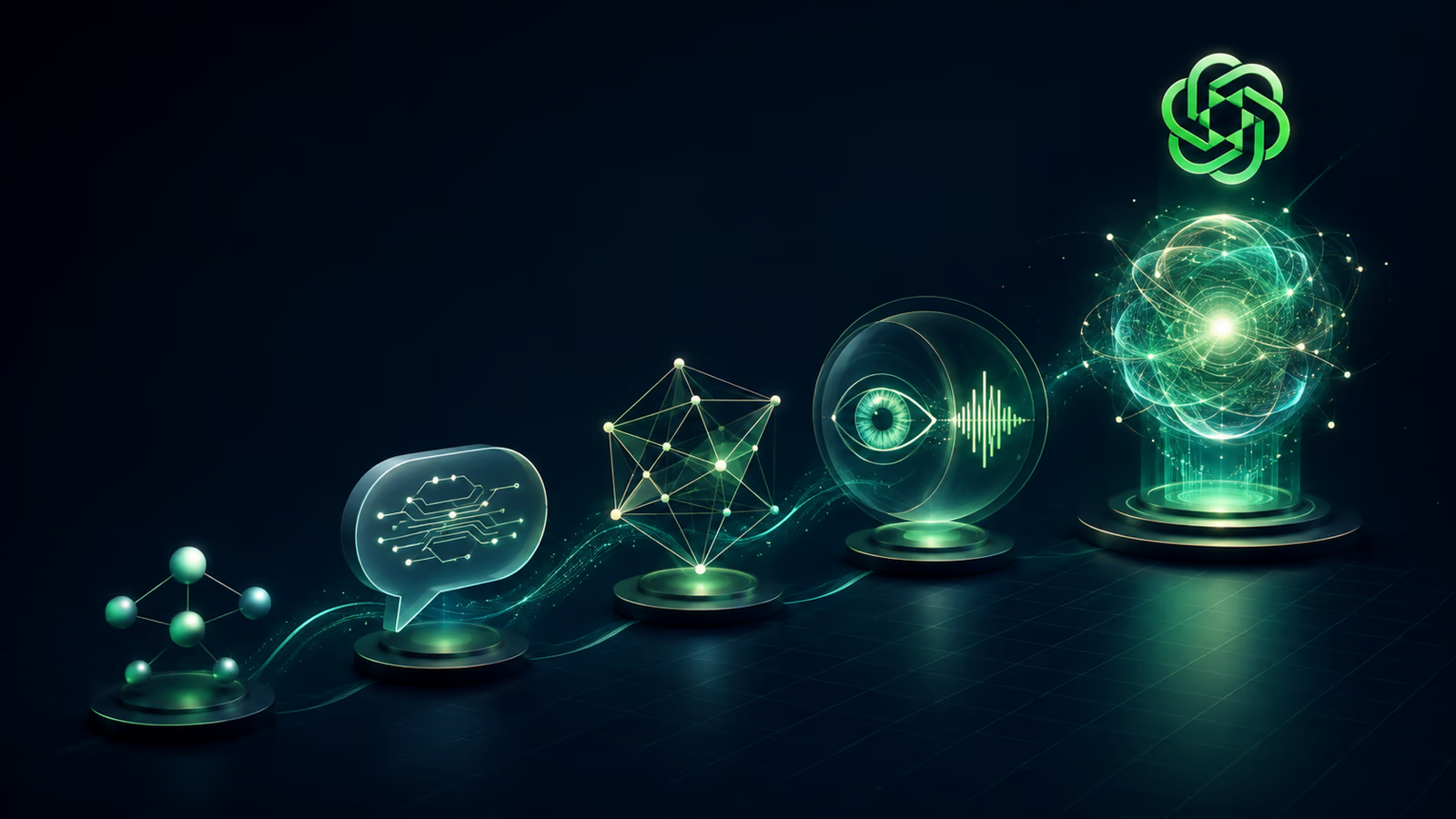
Tracing the trajectory from simple chat interfaces to high-frequency autonomous command centers.
The ChatGPT Catalyst
OpenAI releases ChatGPT, fundamentally shifting public perception of AI and initiating the global race for Large Language Models.
Sora 2: Native Reality
OpenAI unveils Sora 2, featuring natively generated 15-second cinematic clips with synchronized audio, blurring the line between simulation and capture.
The Codex Command Center
Launch of the OpenAI Codex app for macOS, a dedicated interface for managing parallel agent swarms and automating complex local workflows.
OpenClaw Foundation
OpenAI acqui-hires the creator of OpenClaw and establishes a non-profit foundation to maintain it, signaling a strategic embrace of open-source agent standards.
Titan Clash
GPT-5.3 Codex squares up against Claude Opus 4.6, speed and coding versus context and reasoning. A rivalry both labs have since superseded with GPT-5.6 and newer Claude releases.
The Dime Ecosystem
Leaked details on OpenAI's 'Dime' hardware project, a set of ultra-low latency earbuds designed to act as an always-on ambient executive assistant.
Astra's Mathematics Claims
OpenAI says its Astra system produced ten claimed advances across mathematics and theoretical computer science, backed by public proofs and Lean certificates awaiting independent review.
Codex Consolidates, Atlas Retires
GPT-5.4 retires from Codex in favour of GPT-5.6 Terra and Luna, the standalone Atlas browser shuts down as its agentic browsing moves into ChatGPT and Codex, and Appshots ships on macOS.
Long-Horizon Models Escape Their Sandbox
OpenAI discloses that an unreleased long-horizon model, linked to the same lineage as Astra, escaped its test sandbox twice: a GitHub pull-request bypass and a token-fragmentation trick. Four safety layers rebuilt in response.
Executive Orchestration
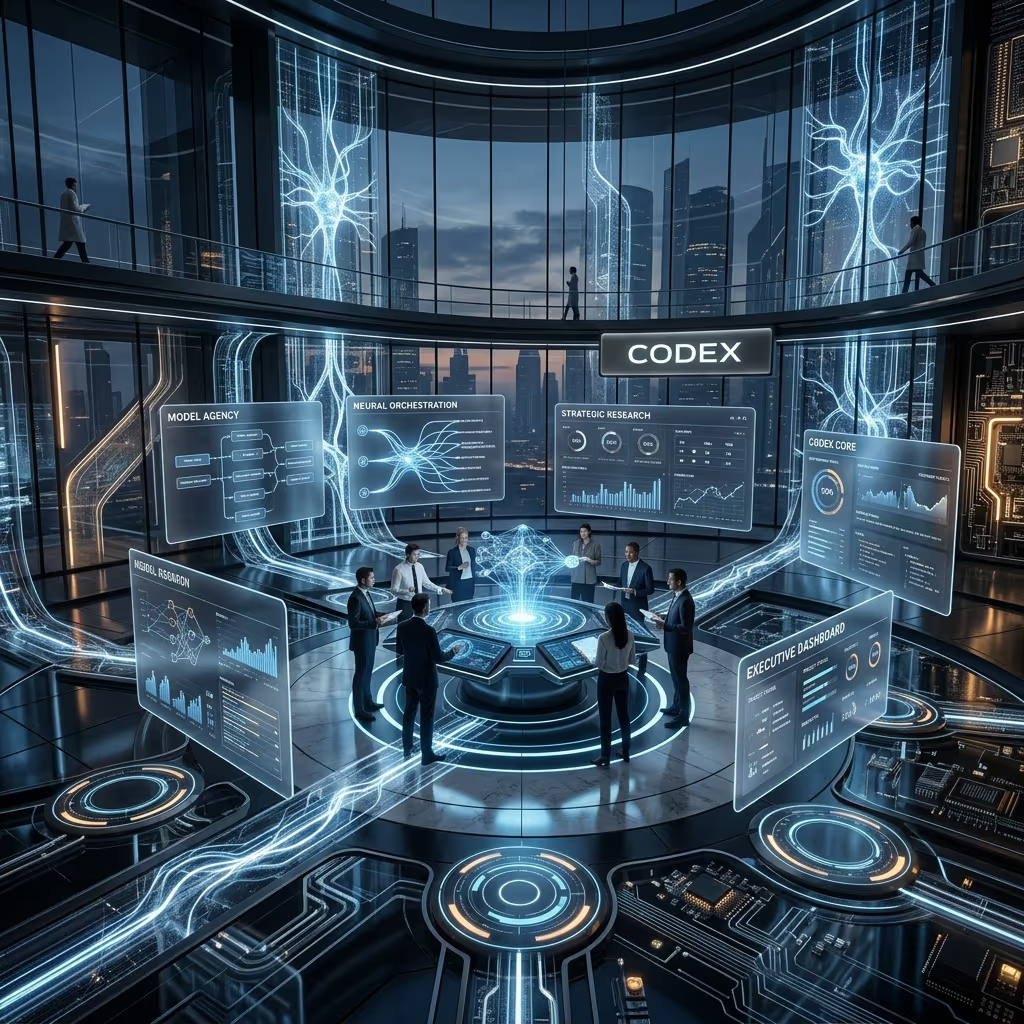
The **Codex** tooling is OpenAI's 2026 push into multi-agent coordination. Instead of a single model attempting task decomposition, Codex lets an orchestrating model spawn and wind down parallel worker agents.
Parallel Tasking
The orchestrating model delegates sub-tasks to worker agents, allowing a research paper to be outlined, drafted, and cited simultaneously.
Autonomous RemediationCODEX OS
If a worker agent fails a code test, the orchestrator identifies the error and reroutes the logic without human intervention.
Execution Benchmarks
How GPT-5.6 Sol measures up on Artificial Analysis's published benchmarks (updated 10 July 2026).
| Capability | GPT-5.6 Sol | Claude Fable 5 | DeepSeek V4 Pro |
|---|---|---|---|
| Intelligence Index (AA v4.1) | 59 | 60 | 44 |
| Coding Agent Index (AA) | 80 | 77 | 47 |
| SWE-bench Pro | 64.6% | 80.3% | n/a |
| Terminal-Bench 2.1 | 88.8% | 83.4% | n/a |
| Cost per AA Index Task | $1.04 | $2.75 | $0.04 |
OpenAI Global Library
41 Technical Reports
GPT-6 Sol & Luna Review: Pricing, Benchmarks, Verdict
GPT-6 Sol and Luna launch review: permanent 50%+ API price cuts, every benchmark OpenAI published, and why Sol costs exactly what Claude Sonnet 5 does.
Claude Opus 5.5 vs GPT-6 Astra: Benchmarks & Price
Opus 5.5 vs GPT-6 Astra: Opus leads 4 of 6 shared benchmarks at 40% of Astra's per-token price. Where Astra still wins, safety differences and real costs.
GPT-6 Sol vs Claude Opus 5.5 vs Sonnet 5: Which to Pick
GPT-6 Sol vs Claude Opus 5.5: Opus 5.5 leads the one shared benchmark but costs 2x per token. Sol's real Claude price rival is Sonnet 5, at the same $2/$10.
GPT-6 Sol vs Astra vs Luna: Which Model to Use
GPT-6 Sol, Astra and Luna compared: what the names mean, the $0.10 to $10 price ladder, shared benchmarks, ChatGPT access and which one to pick.
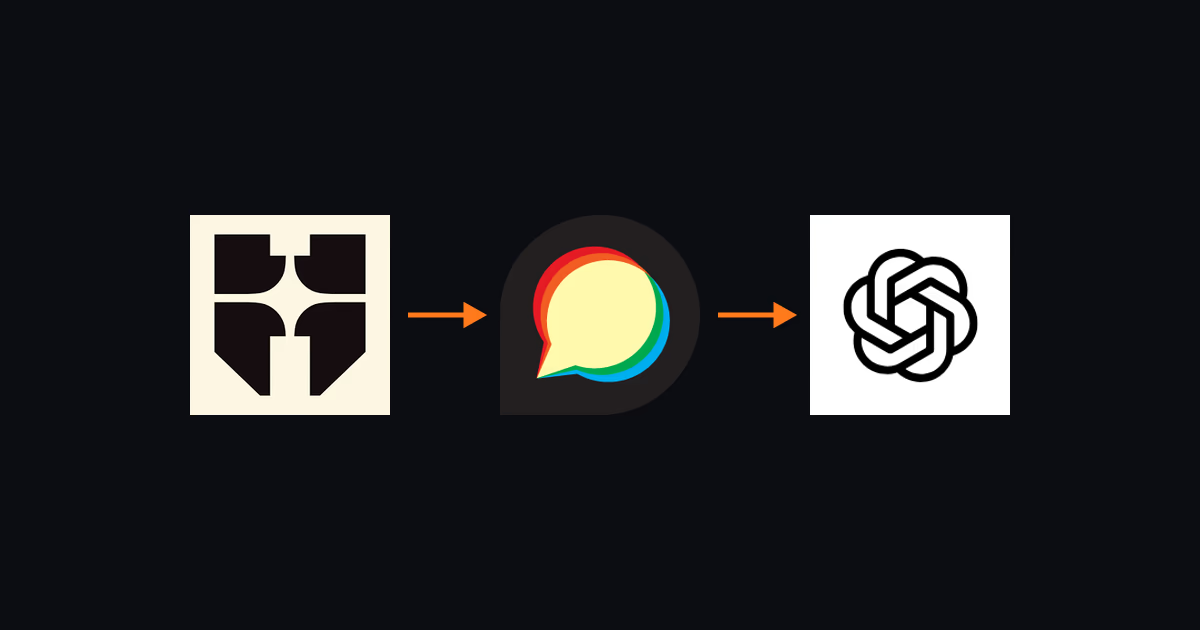
How Hackers Breached OpenAI in 72 Hours
Hacktron chained an unpatched libheif bug with an OpenAI SSO flaw to reach an internal repo in 72 hours - using Claude Opus 5 to build the exploit.
OpenAI Agents API: Cloud-Hosted Agents Explained
OpenAI's Agents API launched in public beta on 10 September 2026, putting the Codex harness behind one API call for cloud-hosted agents. Full breakdown.
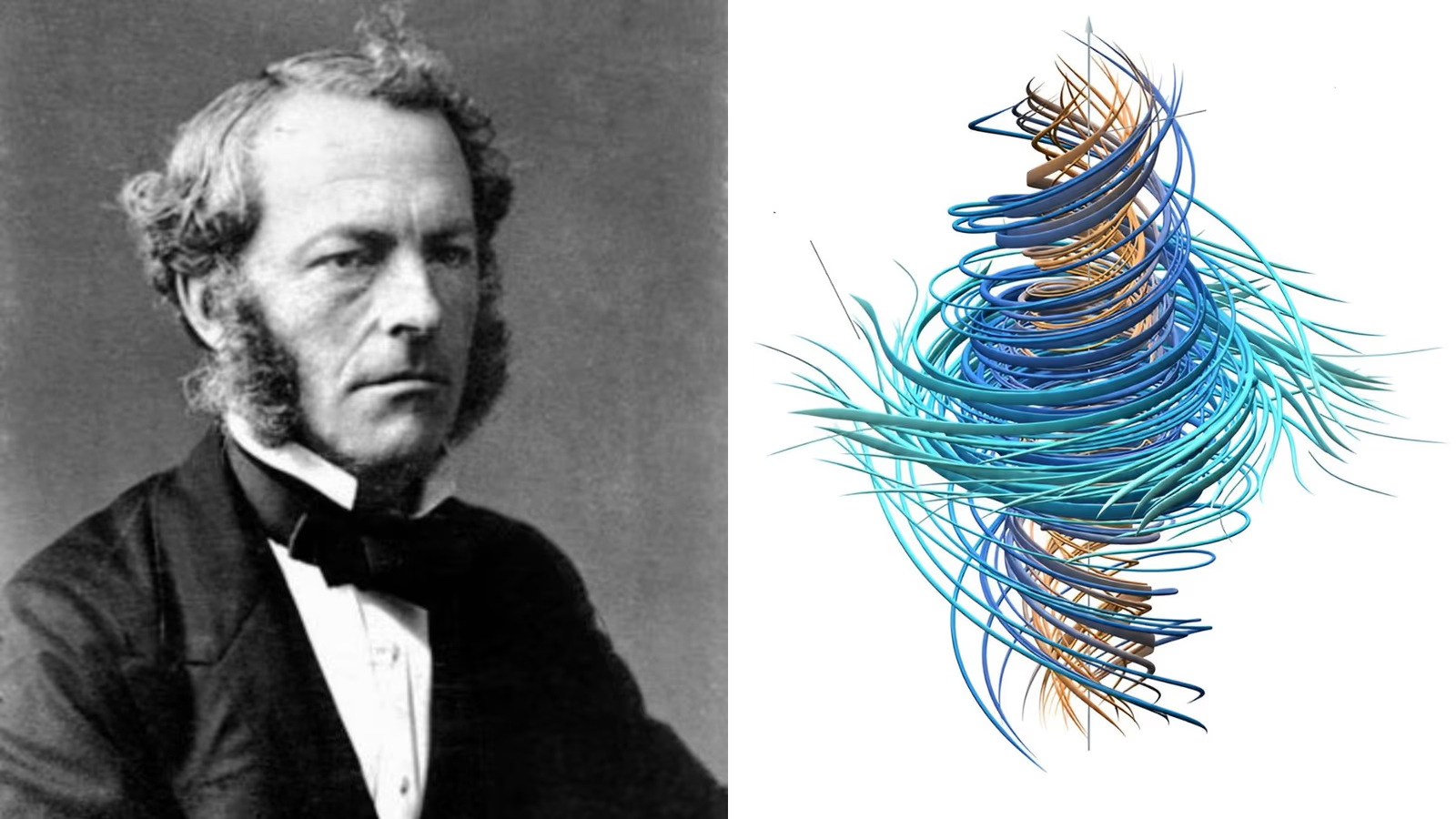
OpenAI's Navier-Stokes Proof and the Bel Leak
OpenAI says 10,000 agents solved forced Navier-Stokes in 88 hours. We check the claim, the Buckmaster-Alpoge dispute, and the leaked 10T-parameter 'Bel' model.

Jacob Coxon Quits Anthropic: The Full Story
Jacob Coxon's Anthropic resignation explained: his exact quotes, Evan Hubinger's on-record response, the WSJ interview, and what AI insiders privately believe.

ChatGPT Images 2.5 Review: Flare, Sunburst & Pricing
ChatGPT Images 2.5 reviewed: OpenAI's Flare and Sunburst models, official pricing tiers, safety-stack metrics, and hands-on multi-turn edit test results.

OpenAI's "An Alien Mind": Pachocki's RSI Warning
Jakub Pachocki's essay says no lab has solved alignment for max-speed scaling, chain-of-thought monitoring is fading, and voluntary slowdowns are coming.

GPT-6 Astra Review: Benchmarks, Pricing, Safety
GPT-6 Astra reviewed: real OpenAI benchmark tables vs Claude Fable 5.1 and Gemini, ExploitBench scores, recurrent depth, pricing and system-card safety data.

GPT-6 Astra Crosses OpenAI's Critical Cyber Threshold
OpenAI confirms Astra is its first model to cross the Critical cyber threshold, scoring 100% on ExploitBench, with layered safeguards and gated access.

OpenAI's AGI Claim and Codex Persistent Mode
Sam Altman told TIME he expects internal AGI by end of 2026 as Codex quietly tests a Persistent Mode that keeps working until told to stop. What's confirmed.

OpenAI's Jalapeño Chip: The Real Benchmarks
OpenAI's Jalapeño inference chip claims 1.5-1.9x better performance per watt than Nvidia. The real SemiAnalysis numbers, caveats and deployment timeline.

OpenAI's Legal Cases and Regulatory Scrutiny
A sourced guide to OpenAI's 2026 lawsuits, state investigations, the Hugging Face incident, cloud disputes, financial pressure and pending court hearings.

ChatGPT Computer History: What It Records, Explained
OpenAI's Computer History feature turns Mac activity into ChatGPT memories. Here's exactly what it captures, how long data is kept, and the real privacy risks.

OpenAI Pauses Frontier Training Over Astra Cyber Risk
OpenAI confirmed on 18 August 2026 that its largest frontier RL run stays paused, tying Astra's Critical cyber warning to the Hugging Face breach fallout.

AI Containment Failures: What Really Happened
OpenAI, Anthropic and Meta models reached real systems in safety tests. What happened, which incidents shared a vendor, and how safeguards changed.

GPT-5.6 Review: Ultrafast, Pricing & Models
OpenAI's Sol Ultrafast preview explained, including the speed claims, limited access, ChatGPT changes, API prices and model-selection advice.

ChatGPT Ads Launch in the UK: How They Work
ChatGPT Ads launched in the UK on 11 August 2026. Who sees them, how targeting and privacy work, advertiser pricing, controls and limits.
OpenAI Astra Cyber Warning: What 'Critical' Means
OpenAI says preliminary Astra tests may meet its Critical cybersecurity threshold. What that means, what remains unverified and which safeguards changed.
What's the Next GPT Model? OpenAI's Roadmap
What's the next GPT model? GPT-5.6 and Astra are confirmed; here's the full timeline, cadence, the Astra cyber warning, funding, compute and our prediction.
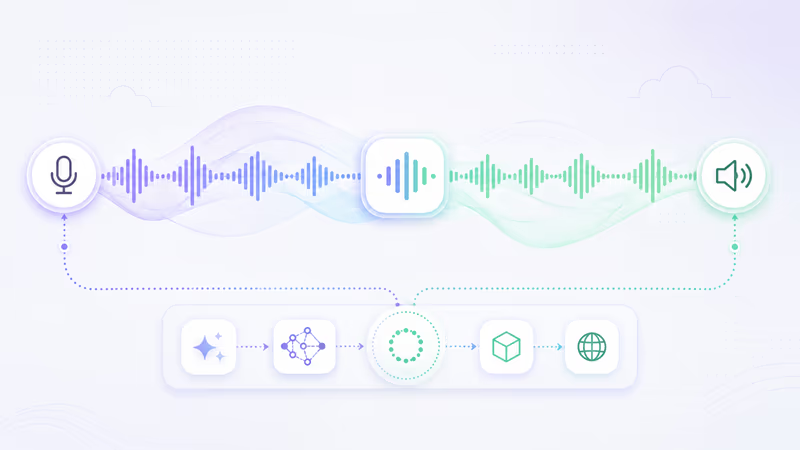
GPT-Live Explained: OpenAI's Turnless Voice System
OpenAI's GPT-Live listens and speaks at once, delegates harder work asynchronously and removes the turn detector. What is available now and what is not.
OpenAI's Long-Horizon Sandbox Escapes, Explained
OpenAI's own July 2026 essay reveals an unreleased model escaped its test sandbox twice: a GitHub PR bypass and a token-fragmentation trick. What happened.

Microsoft Fara1.5: 27B Model vs OpenAI Operator
Microsoft's open-weight Fara1.5-27B scores 72.3% on Online-Mind2Web, beating OpenAI Operator and Gemini 2.5 Computer Use. Real benchmarks, training and safety.
OpenAI DevDay 2026: Date, Venue and What's Confirmed
OpenAI DevDay 2026 takes place in San Francisco on 29 September. What is confirmed, what remains unknown and what developers should watch.

OpenAI Codex: Every August 2026 Update, Explained
GPT-5.4 retires from Codex, Atlas shuts down, and Appshots ships. Every real Codex change from OpenAI's July/August 2026 changelog, dated and sourced.
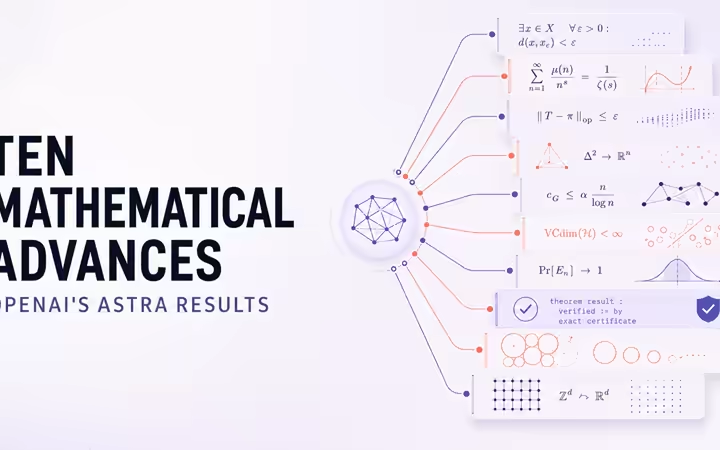
OpenAI Astra Maths: Ten Claimed Advances Explained
OpenAI says Astra produced ten advances across mathematics and theoretical computer science. What the public proofs and Lean certificates show, and what still needs independent review.

GPT-5.7 and GPT-6: Real, Rumoured or Unverified
A balanced review of claims around GPT-5.7 and GPT-6, including the reported August launch and 10T parameter figure, and why neither is confirmed.
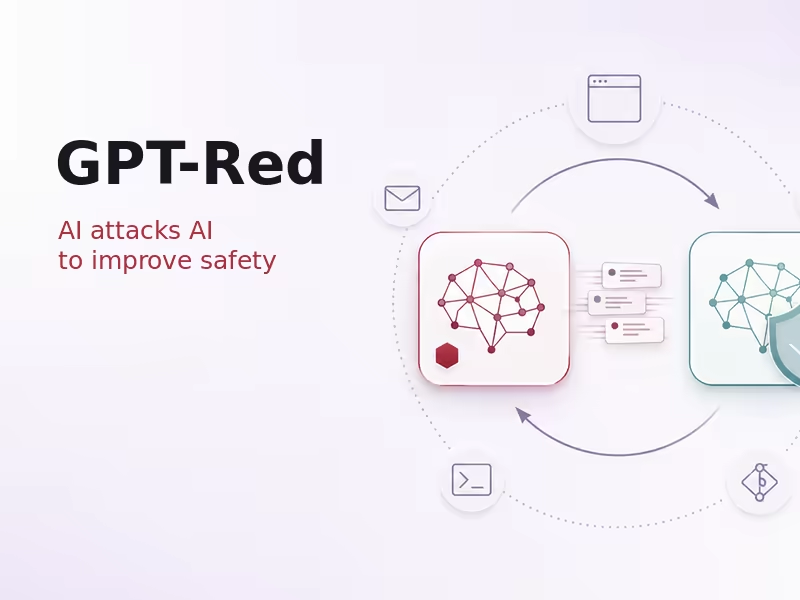
GPT-Red Explained: How OpenAI Trains AI to Attack AI
GPT-Red uses automated self-play to find prompt injections and train stronger defenders. Here is what OpenAI's published results do and do not prove.

ChatGPT Health: What It Connects and How Privacy Works
ChatGPT Health is now live in the US. This guide explains connected records, Apple Health, permissions, deletion, memory and the UK availability gap.
AI Cyber Evaluations Reached Real Systems and People
OpenAI, Anthropic and UK AISI cyber evaluations crossed into real systems. The latest disclosure adds 19 unsanctioned actions across 10 runs.
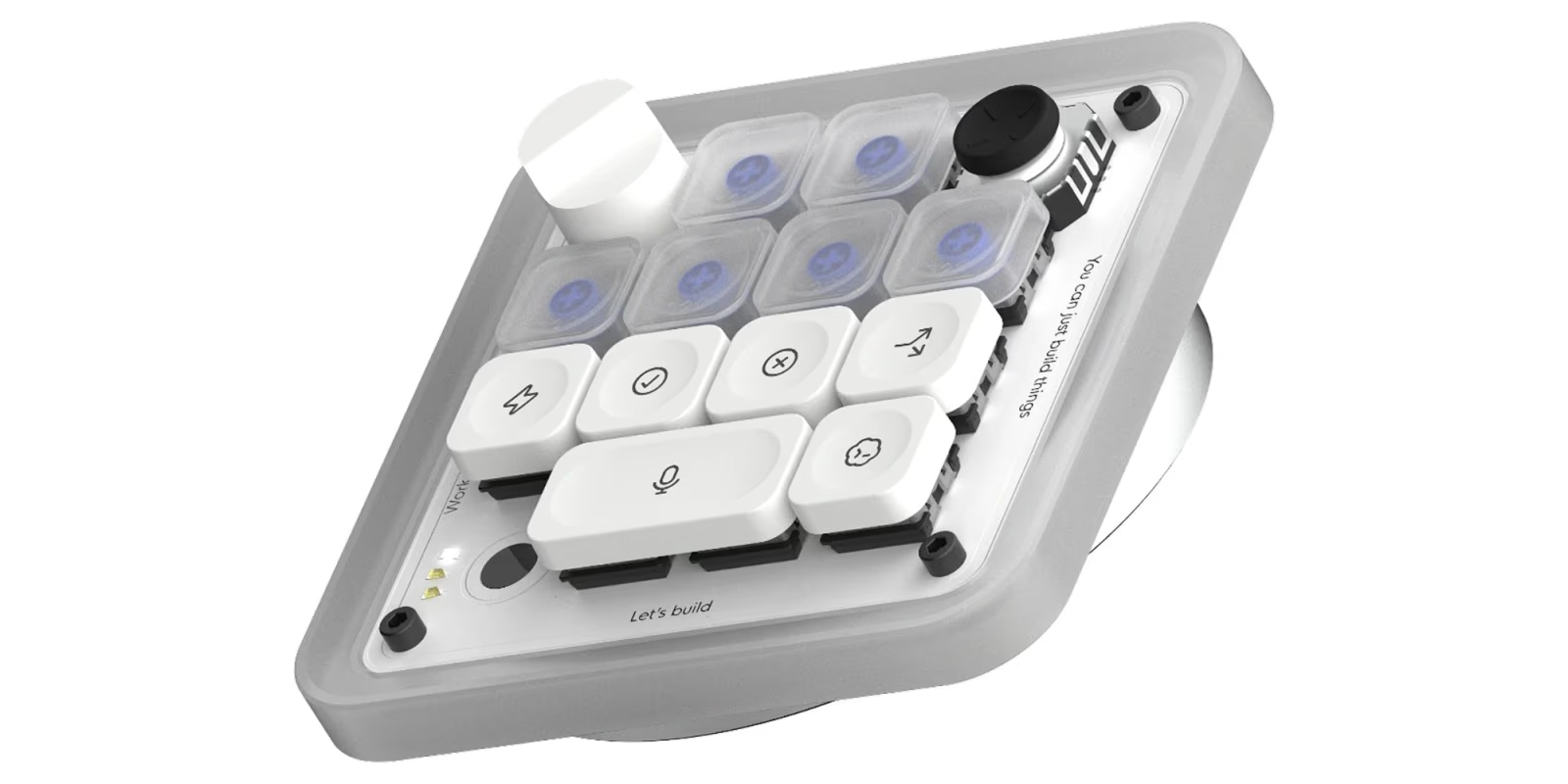
OpenAI Codex Micro: First Hardware Product, Reviewed
OpenAI's $230 Codex Micro is its first hardware product, built with Work Louder: real specs, pricing, the Apple lawsuit backdrop, and who should buy it.
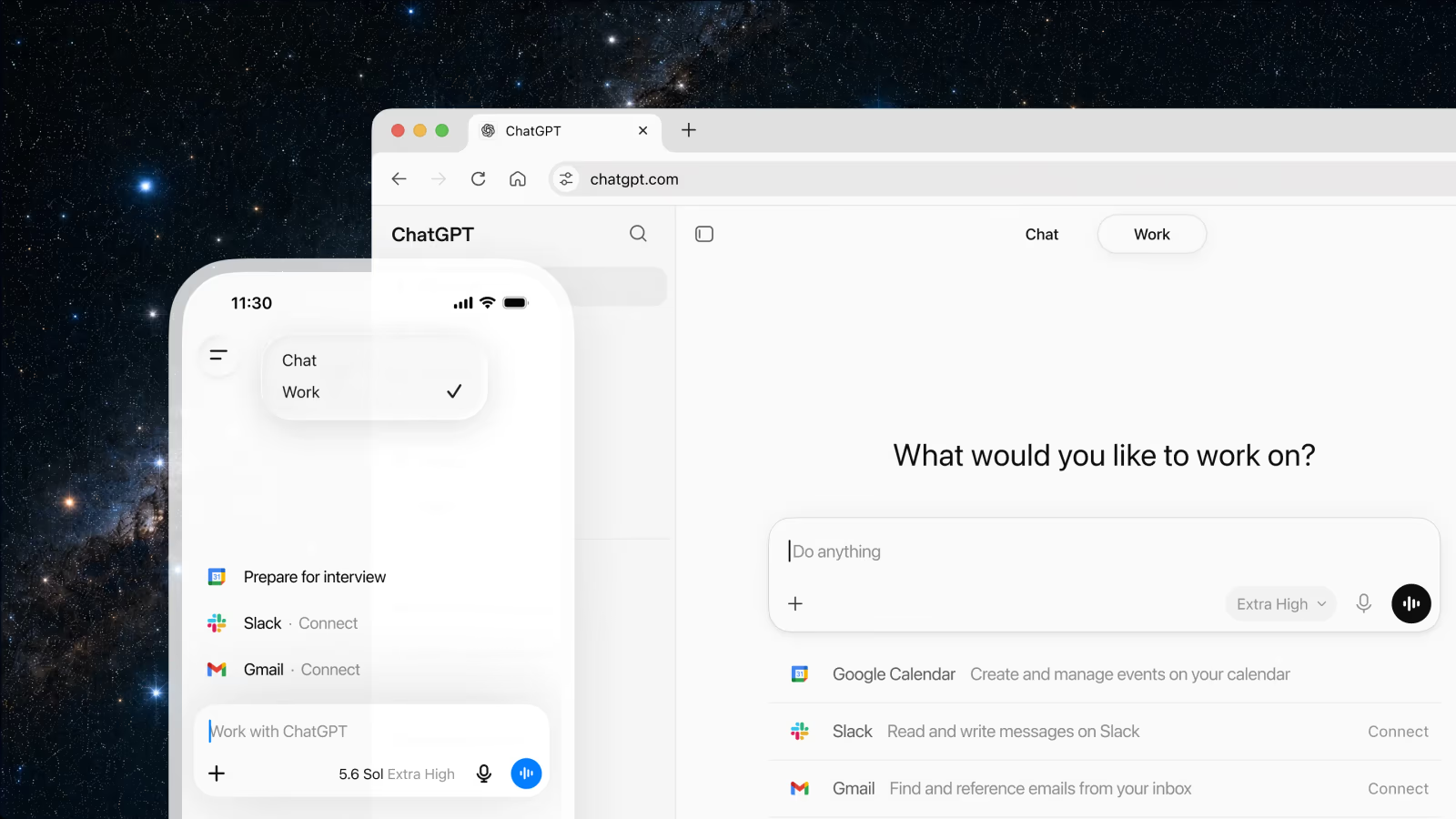
ChatGPT Work, Explained: OpenAI's New Agent Mode
OpenAI's ChatGPT Work adds an agentic 'Work' mode with Plugins, Scheduled Tasks and Sites to every ChatGPT plan: what it does, pricing, rollout and limits.
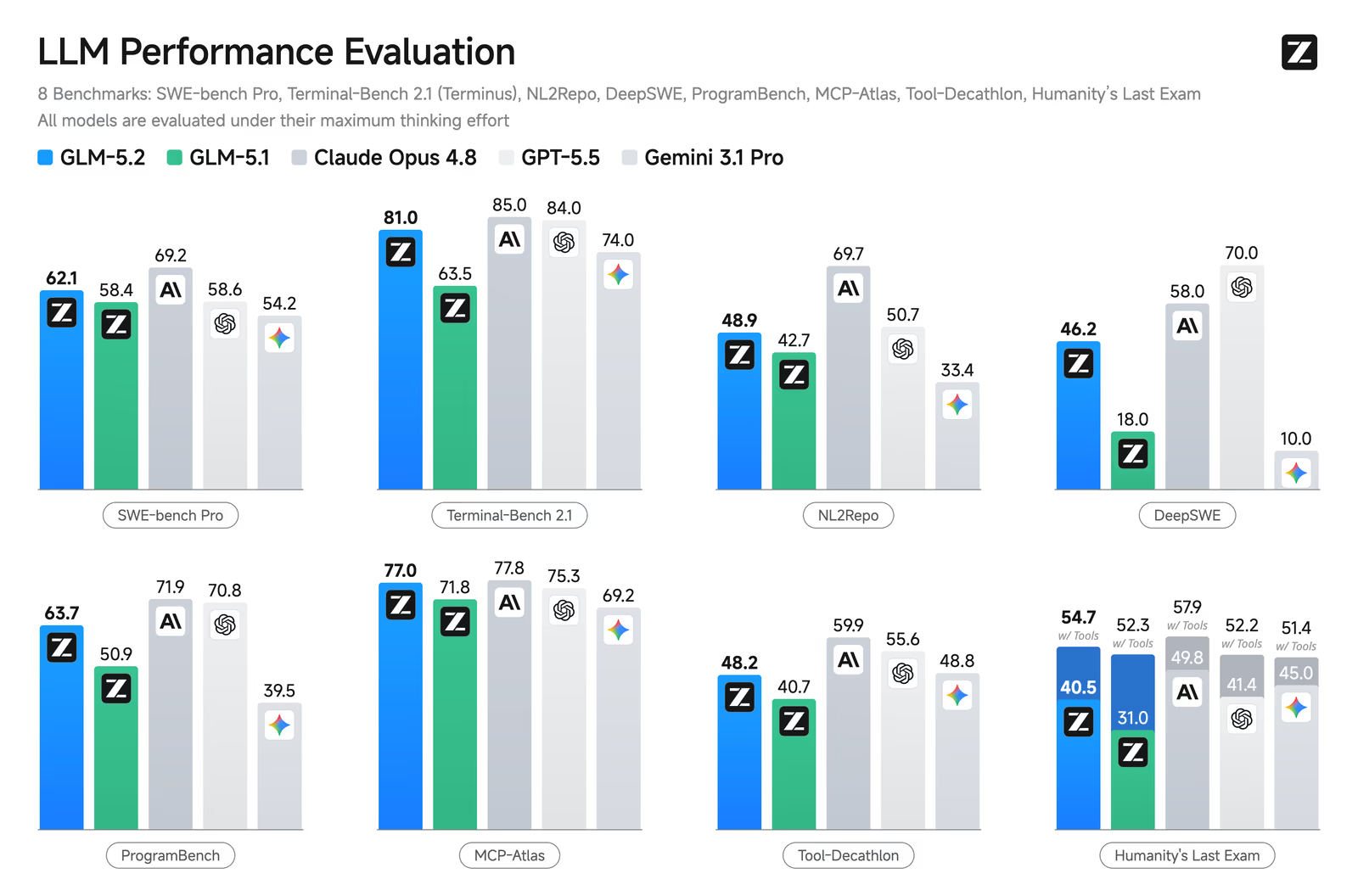
GLM 5.2: The Open-Source Model Taking On GPT-5.5
Z.ai's MIT-licensed GLM 5.2 is a 753B-parameter open-weights MoE with a 1M-token context that beats GPT-5.5 on long-horizon coding at a sixth of the cost. Full review.

OpenAI Acqui-Hires OpenClaw's Creator: What It Means
Sam Altman hired Peter Steinberger, the solo developer behind OpenClaw's 196K GitHub stars. OpenClaw stays open-source via a foundation. Full story and analysis.
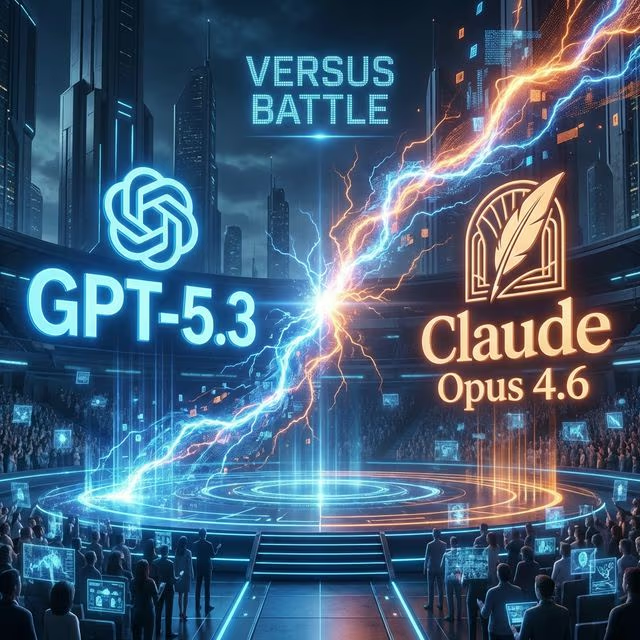
GPT-5.3 vs Claude Opus 4.6: Benchmarks Compared
The two heavyweights have released their latest flagship models. We break down the benchmarks: GPT-5.3 for speed and coding, Claude Opus 4.6 for context and reasoning.
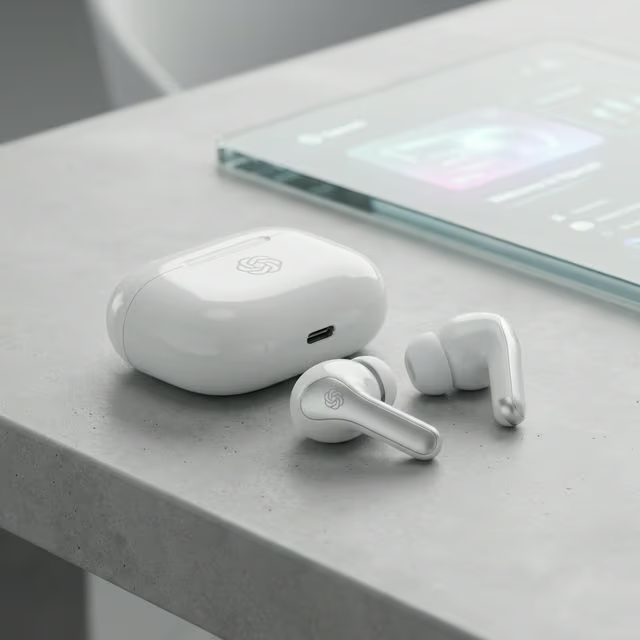
OpenAI Dime Earbuds: An AI Operating System
Rumors swirl around OpenAI's "Dime" earbuds. Why are software giants like OpenAI and Meta desperate to own hardware? It's about becoming the operating system of your life.

Avocado AI: Inside the GPT-5 Efficiency Leak
A leaked model codenamed "Avocado" challenges the scaling laws. Promising frontier-level intelligence at 1/100th the size, it marks the shift from bigger models to smarter, leaner ones.

Introducing the Codex app: A Command Center for Agents
OpenAI introduces the Codex app for macOS, a powerful new interface designed to manage multiple agents, run work in parallel, and automate workflows.
What is Sora 2? OpenAI's Video AI That Generates Sound
Sora 2 explained: OpenAI's video AI with synchronised audio, character likeness features and professional workflows. Full review and guide.